LONDON, ENGLAND: The National Health Service (NHS) in England has added 125 CT and MRI scanners between March 2024 and March 2026.
Alongside this expansion, artificial intelligence (AI) is helping hospitals complete more MRI scans while maintaining image quality.
The developments are expected to support faster cancer investigations, increase the availability of diagnostic appointments and help patients access medical care sooner.
The NHS is also expanding AI-powered MRI technology across compatible scanners, with a wider rollout planned by 2029.
NHS Expands Cancer Scanning Capacity
The NHS has increased its diagnostic imaging capacity to help hospitals manage the growing demand for medical scans.
According to NHS England data released on 3 November 2026, the number of CT and MRI scanners increased by 125 between March 2024 and March 2026.
These additional scanners give doctors more opportunities to investigate suspected cancers and other serious conditions.
CT and MRI scans are important in the investigation of lung, brain, breast and prostate cancers.
The expansion has also helped increase the number of diagnostic appointments available across England. The combined introduction of additional scanners and AI technology is helping the NHS deliver approximately one million extra scans each year.
The development was reported by Health Business, which highlighted how new imaging equipment and AI are helping patients receive cancer investigations sooner. (Department of Health and Social Care & NHS England, 2026)
Diagnostic Waiting Lists Show Progress
The increase in scanning capacity comes as the NHS reports improvements in diagnostic activity.
According to the latest government announcement:
- Every month in 2026 so far has recorded the highest monthly diagnostic activity in NHS history.
- The diagnostic waiting list has fallen in three of the five months since April 2026.
- Cancer waiting times are better than the previous year.
- The overall elective care waiting list has fallen by more than 250,000 since July 2024.
These figures reflect wider improvements in NHS activity. However, they should not be interpreted as evidence that additional scanners alone caused the reduction in waiting lists.
AI Makes MRI Scans Faster
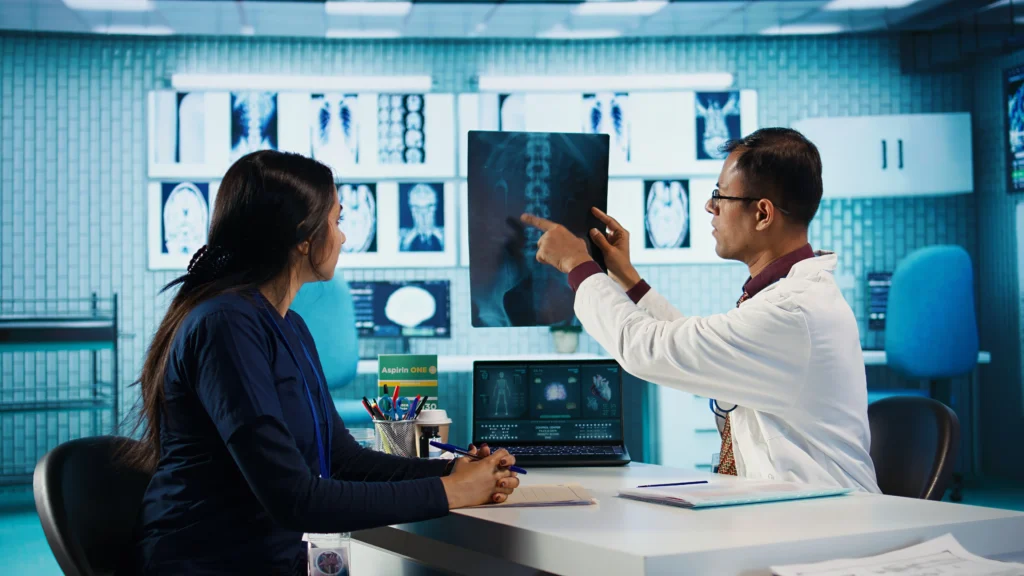
MRI scans provide detailed images of internal organs, soft tissues and other body structures. They help doctors investigate abnormalities and assess conditions that may require further testing.
However, traditional MRI examinations can take time. The NHS estimates that an MRI scan usually takes between 15 minutes and one hour, depending on the area being examined.
AI-powered MRI technology is helping address this challenge by reducing the time needed to acquire and reconstruct medical images.
The NHS reports that hospitals using this technology can perform an average of 14% more MRI scans while maintaining image quality.
Shorter scan times also help create additional appointments and reduce the time patients spend inside scanners.
This improvement is particularly useful in busy hospitals where MRI demand is high and scanner availability is limited. (NHS)
How AI Improves MRI Imaging
AI-assisted MRI technology works by helping imaging systems produce high-quality pictures using less acquired imaging data.
MRI scanners collect signals from the body to create detailed images. AI reconstruction software processes the collected information and helps produce images suitable for clinical assessment.
This can reduce the amount of time required to complete certain imaging sequences. Hospitals can then use the saved time to schedule additional patients.
A 2025 review published in Radiology examined the growing use of AI-accelerated MRI in clinical practice. It explained how AI reconstruction can help reduce image acquisition times while recovering image quality.
The technology may also improve patient comfort by reducing the time spent lying inside the scanner. Shorter examinations can be especially useful for people who experience discomfort, anxiety or difficulty remaining still during long procedures. (Haller et al., 2025)
NHS Plans Wider AI Rollout
AI-powered MRI technology is already being introduced across NHS facilities.
The government’s latest figures show that AI acceleration software has been installed in 54% of compatible NHS MRI scanners.
The NHS plans to give every NHS trust the opportunity to upgrade its compatible MRI scanners by 2029.
A complete rollout could allow existing equipment to deliver up to 162,000 additional checks every year.
This is an important development because hospitals may be able to increase scanning capacity without relying entirely on purchasing new MRI machines.
However, the technology still requires appropriate clinical validation and quality checks to ensure that reconstructed images remain suitable for diagnosis.
Community Centers Improve Access
The NHS is also expanding diagnostic services through Community Diagnostic Centres (CDCs). These facilities offer tests and scans closer to where patients live.
Of the 125 additional CT and MRI scanners introduced between March 2024 and March 2026, 107 were installed in community diagnostic centers.
These centers carried out nearly 2.2 million CT and MRI scans in the 12 months leading up to March 2026. This represented approximately one million more scans than during the equivalent 12-month period ending March 2024.
The expansion aims to reduce pressure on larger hospitals and make diagnostic investigations more accessible.
One example is the new Manchester and Trafford Community Diagnostic Centre, which officially opened on 29 October 2026. The £19.2 million facility provides additional diagnostic capacity and modern imaging equipment.
By bringing more diagnostic services into local communities, the NHS aims to reduce unnecessary travel and make it easier for patients to access investigations. (Department of Health and Social Care & NHS England, 2026)
AI Still Requires Expert Review
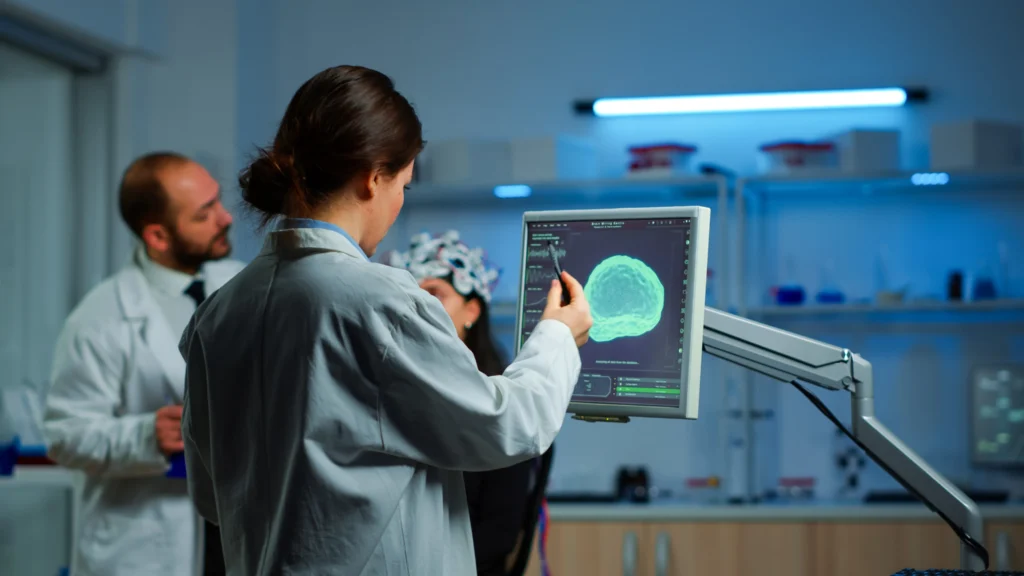
Although AI can improve MRI efficiency, it does not replace radiologists or independently confirm cancer.
Radiologists continue to examine the images produced by MRI scanners. They assess abnormalities, compare findings with the patient’s medical history and determine whether further investigations are needed.
A systematic review published in European Radiology in 2025 examined 14 commercially available AI products for MRI acceleration.
Researchers identified 21 validation studies covering 10 products. Only four studies (19%) prospectively demonstrated an impact on diagnostic performance metrics.
The review also found that none of the included studies evaluated prospective cohorts of more than 100 patients or assessed hallucinated imaging artefacts.
These findings highlight the need for larger clinical studies and proper validation before wider implementation. (Fransen et al., 2025)
Why Earlier Cancer Diagnosis Matters
Early cancer diagnosis can improve treatment options and increase the chances of successful treatment. When cancer is identified before it advances or spreads, doctors may have more opportunities to select appropriate treatments.
The World Health Organization (WHO) identifies three important components of early cancer diagnosis:
- Awareness of cancer symptoms and the importance of seeking medical advice.
- Access to clinical assessments and diagnostic services.
- Timely referral for appropriate treatment.
Imaging services support the second component by helping doctors investigate symptoms and identify abnormalities.
However, faster access to scans must also be supported by timely reporting, specialist consultations and appropriate treatment pathways. (WHO, 2026)
Scans Are Not a Final Diagnosis
CT and MRI scans are valuable tools for investigating suspected cancer, but imaging results alone do not confirm every cancer diagnosis.
A CT scan uses X-rays to create detailed images of internal structures. MRI uses strong magnetic fields and radio waves to produce images of organs, soft tissues and other body structures.
Doctors select the appropriate imaging test based on the patient’s symptoms and the suspected condition.
When a scan identifies a suspicious area, doctors may recommend additional investigations. These can include blood tests, specialist assessments or a biopsy.
A biopsy involves removing a small tissue sample for examination under a microscope. It is often the only way to confirm whether an abnormality is cancerous.
The National Cancer Institute explains that doctors use a combination of medical history, physical examinations, laboratory tests and imaging to investigate suspected cancer.
Therefore, faster imaging can support earlier clinical decisions, but accurate diagnosis still depends on the complete diagnostic process. (National Cancer Institute)
Conclusion
The NHS expansion of CT and MRI scanners, combined with AI-powered imaging, represents an important development in diagnostic healthcare across England.
The addition of 125 scanners, increased use of AI-assisted MRI and expansion of community diagnostic centers are helping hospitals increase scanning capacity.
The planned rollout of AI technology by 2029 could further improve access to imaging appointments.
However, faster scans must be supported by accurate image interpretation, clinical validation and timely follow-up investigations.
AI is not a replacement for medical professionals. Its greatest value lies in helping radiologists and healthcare teams work more efficiently, improve access to diagnostic services and support patients through the cancer diagnosis pathway.