


Frequent falls in toddlers may be part of normal walking development, but repeated falls can sometimes signal balance, coordination, or motor-development difficulties.
Toddlers often trip, stumble and fall while learning to walk, run and explore their surroundings.
Their balance, coordination and ability to adjust their steps are still developing, so occasional falls are a normal part of early movement development.
Quick Answer: Are Frequent Falls Normal in Toddlers?
Frequent minor falls can be part of normal development, especially in toddlers who have recently started walking. Their balance, coordination and ability to control movement are still developing.
However, repeated falls during ordinary walking, consistently falling towards one side, dragging a foot, unusual weakness or difficulty getting up from the floor may indicate a movement or developmental concern.
How can physiotherapy help? Pediatric physiotherapy assesses walking patterns, balance, postural control, strength and coordination. Individualized activities can help improve functional movement and confidence when appropriate.
However, repeated falls can sometimes be associated with difficulties involving muscle strength, postural control, coordination, vision or neurological development.
The important question is not simply how often a toddler falls, but whether their movement skills are progressing and whether other signs of difficulty are present.
Understanding the difference between normal developmental falls and unusual walking patterns can help parents recognize when a pediatric assessment may be needed.
Key Takeaways for Parents
- Occasional falls are common while toddlers learn to walk, run and explore.
- New walkers may fall more frequently because their balance and coordination are still developing.
- There is no fixed number of falls that determines whether a toddler has a developmental problem.
- Repeated falls on flat surfaces, persistent asymmetry and unusual walking patterns deserve assessment.
- Muscle weakness, hypotonia, vision problems and neurological conditions can sometimes affect balance.
- Pediatric physiotherapy can assess gait, balance, postural control, strength and functional movement.
- Sudden walking difficulties, new weakness or loss of previously acquired skills require prompt medical assessment.
Why Do Toddlers Fall So Frequently?
Walking requires several body systems to work together.
A toddler needs to control their trunk, shift their weight between their legs, coordinate their steps and respond to changes in the walking surface.
These abilities develop gradually through movement experience.
New walkers often use a relatively wide stance, shorter steps and increased arm movements to maintain stability.
Their walking pattern also changes as their nervous and musculoskeletal systems mature.
A review of typically developing toddler gait found that walking biomechanics change with both age and walking experience (Liu et al., 2022)
Other reasons toddlers may fall include:
- Developing balance: Children are still learning to maintain stability while standing, walking and changing direction.
- Immature coordination: Their legs and arms may not yet move smoothly together during more demanding activities.
- Limited movement experience: Steps, slopes, toys and uneven surfaces introduce challenges they are still learning to manage.
- Sudden changes in speed: Running, stopping and turning require more control than ordinary walking.
- Distraction: Looking towards a toy or turning to respond to someone can interrupt walking.
- Environmental factors: Slippery floors, loose footwear, clutter and poor lighting can increase the risk of trips.
Frequent minor falls before the age of three can occur during normal development, particularly in children who started walking later.
However, this should not be used to dismiss persistent instability or other concerning symptoms. (NHS Inform, 2026)
What Is Normal at Different Stages of Toddler Development?
Walking experience is an important consideration when assessing falls.
A child who has only recently started walking will usually have less movement control than one who has been walking independently for several months.
The following age ranges are broad developmental guides, not strict deadlines.
Around 12-18 Months
During early independent walking, children may:
- Take short, uneven steps.
- Walk with their feet positioned relatively far apart.
- Hold their arms out for balance.
- Stop frequently or change direction cautiously.
- Fall when starting, stopping or turning.
These characteristics can reflect an early walking pattern rather than a developmental disorder.
Around 18-24 Months
As walking experience increases, toddlers begin exploring more challenging movements.
They may start to:
- Walk faster and attempt running.
- Carry toys while walking.
- Change direction more frequently.
- Climb onto low furniture.
- Kick a ball.
- Navigate familiar obstacles.
Falls can still occur, particularly when children attempt movements that challenge their current balance and coordination.
Around 2-3 Years
Children generally develop greater control over walking and begin attempting more complex physical activities.
These may include running, jumping with both feet, climbing stairs and navigating obstacles.
The CDC identifies running, kicking a ball and walking up a few stairs with or without help as movement milestones by age two.
These milestones help parents monitor development, but they are not tests for diagnosing balance problems. (CDC, 2026)
When Should Parents Be Concerned About Frequent Falls?
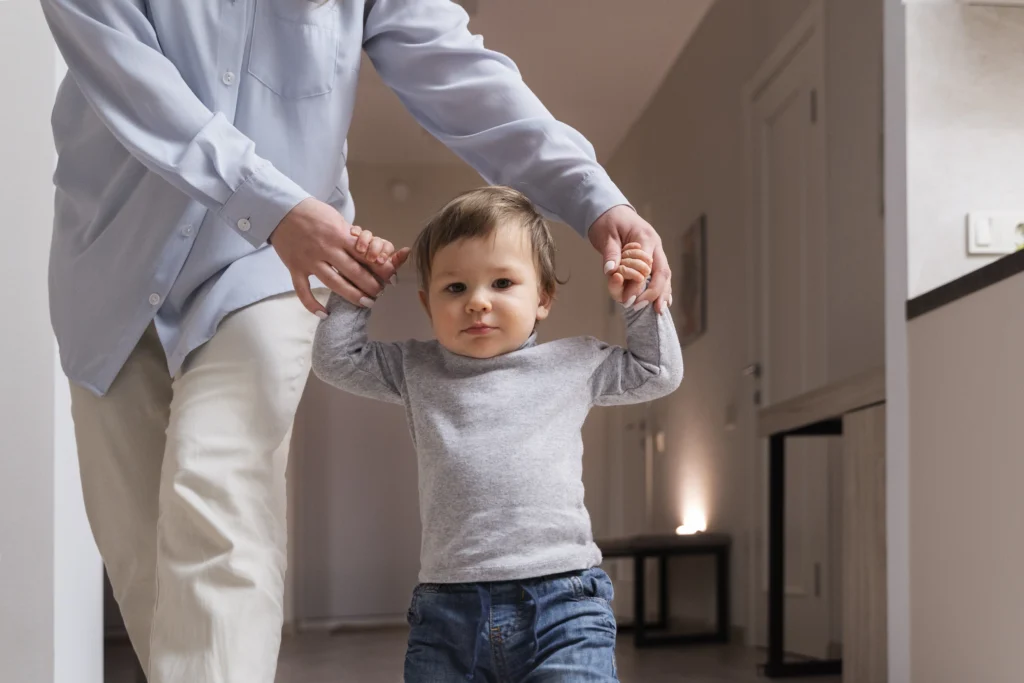
There is no universally accepted number of falls per day or week that identifies a developmental problem.
Instead, parents should observe the circumstances surrounding the falls and whether the child’s movement abilities are improving.
Some patterns deserve closer attention.
1. Falling Even While Walking Slowly
Repeatedly losing balance during ordinary walking on flat, familiar surfaces may indicate difficulty with postural control, strength or movement coordination.
2. Always Falling Towards One Side
Consistently leaning, stumbling or falling towards the same side is more concerning than occasional falls in different directions.
It may suggest asymmetrical movement, weakness or another underlying problem that requires assessment.
3. Dragging One Foot or Walking Unevenly
A toddler who repeatedly drags one foot, walks with an unusual difference between the legs or has difficulty lifting one foot should be assessed.
These patterns should not automatically be attributed to clumsiness.
4. Difficulty Getting Up From the Floor
Some children may struggle to move from sitting or squatting into standing.
Repeated difficulty with these transitions can indicate reduced functional strength or altered motor control.
5. Falling More Often Without Developmental Progress
A child who continues to experience significant instability without becoming more confident or controlled in everyday movement may benefit from an assessment.
6. Avoiding Physical Activities
Some toddlers may become reluctant to climb, run or participate in active play because these movements feel difficult.
Persistent avoidance alongside other motor difficulties deserves attention.
Medical and Developmental Conditions That May Affect Balance
Frequent falls can have several explanations.
The following conditions are possibilities healthcare professionals may consider when other clinical signs are present. None can be diagnosed from falling alone.
Developmental Coordination Difficulties
Some children have difficulty planning and coordinating movements.
They may struggle with running, jumping, navigating obstacles or learning unfamiliar physical activities.
Developmental coordination disorder (DCD) is one possible diagnosis in older children who meet specific clinical criteria.
However, frequent falls alone are not enough to diagnose DCD, particularly in young toddlers whose movement skills are still developing.
Low Muscle Tone (Hypotonia)
Hypotonia refers to reduced resistance to passive movement. It may affect postural stability and the ability to control movements against gravity.
A child with hypotonia may appear floppy, have difficulty maintaining an upright posture or tire during activities requiring trunk and leg control.
Hypotonia is a clinical finding, not a diagnosis by itself. Its underlying cause needs to be investigated when appropriate.
Muscle Weakness
Reduced strength in the hips, thighs, calves or trunk can make walking, climbing and standing more difficult.
Some children may use their hands to push against their thighs when getting up from the floor or struggle with activities that require repeated leg effort.
Progressive weakness or loss of previously acquired abilities requires prompt medical assessment.
Cerebral Palsy
Cerebral palsy can affect posture, muscle tone, coordination and movement control.
Depending on the child’s presentation, walking may involve stiffness, toe walking, asymmetrical steps or difficulty maintaining balance.
Frequent falls alone do not establish a diagnosis. Other movement differences and the child’s developmental history are important.
Joint Hypermobility and Musculoskeletal Differences
Some children have joints that move through a larger range than usual.
This may contribute to instability in certain circumstances, particularly when accompanied by pain, fatigue or functional difficulties.
However, joint hypermobility, flat feet and variations in leg alignment are also common during childhood.
Their presence alone does not mean a child has a disorder or needs treatment.
Vision and Vestibular Difficulties
Vision helps children judge distances, recognize obstacles and adjust their steps.
Problems with visual function can make navigating the environment more difficult.
The vestibular system in the inner ear contributes to balance and awareness of head movement.
Certain vestibular problems can cause unsteadiness or difficulty coordinating head and body movements.
Frequent Falls in Toddlers: Myth vs Fact
MYTH: Every toddler who falls frequently has a developmental problem.
FACT: Falls can be part of normal walking development. The child’s overall movement pattern, walking experience and developmental progress are more important than falls alone.
MYTH: Toddlers should never fall once they learn to walk.
FACT: Children continue to develop balance and coordination after learning to walk. Minor falls may still occur while they explore more challenging movements.
MYTH: Frequent falls are always caused by weak leg muscles.
FACT: Falls may have several contributing factors, including balance, coordination, vision, footwear, the environment and underlying medical conditions.
MYTH: Physiotherapy only involves strengthening exercises.
FACT: Paediatric physiotherapy may include gait practice, balance activities, postural control, coordination and functional movement training.
MYTH: Parents should wait for a toddler to outgrow frequent falls.
FACT: Persistent instability, asymmetry, weakness or developmental regression should be assessed rather than automatically attributed to normal development.
How Does a Pediatric Physiotherapist Assess Frequent Falls?
A pediatric physiotherapy assessment looks beyond the number of falls.
It examines how the child moves, which activities are difficult and whether there are signs that require further medical investigation.
1. Developmental and Medical History
The physiotherapist may ask about:
- When the child started sitting, standing and walking.
- Whether walking abilities are improving.
- Whether the child was born prematurely.
- Previous illnesses or injuries.
- Activities during which falls occur.
- Any history of pain, weakness or unusual fatigue.
This helps establish whether the difficulties are longstanding, recent or progressively changing.
2. Gait and Walking Analysis
The physiotherapist observes the child’s natural walking pattern during play and everyday activities.
They may examine step length, foot placement, walking symmetry, trunk position, arm movements and the child’s ability to turn, stop and restart.
The assessment also considers whether one leg appears to move differently from the other.
3. Balance and Postural Control
Balance is assessed during age-appropriate activities such as standing, reaching for toys, changing positions and stepping over low obstacles.
The physiotherapist observes both:
- Static balance: Maintaining stability while standing or holding a position.
- Dynamic balance: Maintaining stability while walking, turning, reaching or changing direction.
4. Muscle Strength, Tone and Joint Movement
Functional strength may be assessed through squatting, standing up from the floor, climbing and stepping activities.
Muscle tone, joint movement and flexibility are examined when clinically indicated.
The physiotherapist may also consider whether pain, restricted movement or asymmetry affects walking.
5. Coordination and Functional Movement
The child may be observed kicking a ball, navigating obstacles, climbing or moving between sitting, kneeling and standing.
The aim is to identify which movement skills are difficult and whether the child needs further developmental or medical assessment.
How Can Pediatric Physiotherapy Help Toddlers Who Fall Frequently?
Physiotherapy should address the child’s identified movement difficulties rather than simply attempting to reduce the number of falls.
The treatment plan depends on the underlying cause, developmental level and functional goals.
Balance and Postural Stability Training
Activities may involve reaching for toys while standing, walking around soft obstacles, stepping between floor markers and practicing controlled changes in direction.
These activities help children develop the ability to maintain and adjust their posture during movement.
Functional Strengthening
Strength in the hips, thighs, calves and trunk supports walking, climbing and transitions between positions.
Play-based activities may include:
- Squatting to collect toys.
- Repeated sit-to-stand practice.
- Climbing onto low, stable platforms.
- Pushing lightweight toys.
- Stepping up and down with appropriate support.
Gait and Walking Practice
If the child has an unusual walking pattern, physiotherapy may include practicing controlled steps, foot placement, starting and stopping, and navigating safe surfaces.
The approach should be guided by the assessment, particularly when asymmetry or an underlying medical condition is suspected.
Coordination and Motor Planning
Some children need additional practice to coordinate movements during everyday activities.
Games involving kicking a ball, stepping over objects, reaching while standing and moving between different positions can provide meaningful opportunities to practice these skills.
Confidence and Participation
Repeated falls may make a toddler hesitant to explore their surroundings.
A physiotherapist can introduce manageable movement challenges and provide appropriate support, allowing the child to practice safely and gradually develop confidence.
Pediatric rehabilitation guidance supports active, goal-directed and task-specific practice for improving functional movement in children with motor difficulties.
The exact intervention must be individualized rather than assuming the same exercises suit every child. (Jackman et al., 2022)
Simple Ways Parents Can Support Balance and Movement at Home
Everyday play provides opportunities to develop balance, strength and coordination.
Parents can encourage safe movement through:
- Squatting games: Encourage the child to pick up soft toys from the floor and return to standing.
- Ball activities: Practice kicking a stationary ball on a clear, level surface.
- Obstacle play: Place large, soft objects on the floor for supervised stepping around.
- Supported climbing: Allow climbing on low, stable play equipment appropriate for the child’s age.
- Walking games: Encourage walking towards a familiar toy or parent.
- Position changes: Let the child practice moving between sitting, kneeling and standing during play.
Keep floors clear, secure loose rugs, use well-fitting footwear when needed and supervise stairs and climbing.
Avoid unstable furniture, elevated surfaces and activities that cause pain or repeated loss of balance.
Parents can also record when falls occur and whether one side appears more affected.
Short videos of natural walking may help a healthcare professional understand the movement pattern, provided filming never interferes with supervision.
When Do Frequent Falls Need Urgent Medical Attention?
Some changes in walking require prompt medical assessment rather than a routine physiotherapy appointment.
Seek urgent medical attention if a toddler develops:
- Sudden difficulty walking or a new abnormal walking pattern.
- Sudden weakness in one or both legs.
- Loss of previously acquired walking or movement skills.
- New severe unsteadiness, particularly with vomiting, unusual eye movements or altered alertness.
- Significant pain, swelling or inability to put weight on a leg after an injury.
- A painful or swollen joint, particularly when accompanied by fever.
A new gait abnormality or sudden inability to walk should be assessed urgently.
The Royal Children’s Hospital Melbourne identifies acute inability to walk or bear weight as a red flag in children presenting with a limp. (Royal Children’s Hospital Melbourne, 2025)
For ongoing but non-emergency concerns, parents should arrange an appointment with a pediatrician or qualified pediatric physiotherapist.
Further evaluation may be needed if the child has persistent asymmetry, unusual muscle tone, weakness or delayed motor development.
Final Thoughts
Falling is often part of how toddlers learn to move, explore and understand their surroundings. As they gain experience, their balance, coordination and movement control generally improve.
However, persistent falls, unusual walking patterns, one-sided movement difficulties or loss of previously acquired skills should not be dismissed as ordinary clumsiness.
With appropriate assessment, individualized physiotherapy and supportive opportunities for safe movement, children can work towards better balance, confidence and independence in everyday activities.
Conclusion
Frequent falls are common during early walking and active exploration. As toddlers gain movement experience, their balance, strength and coordination generally become more refined.
However, persistent instability, unusual walking patterns, asymmetry, weakness, pain or loss of previously acquired skills should not be dismissed as normal clumsiness.
Pediatric physiotherapy can help assess movement difficulties and support balance, postural control, strength, coordination and functional mobility.
When necessary, the physiotherapist can work with the child’s pediatrician and other specialists to identify the underlying cause and plan appropriate care.
The aim is to help every child explore, play and move as safely and independently as possible.
Frequently Asked Questions About Frequent Falls in Toddlers
1. Is it normal for toddlers to fall frequently?
Yes, minor falls can be common while toddlers learn to walk, run and explore. Their balance and coordination are still developing. However, persistent instability or unusual walking patterns should be assessed.
2. At what age should toddlers become more stable when walking?
Walking control generally improves with age and experience. Many children develop better balance and coordination throughout the second and third years. The rate of progress varies, so developmental milestones should be considered as broad guides rather than strict deadlines.
3. When should parents worry about frequent falls?
Parents should seek an assessment if falls remain frequent without improvement, occur during ordinary walking, are consistently towards one side or are accompanied by weakness, unusual stiffness, foot dragging or delayed motor development.
4. Can low muscle tone cause frequent falls in toddlers?
Low muscle tone may affect postural stability and movement control in some children. However, hypotonia has several possible causes and cannot be diagnosed from frequent falls alone. A clinical assessment is needed.
5. Can physiotherapy help toddlers who fall frequently?
Yes. When appropriate, pediatric physiotherapy can address balance, postural control, strength, gait and coordination through age-appropriate, goal-based activities tailored to the child’s needs.
6. What exercises can parents try at home to improve a toddler’s balance?
Supervised play involving squatting to pick up toys, kicking a stationary ball, walking around soft obstacles and moving between sitting and standing can encourage movement development. Activities should be age-appropriate and performed in a safe environment.
7. Can frequent falls be an early sign of cerebral palsy?
Frequent falls can occur in some children with cerebral palsy, particularly when posture, muscle tone or coordination is affected. However, falling alone is not a diagnostic sign. Other developmental and neurological findings need to be considered.
Stay tuned with us for more health related topics.
Follow us on LinkedIn and Instagram for more.
More Read


Medical Disclaimer
The information in this article is intended for general educational purposes only. It is not a substitute for professional medical advice, diagnosis or treatment.
Every toddler develops movement and balance skills at a different pace. Frequent falls may be part of normal development, but persistent instability, unusual walking patterns or other developmental concerns should be assessed by an appropriately qualified healthcare professional.
Parents and caregivers should consult a pediatrician or qualified pediatric physiotherapist if they are concerned about a child’s walking or movement. Sudden weakness, loss of previously acquired skills or sudden difficulty walking requires prompt medical assessment.


