


Regular exercise and strength training play a crucial role in maintaining physical health, improving muscle strength, and preventing lifestyle-related diseases. However, physiotherapists are increasingly noticing a rise in neck pain from weightlifting among gym enthusiasts, particularly those involved in strength training and weightlifting.
While gym workouts improve muscular fitness, improper technique, excessive loading, and muscle imbalance can place significant strain on the cervical spine (neck).
Unlike large muscle groups such as the legs or chest, the neck is a relatively delicate structure that relies on coordinated muscle activity for stability.
Scientific research confirms that neck pain is surprisingly common in physically active populations.
A systematic review reported that neck pain prevalence among athletes ranges between 38% and 73% over a one-year period, indicating that cervical pain is a frequent musculoskeletal issue in sports and training environments (Kazeminasab et al., 2022).
Similarly, a cross-sectional study examining weightlifters found that more than 80% of participants reported experiencing neck discomfort during training periods, suggesting that repetitive loading of the spine may contribute to cervical strain (Alghadir et al., 2023).
From a physiotherapy perspective, neck pain rarely develops due to a single exercise. Innecstead, it usually arises from repeated biomechanical stress, posture problems, and muscle imbalances.
Understanding how the neck functions during training can help gym enthusiasts prevent injuries and continue exercising safely.
Read about our Complete Neck Pain Guide : Causes, Symptoms, Exercises and Treatment
Quick Answer
Neck pain in gym enthusiasts is usually caused by poor lifting posture, excessive weight training, muscle imbalance, or weak neck stabilizing muscles. Exercises like deadlifts, shoulder presses, and heavy shrugs can strain the cervical spine if the neck is not kept in a neutral position.
Improving lifting technique, strengthening the upper back, and performing physiotherapy exercises can help prevent and relieve gym-related neck pain.
Read About: Managing Neck Pain in Women: Home Exercises and Advice
Key Takeaways
- Neck pain is a common issue among gym enthusiasts due to improper lifting technique and muscle imbalance.
- Exercises such as deadlifts, shoulder presses, and heavy shrugs can strain the cervical spine if posture is not maintained.
- Weak deep neck stabilizers and poor scapular control often contribute to cervical muscle fatigue and stiffness.
- Maintaining a neutral neck position during workouts helps reduce unnecessary stress on the cervical spine.
- Strengthening the upper back and improving thoracic mobility can significantly reduce neck strain.
- Proper warm-up and gradual progression of weights are essential to prevent gym-related neck injuries.
- Physiotherapy exercises that target cervical stability and posture can help relieve neck pain and improve spinal health.
- Persistent neck pain, numbness, or radiating arm pain should be evaluated by a healthcare professional.
Read in detail about: Cervical Radiculopathy: Why Neck Nerve Pain Travels to the Arm
Understanding the Cervical Spine During Strength Training
The cervical spine consists of seven vertebrae (C1-C7) that support the head and allow movements such as flexion, extension, rotation, and side bending.
The average human head weighs approximately 4-5 kilograms, and the neck muscles must constantly work to maintain this weight in proper alignment.
During strength training exercises such as:
- deadlifts
- pull-ups
- overhead presses
- bench presses
the cervical spine works together with the shoulder complex, upper back muscles, and core stabilizers.
A lesser-known fact is that the neck and shoulder complex are connected through more than 17 muscles, meaning dysfunction in one area often affects the other (PhysioRoom Sports Medicine Review, 2023).
This explains why individuals may develop neck pain even when performing exercises that primarily target the shoulders or back.
Read about : 15 Common Causes of Neck Pain You Should Know
Why Gym Enthusiasts Develop Neck Pain

Poor Neck Position During Lifts
One of the most common causes of gym-related neck pain is forward head posture during lifting.
Many gym users unintentionally push their head forward or tilt it upward when performing exercises like deadlifts or shoulder presses.
Biomechanical studies show that forward head posture significantly increases mechanical load on cervical muscles and spinal discs, potentially leading to muscle fatigue and pain (Sahrmann et al., 2017).
Maintaining a neutral neck alignment during exercises is essential for protecting the cervical spine.
Lifting Excessive Weight Too Quickly
Another major contributor to gym injuries is lifting heavier weights than the body can safely manage.
Rapid progression in weight training without adequate conditioning may lead to:
- cervical muscle strain
- ligament stress
- spinal joint irritation
Sports medicine specialists warn that lifting excessive loads without proper technique increases the risk of spinal injuries in young athletes and recreational gym users.
Weak Deep Neck Stabilizing Muscles
Many gym programs focus heavily on visible muscles like the chest, shoulders, and arms while neglecting the deep cervical stabilizers.
Important stabilizing muscles include:
- Longus colli
- Longus capitis
These muscles help maintain cervical spine alignment during movement.
Research in physiotherapy shows that deep neck flexor strengthening exercises significantly improve muscle endurance and reduce neck pain symptoms (Falla et al., 2018).
When these stabilizing muscles are weak, larger superficial muscles such as the upper trapezius compensate, leading to tightness and fatigue.
Shoulder Mobility and Scapular Dysfunction
Limited shoulder mobility or poor scapular control can increase stress on the cervical spine.
For example, restricted shoulder movement during overhead exercises may cause the neck muscles to compensate excessively.
Physiotherapists frequently evaluate scapular stability and thoracic spine mobility when assessing gym-related neck pain.
Poor Posture Outside the Gym
Many people train intensely in the gym but spend long hours sitting at desks or using smartphones.
Prolonged forward head posture during daily activities increases strain on cervical muscles and may worsen gym-related neck pain.
Biomechanical research shows that poor posture can significantly increase loading on cervical structures (Sahrmann et al., 2017).
Learn how posture affects neck pain and correction exercises in our article on Simple Posture Correction Exercises for Forward Head Posture
Gym Exercises That Commonly Trigger Neck Pain
Overhead Shoulder Press
Common technique mistakes include:
- shrugging the shoulders upward
- excessive neck extension
- poor shoulder stability
These errors can overload the upper trapezius and cervical muscles.
Deadlifts
Deadlifts are safe when performed correctly, but some lifters hyperextend the neck while trying to look forward.
The neck should remain aligned with the spine during the lift.
Bench Press
Neck discomfort during bench press may occur due to:
- unstable shoulders
- tight chest muscles
- excessive neck tension
Heavy Shrugs
Shrugs directly target the trapezius muscles but excessive loading can cause upper trapezius dominance, increasing tension in the neck region.
Also read: Why Neck Pain in Swimmers Develop and How to Prevent It
Types of Neck Injuries Seen in Gym Enthusiasts
Neck injuries in gym enthusiasts can range from mild muscle strain to more complex spinal conditions.
The cervical spine is involved in stabilizing the head and coordinating movements with the shoulders and upper back during many gym exercises.
When lifting technique, posture, or training load is not optimal, excessive stress may be placed on cervical structures such as muscles, joints, and discs.
Understanding the different types of neck injuries can help gym users recognize symptoms early and seek appropriate physiotherapy treatment before the condition worsens.
Read about: Cervical Ligament Injury or Neck Ligament Tear
Cervical Muscle Strain

Cervical muscle strain is the most common neck injury seen in gym enthusiasts. It occurs when the muscles surrounding the cervical spine become overstretched or overloaded during exercise.
This type of injury often develops due to:
- improper lifting technique
- excessive training intensity
- sudden increase in workout load
- poor posture during exercises such as deadlifts or shoulder presses
The neck muscles, particularly the upper trapezius, levator scapulae, and sternocleidomastoid, are responsible for stabilizing the head during upper body movements.
When these muscles are repeatedly overloaded or fatigued, small microscopic tears may develop in the muscle fibers, resulting in pain and inflammation.
Common symptoms of cervical muscle strain include:
- neck stiffness or tightness
- localized pain in the neck or upper shoulder region
- muscle tenderness when touched
- discomfort during neck movements
- mild headaches originating from the neck muscles
In most cases, cervical muscle strain improves with rest, physiotherapy exercises, and correction of lifting technique. Early treatment helps prevent the condition from becoming chronic.
Read in detail about: Cervical Disc Degeneration: The Hidden Cause of your Neck Pain
Cervical Disc Irritation
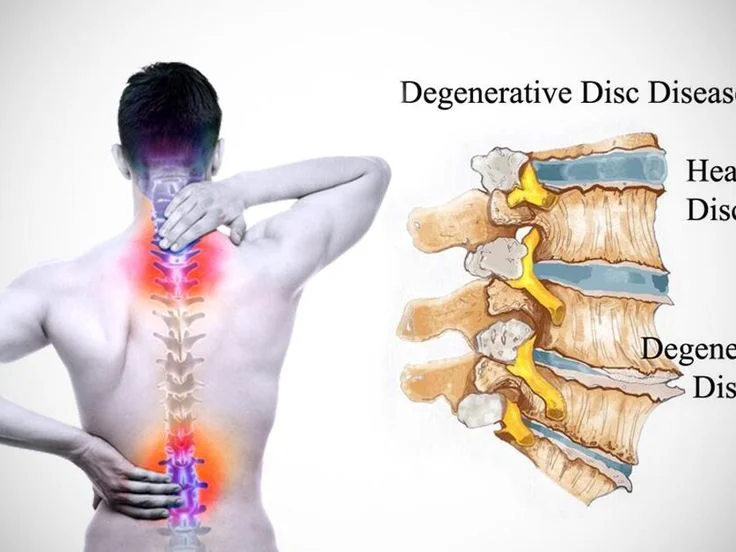
The cervical spine contains intervertebral discs that act as shock absorbers between the vertebrae.
These discs help distribute forces and allow smooth spinal movement during physical activity.
During intense strength training, particularly when lifting heavy weights with poor posture, repetitive spinal loading may place excessive pressure on the cervical discs.
Over time, this stress may cause irritation, inflammation, or early disc degeneration.
Sports medicine research suggests that intense physical activity combined with improper biomechanics may contribute to disc irritation or nerve compression symptoms in athletes (Ansari et al., 2022).
Read in detail: Physiotherapy for Cervical Disc Degeneration: What Actually Works
Exercises that commonly contribute to disc stress include:
- heavy deadlifts with poor neck alignment
- overhead presses with excessive neck extension
- repetitive heavy shrugs
- improper bench press posture
When a cervical disc becomes irritated, it may press against nearby nerves that exit the spinal cord.
This can lead to symptoms not only in the neck but also in the shoulders or arms.
Common symptoms of cervical disc irritation include:
- radiating pain from the neck to the shoulder or arm
- numbness or tingling sensations in the arm or fingers
- weakness in the shoulder or upper limb
- reduced neck mobility
- pain that worsens during certain movements
If nerve compression is suspected, early physiotherapy assessment is important to prevent further progression of symptoms.
Read about : What is Cervical Facet Joint Pain, how it causes cervicogenic headaches and how to correct it naturally
Facet Joint Irritation
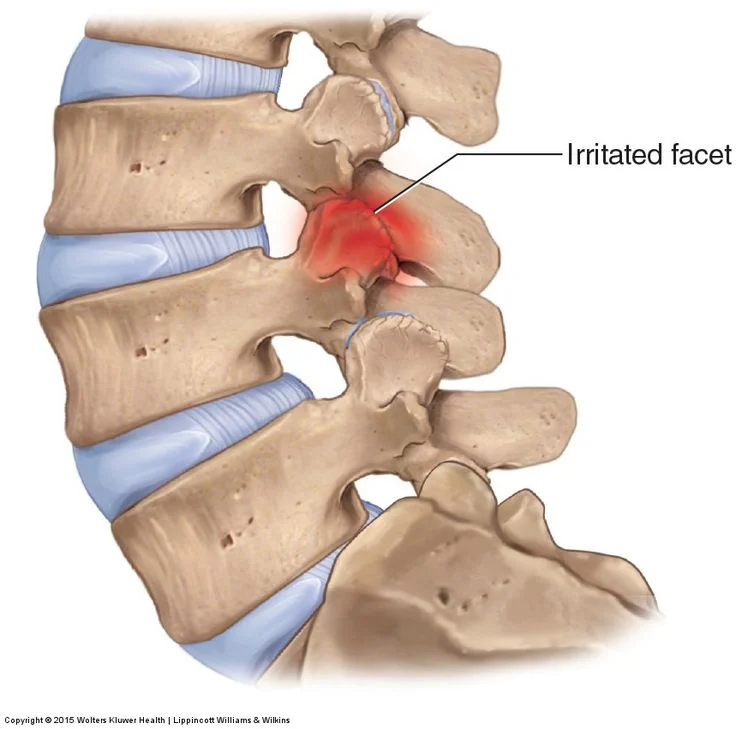
Facet joints are small joints located at the back of each vertebra.
They play an important role in guiding spinal movement and maintaining stability during activities such as bending, twisting, and lifting.
During gym workouts, especially when lifting heavy weights with poor technique, excessive compression or repetitive movement can irritate these joints.
Facet joint irritation often occurs due to:
- excessive neck extension during lifting
- poor posture during overhead exercises
- sudden twisting movements of the neck
- repeated high-load training without adequate recovery
When facet joints become inflamed, they can cause localized pain and stiffness in the neck.
Common symptoms of facet joint irritation include:
- sharp or aching pain on one side of the neck
- pain during neck rotation or extension
- stiffness when turning the head
- pain that worsens after prolonged activity
- localized tenderness near the cervical spine
Facet joint irritation is commonly treated with physiotherapy, posture correction, and controlled mobility exercises to restore normal movement patterns and reduce joint stress.
Read about: What Is Cervical Myofascial Pain Syndrome And How To Relieve Trigger Points
Myofascial Trigger Points

A Lesser-Known Cause of Gym Neck Pain
Another common but often overlooked cause of neck pain in gym enthusiasts is myofascial trigger points.
Trigger points are tight knots that develop within muscle fibers due to overuse, poor posture, or muscle fatigue. These points can cause both localized pain and referred pain in nearby areas.
In gym enthusiasts, trigger points commonly develop in muscles such as:
- upper trapezius
- levator scapulae
- sternocleidomastoid
These trigger points may produce symptoms such as:
- persistent neck tightness
- headaches originating from the neck
- pain radiating toward the shoulder or upper back
- tenderness when pressing specific muscle areas
Physiotherapy treatments such as manual therapy, stretching, and strengthening exercises can effectively relieve trigger points and restore normal muscle function.
Read in detail about: What is Cervical Spondylosis? The Truth Behind Chronic Neck Pain
Common Gym Technique Mistakes That Cause Neck Pain
Many cases of neck pain in gym enthusiasts are not caused by the exercises themselves but by small technique mistakes that place excessive strain on the cervical spine.
These errors often go unnoticed, especially among beginners or individuals lifting heavier weights without professional guidance.
From a physiotherapy perspective, correcting these movement patterns is one of the most effective ways to prevent neck injuries and improve exercise safety.
Looking Up During Deadlifts
One of the most common mistakes during deadlifts is lifting the head excessively upward while pulling the weight.
Many gym users believe that looking up helps maintain posture, but this actually causes hyperextension of the cervical spine, placing unnecessary stress on neck joints and muscles.
Proper deadlift technique requires the neck to remain neutral and aligned with the spine, with the gaze directed slightly toward the floor a few feet ahead.
Maintaining this alignment helps distribute forces evenly across the spine and reduces cervical strain.
Shrugging the Shoulders During Overhead Press
The overhead press is an excellent exercise for shoulder strength, but poor technique can overload the neck muscles.
A common error is shrugging the shoulders toward the ears during the lift. This activates the upper trapezius excessively and places tension on the cervical region.
When the upper trapezius becomes overactive, the smaller stabilizing muscles of the neck may become fatigued or strained.
Instead, gym enthusiasts should focus on:
- keeping the shoulders down and stable
- engaging the core muscles
- maintaining a neutral neck position
This ensures that the shoulders not the neck bear the primary load.
Excessive Neck Tension During Bench Press
Many individuals unknowingly tense their neck muscles while performing bench presses, particularly when lifting heavy weights.
This often happens when lifters:
- push their head into the bench
- hold their breath excessively
- lift weights beyond their current strength level
This tension causes the cervical muscles to contract forcefully, leading to muscle fatigue and stiffness after workouts.
Proper bench press technique should involve:
- keeping the neck relaxed
- stabilizing the shoulders
- maintaining controlled breathing during the lift
Overloading the Trapezius with Heavy Shrugs
Heavy barbell or dumbbell shrugs are frequently used to build the trapezius muscles.
However, excessive loading during shrugs can cause dominance of the upper trapezius muscle, leading to chronic neck tightness.
When the upper trapezius becomes overly dominant, it can disturb the balance between the neck, shoulder, and upper back muscles.
Physiotherapists often recommend balancing shrug exercises with movements that strengthen the middle and lower trapezius muscles, such as:
- face pulls
- reverse fly exercises
- scapular retraction drills
This balanced approach helps maintain proper shoulder and neck mechanics.
Poor Breathing Mechanics During Heavy Lifts
Another overlooked factor that contributes to neck pain is poor breathing technique during strength training.
Many gym users unconsciously tighten their neck and shoulder muscles while holding their breath during heavy lifts. This creates unnecessary tension in the cervical region.
Proper breathing technique involves:
- inhaling before initiating the lift
- exhaling during the exertion phase
- keeping the neck relaxed throughout the movement
Good breathing mechanics improve muscular coordination and reduce stress on the neck muscles.
Lack of Upper Back Strength
Weakness in the upper back and scapular stabilizing muscles is another major contributor to neck pain.
When muscles such as the middle trapezius and rhomboids are weak, the neck muscles compensate during upper body exercises. Over time, this imbalance can lead to chronic tension and discomfort.
Strengthening exercises such as rows, face pulls, and scapular stabilization drills can help restore muscular balance and reduce cervical strain.
Read in detail about: What is Cervical Spondylosis? The Truth Behind Chronic Neck Pain
Physiotherapy Assessment for Gym-Related Neck Pain
Physiotherapists evaluate several factors when assessing neck pain.
Postural Analysis
Common findings include:
- forward head posture
- rounded shoulders
- tight chest muscles
Muscle Strength Testing
Particular attention is given to:
- deep cervical flexors
- scapular stabilizers
- upper back muscles
Mobility Assessment
Restricted mobility in the thoracic spine or shoulder joints may contribute to cervical strain.
Movement Pattern Evaluation
Physiotherapists may observe how patients perform exercises such as:
- deadlifts
- overhead presses
- rows
to identify biomechanical errors.
Read about: Effective Neck Pain Exercises At Home: A Complete Guide to Relief and Improved Mobility
Evidence-Based Physiotherapy Treatments
Deep Neck Flexor Training
Targeted strengthening of deep cervical muscles improves spinal stability and reduces pain.
Clinical studies show that deep cervical flexor exercises improve endurance and reduce neck pain in patients with cervical dysfunction.
Cervical Stabilization Exercises
Cervical stabilization programs focus on improving control and posture.
Research indicates these exercises reduce disability and improve function in individuals with chronic neck pain (Karlsson et al., 2021).
Progressive Strength Training
Strength training can actually reduce neck pain when performed correctly.
Research shows that progressive resistance training improves neck muscle function and decreases pain intensity (Andersen et al., 2024).
Movement Retraining
Teaching correct lifting posture is an important part of physiotherapy rehabilitation.
Maintaining a retracted neck position during lifting improves spinal alignment and muscle activation.
Also read: How to Relieve Neck Tightness Without Equipment
Physiotherapy Exercises for Gym-Related Neck Pain
Physiotherapists often recommend exercises that improve cervical stability, upper back strength, and posture control.
These exercises help reduce strain on the neck during gym workouts and improve overall spinal alignment.
Neck Retraction Against Wall

This exercise improves neck posture and cervical spine stability, especially for individuals who develop forward head posture due to gym training or prolonged desk work.
Steps:
- Stand with your back and head against a wall.
- Keep your shoulders relaxed and spine neutral.
- Gently pull your head backward so the back of your head touches the wall without tilting upward.
- Hold for 5 seconds.
- Repeat 10–12 repetitions.
This exercise strengthens muscles responsible for maintaining proper cervical alignment and helps reduce neck strain during weightlifting.
Postural correction exercises that improve cervical alignment have been shown to reduce neck pain and improve muscular endurance (Falla et al., 2018).
Scapular Retraction Exercise

This exercise strengthens the upper back muscles and scapular stabilizers, which play an important role in supporting the cervical spine.
Weak scapular muscles often lead to excessive upper trapezius activation, which contributes to neck tension during exercises such as shoulder presses or rows.
Steps:
- Sit or stand upright.
- Pull your shoulder blades backward and slightly downward.
- Hold for 5 seconds.
- Relax and repeat 10–12 repetitions.
Strengthening scapular stabilizers improves shoulder mechanics and reduces stress on the neck during upper body exercises.
Thoracic Extension Exercise
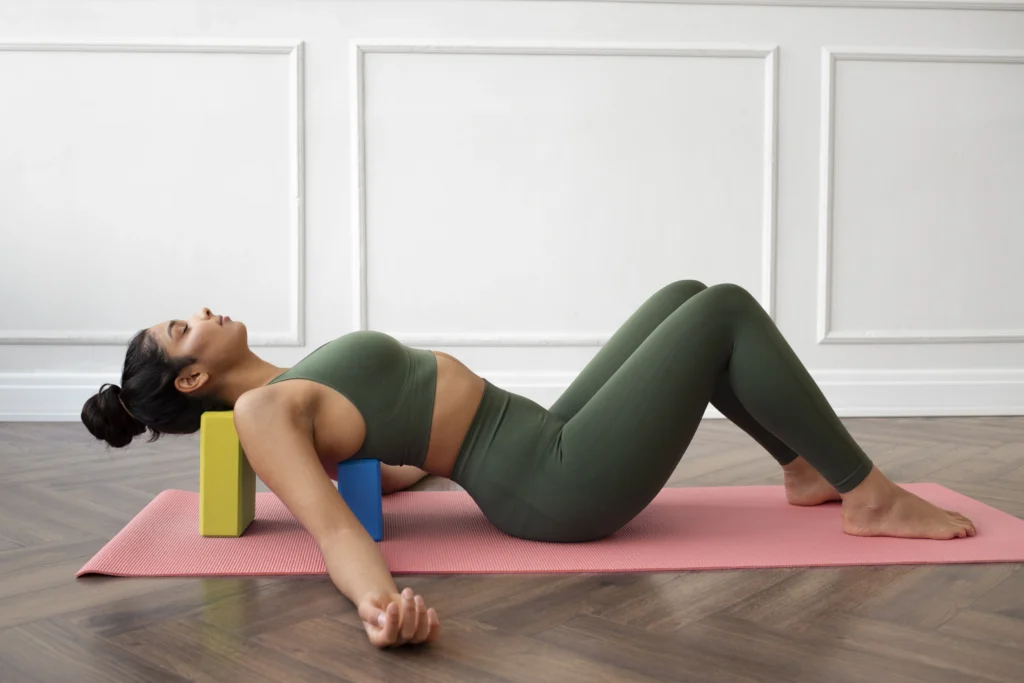
Limited mobility in the thoracic spine (upper back) often forces the cervical spine to compensate during lifting movements.
Improving thoracic mobility helps distribute movement more evenly across the spine.
Steps:
- Sit upright with your hands behind your head.
- Slowly extend your upper back over the back of the chair or a foam roller.
- Hold for 3–5 seconds.
- Repeat 8–10 times.
Research in spinal biomechanics indicates that improving thoracic mobility can significantly reduce cervical spine loading during upper body movements (Sahrmann et al., 2017).
Deep Neck Flexor Lift

This is a clinical physiotherapy exercise used to activate the deep stabilizing muscles of the cervical spine.
Steps:
- Lie on your back with your knees bent.
- Gently lift your head about 2–3 cm off the surface while keeping the chin slightly tucked.
- Hold the position for 5 seconds.
- Slowly lower your head.
- Repeat 8–10 repetitions.
This exercise strengthens deep cervical stabilizers and improves endurance of the neck muscles.
Deep neck muscle training has been shown to improve cervical stability and reduce chronic neck pain symptoms.
Quadruped Cervical Stabilization Exercise

This advanced physiotherapy exercise improves neck stability during functional movements, making it particularly useful for athletes and gym enthusiasts.
Steps:
- Start in a quadruped position (hands and knees).
- Keep the spine neutral and gaze toward the floor.
- Slowly extend one arm forward while maintaining neck alignment.
- Hold for 5 seconds.
- Alternate arms and repeat 8-10 repetitions.
This exercise activates the neck, upper back, and core muscles simultaneously, improving coordination and spinal control during training movements.
Learn About: The Ultimate Neck Stretch Routine for Desk Workers in 2026
Physiotherapy Tip
Gym enthusiasts should perform these exercises 3-4 times per week, particularly on rest days or during warm-up sessions.
Consistent strengthening of cervical and scapular stabilizing muscles can significantly reduce the risk of neck strain, muscle fatigue, and postural dysfunction during workouts.
Read About: How to Choose the Right and Best Pillow for Neck Pain
Prevention Tips for Gym Enthusiasts
Warm Up Properly
Include:
- shoulder mobility exercises
- thoracic spine movements
- resistance band activation drills
Maintain Neutral Neck Alignment
Always keep the neck aligned with the spine during lifts.
Increase Training Load Gradually
Avoid rapid increases in training intensity.
Strengthen the Upper Back
Exercises such as rows and face pulls improve shoulder stability and reduce cervical strain.
Improve Daily Posture
Maintaining proper posture during desk work and smartphone use can significantly reduce neck stress.
Read in detail about: How to Fix Upper Crossed Syndrome Naturally
When to Seek Professional Help
Consult a healthcare professional if you experience:
- pain radiating into the arms
- numbness or tingling
- weakness in the hands
- severe stiffness
- pain lasting longer than two weeks
Early physiotherapy intervention can prevent long-term complications.
Read more: Cervical Vertigo Explained: Why Neck Pain Make You Feel Dizzy
Advice From Our Physiotherapists
Many gym-related neck injuries are preventable with proper technique, balanced muscle training, and gradual progression of weights.
If neck pain occurs during workouts, it is important to:
- stop the exercise temporarily
- review lifting technique
- strengthen supporting muscles
- consult a physiotherapist if pain persists
Early correction of technique errors can significantly reduce the risk of long-term cervical spine problems.
Read about: Which Is The Best Sitting Posture To Avoid Neck Pain And How To Achieve It
Clinical Insight
In clinical practice, neck pain in gym enthusiasts often involves a combination of these conditions rather than a single injury.
For example, a person may experience cervical muscle strain along with trigger points or mild disc irritation.
Early recognition of symptoms and proper training technique are key factors in preventing more serious cervical spine problems.
Regular physiotherapy assessment can help identify muscle imbalances, posture problems, and movement errors before they develop into long-term injuries.
Read in detail: Best Desk Setup to Reduce Neck and Back Pain
Final Thoughts
Neck pain in gym enthusiasts is often preventable. Most cases result from poor lifting technique, muscle imbalance, and excessive training loads.
By focusing on proper posture, balanced muscle development, and gradual progression, gym enthusiasts can significantly reduce the risk of cervical injuries.
A fundamental principle in physiotherapy is simple:
Train the body as a coordinated system rather than focusing only on individual muscles.
When the neck, shoulders, and upper back function together, the cervical spine remains stable and protected during exercise.
Read About: Best Sleeping Position for Neck Pain: A Physiotherapist’s Complete Guide
Frequently Asked Questions
1. Can weightlifting cause neck pain?
Yes, weightlifting can cause neck pain if exercises are performed with poor posture, excessive weight, or improper technique. Movements such as deadlifts, shoulder presses, and heavy shrugs can strain the cervical spine if the neck is not kept in a neutral position.
2. Why does my neck hurt after gym workouts?
Neck pain after gym workouts usually occurs due to muscle strain, poor lifting posture, weak neck stabilizing muscles, or excessive upper trapezius activation during exercises.
3. Should I stop going to the gym if I have neck pain?
Not necessarily. Mild neck pain often improves with exercise modification, proper warm-up, and physiotherapy exercises. However, if the pain is severe, radiates to the arms, or causes numbness, medical evaluation is recommended.
4. Which gym exercises are most likely to cause neck pain?
Exercises that commonly trigger neck pain include overhead shoulder presses, deadlifts with improper posture, heavy shrugs, and bench presses performed with excessive neck tension.
5. How can physiotherapy help with gym-related neck pain?
Physiotherapy helps by identifying muscle imbalances, correcting posture, improving cervical spine stability, and teaching safe movement patterns during gym exercises.
6. How long does gym-related neck pain take to recover?
Mild cervical muscle strain usually improves within a few days to a week with rest and physiotherapy exercises. More complex conditions such as disc irritation may require longer treatment and professional guidance.
Stay tuned with us for more health related topics.
Follow us on LinkedIn and Instagram for more.
More Read


Medical Disclaimer!
This article has been reviewed and written under the guidance of our Head Physiotherapist, Dr. Kruti Raj (PT, MUHS,CPT,CMPT). The information shared is intended for educational purposes only and should not be considered a substitute for personalized medical advice, diagnosis, or treatment.
Please consult us or any other qualified healthcare professional before beginning any exercise program, especially if you are experiencing pain, recovering from injury, or managing a medical condition.


