

Neck pain is one of the most common conditions I manage as a physiotherapist, and in recent years, more patients are asking about trigger point injections (TPIs) as a solution.
Many come in hoping for a quick fix after trying exercises, posture correction, or medications with limited success.
The truth is more nuanced. Trigger point injections can be helpful, but only in the right context and with the right expectations.
In this article, I will walk you through what they actually do, how effective they are according to recent research, and where they fit within a proper physiotherapy-led recovery plan.
Read about our Complete Neck Pain Guide : Causes, Symptoms, Exercises and Treatment
Quick Answer
Do trigger point injections work for neck pain?
Yes, trigger point injections can provide effective short-term relief for neck pain caused by muscle trigger points. They help reduce pain, muscle tightness, and improve mobility. However, they do not treat the root cause, and long-term relief depends on physiotherapy, exercise, and correcting posture and movement patterns.
Read about: What Is Cervical Myofascial Pain Syndrome And How To Relieve Trigger Points
Key Takeaways
- Trigger point injections provide effective short-term relief for neck pain
- They work best for myofascial or muscle-related neck pain
- The needle effect plays a major role, sometimes more than the injected substance
- Long-term relief requires physiotherapy, exercise, and posture correction
- They are not a permanent solution for chronic or recurrent neck pain
- Best outcomes occur when combined with a structured rehabilitation program
Read about: Early Signs of Cervical Spine Damage You Should Never Ignore
Understanding Trigger Points in Neck Pain
What are trigger points?
Trigger points are sensitive, tight spots within muscle fibers that can produce both local pain and referred pain. In the neck, they are commonly found in:
- Upper trapezius
- Levator scapulae
- Cervical paraspinal muscles
They are not just simple knots. Research shows they are biochemically active areas associated with altered muscle activation and pain signaling. Shah et al. (2015)
Why do trigger points develop?
From a clinical perspective, trigger points develop due to a combination of:
- Sustained poor posture such as forward head posture
- Repetitive strain from desk work or mobile use
- Muscle imbalance and weakness
- Stress and lack of recovery
A lesser known insight from recent literature is that trigger points may involve fascia and nervous system sensitization, not just muscle tightness. Dommerholt et al. (2024)
Read about: The Most Effective McKenzie Exercises For Neck Pain
What Are Trigger Point Injections?

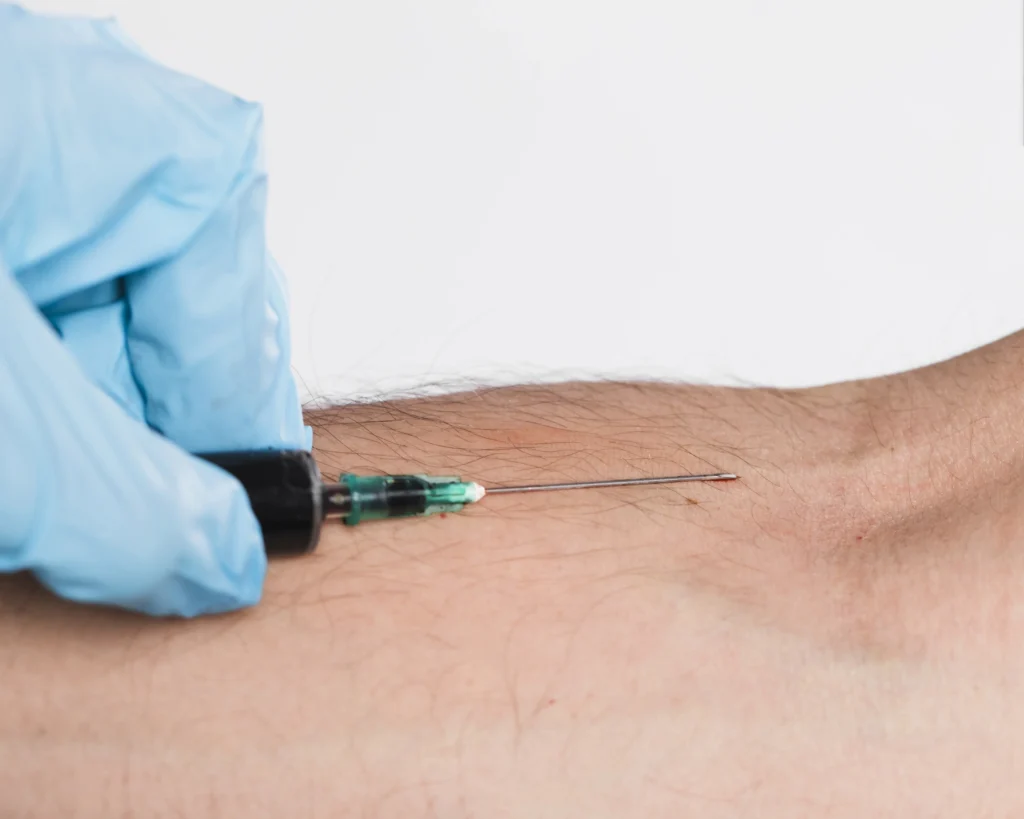
Trigger point injections involve inserting a needle directly into the trigger point. The injection may contain:
- Local anesthetic such as lidocaine
- Saline
- Occasionally corticosteroids
The goal is to reduce pain and restore normal muscle function.
Interestingly, research shows that the mechanical effect of the needle itself plays a major role, which is why dry needling often produces similar results. Cummings and White (2001)
Read about : 15 Common Causes of Neck Pain You Should Know
How Do Trigger Point Injections Work?
Physiological Mechanisms
Trigger point injections work through a combination of mechanical, neurological, and biochemical effects.
What makes them interesting from a physiotherapy perspective is that their benefit is not due to a single factor, but rather a multi-layered response within the muscle and nervous system.
Let’s break this down in more depth.
Read more: Is Cervical Traction For Neck Pain Really Effective
Mechanical Disruption
When the needle enters a trigger point, it physically disrupts the taut band of contracted muscle fibers.
This has several effects:
- Breaks the cycle of sustained muscle contraction
- Reduces local stiffness within the muscle
- Helps “reset” the shortened sarcomeres (muscle units)
Trigger points are often described as areas where muscle fibers are stuck in a persistent contracted state due to abnormal motor endplate activity.
The needle acts almost like a micro-release tool.
Lesser known insight:
Even without injecting any substance, this mechanical disruption alone can reduce pain, which is why dry needling often produces similar results.
Also Read: Ultimate 6 Weeks Neck Rehabilitation Exercises For Pain Relief
Neurological Modulation
One of the most important effects of trigger point injections is their impact on the nervous system.
Trigger points are associated with:
- Increased sensitivity of local nociceptors (pain receptors)
- Enhanced pain signaling to the spinal cord
- Central sensitization in chronic cases
When the needle stimulates the trigger point:
- It alters abnormal nerve signaling
- Reduces peripheral sensitization
- Can interrupt the pain-spasm-pain cycle
Additionally, local anesthetics (if used) temporarily block nerve conduction, providing immediate pain relief.
Clinical perspective:
Pain reduction is not just local. It often involves changes in how the brain processes pain, which explains why some patients feel relief beyond the injection site.
Also Read : Neck Cracking: Benefits, Risks, and the Truth About Stroke
Biochemical Changes at the Trigger Point
Trigger points are not just tight muscles, they are biochemically active regions.
Studies have shown elevated levels of:
- Substance P
- Calcitonin gene-related peptide (CGRP)
- Inflammatory mediators
These chemicals contribute to:
- Pain sensitivity
- Muscle contraction
- Reduced blood flow
Trigger point injections help:
- Dilute these inflammatory substances
- Normalize the chemical environment
- Reduce local irritation
Lesser known fact:
This is why even saline injections can be effective, as they help wash out sensitizing chemicals.
Learn About: The Ultimate Neck Stretch Routine for Desk Workers in 2026
Improved Circulation
Trigger points are often located in areas of local ischemia, meaning reduced blood flow.
This leads to:
- Oxygen deprivation
- Accumulation of metabolic waste
- Increased pain sensitivity
The injection process helps by:
- Increasing local blood flow
- Delivering oxygen and nutrients
- Removing metabolic waste products
This improves tissue health and supports recovery.
Clinical insight:
Improved circulation is one reason why patients often feel a sense of “release” or warmth after treatment.
Read about: How to Relieve Morning Neck Stiffness Naturally
Local Twitch Response
A local twitch response is a brief, involuntary contraction of the muscle fibers when the needle hits the trigger point.
This response is considered clinically significant because:
- It indicates accurate targeting of the trigger point
- It is associated with better pain reduction outcomes
- It may help normalize muscle activity
The twitch response is thought to reflect a spinal reflex mechanism, helping reset abnormal motor patterns.
Important note:
Not all successful treatments produce a visible twitch, but when present, it often correlates with better results.
Read about: The Best Physiotherapy Exercises for Cervical Spondylosis Relief
Reflex Relaxation and Muscle Length Restoration
After the injection and stimulation:
- Muscle tone decreases
- The taut band relaxes
- Muscle length gradually normalizes
This allows:
- Improved flexibility
- Reduced stiffness
- Better movement patterns
However, without active rehabilitation, this effect may be temporary.
Read more: Cervical Myelopathy: The Hidden Neck Condition Affecting Your Walking
Central Nervous System Effects
In chronic neck pain, the issue is often not just in the muscle but in the central nervous system.
Trigger point injections may:
- Reduce central sensitization temporarily
- Improve pain thresholds
- Allow better tolerance to movement
Lesser known insight:
This is why injections can sometimes produce rapid relief even in long-standing pain, but the effect may not last without addressing underlying factors.
Read in detail about: How to Fix Upper Crossed Syndrome Naturally
The Role of the Injected Substance
Interestingly, research shows that:
- Local anesthetics provide immediate relief
- Steroids may reduce inflammation in selected cases
- Saline can be equally effective in some patients
This reinforces the idea that:
The needle effect and neuromuscular response are often more important than the drug itself.
Read in detail: Physiotherapy for Cervical Disc Degeneration: What Actually Works
Why These Effects Are Temporary
Despite all these mechanisms, trigger point injections do not address:
- Poor posture
- Muscle weakness
- Movement dysfunction
- Repetitive strain
So while they reduce pain, they do not remove the cause of trigger point formation.
Read about : What is Cervical Facet Joint Pain, how it causes cervicogenic headaches and how to correct it naturally
Final Clinical Interpretation
Trigger point injections work by:
- Physically releasing tight muscle fibers
- Modulating pain signals
- Improving circulation and tissue chemistry
- Resetting abnormal muscle activity
This combination can provide significant relief, especially in the short term.
However, without physiotherapy and movement correction, the same patterns that caused the trigger point will often lead to its return.
In simple terms:
Trigger point injections can “open the door” to recovery, but rehabilitation is what keeps it open.
Read in detail about: Cervical Radiculopathy: Why Neck Nerve Pain Travels to the Arm
What Does Recent Research Say?
Short term pain relief
There is strong evidence that trigger point injections provide short term relief.
A recent systematic review found that trigger point injections significantly reduced pain compared to standard medical management. Kocak et al. (2023)
Another study showed they were more effective than NSAIDs for acute myofascial pain. Roldan et al. (2023)
Clinical interpretation:
Trigger point injections are effective for reducing pain quickly, especially during flare ups.
Comparison with dry needling
Many patients ask whether injections are better than dry needling.
Research shows:
- Slightly better short term pain relief with injections
- No significant difference in long term outcomes. Liu et al. (2021)
This suggests that the needle stimulus is more important than the injected substance.
Long term effectiveness
This is where expectations need to be realistic.
Several reviews report:
- No strong evidence of sustained long term benefit
- Pain relief lasting weeks to a few months Fitzgerald et al. (2024)
Guideline reviews also highlight that evidence remains inconclusive for chronic use. Oregon Health Authority (2024)
Functional improvement
Pain relief does not always translate into better movement.
Studies show:
- Inconsistent improvement in mobility and disability
- Limited long term functional gains Tough et al. (2023)
This highlights the importance of combining injections with rehabilitation.
Read in detail: Whiplash Injury After An Accident? Here’s Treatment And Expert Rehab Guide
When Do Trigger Point Injections Work Best?
From both research and clinical experience, TPIs are most useful when:
- Pain is clearly muscular and localized
- Trigger points are palpable and reproducible
- Pain is severe enough to limit exercise
- They are used alongside physiotherapy
Read in detail about: Cervical Radiculopathy: Why Neck Nerve Pain Travels to the Arm
When They Are Less Effective
Trigger point injections may not work well when:
- Pain is due to disc issues or nerve compression
- There is central sensitization
- Posture and movement habits are not corrected
- There is no follow up rehabilitation
Read more: Cervical Disc Bulge: Causes, symptoms and treatment
Risks and Safety Considerations
Trigger point injections are generally safe but not risk free.
Possible side effects include:
- Temporary soreness
- Bruising
- Infection
- Rare complication such as pneumothorax in upper trapezius injections Tough et al. (2023)
Read about: Effective Neck Pain Exercises At Home: A Complete Guide to Relief and Improved Mobility
A Physiotherapist’s Perspective: What Really Matters

This is where I want to be very clear.
Injections reduce symptoms. They do not fix the root cause.
Without addressing:
- Muscle weakness
- Postural habits
- Movement patterns
…the pain often returns.
Read about: Yoga for Neck Pain: Poses That Actually Work
The Ideal Treatment Approach
In clinical practice, the most successful outcomes come from a structured, phase-wise rehabilitation plan rather than relying on a single intervention like injections.
Trigger point injections can play a role, but only as part of a broader strategy that restores movement, builds strength, and prevents recurrence.
Let’s expand each phase the way I would guide a patient through recovery.
Phase 1: Pain Reduction and Symptom Control
This phase focuses on calming the irritated tissues and reducing pain enough to allow movement.
Trigger point injections if needed
Trigger point injections may be used when pain is severe and limiting basic movement or sleep.
They help reduce muscle hyperactivity and create a window where rehabilitation becomes possible.
However, they should be used selectively, not routinely.
Manual therapy
Hands-on techniques such as soft tissue release, myofascial release, and gentle joint mobilizations can help:
- Reduce muscle tension
- Improve local circulation
- Decrease pain sensitivity
From a physiotherapy standpoint, manual therapy also helps patients feel immediate relief, which improves confidence in movement.
Read more on : Manual Therapy for Neck Pain: A Physiotherapist’s Evidence Based Guide
Heat or relaxation techniques
Heat therapy improves blood flow and reduces muscle stiffness. It is particularly useful for:
- Chronic tightness
- Morning stiffness
Relaxation techniques such as diaphragmatic breathing are often overlooked but highly effective.
They help reduce sympathetic nervous system overactivity, which is commonly elevated in chronic neck pain.
Clinical tip:
This phase should be short. Staying too long in passive treatment delays recovery.
Read more: Heat Or Cold Therapy for Neck Pain: What Actually Works?
Phase 2: Restore Mobility
Once pain is manageable, the focus shifts to restoring normal movement.
Gentle stretching
Targeted stretching helps release shortened muscles such as:
- Upper trapezius
- Levator scapulae
- Pectoralis minor
Stretching should be:
- Slow and controlled
- Pain-free or mildly uncomfortable
- Combined with breathing
Range of motion exercises
These include:
- Neck rotations
- Side bending
- Flexion and extension movements
The goal is to:
- Restore joint movement
- Reduce stiffness
- Improve proprioception
Lesser known fact:
Restricted movement is not always due to tight muscles. Sometimes it is due to protective guarding by the nervous system, which improves with gradual exposure to movement.
Also read: How to Relieve Neck Tightness Without Equipment
Phase 3: Strength Correction and Motor Control
This is the most critical phase for long-term recovery, yet the most commonly neglected.
Deep neck flexor training
These muscles are essential for cervical stability but are often weak in people with neck pain.
Exercises include:
- Chin tucks (cranio-cervical flexion)
- Low-load endurance holds
Benefits:
- Improves posture
- Reduces strain on superficial muscles
- Enhances spinal support
Scapular stabilization
The neck does not function in isolation. The shoulder blade plays a key role.
Key muscles targeted:
- Middle and lower trapezius
- Serratus anterior
Exercises may include:
- Scapular retraction
- Wall slides
- Resistance band work
Clinical insight:
Many patients have overactive upper trapezius but weak lower stabilizers. Correcting this imbalance is essential to prevent recurrence.
Learn: How to do Chin Tucks for Neck Pain Relief and Posture Correction
Phase 4: Prevention and Long-Term Control
This phase ensures that pain does not keep coming back.
Ergonomic correction
Workstation setup is crucial, especially for desk workers.
Key adjustments:
- Screen at eye level
- Chair supporting lumbar spine
- Keyboard and mouse at elbow height
Even small changes can significantly reduce neck load over time.
Activity modification
Patients need to understand how daily habits affect their neck.
This includes:
- Limiting prolonged static postures
- Taking movement breaks every 30 to 45 minutes
- Avoiding sustained forward head posture
Load management
This is a concept many people are unaware of.
It involves:
- Gradually increasing activity levels
- Avoiding sudden spikes in physical or work-related load
- Balancing activity with recovery
Example:
Suddenly increasing gym intensity or working long hours without breaks can reactivate trigger points.
Read in detail: Best Desk Setup to Reduce Neck and Back Pain
Why Exercise-Based Physiotherapy Matters Most
While injections and passive treatments can reduce pain, exercise is what creates lasting change.
Exercise-based physiotherapy:
- Improves muscle strength and endurance
- Restores movement patterns
- Reduces recurrence rates
- Addresses the root cause of pain
Strong evidence supports exercise therapy as the most effective long-term intervention for neck pain. Gross et al. (2015)
Final Clinical Insight
If I had to simplify the entire approach:
- Phase 1 reduces pain
- Phase 2 restores movement
- Phase 3 builds resilience
- Phase 4 prevents relapse
Trigger point injections may help in Phase 1, but real recovery happens in Phases 2, 3, and 4.
That is the difference between temporary relief and long-term results.
Read About: Best Sleeping Position for Neck Pain: A Physiotherapist’s Complete Guide
Lesser Known Facts About Trigger Point Injections
- Saline injections can be as effective as anesthetic
- The twitch response is linked to better outcomes
- Chronic pain often involves brain sensitization
- Repeated injections may reduce effectiveness
- Exercise after injection improves results significantly
Read About: How to Choose the Right and Best Pillow for Neck Pain
Final Verdict
Trigger point injections do work, but only within limits.
They are:
- Effective for short term pain relief
- Useful for enabling rehabilitation
They are not:
- A permanent solution
- Effective for all types of neck pain
The best results happen when injections are used as part of a comprehensive physiotherapy plan.
Read about: Neck And Jaw Pain Together? Here’s The Full Clinical Picture
Frequently Asked Questions
1. How quickly do trigger point injections work?
Relief can begin within minutes to hours, especially when local anesthetic is used.
2. How long do trigger point injections last?
The effects usually last from a few weeks to a few months depending on follow-up treatment and lifestyle changes.
3. Are trigger point injections better than dry needling?
They may provide slightly faster relief, but long-term results are similar to dry needling.
4. Are trigger point injections safe?
Yes, they are generally safe when performed by trained professionals, though minor side effects like soreness can occur.
5. Can trigger point injections cure neck pain permanently?
No, they relieve symptoms but do not address underlying causes like posture and muscle imbalance.
6. How many sessions are needed?
Most patients require one to three sessions depending on severity and response to treatment.
7. Can I exercise after trigger point injections?
Yes, exercise is strongly recommended to improve long-term outcomes and prevent recurrence.
8. Who should avoid trigger point injections?
People with infections at the injection site, bleeding disorders, or certain medical conditions should consult a doctor before treatment.
Stay tuned with us for more health related topics.
Follow us on LinkedIn and Instagram for more.
More Read






Medical Disclaimer!
This article has been reviewed and written under the guidance of our Head Physiotherapist, Dr. Kruti Raj (PT, MUHS,CPT,CMPT). The information shared is intended for educational purposes only and should not be considered a substitute for personalized medical advice, diagnosis, or treatment.
Please consult us or any other qualified healthcare professional before beginning any exercise program, especially if you are experiencing pain, recovering from injury, or managing a medical condition.