
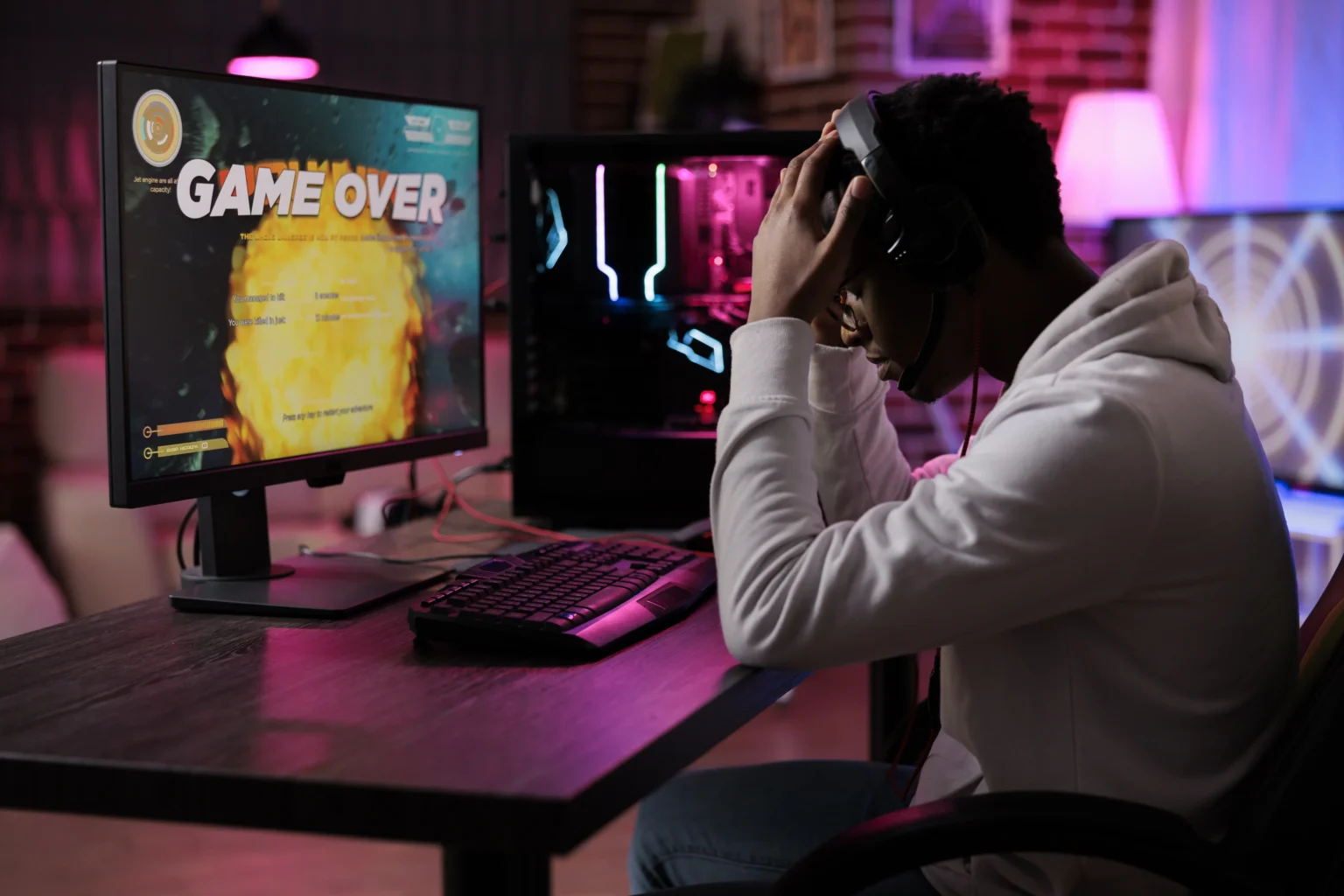

If you ask most gamers about headaches, they will say it is because of screen time. But if you frequently experience a headache after gaming, that explanation sounds convenient, it is also incomplete.
In my clinical experience as a physiotherapist, headaches after gaming are rarely caused by just one factor.
They usually develop slowly from a combination of posture, eye strain, hydration habits, and nervous system overload.
What makes it tricky is that these factors build up quietly. By the time the headache appears, your body has already been under stress for hours.
Interestingly, recent research is now supporting what we observe clinically.
Prolonged gaming sessions have been linked with increased reports of neck pain, eye fatigue, and headaches, especially when sessions extend beyond a few hours (BMC Sports Science, Medicine and Rehabilitation, 2024)
So if you are experiencing headaches after gaming, it is not random. Your body is responding to accumulated strain.
Headaches after long gaming sessions are usually caused by a combination of eye strain, neck muscle tension, dehydration, and staying in one position for too long. These factors build up gradually and lead to discomfort. The most effective way to prevent them is by improving posture, taking regular breaks, staying hydrated, and keeping your eyes and neck active during gameplay.
- Gaming headaches are usually caused by combined strain, not just screen exposure
- Neck posture and eye fatigue are the most common triggers
- Dehydration and lack of breaks silently worsen symptoms
- Early warning signs appear before the actual headache starts
- Small lifestyle and posture changes can prevent most headaches
A situation I see very often in clinic
I remember a young gamer who came to me with daily evening headaches. He thought it was because of stress or lack of sleep.
But when we spoke in detail, a pattern showed up. His headaches always started after a few hours of continuous gaming.
He wasn’t doing anything “wrong” in an obvious way.
But he was not taking breaks, barely drinking water, and his posture was slightly forward the entire time.
We made small changes. Nothing drastic. Within two weeks, his headaches reduced a lot.
This is something I see quite often. The issue is usually not serious, but it builds up quietly over time.
What actually happens inside your body during long gaming sessions

Let us break this down in a simple way.
When you are gaming for long hours, three major systems are working continuously without proper recovery:
- Your eyes are locked into near focus
- Your neck and shoulder muscles are holding a fixed position
- Your brain is in a constant alert state
Over time, these systems stop working efficiently. That is when symptoms begin to appear.
One important point that most people do not realize is this.
The headache itself is not the problem. It is the final signal that your body has reached its tolerance limit.
Common Causes of Headache After Gaming
Visual fatigue is more complex than you think
Many people think eye strain just means dry eyes. That is only part of the story.
When you focus on a screen for long periods, the muscles inside your eyes remain contracted to maintain focus.
At the same time, your eyes are constantly tracking movement and adjusting to contrast and brightness.
This creates fatigue in the visual system, not just on the surface of the eye.
Digital eye strain has been shown to affect a large percentage of screen users and is strongly associated with headaches, blurred vision, and difficulty focusing (Rosenfield, 2016)
Another recent study also highlights that visual fatigue involves internal eye muscle strain, which can directly contribute to headache patterns (Scientific Reports, 2025)
From a clinical perspective, patients often describe this as a pressure behind the eyes that gradually spreads to the forehead.
Neck muscles are working harder than you realize
Posture plays a huge role here.
Most gamers sit with their head slightly forward. It may not feel like much, but even a small forward shift increases the load on your neck muscles significantly.
Over time, these muscles remain in a semi-contracted state. Blood flow reduces, and metabolic waste starts to accumulate.
This leads to trigger points, especially in the muscles at the base of the skull.
These trigger points can refer pain to the head, creating what we call a cervicogenic headache.
Research has shown a strong relationship between neck muscle dysfunction and headache development (Falla et al., 2018)
One thing I often notice is that many gamers do not feel neck pain initially.
Instead, they feel headache first. The neck involvement becomes obvious only when examined closely.
Reduced blinking and dry eye response
During intense gameplay, your blink rate drops significantly.
This leads to faster evaporation of the tear film, causing dryness and irritation. The important part here is not just dryness itself.
The irritation activates sensory nerves around the eye, particularly those linked to the trigeminal nerve.
This nerve also plays a role in headache pathways.
So what starts as dry eye can gradually evolve into a headache if the exposure continues.
Dehydration quietly contributes
This is one of the simplest yet most overlooked factors.
Many gamers do not drink enough water during sessions.
Even mild dehydration can reduce blood flow efficiency and increase fatigue.
A study has shown that improving hydration can reduce headache intensity in individuals prone to headaches (Spigt et al., 2012)
In practice, I have seen cases where improving hydration alone significantly reduced headache frequency.
Your nervous system stays in high alert mode
Gaming, especially competitive gaming, keeps your brain highly engaged.
Your body remains in a state of alertness, with increased sympathetic activity.
This leads to increased muscle tension and reduced relaxation.
Over time, this contributes to tension-type headaches.
Another important aspect is mental fatigue. Continuous decision making and sensory input overload the brain, which lowers your tolerance to stress and pain.
Static posture is a bigger problem than movement
Most people assume that movement causes strain. In reality, lack of movement is often the issue.
When you sit in one position for a long time:
- Blood circulation reduces
- Muscles stiffen
- Joint mobility decreases
This creates a buildup of tension that eventually presents as a headache.
Sleep disruption makes everything worse
Late-night gaming can affect sleep quality. Poor sleep reduces your body’s ability to recover and increases sensitivity to pain.
Research has shown that gaming habits can influence sleep patterns, which in turn affects overall health and headache risk (Springer, 2024)
This creates a cycle where poor sleep leads to more headaches, and headaches further affect daily performance.
Types of headaches commonly seen in gamers
From a physiotherapy standpoint, these are the most common patterns:
- Tension-type headache, felt as a tight band around the head
- Cervicogenic headache, starting from the neck and moving to the head
- Visual fatigue headache, usually behind the eyes
- Migraine triggered by prolonged exposure in some individuals
Each type may feel slightly different, but they often overlap.
Early warning signs you should not ignore
Before a headache starts, your body usually gives signals:
- Mild stiffness in the neck
- Burning or dryness in the eyes
- Slight pressure in the forehead
- Difficulty concentrating
- Feeling unusually tired after gaming
Recognizing these signs early can help you prevent a full headache episode.
Quick self-check: Is your gaming causing headaches?
Before jumping to solutions, take a moment and check this.
- Do you feel stiffness in your neck after gaming?
- Do your eyes feel dry or tired?
- Do headaches start around the same time daily?
- Do you forget to drink water while gaming?
If you answered yes to even two of these, your current gaming habits may be contributing to your headaches.
How to prevent headaches while gaming
This is where small changes make a big difference.
Improve your posture setup
Make sure your screen is at eye level. Your back should be supported, and your feet should rest flat on the floor.
A simple check is this. If your chin is constantly moving forward, your posture needs correction.
Take structured breaks
Breaks should not be random.
For better results:
- Every 25 to 30 minutes, take a visual break
- Every 60 to 90 minutes, take a movement break
Not taking breaks has been associated with increased risk of eye strain and headaches (Neuropsychiatric Investigation, 2024)
Add simple neck movements
During breaks, include:
- Gentle chin tucks
- Neck rotations
- Shoulder rolls
These help restore blood flow and reduce muscle tension.
Stay consistently hydrated
Instead of drinking large amounts at once, take small sips regularly.
Do not wait until you feel thirsty. By then, dehydration has already started affecting your body.
Adjust your screen and lighting
Keep your screen brightness similar to the room lighting. Avoid extreme contrast between a bright screen and a dark room.
Maintain a comfortable distance from the screen, ideally about an arm’s length.
Train your eyes to relax
Every now and then, look at something far away. This relaxes the focusing muscles inside your eyes.
Also, make a conscious effort to blink normally.
Build long-term resilience
If you game regularly, strengthening your neck and upper back muscles is important.
Stronger muscles can handle prolonged activity better and are less likely to develop fatigue-related pain.
A simple daily routine to prevent gaming headaches
If you prefer something straightforward, follow this:
- Before gaming: Adjust your setup and drink a glass of water
- During gaming: Take short eye breaks every 25 to 30 minutes
- Every hour: Stand up and move your neck and shoulders
- After gaming: Do light stretching for your neck and upper back
- Before sleep: Avoid screens for at least 20 minutes
This is simple, but consistency matters more than complexity.
Simple do’s and don’ts for gamers
Do:
- Keep your screen at eye level
- Sit with proper back support
- Take regular breaks
- Stay hydrated
Don’t:
- Play continuously for hours without movement
- Ignore early signs like eye strain or stiffness
- Sit in a slouched position
- Depend only on painkillers
Lesser known triggers that often get missed
Some factors are not commonly discussed but can contribute:
- Wearing tight headphones for long periods
- Clenching your jaw during intense gameplay
- Playing in a cold environment that increases muscle stiffness
- Skipping meals during long sessions
These may seem minor, but over time they add to the overall load on your body.
Common myths about headache after gaming
Myth: It is only because of screen time
Reality: It is usually a mix of posture, muscle strain, and eye fatigue
Myth: A good gaming chair will solve the problem
Reality: Without movement and breaks, even the best chair will not help
Myth: Taking a tablet is enough
Reality: That only reduces symptoms, not the cause
Why quick fixes do not work
Painkillers may reduce symptoms temporarily, but they do not address the underlying causes.
If posture, muscle tension, and visual strain are not corrected, the headaches are likely to return.
This is why a physiotherapy-based approach focuses on identifying and correcting the root causes rather than just managing symptoms.
When you should seek professional help
Consider consulting a physiotherapist or healthcare professional if:
- Headaches are frequent or worsening
- Pain starts from the neck regularly
- You rely on medication often
- You notice increasing visual discomfort
Early intervention can prevent long-term issues.
Red flag symptoms you should not ignore
- Sudden severe headache that feels different from usual
- Headache with dizziness or blurred vision
- Weakness or numbness in arms
- Headache that wakes you from sleep
If you notice any of these, it is better to seek medical advice.
Final advice from a physiotherapy perspective
Gaming is not harmful by itself. The problem arises when your body is exposed to prolonged stress without recovery.
If you start paying attention to posture, movement, hydration, and visual habits, you will notice a significant improvement.
The goal is not to stop gaming. It is to make your body capable of handling it without discomfort.
Frequently Asked Questions
1. Why do I get headaches after gaming for long hours?
Headaches usually happen due to a mix of eye strain, neck muscle tension, dehydration, and sitting in the same position for too long.
2. Can poor posture really cause headaches while gaming?
Yes, forward head posture increases strain on neck muscles, which can lead to headaches that start from the neck and spread to the head.
3. How can I prevent headaches during gaming?
Maintain proper posture, take regular breaks, stay hydrated, and include simple neck and eye exercises during your sessions.
4. Are gaming headaches dangerous?
Most gaming headaches are not serious, but frequent or worsening headaches should be evaluated by a professional.
5. Does screen brightness affect headaches?
Yes, too much brightness or poor lighting can increase eye strain and trigger headaches.
6. How often should I take breaks while gaming?
Take eye breaks every 20 to 30 minutes and physical movement breaks every 60 to 90 minutes.
7. Can physiotherapy help with gaming headaches?
Yes, physiotherapy helps correct posture, reduce muscle tension, and improve movement patterns to prevent recurring headaches.
Stay tuned with us for more health related topics.
Follow us on LinkedIn and Instagram for more.
More Read


Medical Disclaimer!
This article has been reviewed and written under the guidance of our Head Physiotherapist, Dr. Kruti Raj (PT, MUHS,CPT,CMPT). The information shared is intended for educational purposes only and should not be considered a substitute for personalized medical advice, diagnosis, or treatment.
Please consult us or any other qualified healthcare professional before beginning any exercise program, especially if you are experiencing pain, recovering from injury, or managing a medical condition.


