If you have ever experienced sinus pressure along with a stiff or aching neck, you are not imagining it.
As a physiotherapist, I often see patients who are confused about whether their discomfort is coming from the sinuses, the neck, or both.
The connection exists, but it is not a simple one. It involves shared nerve pathways, biomechanics, posture, and breathing patterns.
Understanding this link can completely change how you approach treatment and recovery.
Read about our Complete Neck Pain Guide : Causes, Symptoms, Exercises and Treatment
Quick Answer
Yes, there is a connection between sinuses and neck pain, but it is usually indirect. Sinus inflammation can cause referred pain to the neck due to shared nerve pathways, while neck dysfunction can also mimic sinus symptoms like facial pressure and headaches.
Read about: Early Signs of Cervical Spine Damage You Should Never Ignore
Key Takeaways
- Sinuses and neck pain are connected through shared nerve pathways and biomechanical interactions.
- Sinus inflammation can cause referred pain in the neck, especially in the upper cervical region.
- Neck dysfunction can mimic sinus symptoms like facial pressure and headaches, leading to misdiagnosis.
- Upper cervical spine segments (C0 to C3) play a key role in both sinus and neck-related pain patterns.
- Poor posture and mouth breathing can worsen both sinus pressure and neck pain.
- Physiotherapy techniques such as manual therapy, muscle release, and breathing retraining can significantly improve symptoms.
- A combined treatment approach addressing both sinus health and neck function gives the best long-term results.
Read about : 15 Common Causes of Neck Pain You Should Know
Understanding Sinuses Beyond the Basics
Sinuses are air-filled cavities in the skull that help regulate pressure, filter air, and support immune defense.
When they become inflamed due to infection or allergy, pressure builds inside these spaces.
This pressure does not remain isolated in the face.
Because of anatomical and neurological connections, it can influence surrounding areas including the head and upper neck.
Read: Sore Throat and Stiff Neck: When to Worry
Can Sinus Problems Cause Neck Pain?

Yes, but not always directly.
A recent clinical study found that a large percentage of people with sinus-related headaches also experienced neck pain, along with measurable dysfunction in the upper cervical spine. (Petersen et al., 2025)
This highlights an important clinical insight. The neck is not just reacting to sinus pain. It is actively involved in the overall symptom pattern.
Read : How to Treat Neck Pain in Ankylosing Spondylitis
The Relationship Works Both Ways
One of the biggest gaps in most articles is this:
The sinus and neck relationship is bidirectional.
Sinus to Neck
- Inflammation in the sinuses activates facial nerves
- These signals travel to shared pathways in the brainstem
- The brain interprets this as neck discomfort or stiffness
Neck to Sinus-Like Symptoms
This is where misdiagnosis commonly happens.
Cervical dysfunction can create:
- Forehead pressure
- Pain around the eyes
- Facial heaviness
Even without sinus infection.
This phenomenon is explained through shared neural pathways between the trigeminal nerve and cervical spine. Armijo-Olivo et al., 2025
This is why many patients take sinus medications but improve only after physiotherapy treatment targeting the neck.
Read about: What Is Military Neck Or Cervical Kyphosis And How To Treat It
The Science Behind the Connection
Trigeminocervical Convergence
The trigeminal nerve, which supplies the face and sinuses, shares pathways with upper cervical nerves.
Because of this:
- Sinus irritation can be felt in the neck
- Neck dysfunction can be perceived as facial pressure
This overlap is a major reason behind confusing symptom patterns.
Upper Cervical Spine Plays a Key Role
Recent research shows that dysfunction is most prominent in:
- C0 to C3 segments
These segments:
- Directly interact with trigeminal pathways
- Influence how pain is perceived in the head and face
Patients with sinus headaches often show reduced mobility and endurance in this region. (Cervicogenic Headache Review, 2024)
Read about: Neck And Jaw Pain Together? Here’s The Full Clinical Picture
Fascial Connection Between Face and Neck
A lesser-known but clinically important concept is fascia.
There is a continuous fascial network connecting:
- Face
- Jaw
- Base of skull
- Neck
When sinus inflammation occurs:
- Fascial tension increases
- This tension spreads into the neck
This explains why releasing neck muscles can reduce facial pressure.
Read: Simple Posture Correction Exercises for Forward Head Posture
Posture and Muscle Overload
Sinus discomfort changes how you hold your body.
You may:
- Tilt your head
- Avoid movement
- Shift to mouth breathing
This leads to:
- Tight neck muscles
- Forward head posture
- Increased strain on upper cervical joints
Over time, this creates mechanical neck pain even after sinus symptoms improve.
Read in detail about: Cervical Disc Degeneration: The Hidden Cause of your Neck Pain
Breathing Pattern Dysfunction
Sinus congestion often forces mouth breathing.
This results in:
- Overactivation of neck muscles
- Reduced diaphragm function
- Increased fatigue and stiffness
This is one of the most overlooked contributors to neck pain.
Read : A Complete Guide To Neck Arthritis
Central Sensitization
Repeated sinus irritation can increase nervous system sensitivity.
This leads to:
- Amplified pain perception
- Persistent discomfort even after recovery (Vozel, 2025)
Read about : What is Cervical Facet Joint Pain, how it causes cervicogenic headaches and how to correct it naturally
Why Many Sinus Headaches Are Misdiagnosed
A large number of people diagnosed with sinus headaches actually have:
- Cervicogenic headache
- Tension headache
- Migraine
Symptoms overlap significantly:
- Pressure in forehead
- Heaviness in face
- Pain around eyes
But the origin may be cervical, not sinus.
Read more: Cervical Vertigo Explained: Why Neck Pain Make You Feel Dizzy
How to Identify the Real Source
One of the biggest challenges in clinical practice is differentiating whether your pain is coming from the sinuses, the neck, or a combination of both.
Many symptoms overlap, which is why misdiagnosis is common.
As a physiotherapist, I always look at patterns, triggers, and responses to movement rather than just symptoms in isolation.
Read: What is Torticollis? How to treat neck tilt condition
Signs Suggesting Sinus Origin
If your symptoms are primarily sinus-driven, you will usually notice a cluster of respiratory and pressure-related features.
Facial pressure or heaviness
This is typically felt around the cheeks, forehead, or behind the eyes.
It often feels like a deep, dull pressure rather than sharp pain. The sensation may fluctuate throughout the day depending on congestion levels.
Nasal congestion or discharge
Blocked nose, thick mucus, or postnasal drip strongly indicate sinus involvement.
This is one of the most reliable distinguishing features compared to neck-related pain.
Pain increases when bending forward
This is a classic sinus sign. When you bend forward, pressure inside the sinuses increases, leading to a noticeable worsening of symptoms.
Many patients report discomfort while tying shoes or looking down.
Fever or fatigue
Systemic symptoms like low-grade fever, tiredness, or general malaise suggest an inflammatory or infectious process rather than a mechanical neck issue.
Additional subtle clues
- Reduced sense of smell
- Ear fullness or pressure
- Symptoms worse in the morning
These are often overlooked but clinically useful indicators.
Read more: Cervical Myelopathy: The Hidden Neck Condition Affecting Your Walking
Signs Suggesting Neck Origin
When the neck is the primary source, symptoms are more mechanical and movement-dependent.
Pain triggered or worsened by neck movement
If turning your head, looking up, or prolonged sitting increases your pain, it is very likely coming from the cervical spine rather than the sinuses.
Stiffness at the base of the skull
This is a hallmark sign of upper cervical dysfunction. Patients often describe a tight band or heaviness at the back of the head that may radiate forward.
Relief with posture correction or movement
If your symptoms improve after stretching, changing posture, or doing simple exercises, it strongly indicates a musculoskeletal origin.
Absence of nasal symptoms
No congestion, no discharge, and no facial tenderness usually rule out sinus involvement.
Additional clinical clues
- Pain after long screen time
- Morning stiffness due to poor sleeping posture
- Tenderness in neck muscles on touch
Read About: Best Sleeping Position for Neck Pain: A Physiotherapist’s Complete Guide
When Both Are Present
In many real-life cases, it is not purely sinus or purely neck-related.
You may have:
- Sinus inflammation triggering neck muscle guarding
- Neck dysfunction amplifying facial pressure
This combined pattern is very common and requires a dual approach, addressing both inflammation and biomechanics.
Read About: How to Choose the Right and Best Pillow for Neck Pain
Physiotherapy Approach That Actually Works
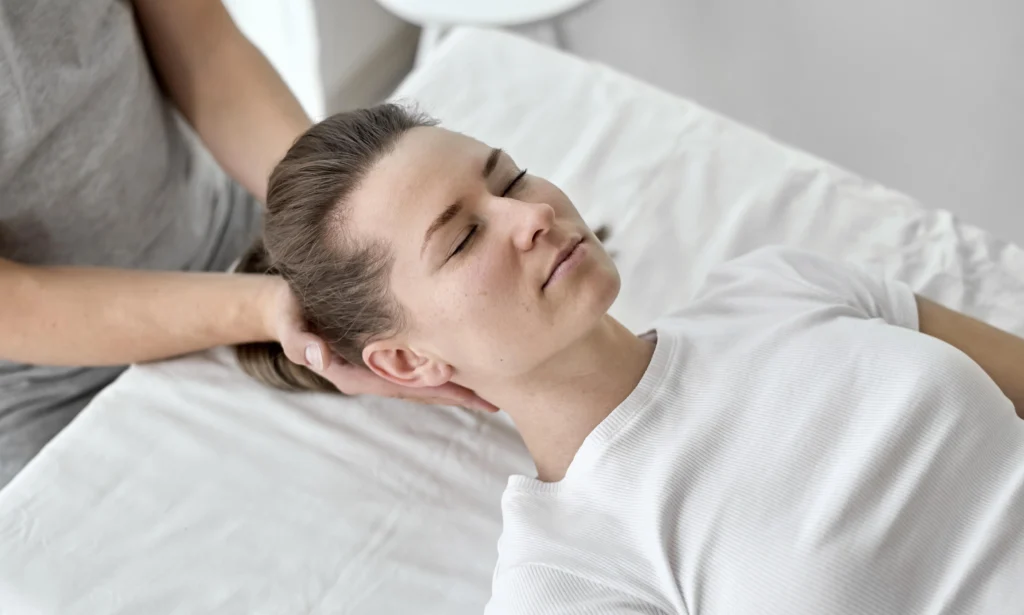
From a physiotherapy perspective, treating only the sinuses often leads to incomplete or temporary relief.
The most effective approach is to address the underlying mechanical, muscular, and breathing-related contributors.
Manual Therapy
This involves gentle, targeted techniques applied to the upper cervical spine.
- Mobilization of C0 to C3 segments
- Soft tissue release around the base of the skull
Why it works
These segments are closely linked to the trigeminal system.
Improving their mobility reduces abnormal nerve signaling and relieves both neck pain and referred facial symptoms.
Patients often report:
- Reduced heaviness in the head
- Easier neck movement
- Decreased headache intensity
Read more on : Manual Therapy for Neck Pain: A Physiotherapist’s Evidence Based Guide
Deep Neck Flexor Training
These are small but crucial stabilizing muscles located in the front of the neck.
Chin tuck exercise
- Sit or lie down
- Gently pull your chin inward without bending the neck
- Hold for 5 to 10 seconds
- Repeat 10 times
Why it works
Weak deep neck flexors lead to overuse of superficial muscles like the sternocleidomastoid.
Strengthening them restores balance and reduces strain.
Learn: How to do Chin Tucks for Neck Pain Relief and Posture Correction
Myofascial Release
This focuses on releasing tight and overactive muscles that contribute to pain.
Key muscles targeted
- Sternocleidomastoid
- Suboccipital muscles
- Upper trapezius
Techniques include
- Gentle sustained pressure
- Trigger point release
- Stretching
Why it works
These muscles often become tight due to both sinus discomfort and poor posture.
Releasing them reduces tension not just in the neck but also in the face and head.
Read about: What Is Cervical Myofascial Pain Syndrome And How To Relieve Trigger Points
Breathing Retraining
This is one of the most underrated yet powerful interventions.
Focus areas
- Shift from mouth breathing to nasal breathing
- Encourage diaphragmatic breathing
Simple exercise
- Place one hand on chest and one on abdomen
- Breathe slowly through the nose
- Ensure the abdomen rises more than the chest
Why it works
Mouth breathing overactivates neck muscles. Restoring proper breathing reduces load on these muscles and improves overall relaxation.
Read: 10 Proven Home Remedies for Neck Pain from Anxiety
Posture Correction
Posture is a major long-term factor that sustains symptoms.
Key correction points
- Keep ears aligned over shoulders
- Avoid slouching or forward head posture
- Maintain screen at eye level
Why it works
Poor posture increases load on the upper cervical spine and surrounding muscles, which can mimic or worsen sinus-related discomfort.
Read about: Which Is The Best Sitting Posture To Avoid Neck Pain And How To Achieve It
Functional Integration
The most effective rehabilitation combines all these elements:
- Mobility
- Strength
- Muscle release
- Breathing
- Posture awareness
This integrated approach ensures:
Better long-term control of symptoms
Faster recovery
Reduced recurrence
Read in detail: Best Desk Setup to Reduce Neck and Back Pain
When to Seek Medical Attention
Seek medical help if you notice:
- Severe neck stiffness with fever
- Neurological symptoms
- Persistent pain beyond two weeks
- Symptoms worsening over time
Read about: Effective Neck Pain Exercises At Home: A Complete Guide to Relief and Improved Mobility
Practical Tips for Relief at Home
- Steam inhalation
- Gentle neck exercises
- Adequate hydration
- Warm compress on neck
- Limit prolonged screen use
Read : Chiropractic for Neck Pain: Does It Really Work?
Conclusion
There is a clear connection between sinus issues and neck pain, but it is not a simple cause-and-effect relationship.
It involves shared nerve pathways, upper cervical mechanics, fascial continuity, and breathing patterns.
From a physiotherapy perspective, the neck is often an overlooked contributor. Addressing both sinus health and cervical function provides the most effective and lasting relief.
Also Read: Ultimate 6 Weeks Neck Rehabilitation Exercises For Pain Relief
Frequently Asked Questions
1. Can sinus infections cause neck pain?
Yes, sinus infections can lead to neck pain due to referred pain and muscle tension caused by shared nerve pathways between the face and neck.
2. Why does my neck hurt when I have sinus pressure?
This happens because of trigeminocervical convergence, where facial nerve signals are interpreted as neck pain, leading to stiffness and discomfort.
3. Can neck problems feel like sinus issues?
Yes, cervical spine dysfunction can cause facial pressure, headaches, and eye discomfort that closely mimic sinus symptoms.
4. How do I know if my pain is from sinuses or neck?
Sinus pain usually includes congestion and facial heaviness, while neck pain is triggered by movement, posture, or prolonged sitting.
5. Can physiotherapy help sinus-related neck pain?
Yes, physiotherapy can improve neck mobility, reduce muscle tension, and correct posture, helping relieve both neck and sinus-related symptoms.
6. What exercises are best for relief?
Chin tucks, neck stretches, and diaphragmatic breathing exercises are highly effective in reducing symptoms.
7. Can poor posture worsen sinus symptoms?
Yes, forward head posture increases strain on the neck and can intensify facial pressure and discomfort.
8. When should I see a doctor?
You should seek medical attention if symptoms persist, worsen, or are accompanied by fever, severe pain, or neurological signs.
Stay tuned with us for more health related topics.
Follow us on LinkedIn and Instagram for more.
More Read


Medical Disclaimer!
This article has been reviewed and written under the guidance of our Head Physiotherapist, Dr. Kruti Raj (PT, MUHS,CPT,CMPT). The information shared is intended for educational purposes only and should not be considered a substitute for personalized medical advice, diagnosis, or treatment.
Please consult us or any other qualified healthcare professional before beginning any exercise program, especially if you are experiencing pain, recovering from injury, or managing a medical condition.