


Blood test vs home pregnancy test is a common question when trying to confirm pregnancy,
but both tests differ in timing, accuracy, and how they detect pregnancy.
The moment you suspect you might be pregnant, one question often comes to mind:
Should I take a home pregnancy test or get a blood test?
For many women, a home pregnancy test is the first step.
Others may visit a doctor and have a blood test done.
Sometimes the results match.
Sometimes they do not.
A faint positive line, a negative result despite pregnancy symptoms, or conflicting test results can create anxiety and confusion.
Quick Answer
Both blood pregnancy tests and home pregnancy tests detect the pregnancy hormone hCG. Blood tests can usually detect pregnancy earlier because they identify smaller amounts of hCG and can measure exact hormone levels. Home pregnancy tests are highly accurate when used correctly after a missed period and are the most convenient first step for most women.
As a women’s health physiotherapist,
I often meet women who become stressed while waiting for answers.
The uncertainty of early pregnancy can feel overwhelming, especially when you are not sure which test to trust.
The good news is that both home pregnancy tests and blood pregnancy tests are reliable when used appropriately.
The difference lies in how they work, how early they can detect pregnancy, and what information they provide.
Let’s explore the science behind pregnancy testing and understand which option may be best for different situations.
Key Takeaways
- Both blood and home pregnancy tests detect the hormone hCG.
- Blood pregnancy tests can detect lower hCG levels and may identify pregnancy earlier.
- Home pregnancy tests are highly accurate when used correctly after a missed period.
- Testing too early is one of the most common causes of false negative results.
- Blood tests may provide exact hCG values through quantitative testing.
- A faint positive line on a home pregnancy test usually means hCG is present.
- False positive home pregnancy tests are uncommon.
- Diluted urine may affect home pregnancy test results.
- Conflicting or unclear results should be discussed with a healthcare provider.
- A positive pregnancy test is the first step toward prenatal care.
How Do Pregnancy Tests Work?
Whether you use a home pregnancy kit or have blood drawn in a laboratory, both tests look for the same thing.
They detect a hormone called human chorionic gonadotropin, commonly known as hCG.
This hormone begins to rise after a fertilized egg implants into the lining of the uterus.
Without hCG, pregnancy tests remain negative.
With enough hCG present, the test becomes positive. (Cleveland Clinic)
What Is hCG?
Many women know hCG as the “pregnancy hormone,” but few know what it actually does. (Betz et al. 2025)
hCG Supports Early Pregnancy
After implantation, developing pregnancy tissues begin producing hCG.
This hormone helps support the early stages of pregnancy until the placenta can take over many hormonal functions.
hCG Levels Rise Quickly
During the first weeks of pregnancy, hCG levels usually increase rapidly.
This is why a test that is negative today may become positive a few days later.
Every Pregnancy Is Different
Not all women produce hCG at exactly the same rate.
Small differences are completely normal.
What Is A Home Pregnancy Test?
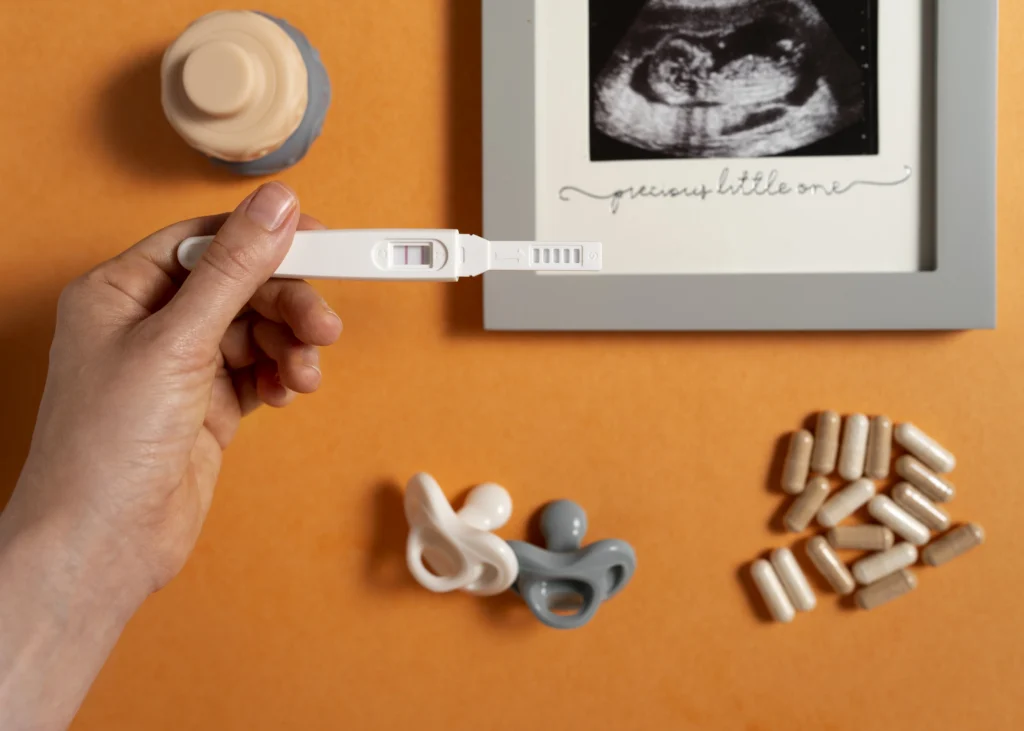
A home pregnancy test is designed to detect hCG in urine.
How It Works
The absorbent strip reacts when hCG is present.
If enough hormone is detected, the test displays a positive result.
Depending on the brand, this may appear as:
- Two lines
- A plus sign
- The word “Pregnant”
Why Home Tests Are Popular
Home pregnancy tests are:
- Convenient
- Private
- Easy to use
- Available without a prescription
Are Home Pregnancy Tests Accurate?
Modern home pregnancy tests are highly accurate when used correctly and at the appropriate time.
What Is A Blood Pregnancy Test?
A blood pregnancy test measures hCG in a blood sample.
It is performed in a laboratory or healthcare setting.
Why Doctors Order Blood Tests
Blood tests may be recommended when:
- Very early pregnancy is suspected.
- Home test results are unclear.
- Additional monitoring is needed.
- Fertility treatment has occurred.
- There are concerns about early pregnancy development.
Unlike home tests, blood tests can detect very small amounts of hCG.
Qualitative vs Quantitative Blood Tests
Many women are surprised to learn there is more than one type of blood pregnancy test.
Qualitative Blood Test
A qualitative test simply answers one question:
Is hCG present?
The result is usually reported as:
- Positive
- Negative
Quantitative Blood Test
A quantitative test measures the exact amount of hCG in the blood.
This is sometimes called a beta hCG test.
The result provides a numerical value.
Healthcare providers may use these measurements to monitor changes over time when clinically appropriate.
Did You Know?
A quantitative blood pregnancy test can measure the exact amount of hCG in your bloodstream. Healthcare providers may use these numbers over time to better understand how an early pregnancy is progressing when medically appropriate.
Which Test Can Detect Pregnancy Earlier?
This is one of the biggest differences between the two methods.
Blood Tests Can Detect Pregnancy Earlier
Because blood tests can identify very small amounts of hCG, they may detect pregnancy before urine tests become positive.
Home Tests Need Higher hCG Levels
Urine generally contains lower concentrations of hCG than blood during the earliest stages.
As a result, testing too soon may produce a negative home test even when pregnancy has occurred.
Timing Is Important
Many false negatives happen because the test was taken too early.
The National Health Service recommends following the manufacturer’s instructions and considering repeat testing if pregnancy is still suspected. (National Health Service 2025)
Blood Pregnancy Test vs Home Pregnancy Test: Accuracy Comparison
Many women assume blood tests are always better.
The answer depends on the situation.
Home Pregnancy Test
Advantages:
- Convenient
- Fast
- Private
- Highly accurate when used correctly
- No laboratory visit required
Limitations:
- May miss very early pregnancy
- Results can be affected by testing too soon
- User error may occur
Blood Pregnancy Test
Advantages:
- Detects lower hCG levels
- Can identify pregnancy earlier
- Quantitative tests measure exact hormone levels
Limitations:
- Requires blood collection
- Laboratory processing may take time
- Usually more expensive
Quick Comparison
| Feature | Home Test | Blood Test |
|---|---|---|
| Detects hCG | Yes | Yes |
| Earlier Detection | Limited | Better |
| Measures Exact hCG Level | No | Yes |
| Convenient at Home | Yes | No |
| Requires Laboratory | No | Yes |
Why False Negative Results Happen
One of the most common reasons women seek medical advice is receiving a negative result despite pregnancy symptoms.
Testing Too Early
This is the leading cause of false negatives.
The body may not have produced enough hCG yet.
Diluted Urine
Drinking large amounts of fluid before testing may reduce hCG concentration in urine.
Not Following Instructions
Every test kit has specific instructions.
Small mistakes may affect results.
Variations In Pregnancy Timing
Implantation does not occur at exactly the same time for everyone.
A delay of a few days can change test results.
Can A Home Pregnancy Test Be Wrong?
Many women ask this question after seeing a faint line.
What About False Positives?
False positive results are uncommon.
However, they can occasionally occur.
Certain medications or medical situations may influence results.
Does A Faint Line Count?
In most cases, a faint positive line means hCG has been detected.
Repeating the test after a short interval often provides additional clarity.
Digital Or Traditional Tests?
Both can be effective when used correctly.
The best choice often depends on personal preference.
When Should You Repeat A Pregnancy Test?
If you receive a negative result but still suspect pregnancy, waiting a short time before retesting may be helpful.
Consider Retesting If:
- Your period has not started.
- Pregnancy symptoms continue.
- The first test was taken very early.
Waiting allows hCG levels more time to rise.
When To See A Doctor
You should contact your healthcare provider if:
- You have a positive pregnancy test.
- You have conflicting test results.
- You experience severe pain.
- You have heavy bleeding.
- You have significant pregnancy symptoms despite negative tests.
A healthcare professional can recommend the most appropriate next steps.
A Physiotherapist’s Advice For Managing Early Pregnancy Stress
Waiting for pregnancy results can be emotionally exhausting.
Many women become hyperaware of every physical sensation.
Remember That Symptoms Vary
Some women have many symptoms.
Others have almost none.
Both experiences can be normal.
Avoid Constant Testing
Repeated testing every few hours often increases anxiety rather than providing reassurance.
Stay Active
Gentle movement can support emotional wellbeing during uncertain periods.
Focus On The Next Step
Rather than worrying about every possibility, focus on the next practical action.
Book the appointment.
Take the test.
Ask questions.
Small steps help reduce stress.
Physiotherapist’s Advice
Waiting for pregnancy test results can be emotionally challenging. Try to avoid repeated testing throughout the day, stay physically active with gentle movement, and remember that testing too early is a common reason for uncertain results. Focus on the next practical step rather than every possible outcome.
Which Test Should You Choose?
For most women, a home pregnancy test is an excellent first step.
It is simple, accessible, and highly accurate when used correctly.
A blood pregnancy test may be recommended when earlier detection or additional medical information is needed.
Neither test is universally better.
They simply serve different purposes.
🔍 Myth vs Fact
❌ Myth: Blood pregnancy tests are always necessary.
✅ Fact: For most women, a properly timed home pregnancy test is highly accurate.
❌ Myth: A faint line means the test is invalid.
✅ Fact: In most cases, even a faint positive line means hCG has been detected.
❌ Myth: Testing earlier always gives faster answers.
✅ Fact: Testing too early is one of the biggest reasons for false negative results.
Final Thoughts
The first days of pregnancy are often filled with excitement, hope, and uncertainty.
It is natural to want immediate answers.
As a physiotherapist, I encourage women to remember that pregnancy is a process, not a single test result.
A home pregnancy test can provide an excellent first indication.
A blood pregnancy test can offer additional information when needed.
Most importantly, neither test defines your entire pregnancy journey.
They are simply tools that help you take the next step.
If your result is positive, begin prenatal care and look after your physical and emotional wellbeing.
If your result is unclear, give your body time and seek professional guidance when appropriate.
Sometimes the most important part of early pregnancy is not how quickly you get an answer,
but knowing that you have the right support as your journey begins.
Frequently Asked Questions About Blood and Home Pregnancy Tests
Which pregnancy test is more accurate?
Both are highly accurate when used correctly, but blood tests can detect smaller amounts of hCG and may identify pregnancy earlier.
Can a blood pregnancy test detect pregnancy before a home test?
Yes. Blood tests can often detect lower hCG levels before urine tests become positive.
Can a home pregnancy test give a false negative result?
Yes. Testing too early is one of the most common reasons for a false negative result.
Does a faint positive line mean I am pregnant?
In most cases, a faint positive line means hCG has been detected and pregnancy is likely.
What is a quantitative blood pregnancy test?
A quantitative blood test measures the exact amount of hCG in the bloodstream.
Can drinking too much water affect a home pregnancy test?
Yes. Very diluted urine may reduce hCG concentration and affect early testing results.
When should I repeat a pregnancy test?
If your first test was negative but your period has not started, waiting a short time before repeating the test may be helpful.
Should I see a doctor after a positive pregnancy test?
Yes. A positive pregnancy test should be followed by prenatal care and appropriate medical guidance.
Stay tuned with us for more health related topics.
Follow us on LinkedIn and Instagram for more.
More Read


Medical Disclaimer!
This article has been reviewed and written under the guidance of our Head Physiotherapist, Dr. Kruti Raj (PT, MUHS,CPT,CMPT). The information shared is intended for educational purposes only and should not be considered a substitute for personalized medical advice, diagnosis, or treatment.
Please consult us or any other qualified healthcare professional before beginning any exercise program, especially if you are experiencing pain, recovering from injury, or managing a medical condition.


