


Starting birth control and then noticing aching, heaviness, cramps or discomfort in your legs can naturally make you wonder whether the two are connected.
Quick Answer
Leg pain after starting birth control does not necessarily mean that the contraception caused it. Muscle overload, changes in exercise, previous injuries and other musculoskeletal factors can cause leg pain. However, some estrogen-containing contraceptives can increase the risk of blood clots. New one-sided leg pain with swelling, warmth or redness should be medically assessed, especially if it occurs with sudden shortness of breath or chest pain.
Sometimes the timing is coincidental and the pain is related to muscles, activity or an existing movement problem.
In other situations, especially with certain estrogen-containing contraceptives, new leg symptoms need medical attention because of the risk of blood clots.
Understanding the difference is important before treating the pain as a simple muscle problem.
Key Takeaways
- Leg pain after starting birth control does not automatically mean the contraception caused it.
- Changes in exercise, activity levels, previous injuries and muscle overload can contribute to leg pain.
- Physiotherapy can assess strength, mobility, balance, movement patterns and physical loading.
- Exercise may help when the cause is musculoskeletal and serious medical causes have been excluded.
- One-sided leg pain with swelling, warmth or redness needs medical assessment.
- Sudden shortness of breath or chest pain with leg symptoms requires emergency medical attention.
- Do not stop prescribed contraception without discussing the decision with your healthcare professional.
Why Do My Legs Hurt After Starting Birth Control?
The first question is whether the leg pain is actually related to the contraception.
Hormonal contraceptives can interact with musculoskeletal tissues, including muscles, tendons and ligaments.
However, current research does not show that taking oral contraceptives routinely causes painful legs.
A systematic review of oral hormonal contraceptives found that evidence on their effects on muscles, tendons and ligaments remains limited.
The review found no significant overall effect on muscle strength, although some findings suggested possible differences in muscle recovery and tissue responses. (Römer et al., 2022).
So, if your legs began hurting soon after starting birth control, the timing is worth paying attention to, but it does not automatically prove that the contraception caused the pain.
What Can Leg Pain Feel Like?
Leg pain can feel very different from person to person.
You might notice a dull ache in the thighs or calves, muscle tightness, heaviness, cramping or fatigue after walking or exercising.
Some people notice pain mainly during activities such as climbing stairs, squatting, running or getting up from a chair.
From a physiotherapy perspective, how the pain behaves can provide useful information.
Pain that changes with movement, exercise or physical load may have a musculoskeletal component.
Pain accompanied by swelling, warmth, redness or significant tenderness needs a different approach and may require medical assessment.
Could Birth Control Affect Your Muscles?
Hormones can influence skeletal muscle, which is one reason researchers have investigated whether oral contraceptives affect strength, recovery and muscle physiology.
A 2026 systematic review and meta-analysis examined 40 clinical studies involving oral contraceptive use and skeletal muscle outcomes.
The researchers did not find an overall effect on the examined muscle outcomes, but they highlighted substantial study heterogeneity and limitations in the available evidence.
Most participants were young, healthy women, so the findings cannot automatically be applied to every person using oral contraception. (Gilmer et al., 2026).
This is important because it prevents a common assumption: feeling muscle pain after starting the pill does not necessarily mean that the pill has directly changed your muscles.
Could It Be From Exercise or Activity?
Sometimes the timing is simply coincidental.
Perhaps you recently started going to the gym, increased your walking, returned to running, changed your workout program or spent longer periods standing at work.
Even a relatively small increase in physical activity can increase the workload placed on the calves, quadriceps, hamstrings, glutes and other muscles.
A physiotherapist would look at what changed around the time the pain began.
For example, did your walking distance increase? Did you add squats or lunges? Did you change footwear? Have you recently returned to exercise after a break?
These details can be more useful than simply asking whether the pain started after birth control.
Can Hormonal Contraception Affect Musculoskeletal Health?
Research in this area is still developing.
A systematic review involving data from approximately 5 million females examined combined hormonal contraceptive use and musculoskeletal outcomes.
The authors found that evidence was limited or uncertain for many outcomes, particularly those involving musculoskeletal tissues beyond bone.
They concluded that the evidence was not strong enough to consider combined hormonal contraception protective against musculoskeletal conditions or injuries. (White et al., 2023).
For someone experiencing leg pain, this means the physiotherapy assessment should focus on the person’s actual symptoms and physical function rather than assuming that hormones are the explanation.
Could Birth Control Increase Blood Clot Risk?
This is the safety issue that should not be overlooked.
Some contraceptives, particularly combined hormonal contraceptives containing estrogen, are associated with an increased risk of venous thromboembolism.
This includes deep vein thrombosis, commonly known as DVT.
A DVT is a blood clot that forms in a deep vein, often in the leg.
A large systematic review and network meta-analysis found that combined oral contraceptive use was associated with an increased risk of venous thrombosis compared with non-use, with the level of risk varying between formulations. (Stegeman et al., 2013).
This does not mean that every person with leg pain after starting the pill has a blood clot.
It does mean that certain symptoms should not be treated as ordinary muscle soreness without appropriate medical assessment.
What Leg Pain Needs Urgent Attention?
New leg pain deserves prompt medical attention if it occurs with symptoms such as:
- swelling, particularly in one leg
- warmth in the affected leg
- redness or skin discoloration
- significant tenderness
- unexplained pain in the calf or thigh
- pain and swelling that are not explained by an injury or exercise
DVT commonly affects one leg, although symptoms can vary and some people may have few or no symptoms.
If leg symptoms occur together with sudden shortness of breath, chest pain, coughing up blood, fainting or severe light-headedness, emergency medical attention is required because a clot can travel to the lungs.
Current public-health guidance identifies leg swelling, pain or tenderness, warmth and redness/discoloration as important DVT symptoms.
Is One Leg More Concerning Than Both?
The distribution of the pain can provide useful context.
For example, someone who develops aching in both legs after suddenly increasing their running mileage may have a muscle-loading problem.
On the other hand, new pain that is concentrated in one leg and accompanied by swelling, warmth or redness should not automatically be assumed to be muscular.
This distinction is particularly important for physiotherapists.
Before prescribing strengthening, stretching or manual therapy, a physiotherapist should screen for symptoms that could require medical referral.
Can Physiotherapy Help With Leg Pain?
Yes, when the symptoms are appropriate for physiotherapy management.
A physiotherapist can look beyond the painful area and assess how the whole lower limb is functioning.
This may include:
- hip and knee strength
- ankle mobility
- muscle flexibility
- balance
- walking and running mechanics
- movement control
- exercise technique
- recent changes in physical activity
- training load
- previous injuries
- functional activities such as stairs and squatting
For example, weakness around the hip can affect lower-limb movement during walking or exercise.
Limited ankle mobility can also change how the knee and hip are loaded.
The goal is not simply to find the muscle that hurts.
The goal is to understand why the symptoms are occurring and whether the problem can be safely managed through physiotherapy.
If the symptoms suggest a possible vascular problem, medical assessment takes priority.
What Exercises May Help?
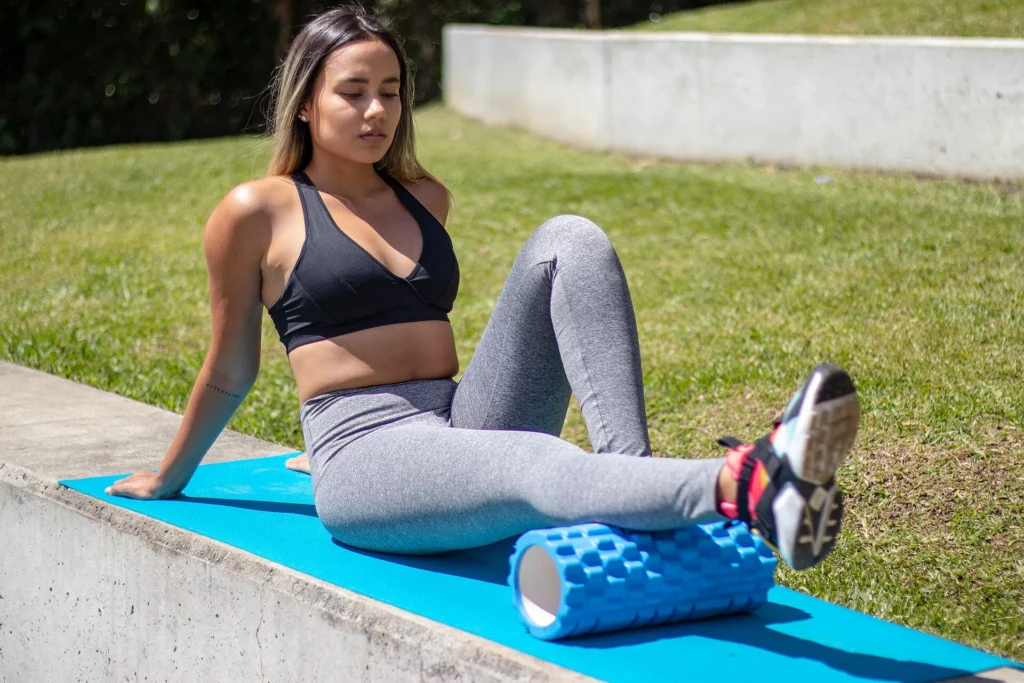
There is no specific exercise that treats “birth control-related leg pain.”
Exercise should be selected according to the actual cause of the symptoms.
If a physiotherapist has assessed the problem and it appears to be musculoskeletal, a program may include simple strengthening and mobility exercises.
Calf Raises
Stand near a wall or stable surface for support.
Slowly rise onto your toes, then lower your heels with control.
Start with around 8-10 repetitions if comfortable and gradually increase the workload as your strength improves.
Sit-to-Stand
Sit on a stable chair with your feet comfortably positioned beneath you.
Stand up while keeping your movement controlled, then slowly lower yourself back onto the chair.
This works the quadriceps and gluteal muscles while also practising a movement used frequently in daily life.
Glute Bridges
Lie on your back with your knees bent and feet supported on the floor.
Gently engage your abdominal muscles and lift your hips while keeping the movement controlled.
Lower slowly and repeat 8-10 times if comfortable.
Gentle Leg Mobility
Depending on the source of the symptoms, a physiotherapist may also use gentle ankle, knee or hip mobility exercises.
The purpose is to maintain comfortable movement rather than force a painful range.
If you have unexplained one-sided swelling, significant calf pain or other symptoms that could indicate a blood clot, do not try to manage the problem with exercises at home.
Seek medical assessment first.
Should You Stop Exercising?
Not necessarily.
If the pain has been assessed as musculoskeletal and there are no concerning medical features, completely stopping physical activity may not be necessary.
Exercise therapy has evidence supporting its use for movement-related musculoskeletal pain.
A systematic review and meta-analysis found moderate-certainty evidence that exercise therapy can reduce movement-evoked pain compared with no treatment. (Leemans et al., 2022).
However, that does not mean you should simply push through worsening symptoms.
A physiotherapist may temporarily reduce exercise intensity, change the number of repetitions, modify the range of movement or choose a different exercise.
The aim is to gradually rebuild strength and tolerance while keeping the program appropriate for the person’s symptoms.
When Should You See a Physiotherapist?
A physiotherapy assessment may be useful if:
- the pain continues after reducing aggravating activities
- symptoms repeatedly return during walking or exercise
- you notice weakness
- your movement has become restricted
- stairs or squatting have become difficult
- you have recurring muscle or joint pain
- you are unsure how to safely return to exercise
A physiotherapist can help determine whether the symptoms are related to strength, mobility, movement control, training load or another musculoskeletal factor.
However, physiotherapy should not delay medical assessment when symptoms suggest DVT or another serious condition.
Should You Stop Taking Birth Control?
Do not automatically stop your contraceptive simply because your legs hurt.
Different contraceptives have different hormonal compositions and risk profiles, and the appropriate decision depends on the specific method and your individual medical history.
If your symptoms began after starting or changing contraception, discuss them with the healthcare professional managing your contraception.
This is particularly important if you have additional risk factors for blood clots, such as a previous DVT, certain clotting disorders, prolonged immobility or recent surgery.
The goal is to determine whether the symptoms are related to the medication, another medical condition, physical activity or a combination of factors.
Myth vs Fact
Myth: Birth control pills directly cause leg pain.
Fact: Current research does not establish that oral contraceptives routinely cause painful legs. Leg pain can have many musculoskeletal and medical causes.
Myth: All leg pain after starting birth control means there is a blood clot.
Fact: Most leg pain does not automatically indicate a blood clot. However, one-sided pain with swelling, warmth or redness requires appropriate medical assessment.
Myth: You should exercise through leg pain to make it go away.
Fact: Exercise should be matched to the cause of the pain. A physiotherapist can help modify activity, exercise intensity and movement patterns when the problem is musculoskeletal.
Lesser-Known Fact: Leg Pain Is Not Always a Muscle Problem
“Leg pain” is a symptom, not a diagnosis.
The source can be a muscle, tendon, joint, nerve or blood vessel.
This is why physiotherapists pay attention to more than the location of the pain.
They may ask whether the pain changes with movement, whether a particular activity reproduces it, whether there is weakness or altered sensation and whether there are visible changes such as swelling.
That information helps determine whether physiotherapy is appropriate or whether medical investigation should come first.
A Simple Leg Pain Check
If your legs hurt after starting birth control, consider these questions:
Is the pain in one leg or both?
Is there swelling, warmth or redness?
Did the symptoms begin after a change in exercise or activity?
Does movement reproduce or reduce the pain?
Have you recently increased your walking, running or gym activity?
Do you have shortness of breath or chest pain?
Is the pain getting progressively worse rather than settling?
These questions cannot diagnose the cause of your symptoms.
They can, however, help you recognize when it may be more appropriate to seek medical assessment rather than assuming the problem is ordinary muscle soreness.
Final Thoughts
Leg pain after starting birth control should not automatically be blamed on the medication. Musculoskeletal factors such as changes in activity, muscle overload, strength deficits and movement patterns can contribute to leg discomfort. Physiotherapy can help assess these factors and guide an appropriate exercise programme when the symptoms are suitable for rehabilitation. However, one-sided leg pain with swelling, warmth or redness requires medical assessment, and sudden chest pain or shortness of breath requires urgent medical attention.
Conclusion
Leg pain after starting birth control can have several possible explanations.
Hormonal contraception can interact with musculoskeletal tissues, but current research does not establish that oral contraceptives routinely cause painful legs.
Activity changes, muscle overload, previous injuries and movement-related factors can also contribute.
At the same time, new one-sided leg pain with swelling, warmth or redness should not be ignored, particularly when using an estrogen-containing combined hormonal contraceptive.
If leg pain occurs with sudden shortness of breath or chest pain, seek emergency medical attention.
For persistent, non-urgent symptoms that appear musculoskeletal, physiotherapy can provide a useful assessment of strength, mobility, movement patterns and physical loading.
A personalized exercise program can then help restore comfortable movement and function.
The most important step is not to assume that the timing of the pain proves the birth control caused it.
Instead, look at the full pattern of symptoms and make sure potentially serious causes are ruled out before treating the problem as a simple musculoskeletal issue.
Frequently Asked Questions
Why do my legs hurt after starting birth control?
Leg pain after starting birth control can have several causes. Changes in physical activity, muscle overload, previous injuries and other musculoskeletal factors may contribute. Hormonal contraception may interact with musculoskeletal tissues, but it has not been established as a routine cause of leg pain.
Can birth control pills cause muscle pain in the legs?
Current evidence does not establish that oral contraceptives routinely cause muscle pain. If symptoms begin after starting contraception, other causes should also be considered.
When is leg pain after birth control concerning?
New one-sided leg pain accompanied by swelling, warmth, redness or significant tenderness should be medically assessed because these can be symptoms of a deep vein thrombosis.
Can physiotherapy help with leg pain?
Yes, when the symptoms are musculoskeletal. A physiotherapist can assess strength, mobility, balance, movement control, walking mechanics and exercise loading, then develop an appropriate rehabilitation programme.
What exercises can help with leg pain?
Depending on the cause, exercises such as calf raises, sit-to-stands, glute bridges and gentle leg mobility may be useful. Exercise should be selected according to the individual’s symptoms and should not be used to self-treat suspected blood-clot symptoms.
Should I stop taking birth control if my legs hurt?
Do not automatically stop prescribed contraception. Discuss new or concerning symptoms with the healthcare professional who manages your contraception, particularly if you have risk factors for blood clots.
Stay tuned with us for more health related topics.
Follow us on LinkedIn and Instagram for more.
More Read


Medical Disclaimer
This article is intended for general educational purposes and does not replace personalised medical advice, diagnosis or treatment. Leg pain can have many different causes, and the information provided here cannot determine the cause of an individual’s symptoms. Do not start, stop or change prescribed contraception or other medication without discussing it with a qualified healthcare professional. If you develop new one-sided leg pain with swelling, warmth or redness, seek appropriate medical assessment. Sudden chest pain, shortness of breath, coughing up blood or fainting requires urgent medical attention.


