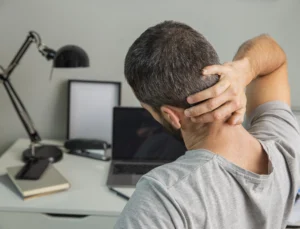
In athletes, neck pain rarely starts as an injury. It begins as something small.
A bit of stiffness after training.
A slight discomfort when turning the head.
Sometimes just a headache that shows up after a session.
Most athletes ignore it. That is where the problem begins.
In clinical practice, neck pain is almost never just about the neck. It reflects how the entire body is handling load, movement, and fatigue.
Recent research is finally catching up with what physiotherapists have been observing for years.
Neck pain in athletes is not isolated. It is part of a bigger system problem involving control, endurance, and impact mechanics.
Read about our Complete Neck Pain Guide : Causes, Symptoms, Exercises and Treatment
Quick Answer
Neck pain in athletes is commonly caused by repetitive strain, poor movement control, or impact during sports. It can affect performance by reducing coordination and strength transfer. Early physiotherapy, proper technique, and neck strengthening play a key role in recovery and prevention.
Read about: Early Signs of Cervical Spine Damage You Should Never Ignore
Key Takeaways
- Neck pain in athletes is often linked to repetitive strain, fatigue, and poor movement control.
- It can affect performance by reducing coordination, timing, and strength transfer.
- Endurance and neuromuscular control are as important as strength.
- Early symptoms like stiffness or headaches should not be ignored.
- Proper rehabilitation is essential, rest alone is usually not enough.
- Neck strengthening and good technique help prevent future injuries.
- Returning to sport too early increases the risk of recurrence.
Also read: How to Relieve Neck Tightness Without Equipment
What Recent Research Says
Let’s move away from generic explanations and look at what current evidence shows.
One of the most important findings is the connection between neck pain and concussion.
Studies show that around one third of athletes report neck pain after a sports related concussion. These athletes also tend to have more severe symptoms and slower recovery. (Crawford et al., 2022)
This changes how we think about neck pain. It is not just a symptom. It can influence recovery and performance. (King et al., 2024)
Another important area is fatigue.
Fatigue affects neck muscle function, joint position sense, and coordination. This increases the risk of both injury and poor performance during later stages of training or competition. (Vintimilla et al., 2024)
There is also growing evidence that targeted neck training can reduce injury risk. (Klein et al., 2024)
These findings confirm one important thing. Neck pain is not just about strain. It is about how the system functions under load. (Thompson et al., 2025)
Read about: How to Relieve Morning Neck Stiffness Naturally
How Neck Pain Affects Performance
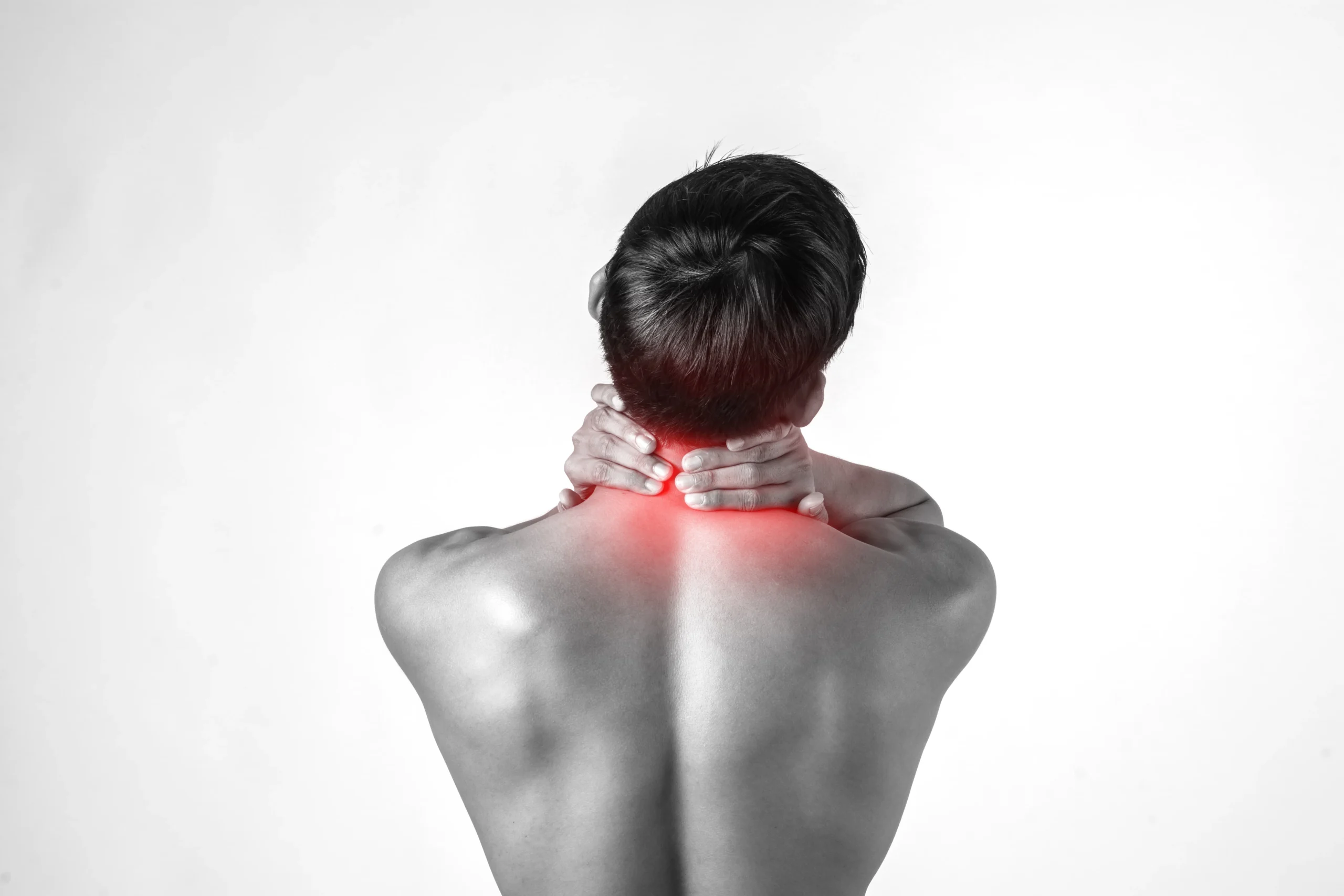
This is something athletes usually notice before they notice pain.
- Timing feels slightly off.
- Reaction becomes slower.
- Strength feels inconsistent.
It is subtle at first.
Neck dysfunction affects how efficiently force travels through the body. Even a small delay in muscle activation can reduce power output.
In sports, that small delay is the difference between average and elite.
Read about: Cervical Ligament Injury or Neck Ligament Tear
Why Athletes Develop Neck Pain Differently
Athletes are not like sedentary individuals. Their neck is exposed to very different demands.
Load Transfer Through the Body
Every movement transfers force from the ground upward.
- Feet to legs
- Legs to pelvis
- Pelvis to trunk
- Trunk to neck
If something is inefficient in this chain, the neck compensates.
This is why athletes with good strength can still develop pain.
Neuromuscular Control Deficits
In many cases, the issue is not weakness.
It is poor timing and coordination.
The neck muscles do not activate at the right time. This leads to increased stress on joints and soft tissues.
Research shows that specific neck exercises improve cervical kinesthesia, which is the ability to sense movement and position. (Ragnarsdottir et al., 2024)
This is a key factor in both injury and recovery.
Endurance Matters More Than Strength
This is one of the most overlooked aspects.
Many athletes have strong neck muscles. But they cannot sustain activity for long durations.
As fatigue builds:
- posture changes
- technique breaks down
- injury risk increases
Fatigue related changes in cervical function are strongly linked to performance decline. (Vintimilla et al., 2024)
Read: Why Neck Pain in Swimmers Develop and How to Prevent It
Neck Pain Looks Different in Different Sports
Not all neck pain in athletes comes from the same place.
- A swimmer’s neck is dealing with repetition.
- A wrestler’s neck is dealing with force.
- A cricketer’s neck is dealing with rotation and tracking.
And those differences matter.
In Cricket
Fast bowlers often develop stiffness on one side due to repeated loading during delivery.
Batsmen, especially at higher levels, develop issues from constant head positioning and visual tracking.
In Gym and Weight Training
Poor bracing during lifts like squats or deadlifts shifts load toward the cervical spine.
Many athletes unknowingly overuse their neck during heavy lifts.
Read: Neck Pain In Regular Gym-Goers- Exercises That Actually Help
In Contact Sports
Rugby and wrestling athletes are exposed to sudden forces.
Here, the problem is less about repetition and more about impact control and positioning.
Read about : 15 Common Causes of Neck Pain You Should Know
Common Causes of Neck Pain in Athletes
Repetitive Overuse
Seen in sports like swimming, cycling, and cricket.
Repeated movements lead to gradual tissue irritation.
Contact and Impact
Common in rugby, football, and wrestling.
The direction and nature of impact play a major role in injury severity.
Biomechanical studies show that certain impact directions produce significantly higher stress on the neck. (Zaman and Adnan, 2024)
Poor Technique
Technique errors increase stress on the cervical spine.
For example:
- head down tackling
- improper lifting mechanics
- uncontrolled rotational movements
Muscle Imbalance
Overactive superficial muscles and underactive deep stabilizers create imbalance.
This leads to inefficient movement and fatigue.
Read: 10 Proven Home Remedies for Neck Pain from Anxiety
The Mental Side of Neck Pain in Athletes
Athletes often push through discomfort.
That mindset helps performance, but it can delay recovery.
Fear of losing form or missing training leads to:
- ignoring symptoms
- rushing back too early
- incomplete rehab
Over time, this creates a cycle.
Pain returns, confidence drops, and performance suffers.
Addressing this early helps both physical and mental recovery.
Read: Neck Pain from Poor Breathing Pattern? Correct Now!
Lesser Known Factors That Contribute to Neck Pain
These are often missed but clinically important.
Breathing Dysfunction
Athletes who rely on accessory breathing muscles overload the neck.
This leads to persistent tightness and fatigue.
Cervical Proprioception Issues
Poor joint position awareness affects coordination and stability.
This is a major contributor to recurrent pain.
Movement Performance and Load
Recent research shows that movement patterns directly influence forces acting on the cervical spine. (Hu et al., 2025)
This means how you move matters just as much as how strong you are.
Read about : What is Cervical Facet Joint Pain, how it causes cervicogenic headaches and how to correct it naturally
Symptoms Athletes Should Not Ignore
- stiffness that does not improve
- pain during rotation
- headaches after training
- reduced range of motion
- tingling or radiating pain
These are early warning signs. Ignoring them often leads to chronic problems.
Read in detail about: Cervical Radiculopathy: Why Neck Nerve Pain Travels to the Arm
When Neck Pain Needs Immediate Attention
Some symptoms should not be ignored.
- pain radiating into the arm
- numbness or tingling
- weakness in the hand or shoulder
- dizziness with neck movement
These may indicate nerve involvement or more serious conditions.
In such cases, proper medical evaluation is necessary before continuing training.
Read more: Cervical Vertigo Explained: Why Neck Pain Make You Feel Dizzy
A Simple Self-Check Athletes Can Try
You do not need equipment for this.
Try this:
Sit upright and slowly rotate your head to each side.
Ask yourself:
- Does one side feel tighter than the other
- Do you feel pulling instead of smooth movement
- Do your shoulders move along with your neck
Now hold your head in a neutral position for 30 seconds.
If you feel fatigue quickly, it is not a strength issue. It is an endurance problem.
This is often the first sign of dysfunction.
Read: Spasm In Neck: What Causes It & How to Fix It Fast
Physiotherapy Perspective: What Actually Drives Recovery
This is where real recovery begins. Not with rest alone. Not with painkillers.
But with proper assessment.
We look at:
- movement quality
- muscle activation
- joint mobility
- sport specific demands
- load exposure
Because the root cause is usually functional, not structural.
Read about: Effective Neck Pain Exercises At Home: A Complete Guide to Relief and Improved Mobility
Phases of Rehabilitation
Phase 1: Pain Reduction
- gentle mobility
- soft tissue work
- breathing correction
Phase 2: Motor Control
- deep neck flexor activation
- coordination training
- postural correction
Phase 3: Strength and Endurance
- progressive resistance
- isometric holds
- functional strengthening
Exercise based rehabilitation improves muscle function and long term outcomes. (Peterson et al., 2024)
Phase 4: Sport Integration
- movement retraining
- gradual load exposure
- technique correction
This is where athletes return safely to performance.
Read in detail about: How to Fix Upper Crossed Syndrome Naturally
How Long Does Recovery Actually Take
This depends on the cause, not just the pain.
Mild overuse cases may improve in 2 to 3 weeks.
But if the issue involves poor movement patterns or long-standing imbalance, recovery can take 6 to 12 weeks.
The key difference is this:
Pain can reduce quickly.
But control and endurance take longer to rebuild.
That is why stopping rehab early often leads to recurrence.
Also Read: Ultimate 6 Weeks Neck Rehabilitation Exercises For Pain Relief
Prevention Strategies That Actually Work
Neck Strength Training
Improves force absorption and reduces injury risk.
Neuromuscular Training
Enhances coordination and reaction to sudden forces.
Load Management
Overtraining without recovery is a major contributor.
Technique Correction
Small changes in movement patterns can significantly reduce stress on the neck.
Read: What is Sternocleidomastoid Syndrome, Trigger Points and Its Treatment
Common Mistakes Athletes Make
- ignoring early symptoms
- relying only on pain relief methods
- skipping rehabilitation
- returning to sport too early
These are the main reasons why pain becomes chronic.
Read more: Is Cervical Traction For Neck Pain Really Effective
When Is It Safe to Return to Sport
It is not just about being pain free.
An athlete should be able to:
- move the neck fully without discomfort
- maintain control under fatigue
- perform sport specific movements confidently
- tolerate training load without symptoms returning
Returning too early is one of the biggest reasons for recurring neck pain.
Read : Chiropractic for Neck Pain: Does It Really Work?
Final Thoughts From a Physiotherapist
Neck pain in athletes is predictable.
It develops when load exceeds the body’s ability to manage it.
But it is also preventable.
When you focus on:
- movement quality
- neuromuscular control
- endurance
- proper recovery
You not only reduce pain but also improve performance.
That is the real goal.
Also Read : Neck Cracking: Benefits, Risks, and the Truth About Stroke
Frequently Asked Questions
Q1. Why do athletes get neck pain?
Neck pain in athletes is usually caused by repetitive movements, impact forces, poor technique, or fatigue over time.
Q2. Can neck pain reduce sports performance?
Yes, it can affect coordination, reaction time, and strength transfer, which can impact performance.
Q3. Is neck strengthening necessary for athletes?
Yes, strengthening improves stability and helps the neck handle load and impact better.
Q4. How long does recovery usually take?
Mild cases may improve in a few weeks, but long-standing issues can take several weeks to months depending on the cause.
Q5. When is neck pain serious?
If there is numbness, tingling, weakness, or pain radiating to the arm, it should be evaluated by a professional.
Q6. Is rest enough to recover from neck pain?
No, proper rehabilitation focusing on movement and control is required for full recovery.
Q7. Can poor posture cause neck pain in athletes?
Yes, especially when combined with training load and fatigue.
Stay tuned with us for more health related topics.
Follow us on LinkedIn and Instagram for more.
More Read


Medical Disclaimer!
This article has been reviewed and written under the guidance of our Head Physiotherapist, Dr. Kruti Raj (PT, MUHS,CPT,CMPT). The information shared is intended for educational purposes only and should not be considered a substitute for personalized medical advice, diagnosis, or treatment.
Please consult us or any other qualified healthcare professional before beginning any exercise program, especially if you are experiencing pain, recovering from injury, or managing a medical condition.