


Cycling is widely recognized as one of the healthiest forms of physical activity. It improves cardiovascular fitness, strengthens muscles, enhances joint mobility, and supports mental well-being. However, despite its many health benefits, neck pain in cyclists is frequently experienced.
From a physiotherapy perspective, neck pain is one of the most common complaints among both recreational and professional cyclists. Long rides, improper posture, and muscle fatigue can place continuous stress on the cervical spine.
Research examining cycling-related musculoskeletal injuries suggests that spinal pain including neck pain affects a large proportion of cyclists, especially those involved in endurance cycling or competitive riding (Wilber et al., 2015).
Another epidemiological analysis of cycling injuries found that neck pain accounts for a notable proportion of musculoskeletal complaints among cyclists, alongside knee and lower back pain (Fernández-Rodríguez et al., 2025).
As physiotherapists, we often remind cyclists that neck pain should not be ignored or accepted as part of the sport. In most cases, it develops due to modifiable factors such as posture, bike fit, muscle imbalance, and training habits.
Understanding these factors is essential for preventing long-term cervical problems.
Read about our Complete Neck Pain Guide : Causes, Symptoms, Exercises and Treatment
Quick Answer
Neck pain in cyclists usually develops from maintaining a forward riding posture for long periods while keeping the head lifted to see the road ahead. This position places repeated load on the cervical muscles and joints, especially during long rides. Physiotherapy treatment focuses on relieving muscle tension, restoring mobility of the neck and upper back, strengthening supporting muscles, and correcting cycling posture so the cervical spine experiences less strain during riding.
Read about : 15 Common Causes of Neck Pain You Should Know
Key Takeaways
- Prolonged cycling posture and repeated neck extension often trigger neck pain in cyclists.
- Poor bike fit and weak postural muscles increase stress on the cervical spine.
- Common symptoms include neck stiffness, muscle fatigue, headaches, and reduced neck mobility.
- Physiotherapy helps through mobility exercises, strengthening, posture training, and manual therapy.
- Improving thoracic spine mobility and maintaining proper bike ergonomics can prevent recurrent neck pain.
Also read: Why Neck Pain in Swimmers Develop and How to Prevent It
Why Cyclists Commonly Develop Neck Pain

Cycling requires a unique riding posture. Riders lean forward while gripping the handlebars, which flexes the trunk forward. To maintain a forward gaze and monitor the road ahead, the neck must extend upward.
This posture places continuous load on the cervical muscles and joints.
Over time, this prolonged cervical extension can lead to muscle fatigue, joint stress, and soft tissue irritation.
Prolonged Cervical Extension
One of the primary causes of neck pain in cyclists is sustained cervical extension.
In a forward-leaning riding position, the cervical spine must extend so the rider can look forward. This forces the neck muscles to contract continuously.
The muscles most affected include:
- Upper trapezius
- Levator scapulae
- Cervical extensor muscles
- Suboccipital muscles
Biomechanical research has shown that certain aggressive cycling positions may require the cervical spine to extend beyond 30 degrees, which significantly increases mechanical load on the neck (Salai et al., 1999).
Over time, these muscles become fatigued and painful, especially during long rides.
Forward Head Posture
Forward head posture is another important contributor to neck pain.
In this posture, the head shifts forward relative to the shoulders, increasing stress on the cervical spine and surrounding muscles.
Clinical studies show that forward head posture is strongly associated with reduced cervical mobility and increased neck pain intensity (Mahmoud et al., 2019).
Cyclists who spend long hours working on computers or using smartphones may already have forward head posture before getting on the bike, which increases the risk of symptoms during cycling.
Learn how posture affects neck pain and correction exercises in our article on Simple Posture Correction Exercises for Forward Head Posture
Poor Bike Fit
Bike setup plays a crucial role in preventing cycling injuries.
If the bicycle is not adjusted according to the rider’s body proportions, the neck and shoulders may experience excessive strain.
Common bike fitting issues include:
- Handlebars positioned too low
- Excessive reach to the handlebars
- Incorrect stem length
- Improper saddle position
Sports medicine experts recommend professional bike fitting to reduce the risk of overuse injuries and improve riding efficiency (Bini & Hume, 2016).
Even small adjustments can significantly reduce cervical strain.
Weak Core and Shoulder Stabilizers
The neck is supported by a complex network of muscles that extend through the shoulders and trunk.
When the core and scapular stabilizers are weak, the neck muscles must work harder to stabilize the upper body during cycling.
Important muscles that support cervical posture include:
- Deep neck flexors
- Serratus anterior
- Lower trapezius
- Rhomboids
- Core stabilizing muscles
Strengthening these muscles helps distribute load more evenly across the spine.
Long Cycling Duration
Endurance cycling significantly increases the risk of neck pain.
During long rides, cervical muscles must hold the head against gravity for prolonged periods.
The human head weighs approximately 4-6 kilograms, which places constant stress on the neck muscles during cycling.
Over time, static muscle contraction leads to fatigue and stiffness.
Read in detail: Whiplash Injury After An Accident? Here’s Treatment And Expert Rehab Guide
A Lesser-Known Fact: Neck Muscle Fatigue Can Affect Balance

An interesting but lesser-known finding in sports medicine research is the relationship between neck muscle fatigue and spatial awareness.
Studies show that fatigue in cervical extensor muscles can alter spatial perception and balance control (Simoneau et al., 2006).
For cyclists, this means severe neck fatigue may lead to symptoms such as:
- dizziness
- reduced coordination
- delayed head movement
This highlights the importance of proper conditioning and posture during cycling.
Read in detail: Physiotherapy for Cervical Disc Degeneration: What Actually Works
Symptoms of Neck Pain in Cyclists
Neck pain in cyclists usually develops gradually.
Common symptoms include:
- stiffness in the neck after rides
- pain at the base of the skull
- tight shoulders
- reduced neck rotation
- headaches after long rides
- burning sensation in the trapezius muscles
In some cases, cyclists may also experience nerve-related symptoms such as:
- tingling in the fingers
- arm numbness
- shoulder weakness
These symptoms may indicate nerve irritation and require medical assessment.
Learn About: The Ultimate Neck Stretch Routine for Desk Workers in 2026
Physiotherapy Assessment for Cyclists
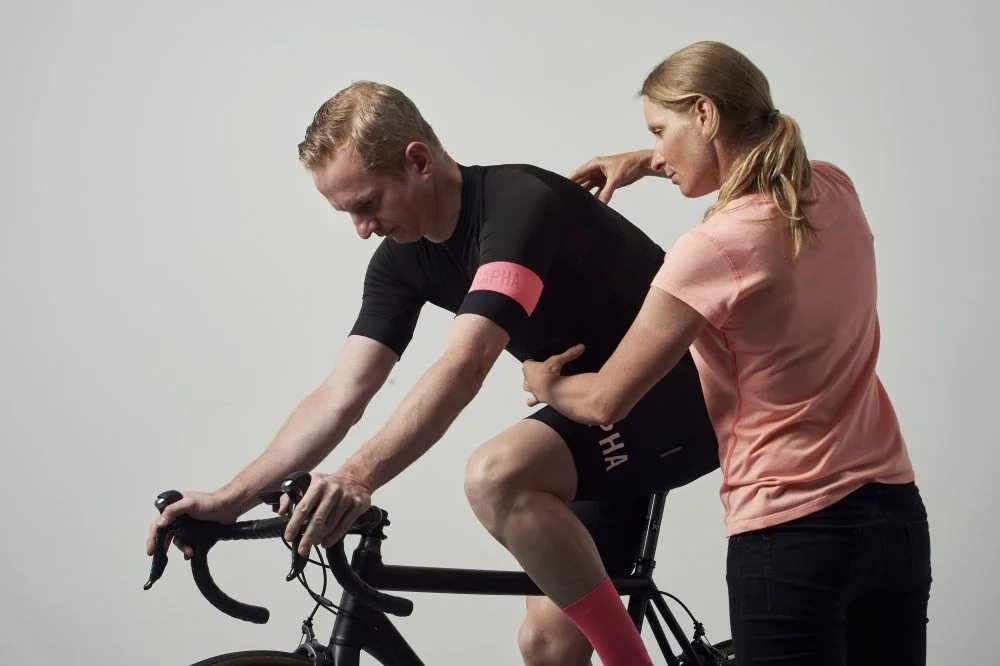
When a cyclist presents with neck pain, physiotherapists evaluate several factors.
Posture Assessment
Therapists examine:
- forward head posture
- rounded shoulders
- thoracic spine alignment
These postural patterns often contribute to cervical strain.
Cervical Range of Motion
Limited neck mobility may indicate joint stiffness or muscle tightness.
Muscle Strength Testing
Key muscles assessed include:
- deep neck flexors
- scapular stabilizers
- core muscles
Weakness in these muscles often contributes to neck overload.
Bike Fit Assessment
Sports physiotherapists may also evaluate bike positioning to identify ergonomic problems.
Read about: Effective Neck Pain Exercises At Home: A Complete Guide to Relief and Improved Mobility
Mobility and Stretching Exercises for Neck Pain in Cyclists
Stretching plays a crucial role in physiotherapy management of neck pain in cyclists because prolonged riding posture often shortens and tightens muscles around the neck, shoulders, and upper back.
During long rides, cyclists typically maintain a forward-leaning posture with the head extended to look ahead.
Over time, this position places constant load on the cervical spine and leads to tightness in the scalene muscles, upper trapezius, pectoral muscles, and posterior shoulder structures.
Regular mobility and stretching exercises help restore normal muscle length, improve joint movement, and reduce muscular stiffness, allowing the neck and upper back to function more efficiently during cycling.
When performed consistently, these exercises also reduce the risk of chronic neck pain and postural dysfunction.
Below are some effective physiotherapy stretches commonly recommended for cyclists.
Scalene Muscle Stretch
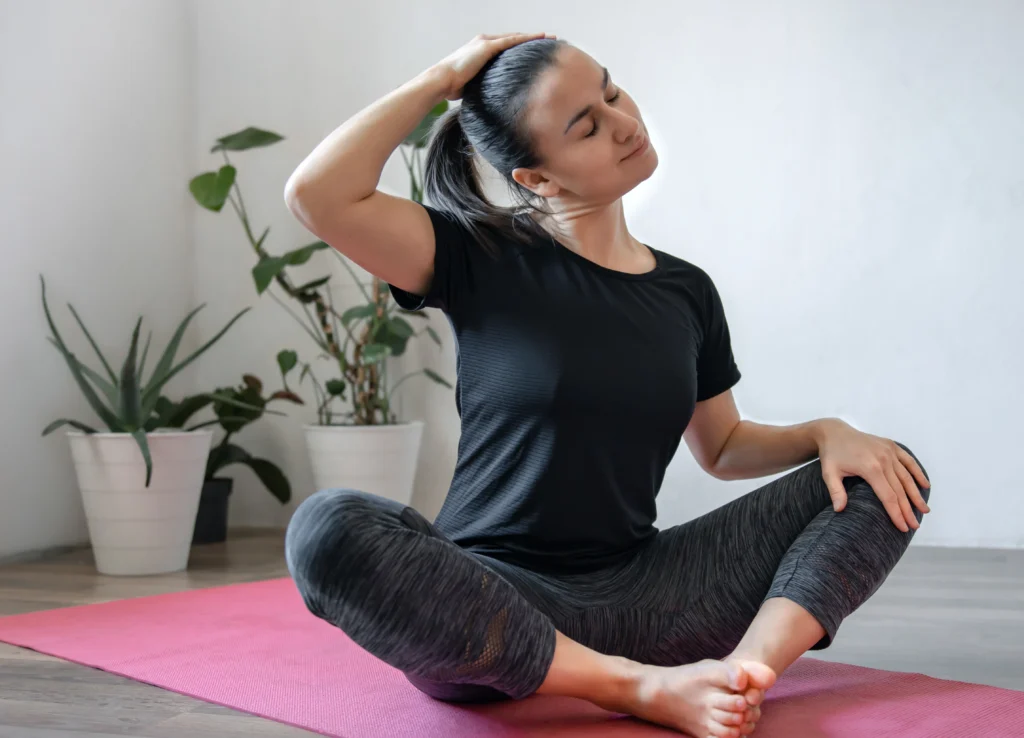
The scalene muscles lie on the sides of the neck and assist with head movement and breathing.
During cycling, prolonged head extension and forward posture can cause these muscles to become tight and overactive.
Tight scalenes may contribute to neck stiffness, discomfort when turning the head, and even referred pain into the shoulder or arm.
Steps to perform
- Sit or stand upright with your shoulders relaxed.
- Place your right hand gently on the left side of your head.
- Slowly tilt your head toward the right shoulder until a stretch is felt along the left side of the neck.
- Keep the opposite shoulder relaxed and avoid shrugging.
- Hold the stretch without forcing the movement.
Hold time: 20-30 seconds
Repetitions: 3-4 repetitions per side
Frequency: 1-2 times daily, especially after long cycling sessions.
This stretch helps reduce muscle tension and improves cervical flexibility, making it easier for cyclists to maintain a comfortable head position while riding.
Posterior Shoulder Capsule Stretch

Cyclists often develop tightness in the posterior shoulder capsule and rotator cuff muscles, especially due to prolonged gripping of handlebars and sustained shoulder stabilization.
Tightness in this area may restrict shoulder mobility and alter posture, which indirectly increases stress on the neck.
Steps to perform
- Stand or sit upright.
- Bring your right arm across your chest at shoulder height.
- Use your left hand to gently pull the right arm closer toward your body.
- Keep the shoulders relaxed and avoid twisting the trunk.
- You should feel a stretch in the back of the shoulder.
Hold time: 20-30 seconds
Repetitions: 3-4 repetitions per arm
Sets: 2 sets
Frequency: Once daily or after cycling workouts.
Improving posterior shoulder flexibility helps maintain better shoulder alignment on the bike and reduces compensatory neck tension.
Thoracic Extension Stretch Over Foam Roller

Limited mobility in the thoracic spine (upper back) is a common problem among cyclists.
When the thoracic spine becomes stiff, the cervical spine is forced to move more than normal to allow the rider to look ahead.
This compensation increases strain on the neck muscles and joints.
Research shows that thoracic spine mobility exercises can significantly reduce neck pain and improve posture in individuals with cervical dysfunction (Cleland et al., 2007).
Thoracic Extension exercises improves mobility of the upper spine and reduces the need for excessive neck extension during cycling.
Steps to perform
- Lie on your back with a foam roller placed horizontally under your upper back.
- Bend your knees with feet flat on the floor.
- Support your head with your hands to protect the neck.
- Gently extend your upper back over the foam roller while keeping the lower back neutral.
- Hold briefly, then return to the starting position.
Repetitions: 10-12 repetitions
Sets: 2-3 sets
Frequency: 4-5 days per week.
You can move the foam roller slightly up or down the thoracic spine to target different segments of the upper back.
Read About: How to Choose the Right and Best Pillow for Neck Pain
Additional Thoracic Mobility Drill (Cyclist-Specific)
Seated Thoracic Rotation

- Sit upright on a chair.
- Cross your arms across your chest.
- Slowly rotate your upper body to one side while keeping the hips stable.
- Return to the center and repeat on the opposite side.
Repetitions: 10 rotations each side
Sets: 2 sets
This exercise helps improve spinal rotation, which is important for maintaining balanced posture during cycling.
Read About: Best Sleeping Position for Neck Pain: A Physiotherapist’s Complete Guide
Why Thoracic Mobility Matters for Cyclists
Improving thoracic spine mobility is particularly important because limited movement in the upper back forces the cervical spine to compensate.
When the thoracic spine becomes stiff, cyclists often increase neck extension to maintain forward vision while riding, which significantly increases the mechanical load on the cervical muscles and joints.
Research by Cleland et al. (2007) demonstrated that thoracic spine mobility exercises can significantly reduce neck pain and improve posture in individuals with cervical dysfunction.
Restoring normal thoracic movement helps redistribute mechanical stress across the spine, reducing strain on the neck during prolonged cycling sessions.
Read about: Which Is The Best Sitting Posture To Avoid Neck Pain And How To Achieve It
Practical Physiotherapy Advice for Cyclists
For optimal results, cyclists should perform these stretches:
- Before cycling as part of a mobility warm-up
- After long rides to reduce stiffness
- On rest days to maintain flexibility and spinal mobility
Combining stretching with strengthening exercises for deep neck flexors, scapular stabilizers, and core muscles further improves posture and endurance during cycling, reducing the likelihood of recurrent neck pain.
Consistent mobility training allows cyclists to maintain better spinal alignment, ride more comfortably for longer durations, and protect the neck from excessive mechanical stress.
Read in detail: Best Desk Setup to Reduce Neck and Back Pain
Ergonomic Adjustments for Cyclists
Exercise alone is often not enough if the bicycle setup continues to place stress on the neck. Physiotherapists frequently assess cycling posture and recommend ergonomic adjustments.
Common modifications include:
Raising handlebar height
Higher handlebars reduce the amount of cervical extension required during riding.
Shortening the stem length
This reduces forward reach and decreases strain on the neck and shoulders.
Adjusting saddle position
A properly positioned saddle improves trunk posture and spinal alignment.
Changing hand positions during rides
Switching between handlebar positions helps reduce static muscle fatigue.
Even small adjustments to bicycle setup can significantly reduce mechanical stress on the cervical spine.
Read in detail about: How to Fix Upper Crossed Syndrome Naturally
The Role of Endurance Training for Neck Muscles

An often overlooked component of rehabilitation is neck muscle endurance training.
Cyclists must maintain head posture for long durations, so the neck muscles require endurance rather than just strength.
Studies have shown that endurance training of cervical muscles can improve neck function and reduce pain in individuals with chronic neck conditions (Ylinen et al., 2003).
For cyclists, this type of conditioning is particularly important during long-distance rides.
A comprehensive physiotherapy program that combines manual therapy, targeted strengthening, thoracic mobility training, and proper bike fitting can significantly reduce neck pain and improve cycling comfort.
When these strategies are applied consistently, most cyclists can return to riding without persistent neck discomfort.
Also read: How to Relieve Neck Tightness Without Equipment
Preventing Neck Pain While Cycling

Preventing neck pain is far easier than treating chronic symptoms later.
For cyclists who ride frequently, whether recreational riders, commuters, or endurance athletes, adopting preventive strategies is essential for maintaining long-term spinal health.
Neck discomfort during cycling usually develops due to prolonged static posture, poor bike setup, muscle fatigue, and inadequate conditioning.
By addressing these factors early, cyclists can significantly reduce the risk of cervical strain and continue riding comfortably.
Research on cycling biomechanics emphasizes that ergonomic adjustments, muscular conditioning, and posture awareness are key components in preventing cycling-related musculoskeletal injuries (Bini & Hume, 2016).
Below are evidence-based strategies recommended by physiotherapists to help cyclists prevent neck pain.
Read more: Cervical Vertigo Explained: Why Neck Pain Make You Feel Dizzy
Get a Professional Bike Fit
One of the most effective ways to prevent neck pain is to ensure the bicycle is properly fitted to the rider’s body.
A professional bike fitting evaluates several important parameters, including:
- saddle height and position
- handlebar height
- reach distance to the handlebars
- stem length
- rider posture on the bike
When a bike is not properly adjusted, the rider may have to overextend the neck to maintain visibility, which places excessive stress on the cervical spine.
Professional bike fitting helps maintain a more neutral spinal alignment and distributes mechanical stress evenly across the body.
Sports medicine research has shown that incorrect cycling posture and improper bicycle setup are major contributors to overuse injuries in cyclists (Salai et al., 1999).
Even small adjustments, such as raising the handlebars by a few centimeters, can reduce cervical extension and significantly improve riding comfort.
Read about : What is Cervical Facet Joint Pain, how it causes cervicogenic headaches and how to correct it naturally
Strengthen the Core
The core muscles play a vital role in stabilizing the spine during cycling.
The core includes the:
- abdominal muscles
- obliques
- deep spinal stabilizers
- pelvic muscles
When these muscles are weak, the neck and shoulder muscles must compensate to maintain posture.
This compensation increases the workload of cervical muscles, leading to fatigue and discomfort.
A strong core allows cyclists to maintain a stable trunk position, which reduces the strain placed on the neck.
Research on spinal biomechanics shows that core muscle endurance contributes to improved spinal stability and reduces the risk of musculoskeletal pain during physical activity (Akuthota & Nadler, 2004).
Cyclists who incorporate core strengthening exercises into their training routines often experience better posture and reduced upper-body fatigue during long rides.
Read in detail about: Cervical Disc Degeneration: The Hidden Cause of your Neck Pain
Change Hand Positions Frequently
Cyclists often maintain the same hand position on the handlebars for extended periods, especially during long rides.
This static posture can lead to fatigue in the shoulders, arms, and neck.
Most road bikes offer multiple hand positions, including:
- tops of the handlebars
- brake hoods
- drops
Switching between these positions helps redistribute muscular load across different muscle groups.
Changing hand positions also alters trunk angle slightly, which helps relieve continuous stress on the cervical spine.
By varying posture throughout a ride, cyclists can reduce static muscle fatigue and improve circulation to the neck and shoulder muscles.
Read about: Cervical Ligament Injury or Neck Ligament Tear
Take Breaks During Long Rides
Endurance cycling places sustained stress on the cervical spine because the neck muscles must continuously support the weight of the head.
The average human head weighs approximately 4 to 6 kilograms, and maintaining it in an extended position for long periods can fatigue the cervical extensor muscles.
Taking short breaks during long rides allows these muscles to relax and recover.
During breaks, cyclists should:
- stand upright
- gently move the neck through comfortable ranges of motion
- stretch the shoulders and upper back
These brief recovery periods help restore blood flow to the muscles and reduce stiffness.
Research on occupational and sports-related neck pain indicates that regular movement breaks reduce muscle fatigue and improve musculoskeletal comfort during prolonged activities (Szeto et al., 2002).
Read about: The Best Physiotherapy Exercises for Cervical Spondylosis Relief
Perform Mobility Exercises
Mobility exercises help maintain flexibility in the neck, shoulders, and thoracic spine.
Cycling posture tends to place the thoracic spine in a flexed position, which can gradually reduce mobility in the upper back. When thoracic mobility decreases, the cervical spine must compensate by moving excessively.
This compensation increases strain on the neck muscles and joints.
Performing daily mobility exercises helps restore movement in the thoracic spine and reduces stress on the cervical region.
Useful mobility exercises include:
- thoracic spine rotations
- shoulder mobility drills
- gentle cervical range-of-motion movements
- foam rolling of the upper back
Improving thoracic mobility is particularly important because it allows the neck to move more naturally without excessive strain.
Clinical research has shown that thoracic spine mobility interventions can significantly improve neck pain and posture in individuals with cervical dysfunction (Cleland et al., 2007).
Read About: Managing Neck Pain in Women: Home Exercises and Advice
Improve Riding Posture Awareness
Another important preventive strategy is simply becoming aware of posture while cycling.
Many cyclists gradually adopt poor posture during long rides, especially when fatigue sets in. Common postural habits that increase neck strain include:
- shrugging the shoulders upward
- locking the elbows
- craning the neck excessively upward
Maintaining relaxed shoulders, slightly bent elbows, and a stable trunk position can help reduce cervical muscle tension.
Cyclists should periodically check their posture during rides and make small adjustments when necessary.
Build Gradual Training Progression
Cyclists sometimes increase their training volume too quickly, which can overload the musculoskeletal system.
Gradually increasing ride duration and intensity allows muscles and joints to adapt to the demands of cycling.
Progressive training helps improve muscular endurance and reduces the risk of overuse injuries, including neck pain.
Preventing neck pain while cycling requires a combination of proper bike setup, muscular conditioning, mobility exercises, and posture awareness.
By incorporating these preventive strategies into regular training routines, cyclists can significantly reduce the risk of cervical strain and enjoy longer, more comfortable rides.
Read about: What Is Cervical Myofascial Pain Syndrome And How To Relieve Trigger Points
When Cyclists Should See a Doctor
Cyclists should seek medical evaluation if they experience:
- persistent neck pain lasting more than two weeks
- pain radiating into the arms
- numbness or tingling in the hands
- weakness in the upper limbs
- severe headaches
These symptoms may indicate cervical nerve compression.
Read in detail about: Cervical Radiculopathy: Why Neck Nerve Pain Travels to the Arm
The Long-Term Outlook
With proper physiotherapy care, most cyclists recover well from neck pain.
Treatment typically includes posture correction, strengthening exercises, ergonomic adjustments, and gradual return to cycling.
By addressing the underlying causes early, cyclists can continue riding comfortably and reduce the risk of chronic neck problems.
Read in detail about: What is Cervical Spondylosis? The Truth Behind Chronic Neck Pain
Frequently Asked Questions About Neck Pain in Cyclists
1. Is neck pain common among cyclists?
Yes. Neck pain is one of the most common musculoskeletal complaints in cyclists. The forward-leaning riding posture forces the neck into prolonged extension, which can lead to muscle fatigue and stiffness during long rides.
2. Why does my neck hurt after long cycling rides?
Neck pain after cycling usually occurs due to prolonged cervical extension, poor bike fit, weak core muscles, and static muscle fatigue. When the neck muscles work continuously to support the head during riding, they can become strained and painful.
3. Can poor bike fit cause neck pain while cycling?
Yes. Incorrect handlebar height, excessive reach to the handlebars, or improper saddle position can increase strain on the cervical spine. A professional bike fitting can significantly reduce neck and shoulder stress.
4. What muscles become tight during cycling?
Cycling commonly tightens the upper trapezius, levator scapulae, suboccipital muscles, and chest muscles. These muscles work continuously to stabilize the neck and shoulders during riding.
5. How can cyclists prevent neck pain during long rides?
Cyclists can prevent neck pain by maintaining proper bike posture, strengthening core and shoulder muscles, performing regular mobility exercises, and taking short breaks during long rides.
6. Can cycling cause headaches related to neck pain?
Yes. Prolonged neck extension can irritate the muscles at the base of the skull, which may lead to cervicogenic headaches. These headaches often start in the neck and radiate toward the back of the head.
7. Should cyclists stretch their neck before or after rides?
Gentle mobility exercises before cycling can prepare the neck muscles for activity, while stretching after rides helps relieve muscle tension and maintain flexibility.
8. When should a cyclist see a physiotherapist for neck pain?
If neck pain persists for more than two weeks, worsens during rides, or causes symptoms such as numbness, tingling, or arm weakness, a physiotherapist should evaluate the condition.
Stay tuned with us for more health related topics.
Follow us on LinkedIn and Instagram for more.
More Read


Medical Disclaimer!
This article has been reviewed and written under the guidance of our Head Physiotherapist, Dr. Kruti Raj (PT, MUHS,CPT,CMPT). The information shared is intended for educational purposes only and should not be considered a substitute for personalized medical advice, diagnosis, or treatment.
Please consult us or any other qualified healthcare professional before beginning any exercise program, especially if you are experiencing pain, recovering from injury, or managing a medical condition.


