


What happens to your body when you stop birth control?
The answer depends on the type of contraception you were using.
Stopping birth control does not affect every woman in the same way.
Some notice their periods becoming different, while others notice changes in cramps, bleeding, acne, libido, or symptoms that were previously controlled by contraception.
Quick Answer
When you stop birth control, your body generally begins returning to its natural reproductive pattern. Your period may change, cramps or acne may return, and fertility can come back quickly with most reversible methods. The experience depends on the type of contraception you used and what your menstrual cycle was like before starting it. Injectable contraception can take longer to wear off than pills, implants, or IUDs.
The type of birth control matters too.
Fertility can return quickly after stopping pills or removing an IUD or implant, while injectable contraception can take longer to wear off.
For most reversible contraceptive methods, stopping birth control does not permanently reduce fertility.
Instead, the body gradually returns to its own reproductive pattern, which may or may not look exactly like it did before contraception.
Key Takeaways
- Stopping birth control does not cause the same changes in every woman.
- Fertility can return quickly after stopping many reversible contraceptive methods.
- Periods may become heavier or more painful if hormonal contraception previously reduced these symptoms.
- Injectable contraception can take longer to wear off than many other methods.
- Changes in acne, libido, mood or weight are not predictable for everyone.
- Stopping birth control does not automatically mean you need to change your exercise routine.
- Physiotherapy is relevant for specific pelvic-floor or musculoskeletal symptoms, not for regulating reproductive hormones.
What Happens to Your Body When You Stop Birth Control?
When hormonal contraception is stopped, the hormones supplied by the contraceptive are no longer being delivered.
Depending on the method, this allows the body’s natural reproductive hormone signalling and ovulation to resume.
However, there is no single “post-birth-control” experience.
Some women notice almost no physical difference.
Others notice changes in menstrual bleeding, cramps, skin, libido, or symptoms that hormonal contraception had previously helped control.
The changes also depend on what your menstrual cycle was like before starting contraception.
Does Your Period Come Back Immediately?
Not always.
After stopping hormonal contraception, bleeding may occur relatively soon, but the first bleeding episode does not necessarily mean that a regular ovulatory menstrual cycle has already been established.
The timing of the first natural period varies between women and between contraceptive methods.
If your periods were regular before starting contraception, they may gradually return toward that pattern.
However, if you had irregular periods before using birth control, those irregularities may become noticeable again after stopping.
For example, someone with PCOS may find that irregular cycles return after discontinuing hormonal contraception.
This does not necessarily mean that the contraceptive caused the irregularity.
It may have been controlling or masking an underlying menstrual pattern.
Can Your Period Become Heavier After Stopping Birth Control?
It can, particularly if your contraceptive previously made your periods lighter.
Some hormonal contraceptives reduce menstrual bleeding, and some can make periods very light or stop them altogether.
After stopping, your natural bleeding pattern may return.
This can make your periods appear heavier compared with what you experienced while using contraception.
However, very heavy, prolonged, or unusual bleeding should not automatically be attributed to stopping birth control.
Other causes may need to be considered if the change is significant or persistent.
Can Stopping Birth Control Cause Period Cramps?
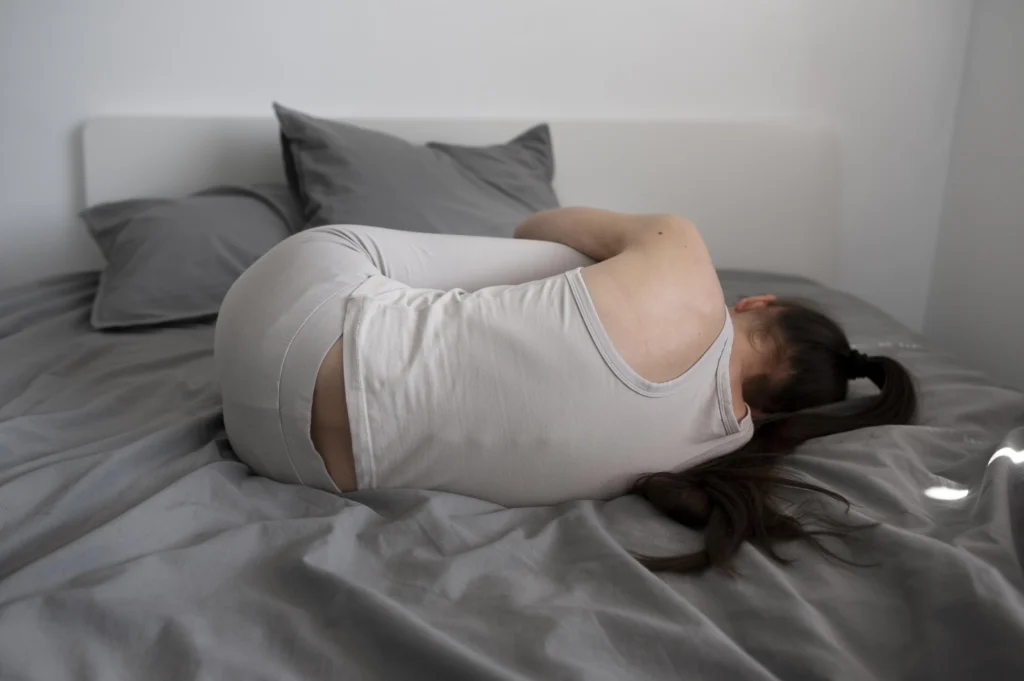
It may seem that way, especially when hormonal contraception had previously reduced menstrual symptoms.
If your contraceptive made periods lighter or reduced menstrual discomfort, those symptoms may become noticeable again after stopping.
That does not necessarily mean that stopping birth control directly caused new pelvic pain.
Persistent pelvic pain, severe menstrual pain, pain outside your period, or pain that interferes with normal activities deserves appropriate medical assessment.
Does Fertility Return After Stopping Birth Control?
For most reversible contraceptive methods, fertility returns after discontinuation.
A systematic review and meta-analysis of 22 studies involving 14,884 women found that contraceptive use was not associated with a significant negative effect on the ability to conceive after discontinuation.
The pooled pregnancy rate within 12 months was approximately 83% (Girum & Wasie et al., 2018).
The timing can still vary considerably between individuals.
Importantly, using contraception for several years does not mean that the body needs to “detox” from birth control before fertility can return.
How Quickly Can You Get Pregnant After Stopping Birth Control?
Pregnancy can occur soon after stopping many forms of contraception.
Ovulation may occur before the first noticeable menstrual period.
This means that waiting for your first period is not a reliable way to determine whether fertility has returned.
The World Health Organization states that fertility returns quickly after stopping both combined oral contraceptives and progestin-only pills, with no delay in fertility (World Health Organization, 2025).
If you do not want to become pregnant, another appropriate contraceptive method should be used when you stop your current method.
If you are trying to conceive, there is generally no medical reason to wait for several months simply because you previously used birth control pills.
What Happens After Removing a Hormonal IUD?
A hormonal IUD releases a progestin and can significantly change menstrual bleeding while it is in place.
After removal, fertility can return rapidly and your periods may gradually move toward their previous pattern.
The World Health Organization states that fertility returns immediately after removal of an IUD (World Health Organization, 2026).
If your periods were naturally heavier or more painful before the IUD, those symptoms may become noticeable again.
The return of these symptoms does not necessarily mean that removing the IUD caused a new problem.
What Happens After Removing a Birth Control Implant?
After a contraceptive implant is removed, the contraceptive hormone is no longer being delivered and ovulation can return relatively quickly.
Your menstrual bleeding may also change as your natural cycle resumes.
However, bleeding during implant use does not reliably predict exactly what your menstrual cycle will look like after removal.
Some women return to their previous pattern, while others notice a different pattern for a period of time.
What Happens After Stopping the Birth Control Injection?
The injectable contraceptive is different from many other reversible methods because its contraceptive effect can persist after the last injection.
For depot medroxyprogesterone acetate, return to ovulation can take substantially longer than it does after stopping oral contraceptives or removing an IUD or implant.
A 2025 narrative review examining subcutaneous depot medroxyprogesterone acetate found that return to ovulation varied between individuals and could take several months (Osoti et al., 2025).
This delay does not mean that the injection permanently damages fertility.
It means that the contraceptive effect can take longer to wear off.
Can Your Skin Change After Stopping Birth Control?
Some women notice changes in their skin after stopping hormonal contraception.
For example, if hormonal contraception had helped control acne, acne may become more noticeable again after discontinuation.
This does not necessarily mean that stopping birth control has damaged your skin.
Instead, the hormonal environment that existed before contraception may become relevant again.
If significant or persistent acne develops, a dermatologist or other appropriate healthcare professional can help identify the underlying cause and treatment options.
Can Your Mood Change After Stopping Birth Control?
Mood can change around the time contraception is stopped, but there is no universal “post-pill mood change.”
Mood is influenced by many factors, including sleep, stress, menstrual symptoms, relationships, medications, mental health, and general health.
Therefore, a mood change after stopping birth control should not automatically be blamed on the contraceptive.
Persistent low mood, significant anxiety, major changes in sleep, or symptoms affecting daily functioning deserve appropriate professional assessment.
Can Your Sex Drive Change?
Sexual desire may change after stopping contraception, but there is no predictable direction.
Some women notice increased interest in sex, while others notice no change or even a decrease.
Libido is influenced by many factors, including stress, sleep, relationship circumstances, pain, medications, hormonal factors, and psychological wellbeing.
A change in sexual desire by itself cannot establish whether stopping contraception was beneficial or harmful.
Can Your Weight Change After Stopping Birth Control?
There is no universal amount of weight that women should expect to lose or gain after stopping birth control.
Some women may notice changes in appetite, activity, fluid retention, or body weight, while others notice very little.
It is therefore misleading to promise that stopping birth control will automatically cause weight loss.
Body weight is influenced by multiple factors, including nutrition, physical activity, sleep, stress, medications, metabolic health, and changes in routine.
Can Stopping Birth Control Affect Exercise?
Stopping birth control does not automatically mean that you need to stop exercising.
Most women can continue their usual activities, including walking, running, strength training, swimming, cycling, or yoga, according to their fitness level and symptoms.
However, exercise may feel different if your natural periods become heavier or more painful after stopping a hormonal method.
For example, menstrual cramps or heavy bleeding may make running or high-intensity training less comfortable during certain days of the cycle.
This is different from saying that stopping contraception makes exercise unsafe.
If you experience severe pain, dizziness, unusual weakness, or very heavy bleeding during exercise, reduce the intensity and seek appropriate medical assessment.
Where Does Physiotherapy Fit In?
Stopping birth control itself is not a physiotherapy condition.
A physiotherapist cannot regulate reproductive hormones, restart ovulation, determine whether your period has returned, or treat the contraceptive effect itself.
The physiotherapy role becomes relevant when there is a separate musculoskeletal or pelvic-floor problem.
For example, a pelvic-health physiotherapist may assess symptoms such as:
- Persistent pelvic pain
- Pelvic-floor muscle overactivity
- Pain with intercourse
- Movement-related pelvic or abdominal discomfort
- Difficulty relaxing or coordinating the pelvic-floor muscles
- Musculoskeletal symptoms affecting exercise or daily activity
These symptoms should be considered in the context of the individual’s medical history rather than automatically being attributed to stopping contraception.
Can Pelvic-Floor Physiotherapy Help With Pelvic Pain?
Yes, pelvic-health physiotherapy may have a role for selected women with chronic pelvic pain.
Importantly, treatment is not necessarily about strengthening the pelvic floor.
Depending on the assessment, treatment may involve movement retraining, breathing strategies, relaxation, education, mobility work, manual techniques, or individualized exercise.
Recent evidence suggests that multimodal physical therapy can reduce pain in women with chronic pelvic pain, although treatment should be individualized and integrated with appropriate medical care (Bittelbrunn et al., 2023).
Do You Need Kegel Exercises After Stopping Birth Control?
No.
There is no reason to automatically perform Kegel exercises simply because you have stopped birth control.
Hormonal contraception does not mean that your pelvic-floor muscles have automatically become weak.
Some women with pelvic pain may actually have pelvic-floor overactivity or difficulty relaxing the muscles.
In these situations, repeatedly performing strengthening exercises without assessment may not address the underlying problem.
A systematic review found that pelvic-floor physical therapy may be beneficial for pelvic-floor hypertonicity and associated conditions such as chronic pelvic pain and dyspareunia, although the evidence base still has limitations. (van Reijn-Baggen et al., 2022).
The right exercise depends on the individual’s symptoms and physical assessment.
What If Your Periods Do Not Return?
If your periods do not return after stopping contraception, do not automatically assume that your body is simply “adjusting.”
Pregnancy should be considered if there has been unprotected sex.
Other possible causes of absent periods include PCOS, major changes in body weight, very high exercise loads, thyroid disorders, elevated prolactin, perimenopause, and other medical conditions.
The appropriate evaluation depends on your age, contraceptive method, previous menstrual pattern, symptoms, and pregnancy possibility.
Myth vs Fact
Myth: Your body needs to detox after stopping birth control.
Fact: There is no medical need for a “birth control detox.” Reproductive function can resume naturally after stopping reversible contraception.
Myth: Everyone gains or loses weight after stopping birth control.
Fact: Weight changes are not predictable and can be influenced by nutrition, activity, sleep, stress and other factors.
Myth: You need Kegel exercises after stopping birth control.
Fact: Stopping contraception does not automatically weaken the pelvic-floor muscles. Exercise should be based on symptoms and assessment.
Myth: You cannot get pregnant until your first period returns.
Fact: Ovulation can occur before the first noticeable menstrual period, so fertility may return before the first period.
Lesser-Known Fact: Your First Bleeding May Not Tell the Whole Story
One of the less obvious things about stopping hormonal contraception is that the first bleeding episode does not necessarily tell you when your natural ovulatory cycle has completely returned.
Ovulation can occur before the first obvious menstrual period.
This means that the return of bleeding and the return of fertility are related but are not exactly the same event.
For someone trying to avoid pregnancy, relying on the first period as proof that fertility has not yet returned can therefore be misleading.
When Should You See a Healthcare Professional?
Speak with a healthcare professional if you experience:
- Very heavy or prolonged bleeding
- Severe or persistent pelvic pain
- Repeatedly missed periods
- A positive pregnancy test with significant pain or bleeding
- Persistent dizziness, weakness, or unusual fatigue
- Symptoms that significantly affect exercise or daily activities
- Concerns about fertility after stopping contraception
Do not assume that every change after stopping birth control is simply a normal hormonal adjustment.
Sometimes stopping contraception allows a previously controlled condition to become noticeable again.
Other times, a new symptom may have an unrelated cause.
Final Thoughts
Stopping birth control does not create one predictable set of changes. Your period, cramps, skin, libido and other symptoms may change as your natural reproductive pattern returns.
From a physiotherapy perspective, the focus should be on function and symptoms rather than hormonal regulation. Persistent pelvic pain, pelvic-floor problems or movement-related symptoms may benefit from an individualized assessment.
Conclusion
Stopping birth control does not produce one predictable set of physical changes.
Some women notice their natural menstrual pattern returning.
Others notice changes in bleeding, cramps, acne, libido, or symptoms that had previously been controlled by contraception.
For most reversible methods, fertility returns without a lasting reduction in the ability to conceive, although injectable contraception can take longer to wear off.
The most useful approach is to look at your symptoms in context rather than assuming that every change is caused by stopping birth control.
From a physiotherapy perspective, the focus should be on function and symptoms, not hormonal regulation.
Persistent pelvic pain, pelvic-floor dysfunction, painful intercourse, or movement-related problems may benefit from an individualized pelvic-health assessment after appropriate medical causes have been considered.
More recent evidence supports multimodal physical therapy for chronic pelvic pain, while also emphasizing the complexity of these conditions. (Starzec-Proserpio et al., 2025).
Frequently Asked Questions
1. What happens to your body when you stop birth control?
Your body generally begins returning to its natural reproductive pattern. Periods, cramps, skin, libido and other symptoms may change depending on the contraceptive method and your previous menstrual pattern.
2. How quickly does fertility return after stopping birth control?
Fertility can return quickly after stopping many reversible contraceptive methods. Injectable contraception can take longer for ovulation to return.
3. Can your period become heavier after stopping birth control?
Yes. If hormonal contraception previously made your periods lighter, your natural bleeding pattern may become more noticeable after stopping.
4. Can stopping birth control cause cramps?
Menstrual cramps may become noticeable again if hormonal contraception previously reduced them. Severe or persistent pelvic pain should be assessed.
5. Can stopping birth control affect your weight?
There is no predictable weight change after stopping birth control. Weight is influenced by many factors, including nutrition, activity, sleep and stress.
6. Can you exercise after stopping birth control?
In general, stopping birth control does not require you to stop exercising. Your activity can be adjusted according to symptoms, fitness level and comfort.
7. Can physiotherapy help after stopping birth control?
Physiotherapy does not regulate reproductive hormones, but pelvic-health physiotherapy may help with selected pelvic-floor, pelvic pain or musculoskeletal symptoms after appropriate medical assessment.
Stay tuned with us for more health related topics.
Follow us on LinkedIn and Instagram for more.
More Read


Medical Disclaimer
This article is intended for general educational purposes only and should not be considered a substitute for individualized medical advice, diagnosis or treatment. Different contraceptive methods have different effects, timelines, benefits and risks. If you are stopping contraception because of symptoms, planning a pregnancy, experiencing significant menstrual changes, or developing persistent pelvic pain or other concerning symptoms, consult a qualified healthcare professional for personalized guidance.


