
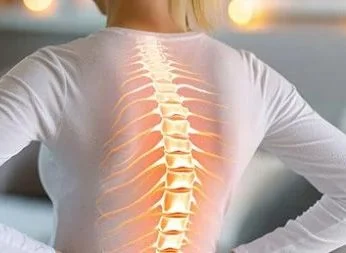

Understanding Cervical Kyphosis– also known as Military Neck
The cervical spine normally has a gentle C-shaped inward curve called cervical lordosis.
This curve helps distribute the weight of the head, maintain balance, and absorb mechanical stress during movement.
In military neck, this normal curvature becomes straightened or reversed, resulting in a condition known as cervical kyphosis.
In severe cases, the neck may even curve forward instead of backward. (Cleveland Clinic)
The term “military neck” originates from the rigid upright posture seen in soldiers standing at attention, where the neck loses its natural curve.
From a physiotherapy perspective, military neck is not just a posture problem. It is a biomechanical dysfunction of the cervical spine involving muscles, discs, ligaments, and neural structures.
If untreated, it may gradually lead to:
- Chronic neck pain
- Reduced neck mobility
- Nerve compression symptoms
- Accelerated spinal degeneration
Understanding why this condition develops and how physiotherapy restores cervical biomechanics is crucial for long-term recovery.
Read about our Complete Neck Pain Guide : Causes, Symptoms, Exercises and Treatment
Also read: How to Relieve Neck Tightness Without Equipment
Why the Natural Neck Curve Matters
Your head weighs approximately 4-6 kg, roughly the weight of a bowling ball.
When the cervical spine maintains its normal curvature:
- The weight is evenly distributed across discs and joints
- Muscles work efficiently with minimal strain
- Nerves exit the spine without compression
When the curve disappears:
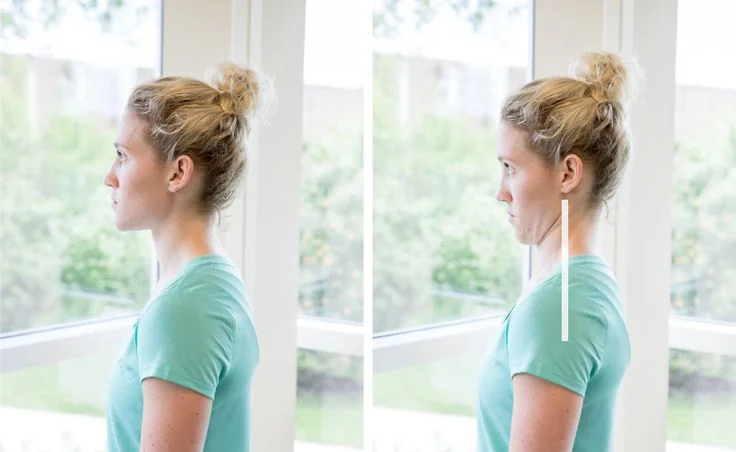
- The head shifts forward
- Cervical muscles must work 2-3 times harder
- Discs and joints experience abnormal compressive forces
Over time this leads to:
- Disc degeneration
- Muscle fatigue
- Cervicogenic headaches
- Nerve irritation
Research has shown that postural alterations in the cervical and thoracic spine can significantly influence neck pain and range of motion, highlighting the importance of spinal alignment in cervical dysfunction. (IJPHY)
Read more: Cervical Vertigo Explained: Why Neck Pain Make You Feel Dizzy
Types of Cervical Kyphosis

From a clinical perspective, military neck can develop in several forms.
Postural Cervical Kyphosis
The most common type seen in:
- Desk workers
- Students
- Smartphone users
This occurs due to long-term forward head posture.
Learn how posture affects neck pain and correction exercises in our article on Simple Posture Correction Exercises for Forward Head Posture
Degenerative Cervical Kyphosis
Age-related changes lead to:
- Disc height loss
- Ligament laxity
- Vertebral instability
Degenerative disc disease is one of the most frequent contributors to cervical curvature loss. (Healthline)
Read in detail about: Cervical Disc Degeneration: The Hidden Cause of your Neck Pain
Post-Traumatic Cervical Kyphosis
Occurs after injuries such as:
- Whiplash
- Road traffic accidents
- Sports injuries
Recent clinical reports highlight delayed post-traumatic cervical kyphosis as a significant spinal complication following untreated cervical injuries. (Lippincott Journals)
Congenital Cervical Kyphosis
Rare condition present from birth due to abnormal vertebral development.
Iatrogenic Cervical Kyphosis
Develops after spinal surgery, especially when spinal fusion alters vertebral alignment.
Read about : 15 Common Causes of Neck Pain You Should Know
Causes of Military Neck
1. Chronic Forward Head Posture
This is the most common cause today.
Activities responsible include:
- Smartphone use
- Laptop work
- Gaming
- Reading with head bent down
When the head moves forward by just 2.5 cm, the load on cervical muscles increases dramatically.
Read in detail: Neck Pain from Phone Use? Here’s How to Treat Text Neck Syndrome
2. Degenerative Disc Disease
As discs lose hydration and height:
- Vertebrae collapse closer together
- Cervical alignment gradually changes
Read in detail about: Cervical Radiculopathy: Why Neck Nerve Pain Travels to the Arm
3. Neck Trauma
Examples include:
- Whiplash injuries
- Sports collisions
- Falls
Trauma can damage ligaments and muscles responsible for maintaining cervical curvature.
Read in detail: Whiplash Injury After An Accident? Here’s Treatment And Expert Rehab Guide
4. Weak Deep Cervical Muscles
Deep neck flexors act like stabilizing muscles for cervical posture.
Weakness leads to:
- Forward head posture
- Loss of cervical lordosis
5. Thoracic Spine Kyphosis
A stiff upper back forces the neck to compensate, contributing to cervical curvature changes.
Read in detail about: What is Cervical Spondylosis? The Truth Behind Chronic Neck Pain
Mechanism of Pain in Military Neck
Military neck produces pain through several physiological mechanisms.
Increased Mechanical Load
Without the natural cervical curve:
- Discs absorb excessive compression
- Facet joints experience abnormal stress
This triggers chronic inflammation.
Muscle Overuse and Fatigue
Muscles such as:
- Upper trapezius
- Levator scapulae
- Suboccipital muscles
must work constantly to hold the head upright.
This results in:
- Trigger points
- Muscle stiffness
- Tension headaches
Cervical Nerve Irritation
Abnormal spinal alignment may narrow neural foramina, compressing nerve roots.
Symptoms may include:
- Arm pain
- Tingling
- Numbness
- Weak grip strength
Reduced Shock Absorption
The cervical curve normally acts as a shock absorber.
Loss of curvature exposes spinal discs to repetitive stress.
Read about: Effective Neck Pain Exercises At Home: A Complete Guide to Relief and Improved Mobility
Stages of Cervical Curvature Loss
Military neck often develops gradually rather than appearing suddenly.
Early Stage
In the early stage, the cervical spine begins to lose its natural lordotic curve due to prolonged forward head posture or muscular imbalance.
Intermediate Stage
In the intermediate stage, the cervical spine may become almost completely straight, leading to increased muscular strain and reduced shock absorption.
Advanced Stage
In advanced stages, the curvature may reverse into true cervical kyphosis, where the neck curves forward abnormally.
This structural change may increase stress on spinal discs, ligaments, and nerve roots, increasing the risk of degenerative cervical conditions.
Research on spinal posture has shown that forward head posture and thoracic kyphosis can significantly influence cervical biomechanics and spinal loading patterns. (PubMed)
Read in detail about: How to Fix Upper Crossed Syndrome Naturally
Symptoms of Military Neck
Patients with cervical kyphosis may experience:
Common Symptoms
- Persistent neck pain
- Neck stiffness
- Reduced neck mobility
- Shoulder tightness
- Headaches
Neurological Symptoms
In more severe cases:
- Numbness in arms or fingers
- Tingling sensation
- Muscle weakness
Advanced Symptoms
If the spinal cord becomes compressed:
- Balance problems
- Coordination difficulties
- Difficulty walking
Read more: Cervical Myelopathy: The Hidden Neck Condition Affecting Your Walking
Diagnosis
Diagnosis typically involves:
Clinical Examination
Physiotherapists evaluate:
- Cervical posture
- Range of motion
- Muscle strength
- Scapular stability
Postural Assessment
Important indicators include:
- Forward head posture
- Shoulder rounding
- Thoracic kyphosis
Radiological Imaging
X-ray imaging helps confirm:
- Loss of cervical lordosis
- Reversed curvature
- Vertebral alignment
Learn About: The Ultimate Neck Stretch Routine for Desk Workers in 2026
Craniovertebral Angle
Physiotherapists use several clinical assessments to evaluate cervical alignment and detect military neck.
One commonly used method is measuring the craniovertebral angle, which helps assess forward head posture.
Reduced craniovertebral angle indicates forward head positioning and cervical alignment changes. Additional assessments include cervical range of motion testing, muscle strength evaluation, and palpation of cervical musculature for trigger points or tightness. (PubMed)
Research shows that forward head posture and thoracic kyphosis are closely associated with reduced cervical range of motion and neck pain, highlighting the importance of posture assessment during clinical evaluation. (IJPHY)
Read about: Which Is The Best Sitting Posture To Avoid Neck Pain And How To Achieve It
Physiotherapy Treatment for Military Neck
Physiotherapy is the first-line treatment for most cases of cervical kyphosis.
The goals are:
- Restore cervical alignment
- Strengthen stabilizing muscles
- Improve mobility
- Reduce pain
Deep Cervical Flexor Activation Training
Deep cervical flexors are crucial for restoring the neck curve.
Exercise: Chin Nod (Deep Neck Flexor Training)
- Lie on your back.
- Gently nod your head as if saying “yes.”
- Avoid lifting the head.
- Hold for 5 seconds.
Repeat 10–15 times.
Research shows that deep cervical flexor training improves cervical stability and reduces neck pain.
Learn: How to do Chin Tucks for Neck Pain Relief and Posture Correction
Cervical Extension Strengthening
Extension exercises help restore the cervical lordotic curve.
Exercise: Prone Cervical Extension
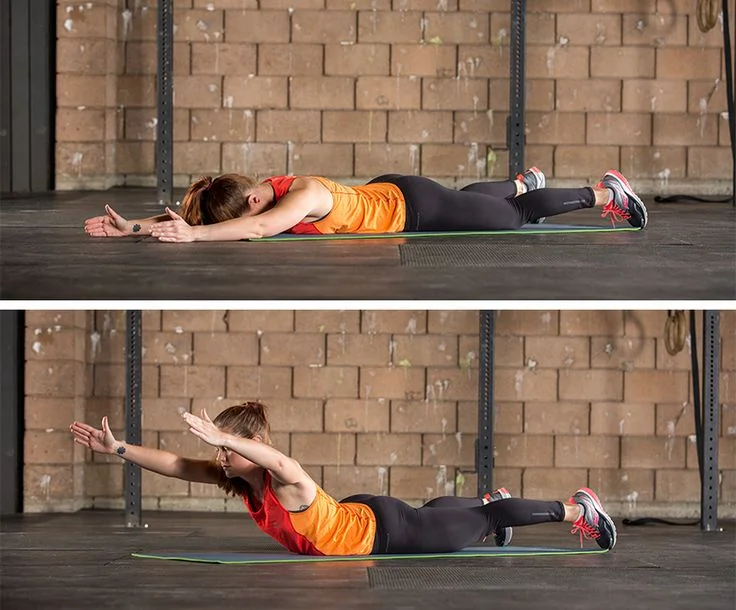
- Lie face down with head off the bed.
- Slowly raise the head upward.
- Hold for 3 seconds.
Perform 10 repetitions.
Thoracic Spine Mobility Exercises
A stiff thoracic spine worsens cervical alignment.
Exercise: Thoracic Foam Roller Extension

- Lie on a foam roller placed under the upper back.
- Extend your spine gently.
- Hold for 10 seconds.
Repeat 8-10 times.
Scapular Stabilization Exercises
Shoulder blade muscles support cervical posture.
Exercise: Scapular Retraction

- Sit upright.
- Squeeze shoulder blades together.
- Hold for 5 seconds.
Perform 12 repetitions.
Cervical Traction Therapy

Manual or mechanical traction may help:
- Reduce disc pressure
- Relieve nerve compression
- Improve spinal alignment
Traction is particularly useful in patients with nerve symptoms.
Read more: Is Cervical Traction For Neck Pain Really Effective
Myofascial Release Therapy

Trigger points in neck muscles contribute to pain.
Physiotherapists may use:
- Manual myofascial release
- Instrument-assisted soft tissue mobilization
This improves blood flow and reduces muscle tension.
Read about: What Is Cervical Myofascial Pain Syndrome And How To Relieve Trigger Points
McKenzie Cervical Extension Therapy
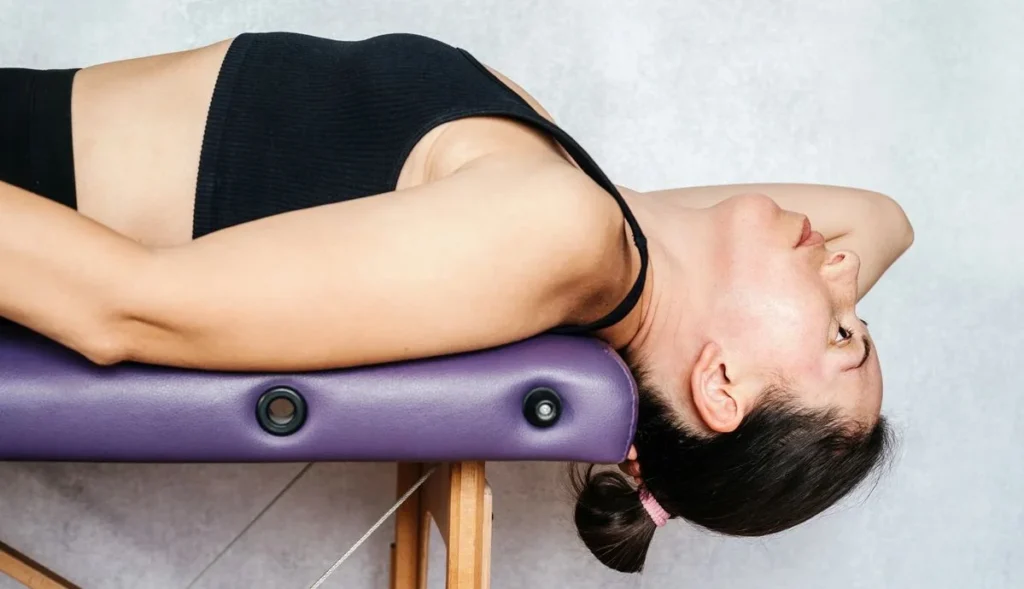
The McKenzie method focuses on repeated cervical extension movements to restore spinal alignment.
Benefits include:
- Pain centralization
- Disc pressure reduction
- Improved cervical posture
Read about: The Most Effective McKenzie Exercises For Neck Pain
Neuromuscular Postural Retraining
Advanced rehabilitation focuses on:
- Sensorimotor control
- Postural awareness
- movement re-education
Patients learn how to maintain neutral cervical posture during daily activities.
Read in detail: Best Desk Setup to Reduce Neck and Back Pain
Ergonomic Correction
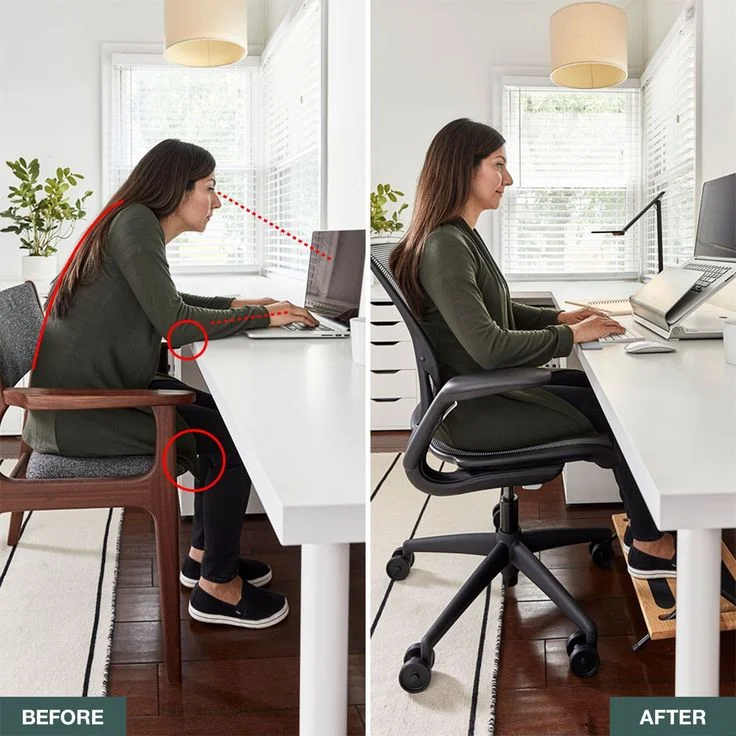
Posture correction plays a major role in preventing recurrence.
Recommended strategies:
- Screen at eye level
- Use ergonomic chairs
- Avoid prolonged smartphone bending
Also Read: Ultimate 6 Weeks Neck Rehabilitation Exercises For Pain Relief
Advanced Spinal Decompression Techniques
Modern physiotherapy clinics sometimes incorporate spinal decompression strategies to reduce pressure on cervical discs and nerves in patients with military neck.
Techniques such as mechanical cervical traction, intermittent traction therapy, and positional spinal decompression can gently separate vertebrae and relieve disc compression.
Research reports that multimodal rehabilitation programs combining cervical traction, extension exercises, and posture correction may improve cervical alignment and reduce nerve-related symptoms in patients with cervical kyphosis.
These techniques aim to restore spinal biomechanics and reduce mechanical stress on cervical structures. (PubMed)
Read about: How to Relieve Morning Neck Stiffness Naturally
Lesser-Known Fact About Military Neck
Many patients believe military neck is purely a structural problem.
However, modern research shows muscle imbalance and neuromuscular dysfunction are often the primary drivers, meaning physiotherapy can significantly improve spinal alignment even without surgery.
Read About: Best Sleeping Position for Neck Pain: A Physiotherapist’s Complete Guide
Sleep Position Guide for Patients with Military Neck
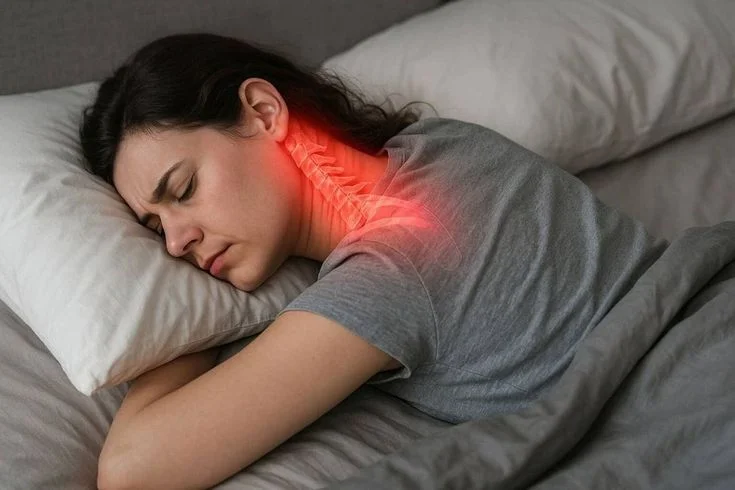
Sleep posture plays a crucial role in managing military neck because the cervical spine remains in one position for several hours during sleep.
Poor sleeping alignment can worsen cervical kyphosis by forcing the neck into prolonged flexion or extension.
Patients with military neck should ideally sleep on their back or side with the neck supported in a neutral position.
Back sleeping allows the cervical spine to maintain a gentle curve when a supportive pillow is used. Side sleeping can also be comfortable if the pillow fills the space between the shoulder and neck.
Sleeping on the stomach is generally discouraged because it forces the neck into excessive rotation and extension, increasing stress on cervical joints and muscles.
Research on cervical biomechanics during sleep shows that pillow height and sleep posture significantly influence cervical spine alignment and pressure distribution. (PubMed)
Read About: How to Choose the Right and Best Pillow for Neck Pain
Best Pillow Types for Cervical Kyphosis
A supportive pillow helps maintain cervical alignment during sleep and reduces morning neck stiffness.
For individuals with military neck, orthopedic cervical pillows or memory foam contour pillows are commonly recommended because they help support the natural cervical curvature.
A systematic review evaluating different pillow designs found that certain ergonomic pillows significantly reduced neck pain, waking symptoms, and disability in individuals with chronic neck problems.
The study also highlighted that pillow height and shape can influence cervical spine positioning during sleep.
Choosing a pillow that maintains neutral alignment between the head, neck, and shoulders is therefore essential in managing cervical spine disorders. (PubMed)
Another randomized controlled trial found that using an ergonomic latex pillow improved craniovertebral angle and cervical muscle endurance in patients undergoing physiotherapy for cervical spine disorders.
These improvements suggest that appropriate pillow support may assist in improving cervical posture and muscle function. (PubMed)
Read more on : Manual Therapy for Neck Pain: A Physiotherapist’s Evidence Based Guide
When Surgery May Be Required
Surgery is considered when:
- Severe spinal deformity exists
- Neurological symptoms worsen
- Conservative treatment fails
Surgical procedures aim to restore spinal alignment and decompress nerves.
Read about: Managing Neck Pain in Women: Home Exercises and Advice
Prevention Strategies
Preventing cervical kyphosis requires daily spinal care.
Maintain Neutral Posture
Avoid forward head posture while:
- working
- reading
- using smartphones
Strengthen Neck and Upper Back
Regular strengthening exercises maintain spinal stability.
Take Frequent Movement Breaks
Avoid sitting longer than 30-40 minutes without movement.
Read about : What is Cervical Facet Joint Pain, how it causes cervicogenic headaches and how to correct it naturally
Clinical Insight
Many patients with military neck assume their neck structure cannot change.
In reality, most cases are functional postural disorders rather than fixed deformities.
Through consistent physiotherapy, posture correction, and muscle retraining, it is often possible to restore cervical alignment and significantly reduce pain.
Read about: Cervical Ligament Injury or Neck Ligament Tear
Physio Prescription
Daily routine for military neck patients:
Morning
- Chin nod exercises- 10 reps
- Thoracic extension- 10 reps
Afternoon
- Scapular retractions- 12 reps
Evening
- Cervical extension exercises- 10 reps
Perform this routine 5 days per week.
Red Flags
Consult a doctor if you experience:
- Progressive arm weakness
- Severe numbness
- Difficulty walking
- Loss of bladder or bowel control
Myth vs Fact
Myth: Military neck cannot be corrected without surgery.
Fact: Most patients improve significantly with targeted physiotherapy and posture correction.
Frequently Asked Questions
1. What is military neck?
Military neck is a condition where the natural cervical curve becomes straight or reversed, leading to cervical kyphosis and neck pain.
2. Can military neck be corrected with physiotherapy?
Yes. In many cases physiotherapy exercises, posture correction, and strengthening of deep neck muscles can improve spinal alignment and reduce symptoms.
3. What exercises help military neck?
Deep cervical flexor exercises, thoracic extension movements, cervical extension strengthening, and scapular stabilization exercises are commonly recommended.
4. Is military neck permanent?
Not always. Many patients experience significant improvement with physiotherapy and lifestyle modifications.
5. Can military neck cause headaches?
Yes. Cervical muscle tension and nerve irritation associated with military neck can trigger cervicogenic headaches.
Read about: Top 5 Posture Mistakes Causing Back Pain and How to Fix Them
Final Word
Military neck is increasingly common in the digital age.
Fortunately, with early physiotherapy intervention, proper posture training, and consistent rehabilitation exercises, many patients can restore neck function, reduce pain, and prevent spinal degeneration.
The key is early recognition and structured physiotherapy care.
- Military neck is the loss or reversal of the normal cervical spine curve.
- Common causes include poor posture, disc degeneration, trauma, and muscle imbalance.
- Symptoms may include neck pain, headaches, stiffness, and nerve symptoms in severe cases.
- Physiotherapy is the first-line treatment and includes posture training, strengthening, and traction.
- Early treatment can help restore spinal alignment and prevent long-term complications.
Stay tuned with us for more health related topics.
Follow us on LinkedIn and Instagram for more.
More Read


Medical Disclaimer!
This article has been reviewed and written under the guidance of our Head Physiotherapist, Dr. Kruti Raj (PT, MUHS,CPT,CMPT). The information shared is intended for educational purposes only and should not be considered a substitute for personalized medical advice, diagnosis, or treatment.
Please consult us or any other qualified healthcare professional before beginning any exercise program, especially if you are experiencing pain, recovering from injury, or managing a medical condition.


