


If your headache keeps coming back, it’s time to learn how to break headache cycle naturally.
There is a pattern behind it.
Same trigger. Same timing. Same relief. Then it returns.
In clinical practice, I rarely see “just a headache.”
What I see is a cycle that the body has learned over time.
Painkillers can reduce pain for a few hours.
But they do not reset what is happening in your muscles, posture, and nervous system.
This is where a structured weekly plan helps.
Not as a quick fix, but as a way to interrupt the cycle and retrain your body.
Quick Answer
Breaking the headache cycle requires more than temporary relief. A structured weekly plan that combines neck exercises, posture correction, movement, and stress management helps reduce frequency and intensity over time.
- Focus on neck muscle activation and posture awareness
- Stay consistent with light movement and daily routines
- Address stress and breathing patterns
- Avoid relying only on painkillers
Key Takeaways
- Recurring headaches are often a pattern, not a one-time issue
- Neck muscles and posture play a major role in triggering headaches
- Exercise works best when combined with posture and lifestyle changes
- Stress and breathing patterns directly affect headache frequency
- Small daily habits matter more than occasional intense efforts
- Consistency is the real solution, not quick fixes
Why Headaches Keep Coming Back
Most recurring headaches are linked to a combination of:
- Neck muscle tension
- Poor posture habits
- Reduced movement
- Stress and breathing patterns
Research shows that people with headaches often have altered neck muscle function and endurance, especially in deep stabilizing muscles (Falla et al. 2007)
Another important point is that no single treatment works alone.
A combination of exercise, posture correction, and lifestyle changes gives better outcomes (Luedtke et al. 2020)
That is exactly what this weekly plan is built around.
How to Identify Your Headache Pattern
Before you fix headaches, you need to notice your pattern.
Ask yourself:
- Does it start from the neck and move upward
- Does it come after long screen time
- Does it worsen with stress or poor sleep
- Does it improve with movement or rest
Quick self-check
- Neck stiffness + one-sided pain → likely cervicogenic
- Tight band feeling → tension-type
- Throbbing + sensitivity → migraine pattern
You don’t need a perfect diagnosis.
You just need a direction.
The 7-Day Plan to Break the Headache Cycle
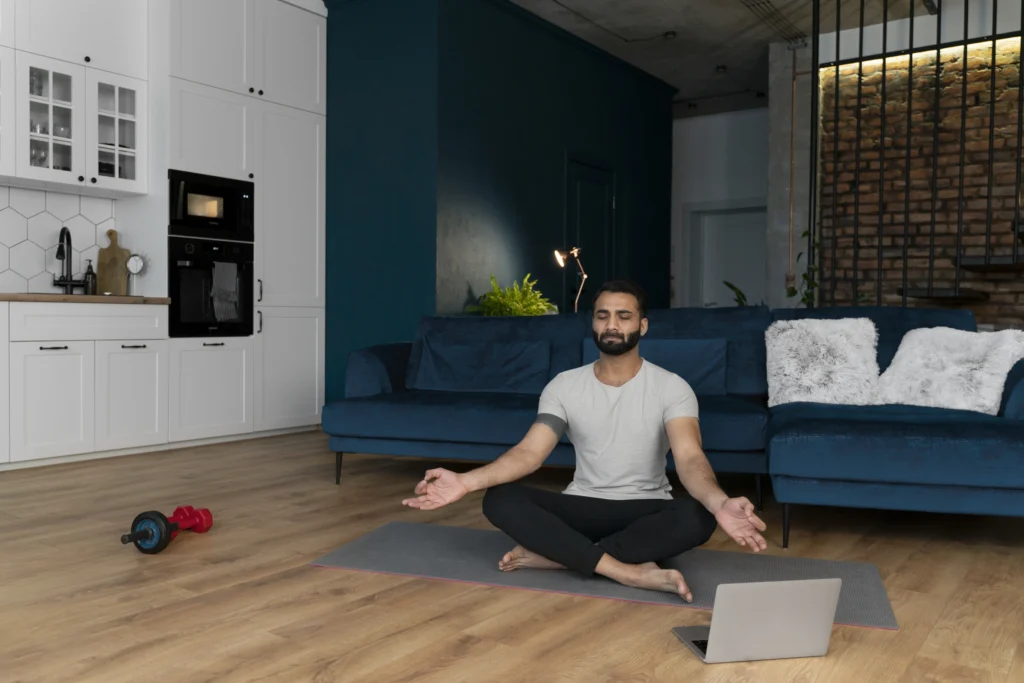
This is not intense. It is structured and realistic.
Day 1: Calm Down the System
Start simple.
- Reduce screen time, especially at night
- Increase water intake
- Avoid intense exercise
What is happening here
Your nervous system is already irritated.
When you overload it further, headaches worsen.
A calmer system responds better to movement in the next few days.
Early Warning Signs Most People Ignore
These show up before the headache:
- Neck feels heavy or tight
- You start adjusting posture frequently
- Eyes feel strained
- Jaw feels tight without noticing
If you act here, you often prevent the headache completely.
Day 2: Release the Upper Neck
Focus on small, controlled movements.
- Gentle head nods
- Slow neck rotations
- Tennis ball release at the base of the skull
Lesser-known clinical insight
The suboccipital muscles are small but powerful headache triggers.
Tightness here can refer pain to the head and eyes.
Studies show that combining suboccipital release techniques with exercises improves outcomes (Bhardwaj et al. 2025)
What to Do When a Headache Starts
Keep it simple:
- Step away from screen for 5–10 minutes
- Do gentle neck movements, not stretching aggressively
- Apply warmth to neck
- Slow your breathing
Avoid:
- Sudden intense stretches
- Scrolling on your phone
- Ignoring it and pushing through
Early response can reduce intensity quickly.
Day 3: Fix How You Sit
Instead of forcing a rigid posture, make small corrections:
- Slight chin tuck
- Screen at eye level
- Support your elbows
Why this matters
Forward head posture increases load on the neck significantly and contributes to recurring headaches.
You do not need perfect posture.
You need less strain throughout the day.
Day 4: Activate Deep Neck Muscles
Now begin light strengthening.
- Chin tuck hold for 5 to 8 seconds
- Gentle head nods lying down
- Controlled resistance using your hand
Important point
Stretching alone is not enough.
Strength and endurance training of neck muscles show better results in reducing headache frequency (Andersen et al. 2011)
Simple 5-Minute Reset Routine
If you are busy, do this:
- 1 minute neck mobility
- 1 minute shoulder rolls
- 1 minute chin tuck holds
- 1 minute walking
- 1 minute slow breathing
Done.
Even this small routine helps if done daily.
Day 5: Move Your Whole Body
Pick something simple:
- Walking
- Cycling
- Light cardio
Why this helps
Movement improves circulation and reduces sensitivity in the nervous system.
Exercise has been shown to reduce migraine frequency and intensity when done consistently
(Varkey et al. 2011)
What to Do Instead (Better Options for Your Body)
If movement triggers pain, try:
- Replace running with walking
- Replace heavy workouts with light controlled movement
- Replace fast exercises with slow repetitions
- Replace intense yoga with breathing-based sessions
The goal is not to stop movement.
It is to find movement your body tolerates.
Day 6: Address Stress and Breathing
Do not skip this.
- Slow breathing practice
- Jaw relaxation
- Short mindfulness break
What many people miss
Stress changes how you breathe and increases muscle tension.
This directly feeds into the headache cycle.
Behavioral and relaxation therapies have shown reduction in headache frequency (Probyn et al. (2017)
Day 7: Build Your Routine
Now combine everything into a simple weekly structure:
- 2 to 3 days of neck exercises
- Daily posture awareness
- Regular movement
- Stress breaks
Key idea
There is no one-day cure.
There is only consistency that breaks the cycle over time.
Your Weekly Headache Checklist
- Move every 30-45 minutes
- Do neck exercises 2-3 times/week
- Walk or stay active daily
- Take stress breaks
- Adjust your posture, don’t force it
- Stay hydrated
Keep this simple.
Consistency matters more than doing everything perfectly.
What Actually Works According to Research
To keep it practical:
- Neck strengthening reduces headache intensity and frequency
- Exercise improves circulation and pain tolerance
- Multimodal treatment works better than single methods
Exercise therapy and physiotherapy interventions show measurable improvements in headache-related disability (Luedtke et al. 2020)
What Usually Does Not Work Alone
This is where many people get stuck:
- Only stretching
- Only massage
- Only posture correction
- Only medication
Each of these may help temporarily, but none address the full cycle on their own.
Small Triggers Most People Ignore
These are commonly seen in practice:
- Incorrect pillow height
- Jaw clenching during stress
- Long gaps between meals
- Sitting for hours without breaks
These seem minor, but together they keep the cycle active.
How Your Sleep Position Affects Daily Headaches
Things to check for correct sleeping position:
- Pillow too high or too flat
- Neck not supported
- Sleeping on stomach
Better options:
- Use a pillow that supports neck curve
- Sleep on your side or back
- Keep neck neutral, not bent
Many people wake up with headaches because of this alone.
Common Mistakes That Keep the Cycle Going
These show up again and again:
- Waiting until pain becomes severe
- Doing exercises only when pain starts
- Over-relying on massage
- Skipping meals during busy days
- Using the wrong pillow height
- Sitting for long hours without breaks
Fixing just 2-3 of these can make a big difference.
How You Know It Is Working
You may not see instant results, but you will notice:
- Fewer headache days
- Reduced intensity
- Faster recovery
That means your body is adapting.
A Real-Life Example
One patient came in with daily headaches.
Not severe. But constant.
She worked long hours on a laptop. Minimal movement. High stress.
We did not start with heavy exercises.
We started with:
- posture changes
- short movement breaks
- basic neck activation
Within 10 days, her headaches reduced.
Not gone completely. But no longer controlling her day.
That’s the goal. Progress, not perfection.
When You Should Seek Help
Consult a physiotherapist if:
- Headaches occur more than 3 to 4 times per week
- Pain starts from the neck and spreads to the head
- You rely frequently on medication
- Stiffness is constant
At this stage, you need a personalized plan based on your movement and muscle patterns.
When This Plan Will Not Work Alone
This plan may not be enough if:
- Headaches are severe and disabling
- You have visual disturbances or headache with dizziness
- Pain is sudden and different from usual
- There is no improvement at all
In these cases, you need proper assessment.
Final Thoughts On How To Break Headache Cycle
Breaking the headache cycle is not about finding one perfect exercise or one quick solution.
It is about understanding what your body has been trying to tell you for a long time.
In most cases, headaches are not just “in the head.”
They are a result of how you sit, move, breathe, and deal with daily stress.
What matters is not doing everything at once.
What matters is doing small things consistently.
Some days you will follow the plan fully.
Some days you will only manage a short routine. That is okay.
Progress in headaches is not always dramatic. It is often quiet.
Fewer episodes. Less intensity. Faster recovery.
That is how you know your body is moving in the right direction.
And if there is one thing I would want you to take from this, it is this:
You don’t need to fight your headaches.
You need to understand and retrain the pattern behind them.
That is where real, lasting relief begins.
Once you understand how to break headache cycle naturally, you can stop the pattern instead of just chasing relief.
Frequently Asked Questions
1. Can physiotherapy really help recurring headaches?
Yes, especially for tension and cervicogenic headaches. It addresses muscle imbalance, posture, and movement patterns.
2. How long does it take to break the headache cycle?
Most people notice improvement within 1 to 2 weeks if they stay consistent with the routine.
3. What should I do when a headache starts?
Pause your activity, reduce screen exposure, do gentle neck movements, and focus on slow breathing.
4. Can stress alone trigger headaches?
Yes. Stress increases muscle tension and changes breathing, which can trigger or worsen headaches.
5. Are exercises safe during headaches?
Gentle movements are safe. Avoid intense or forceful exercises during active pain.
6. Is posture the main cause of headaches?
Posture is a major factor, but it works together with stress, movement habits, and lifestyle.
7. Why do headaches keep coming back?
Because the underlying causes like muscle tension, posture, and stress are not addressed.
Stay tuned with us for more health related topics.
Follow us on LinkedIn and Instagram for more.
More Read


Medical Disclaimer!
This article has been reviewed and written under the guidance of our Head Physiotherapist, Dr. Kruti Raj (PT, MUHS,CPT,CMPT). The information shared is intended for educational purposes only and should not be considered a substitute for personalized medical advice, diagnosis, or treatment.
Please consult us or any other qualified healthcare professional before beginning any exercise program, especially if you are experiencing pain, recovering from injury, or managing a medical condition.


