
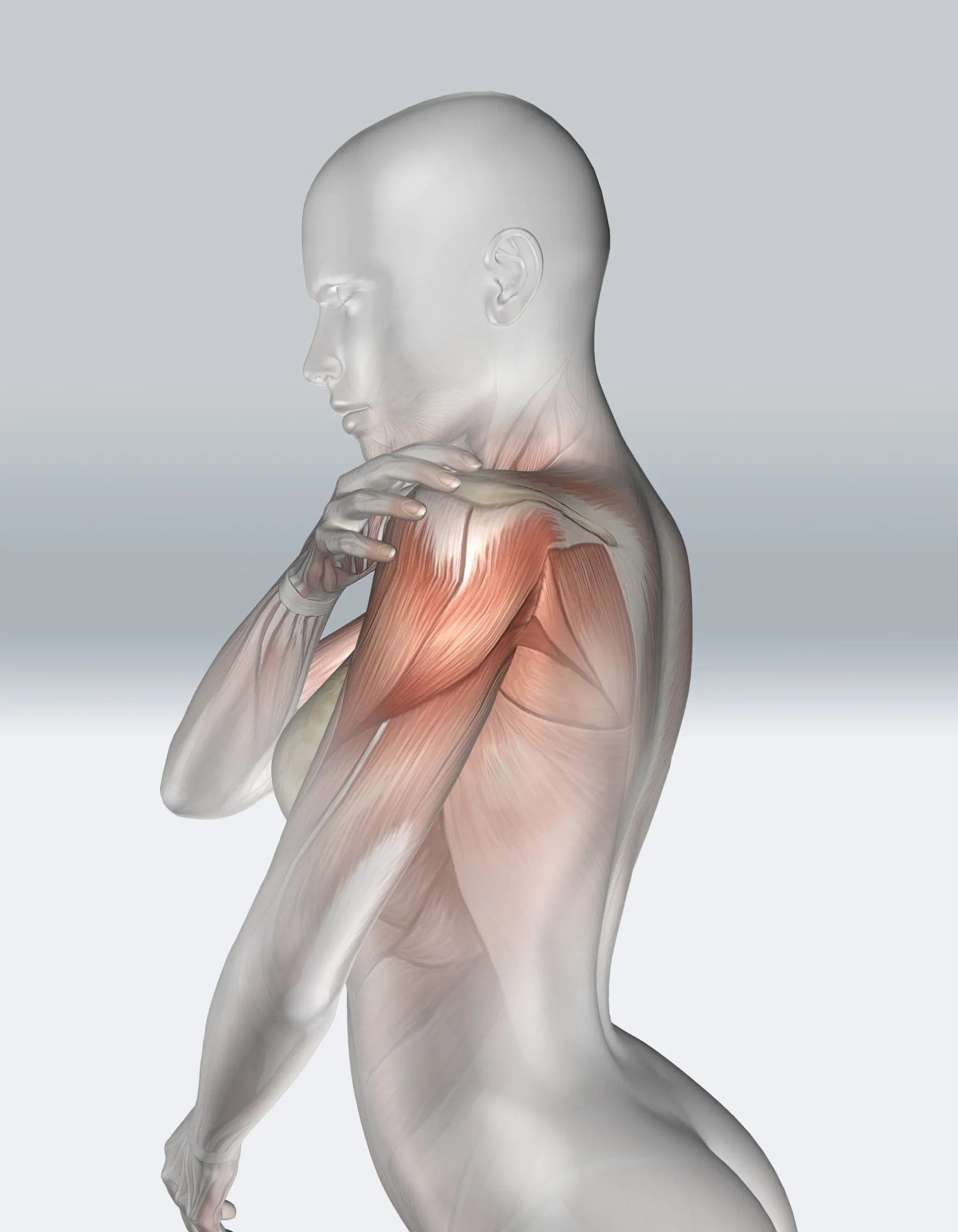

Shoulder pain from nerve compression can feel very different from normal muscle pain.
Your body usually gives warning signs early.
Shoulder pain is not always coming from the shoulder itself.
This surprises many people in physiotherapy clinics.
They come in expecting a rotator cuff injury, frozen shoulder, or muscle strain.
But the real issue turns out to be an irritated nerve somewhere around the neck, collarbone, or upper back.
Quick Answer
Shoulder pain due to nerve compression happens when nerves around the neck, collarbone, or shoulder become irritated or pinched. It can cause burning pain, tingling, numbness, arm weakness, or pain that travels from the neck into the shoulder and arm. Common causes include cervical disc problems, thoracic outlet syndrome, poor posture, repetitive strain, and prolonged desk work. Physiotherapy treatment often includes posture correction, nerve gliding exercises, strengthening, ergonomic advice, and movement retraining to reduce pressure on the affected nerve and improve recovery.
In fact, some people spend months treating the “wrong area.”
They massage the shoulder, apply pain gels, or even avoid movement completely, yet the pain keeps returning.
That usually happens because the nerve causing the symptoms was never properly addressed.
Nerve compression related shoulder pain can feel very different from normal muscle soreness.
Sometimes it burns. Sometimes it tingles.
Sometimes the arm feels heavy for no obvious reason. Many patients say things like:
“It feels like the pain is travelling.”
“My shoulder feels weak but scans look normal.”
“The pain gets worse at night.”
“I thought it was a shoulder issue but my fingers also go numb.”
These clues matter.
From a physiotherapy perspective, nerve related shoulder pain is often linked with:
posture habits, neck stiffness, prolonged laptop use, stress-related muscle tension, poor sleep positions, repetitive overhead activity, or cervical spine irritation.
Modern lifestyle patterns are playing a huge role here.
Long desk hours, scrolling on phones with bent neck posture, poor workstation ergonomics, and low physical activity are contributing to rising cases of cervical nerve irritation and thoracic outlet problems.
Recent research has also highlighted how prolonged static posture may increase pressure around nerves and surrounding soft tissues. (De Carvalho et al. 2024)
This article explains shoulder pain due to nerve compression in a practical, reader-friendly way.
You will learn the symptoms people often ignore, the lesser-known causes physiotherapists see in clinics, modern rehabilitation approaches, and what actually helps recovery.
Key Takeaways
- Shoulder pain is not always caused by the shoulder joint itself. Nerve compression in the neck or upper chest can trigger similar symptoms.
- Burning pain, tingling, numbness, and weakness are common signs of nerve-related shoulder pain.
- Poor posture, prolonged laptop use, and sleeping positions often contribute to cervical nerve irritation.
- Thoracic outlet syndrome and cervical radiculopathy are commonly overlooked causes of shoulder pain.
- Physiotherapy focuses on reducing nerve irritation, improving posture, restoring mobility, and strengthening supportive muscles.
- Nerve gliding exercises can help improve nerve movement and reduce sensitivity when performed correctly.
- Symptoms that worsen at night or travel into the arm should not be ignored.
- Early treatment usually improves recovery and reduces the risk of chronic pain or weakness.
What Does Nerve Compression Shoulder Pain Feel Like?
People expect nerve pain to feel dramatic. Sometimes it does. But often, it starts subtly.
A mild ache near the shoulder blade.
Tingling while using the phone.
Discomfort after laptop work.
A strange pulling sensation while reaching overhead.
Pain during sleep that disappears after changing position.
These early symptoms are easy to dismiss.
Unlike muscle pain, nerve irritation usually behaves unpredictably.
Some days feel manageable. Other days the arm suddenly feels weak or unusually tired.
Patients often notice:
- burning pain near the shoulder blade,
- tingling down the arm,
- numbness in fingers,
- heaviness in the arm,
- neck tightness,
- pain while driving,
- weakness while lifting objects,
- discomfort during overhead movement,
- or symptoms worsening after long sitting.
One lesser-known sign is “delayed pain.”
A person may work all day without major symptoms, then experience severe shoulder discomfort at night because the irritated nerve became more sensitive throughout the day.
Why Nerves Cause Shoulder Pain Even When the Shoulder Is Fine
This confuses many people.
A compressed nerve in the neck can create pain in the shoulder even if the shoulder joint itself is healthy.
That happens because nerves act like electrical cables.
When irritated, the brain may interpret the signal in a completely different area.
This is called referred pain.
For example:
- C5 nerve irritation commonly causes pain around the outer shoulder.
- C6 nerve irritation may create symptoms down the arm and thumb.
- Thoracic outlet compression may cause heaviness and tingling without severe neck pain.
Sometimes MRI scans of the shoulder appear normal because the actual issue is happening higher up near the cervical spine or brachial plexus.
This is one reason why physiotherapists assess both the neck and shoulder together instead of focusing only on the painful spot.
The Most Common Causes Physiotherapists See

Cervical Disc Irritation and Pinched Nerves
This is probably the most common cause.
The cervical spine contains discs between the vertebrae.
Over time, poor posture, repetitive strain, aging, or prolonged sitting can irritate these structures.
When a disc bulges or inflammation develops nearby, nerves may become compressed.
People usually notice:
- neck stiffness,
- arm tingling,
- shoulder pain
- weakness,
- headaches,
- or numb fingers.
Interestingly, many patients do not initially complain about neck pain at all.
A 2023 review found that exercise therapy combined with manual physiotherapy techniques significantly improved pain and functional outcomes in cervical radiculopathy patients. (Roman de Mettelinge et al. 2023)
Thoracic Outlet Syndrome
This condition is often missed for months.
Thoracic outlet syndrome happens when nerves or blood vessels become compressed between the collarbone and first rib.
People with rounded shoulders, desk jobs, or prolonged laptop posture are especially vulnerable.
Symptoms often include:
- arm heaviness,
- shoulder fatigue,
- tingling,
- poor grip strength,
- pain during overhead activity,
- and discomfort while carrying bags.
Many patients say:
“My arm feels tired for no reason.”
That detail matters clinically.
Recent literature has shown increasing links between thoracic outlet syndrome and prolonged postural strain from modern sedentary habits. (Vanti et al. 2024)
Suprascapular Nerve Entrapment
This condition is surprisingly underdiagnosed.
The suprascapular nerve supplies important shoulder stabilizing muscles.
Compression can create deep aching pain at the back or top of the shoulder.
Athletes are commonly affected, especially:
- swimmers,
- volleyball players,
- badminton players,
- tennis players,
- and gym-goers doing repetitive overhead exercises.
Sometimes the pain gets labelled as “rotator cuff tightness” for months before the nerve issue is identified.
Recent research suggests suprascapular nerve entrapment continues to be under-recognized in active populations. (Mallon et al. 2025)
Posture Related Nerve Irritation
This is now extremely common.
Forward head posture changes the mechanics of the neck and shoulder region.
As the head moves forward, surrounding muscles tighten and nerve spaces become more compressed.
A lesser-known fact:
Even a small forward shift in head position can dramatically increase load on cervical tissues.
Physiotherapists often notice that people working on laptops for 8 to 10 hours daily develop:
- tight chest muscles,
- weak upper back muscles,
- stiff thoracic spine,
- and irritated neural structures.
The body slowly adapts to poor posture until symptoms finally appear.
Why Symptoms Often Get Worse at Night
This is one of the biggest complaints patients mention.
There are several reasons:
- poor sleeping posture,
- prolonged nerve tension during sleep,
- inflammatory fluid changes at night,
- reduced movement,
- and pressure on sensitive structures.
Sleeping with the arm overhead is especially aggravating for many people with nerve compression.
Side sleeping without proper pillow support can also increase stress around the neck and shoulder.
Some patients wake up with numb fingers and assume it is poor circulation, when in reality it may be nerve irritation.
Symptoms That Should Not Be Ignored
Mild soreness after activity is common.
But these symptoms deserve proper assessment:
- persistent tingling,
- numbness,
- burning pain,
- muscle weakness,
- dropping objects,
- pain travelling below the elbow,
- worsening grip strength,
- or symptoms affecting sleep regularly.
Weakness especially matters.
If muscles supplied by the nerve begin weakening significantly, recovery may become slower if treatment is delayed.
What Physiotherapists Actually Look For
Good physiotherapy assessment is not just about finding where it hurts.
A physiotherapist observes:
- posture,
- neck movement,
- shoulder mechanics,
- breathing patterns,
- scapular control,
- nerve sensitivity,
- muscle imbalance,
- and movement habits.
This is important because nerve compression is rarely caused by one single structure.
Usually, several factors overlap:
- stiff joints,
- tight muscles,
- poor posture,
- reduced nerve mobility,
- stress tension,
- weakness,
- and repetitive strain.
Modern rehabilitation focuses on the entire movement system, not just isolated pain points.
Why Some MRI Scans Look “Normal”
This frustrates many patients.
They feel real pain but imaging reports appear mild or normal.
Here is the important part:
Nerves can become mechanically sensitive even without major structural damage.
Sometimes:
- inflammation,
- muscle tightness,
- poor neural mobility,
- or repetitive postural stress
can irritate nerves enough to create symptoms.
Pain science research increasingly supports the idea that nerve sensitivity is not always directly proportional to imaging findings.
That does not mean the symptoms are imaginary.
Treatment Approaches That Actually Help
Manual Physiotherapy
Hands-on treatment can reduce stiffness around joints and soft tissues that may be increasing nerve irritation.
This may include:
- cervical mobilization,
- thoracic mobility work,
- soft tissue release,
- and scapular movement retraining.
Manual therapy works best when combined with active rehabilitation rather than passive treatment alone.
Nerve Gliding Exercises
Nerves are designed to move.
When mobility decreases, nerves become more sensitive during arm or neck movement.
Neural gliding exercises help restore smooth movement of the nerve through surrounding tissues.
These exercises are gentle.
Aggressive stretching usually makes symptoms worse.
Research supports neural mobilization for reducing pain and improving upper limb function in selected patients. (Basson et al. 2017)
Strengthening the Right Muscles
Many people focus only on stretching.
But weak stabilizing muscles often contribute to the problem.
Physiotherapy usually targets:
- deep neck flexors,
- scapular stabilizers,
- rotator cuff muscles,
- and thoracic extensors.
Improved muscle support reduces long-term stress on irritated structures.
Breathing Retraining
This is rarely discussed online.
People with chronic neck and shoulder tension often breathe using upper chest muscles instead of the diaphragm.
Overactive neck muscles may contribute to nerve irritation around the thoracic outlet region.
Breathing retraining can reduce unnecessary tension and improve movement efficiency.
Gym Exercises That Quietly Aggravate Nerve Compression
Some exercises irritate symptoms more than people realize.
Common triggers include:
- heavy shrugs,
- overhead presses,
- upright rows,
- poorly performed deadlifts,
- excessive chest training,
- and aggressive neck stretching.
Many gym-goers continue training through tingling symptoms thinking it is “normal tightness.”
It is not.
Persistent numbness or burning pain during workouts should never be ignored.
The Stress and Pain Connection Nobody Talks About
Stress does not “cause” nerve compression directly.
But chronic stress changes muscle tone and nervous system sensitivity.
Physiotherapists frequently notice symptom flare-ups during:
- work deadlines,
- poor sleep,
- emotional stress,
- prolonged sitting,
- and fatigue.
People often carry tension unconsciously through:
- upper trapezius muscles,
- jaw clenching,
- shallow breathing,
- and elevated shoulders.
Over time, this creates additional pressure around sensitive structures.
Recovery Is Usually Not Linear
This is important to understand.
People expect steady improvement.
Nerve recovery rarely behaves that way.
Symptoms may improve for several days, then flare up temporarily after:
- poor sleep,
- travel,
- long desk work,
- stress,
- or overactivity.
That does not always mean damage is worsening.
Consistency matters more than perfection.
When Medical Evaluation Is Important
Seek proper medical evaluation if symptoms include:
- severe weakness,
- worsening numbness,
- balance problems,
- loss of hand coordination,
- unexplained weight loss,
- severe night pain,
- or bowel/bladder changes.
These signs require further assessment.
A Physiotherapist’s Honest Perspective
One thing many patients misunderstand is this:
Pain relief alone is not recovery.
A person may feel better temporarily after massage, rest, or medication, but unless movement habits and mechanical stress are addressed, symptoms often return.
The people who usually recover best are the ones who:
- improve posture gradually,
- stay physically active,
- perform exercises consistently,
- manage workstation setup,
- sleep better,
- and avoid fear of movement.
The nervous system responds very well to calm, progressive movement when guided correctly.
Final Thoughts
Shoulder pain due to nerve compression can feel confusing because the symptoms rarely stay in one place.
One day it feels like neck pain.
Another day it burns near the shoulder blade.
Sometimes the fingers tingle.
Sometimes the arm simply feels weak and tired.
That unpredictability is exactly why proper assessment matters.
The good news is that many cases improve significantly with modern physiotherapy, movement correction, progressive strengthening, and lifestyle changes.
The earlier nerve irritation is addressed, the better the long-term outcome usually becomes.
Ignoring symptoms for months and repeatedly “working through the pain” tends to prolong recovery.
If symptoms like tingling, numbness, burning pain, or weakness continue, it is worth getting assessed properly instead of assuming it is just muscle tightness or bad posture.
Ignoring shoulder pain from nerve compression can gradually affect strength, movement, and even nerve function over time.
Frequently Asked Questions
Can a pinched nerve cause shoulder pain without neck pain?
Yes. Many people experience shoulder pain, arm tingling, or numbness without significant neck pain because the irritated nerve may refer pain into the shoulder region.
What does nerve compression shoulder pain feel like?
It may feel like burning pain, electric shocks, tingling, heaviness, weakness, or pain travelling from the neck into the arm or fingers.
Can physiotherapy help shoulder nerve compression?
Yes. Physiotherapy is one of the most effective non-surgical treatments and may include posture correction, strengthening, nerve gliding exercises, manual therapy, and ergonomic advice.
Why does nerve-related shoulder pain worsen at night?
Symptoms may worsen because of sleeping posture, prolonged pressure on sensitive nerves, reduced movement, or poor neck support during sleep.
Can poor posture compress nerves?
Yes. Rounded shoulders and forward head posture can increase pressure around cervical nerves and surrounding soft tissues.
How long does nerve compression shoulder pain take to heal?
Mild cases may improve within a few weeks, while chronic or severe cases may take several months depending on the cause and consistency of treatment.
When should I see a doctor for shoulder nerve pain?
Seek medical evaluation if you experience severe weakness, worsening numbness, loss of coordination, or persistent pain that does not improve.
Stay tuned with us for more health related topics.
Follow us on LinkedIn and Instagram for more.
More Read


Medical Disclaimer!
This article has been reviewed and written under the guidance of our Head Physiotherapist, Dr. Kruti Raj (PT, MUHS,CPT,CMPT). The information shared is intended for educational purposes only and should not be considered a substitute for personalized medical advice, diagnosis, or treatment.
Please consult us or any other qualified healthcare professional before beginning any exercise program, especially if you are experiencing pain, recovering from injury, or managing a medical condition.


