


Safe daily pregnancy exercises routine can help improve mobility, posture, circulation, and overall comfort throughout pregnancy.
Pregnancy changes the way your body responds to movement.
Some women suddenly feel exhausted after climbing a few stairs.
Others feel surprisingly energetic during the second trimester and want to stay active every day.
Somewhere between all the advice online, many pregnant women end up confused.
Should you rest more?
Should you avoid workouts completely?
Or is daily exercise actually good for pregnancy?
As a physiotherapist, this is one of the most common questions I hear in clinic.
And honestly, most women are not looking for six-pack workouts during pregnancy.
They simply want to know what is safe, what is excessive, and how to move without harming themselves or the baby.
Quick Answer
Yes, most women with healthy pregnancies can safely exercise daily during pregnancy. The key is choosing moderate, pregnancy-safe activities like walking, prenatal strength training, pelvic floor exercises, stretching, and mobility work instead of intense or exhausting workouts.
Daily movement may help reduce back pain, swelling, poor circulation, fatigue, gestational diabetes risk, and posture-related discomfort. However, exercise should always be adapted according to trimester, energy levels, and medical advice.
If you experience dizziness, vaginal bleeding, chest pain, severe pelvic pain, or contractions during exercise, stop immediately and consult your healthcare provider.
The good news is that for most healthy pregnancies, daily movement is not only safe, it is actually beneficial.
But there is an important difference between exercising every day and overtraining during pregnancy.
Your body is already under physical stress.
Hormones are changing.
Your joints are becoming looser.
Your breathing pattern shifts.
Your pelvic floor starts handling extra pressure.
Even your walking style slowly changes.
So pregnancy exercise should support the body, not punish it.
Recent research strongly supports regular prenatal movement for reducing pregnancy discomfort, improving circulation, lowering the risk of gestational diabetes, and even helping with labor outcomes.
But what many generic blogs miss is this:
Not every pregnant woman needs intense workouts.
Sometimes the healthiest thing you can do is a 20-minute walk, breathing exercises, and a few mobility drills.
That still counts.
Key Takeaways
- Most healthy pregnant women can safely exercise daily with proper modifications.
- Walking, prenatal yoga, mobility drills, swimming, and strength training are usually considered safe during pregnancy.
- Pregnancy workouts should support the body, not exhaust it.
- Pelvic floor coordination is more important than constantly doing aggressive Kegels.
- Exercise may help reduce back pain, swelling, stress, and gestational diabetes risk.
- Shorter and gentler workouts often work better during the third trimester.
- Overtraining, overheating, dehydration, and breath-holding should be avoided.
- Always stop exercising and seek medical advice if warning signs appear.
Why Pregnancy Feels So Physically Different
One thing I notice clinically is that women are often surprised by how quickly their body mechanics change during pregnancy.
Even very fit women can suddenly develop:
- lower back pain
- pelvic heaviness
- calf cramps
- rib discomfort
- poor posture
- foot pain
- hip tightness
This is not because the body is weak.
It is because pregnancy changes alignment and load distribution very quickly.
One major reason is a hormone called relaxin.
It helps prepare the pelvis for childbirth by loosening ligaments.
The downside is that joint stability reduces slightly across the body.
That is why some women suddenly feel unstable doing movements that never bothered them before.
This is also why aggressive stretching during pregnancy is not always a great idea.
Many women think tighter muscles automatically need deeper stretching, but sometimes the body actually needs more stability, not more flexibility.
So, Can You Exercise Daily While Pregnant?
In most uncomplicated pregnancies, yes.
You can absolutely move daily if:
- your doctor has not restricted activity
- your body is tolerating movement well
- intensity is moderate
- hydration is good
- you are not pushing through pain or exhaustion
The American College of Obstetricians and Gynecologists recommends at least 150 minutes of moderate exercise weekly during pregnancy. (American College of Obstetricians and Gynecologists 2020)
But daily exercise during pregnancy does not mean:
- HIIT sessions every morning
- intense fat-loss workouts
- training until exhaustion
- trying to maintain pre-pregnancy athletic performance
Some days your body will tolerate more.
Other days it will not.
And honestly, that unpredictability is completely normal during pregnancy.
The Biggest Mistake Pregnant Women Make With Exercise
One trend I keep noticing lately is women copying random pregnancy workouts from social media without understanding what their own body needs.
Just because an influencer is doing jump squats at 34 weeks does not mean your body should.
Pregnancy exercise is highly individual.
Some women need more strengthening.
Some need pelvic floor relaxation.
Some need posture correction.
Some actually need more rest.
Trying to “stay exactly the same” physically throughout pregnancy often backfires.
The body is adapting every single week.
What Daily Pregnancy Exercise Should Actually Look Like
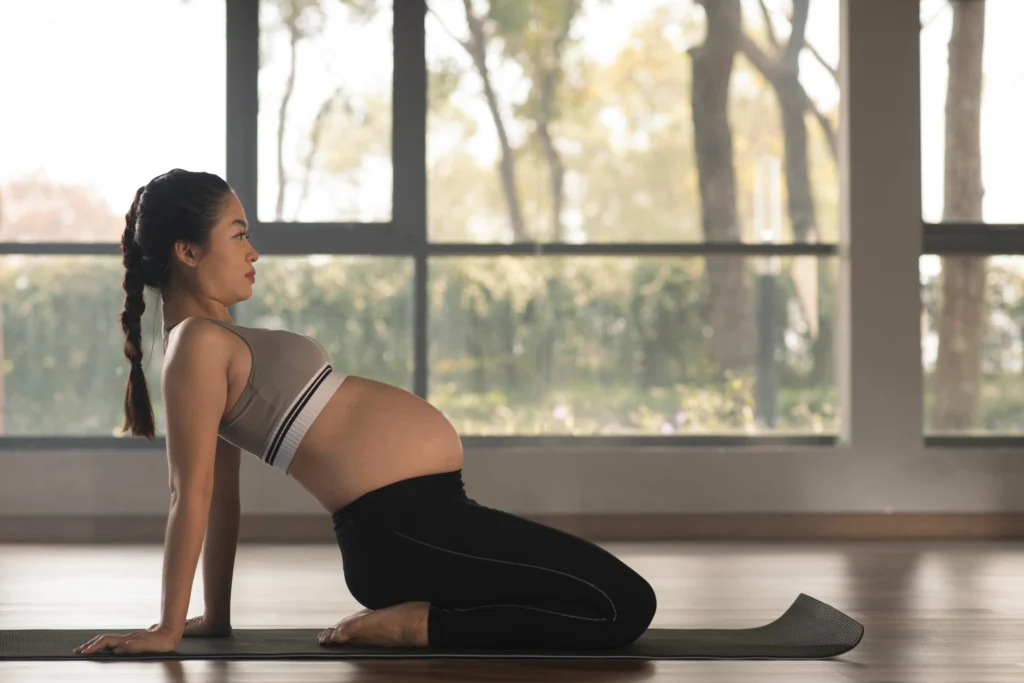
This surprises many women, but healthy prenatal movement usually looks much simpler than expected.
A good pregnancy movement routine may include:
- walking
- mobility work
- breathing drills
- light strength training
- pelvic floor coordination
- stretching
- circulation exercises
- posture exercises
Not every workout needs to leave you sweating heavily.
Sometimes the goal is simply reducing stiffness and helping circulation.
That matters too.
Walking During Pregnancy Is Underrated
Walking is honestly one of the best and safe daily pregnancy exercises.
It is simple, accessible, and easier on the joints compared to high-impact training.
I often suggest short walks after meals because they may help with blood sugar regulation and digestion.
Walking also helps:
- reduce stiffness
- improve circulation
- support mental health
- reduce swelling
- maintain endurance
Many women underestimate how powerful consistent walking can be during pregnancy.
Strength Training During Pregnancy Is Usually Safe
This is another area filled with myths.
A lot of women get scared when they hear the words “strength training” during pregnancy.
But properly modified strengthening exercises can actually help support:
- posture
- pelvic stability
- spinal alignment
- muscular endurance
- postpartum recovery
Safe prenatal strengthening may include:
- bodyweight squats
- glute bridges
- resistance band rows
- seated shoulder exercises
- wall sits
- supported lunges
The key is proper breathing and controlled loading.
Holding your breath while lifting is not a good idea during pregnancy because it increases abdominal pressure.
The Pelvic Floor
This part is important.
Most women are told to “do Kegels” during pregnancy without really understanding what the pelvic floor actually does.
Your pelvic floor supports:
- the bladder
- bowel
- uterus
During pregnancy, these muscles handle increasing pressure from the growing baby.
But here is the thing many people do not realize:
A pelvic floor can be weak and tight at the same time.
I see this often in clinic.
Some women constantly grip their pelvic muscles because of stress, poor posture, or fear of leaking urine.
An over-tight pelvic floor may contribute to:
- pelvic pain
- pain during intimacy
- difficulty relaxing during labor
- pressure symptoms
That is why pelvic floor training should focus on coordination, not just squeezing harder. (MedlinePlus)
Pregnancy Fatigue Changes Everything
One reason many women feel guilty during pregnancy is inconsistency.
One week they feel active.
The next week they feel exhausted.
Especially during the first trimester, fatigue can feel overwhelming.
And honestly, this is where many unrealistic fitness articles fail pregnant women.
Some days your nervous system simply needs more rest.
Movement still helps, but intensity often needs adjusting.
A slow walk and breathing exercises may be enough on low-energy days.
That still counts as taking care of your body.
Prenatal Yoga Can Be Helpful But It Is Not Magic
Prenatal yoga is popular for a reason.
It may help:
- breathing control
- mobility
- stress reduction
- relaxation
- hip movement
- body awareness
But one thing people rarely mention is that pregnancy already increases flexibility because of hormonal changes.
So chasing extremely deep stretches is not always beneficial.
I have seen women overstretch during pregnancy and worsen pelvic discomfort.
Gentle mobility is usually safer than aggressive flexibility work.
Swimming Feels Amazing for Many Pregnant Women
Women dealing with:
- pelvic pain
- lower back pain
- heaviness
- swelling
often feel significantly better in water.
Swimming reduces joint loading while still allowing movement and circulation.
Some women who struggle to walk comfortably in late pregnancy feel surprisingly mobile in a pool.
The Truth About Core Exercises During Pregnancy
Many women stop all abdominal exercise immediately after becoming pregnant.
That is not always necessary.
Your core muscles still matter during pregnancy because they help support:
- posture
- breathing
- spinal stability
- pelvic control
What changes is the type of core training.
Instead of crunches or aggressive abdominal exercises, physiotherapists usually focus more on:
- breathing mechanics
- deep core activation
- stability exercises
- posture control
- pressure management
This becomes especially important as the abdomen expands.
Understanding Diastasis Recti Without Fear
Social media has created a lot of fear around abdominal separation during pregnancy.
Some degree of abdominal separation is actually normal.
The bigger concern is poor pressure management and excessive strain.
Risk factors may include:
- aggressive abdominal workouts
- chronic constipation
- poor lifting mechanics
- repeated breath-holding
- unmanaged pressure
Good movement habits during pregnancy may help reduce excessive stress on the abdominal wall.
Signs You Should Stop Exercising Immediately
Even though exercise is beneficial, there are situations where you should stop immediately and seek medical advice.
These include:
- vaginal bleeding
- chest pain
- dizziness
- painful contractions
- severe shortness of breath
- fluid leakage
- severe pelvic pain
- calf swelling with pain
Never ignore warning signs.
What About Exercising in the Third Trimester?
The third trimester feels very different physically.
Many women describe:
- heaviness
- pressure
- swelling
- interrupted sleep
- reduced stamina
This is where exercise often becomes more functional rather than fitness-focused.
Late pregnancy movement may focus more on:
- circulation
- pelvic mobility
- breathing
- posture
- comfort
- labor preparation
And honestly, shorter sessions usually work better at this stage.
Can Daily Pregnancy Exercises Help Safe Labor and Delivery?
Research suggests physically active women may experience:
- improved endurance during labor
- better circulation
- reduced risk of excessive pregnancy weight gain
- lower risk of gestational diabetes
- improved mental well-being (Davenport et al. 2018)
That does not mean exercise guarantees an easy delivery.
But better physical conditioning may help the body tolerate labor more efficiently.
The Emotional Side of Pregnancy Fitness
This is something I wish more people talked about.
Pregnancy exercise should not become another source of stress.
A lot of women compare themselves online and feel like they are failing if they skip workouts.
But pregnancy is not a performance competition.
Your body is already doing something physically extraordinary.
Some days movement helps.
Some days rest helps more.
Learning to listen to those signals is actually a healthy skill.
Simple Daily Pregnancy Movement Routine
A realistic safe daily pregnancy exercises day might look like this:
Morning
- gentle stretching
- breathing drills
- short walk
Afternoon
- light strengthening exercises
- posture work
- hydration break
Evening
- pelvic floor relaxation
- mobility exercises
- relaxed walking
Nothing extreme.
Nothing exhausting.
Just consistent supportive movement.
When Exercise Needs Modification
Some pregnancies require medical clearance before exercising.
These may include:
- placenta previa
- preeclampsia
- severe anemia
- preterm labor risk
- uncontrolled blood pressure
- cervical insufficiency
- significant cardiac conditions
If you have a high-risk pregnancy, never follow generic online routines blindly.
Final Thoughts
So, can you exercise daily while pregnant?
For most healthy pregnancies, yes.
But healthy pregnancy exercise is not about proving how strong or productive you are.
It is about supporting your body through rapid physical change.
Some women need strengthening.
Some need mobility.
Some need recovery.
Most need a combination of all three.
Safe daily pregnancy exercises may help support better strength, flexibility, and physical comfort during pregnancy.
The best prenatal exercise routine is usually the one that:
- feels sustainable
- reduces pain
- improves circulation
- supports posture
- respects energy levels
- protects the pelvic floor
- leaves you feeling better afterward, not destroyed
And honestly, that approach tends to help women far more than chasing perfect pregnancy workouts from the internet.
Frequently Asked Questions
Can I exercise every day while pregnant?
Yes, most women with healthy pregnancies can safely exercise daily as long as workouts are moderate, comfortable, and approved by their healthcare provider.
What are the safest exercises during pregnancy?
Walking, prenatal yoga, swimming, breathing exercises, pelvic floor training, and light strength workouts are generally considered safe for most pregnancies.
Can exercise cause miscarriage?
Current research does not show that moderate exercise causes miscarriage in healthy pregnancies. However, high-risk pregnancies require medical guidance.
Are squats safe during pregnancy?
Modified squats are usually safe and may help strengthen the legs and pelvic muscles when performed with proper form and balance support.
Should pregnant women avoid abdominal exercises?
Not completely. Deep core stability exercises and breathing-based abdominal training are often safer than traditional crunches during pregnancy.
Can exercise reduce pregnancy back pain?
Yes, physiotherapy-guided exercises may help improve posture, reduce muscle strain, and decrease lower back pain during pregnancy.
When should I stop exercising during pregnancy?
Stop exercising immediately if you experience dizziness, vaginal bleeding, chest pain, severe pelvic pain, fluid leakage, or painful contractions.
Stay tuned with us for more health related topics.
Follow us on LinkedIn and Instagram for more.
More Read


Medical Disclaimer!
This article has been reviewed and written under the guidance of our Head Physiotherapist, Dr. Kruti Raj (PT, MUHS,CPT,CMPT). The information shared is intended for educational purposes only and should not be considered a substitute for personalized medical advice, diagnosis, or treatment.
Please consult us or any other qualified healthcare professional before beginning any exercise program, especially if you are experiencing pain, recovering from injury, or managing a medical condition.


