


A morning pregnancy stretch routine can help reduce stiffness, improve circulation, and support more comfortable movement throughout the day.
Waking up pregnant is a completely different experience from waking up before pregnancy.
Some mornings feel surprisingly normal.
Other mornings, your hips feel locked, your lower back feels tight, your calves ache for no reason, and even rolling out of bed becomes a mini workout.
A lot of pregnant women assume this stiffness means they need more rest.
In reality, gentle movement is often exactly what the body needs.
As a physiotherapist, I usually notice one pattern among women who stay more comfortable throughout pregnancy.
They move early in the day.
Not intensely.
Not aggressively.
Just enough to wake the muscles, improve circulation, and help the joints stop feeling “stuck.”
The problem is that most pregnancy stretching articles online repeat the same generic advice without explaining why these stretches matter or how pregnancy actually changes movement mechanics.
This guide is different.
Quick Answer
The best morning stretch routine during pregnancy includes gentle movements that improve circulation, reduce stiffness, ease lower back tension, and support pelvic mobility without overstretching the body. Physiotherapist-approved exercises like rib cage breathing, cat-cow stretches, pelvic tilts, calf pumps, butterfly stretches, and supported hip openers may help pregnant women feel more comfortable throughout the day.
Best Time: Within 30 to 60 minutes after waking up
Ideal Duration: 15 to 20 minutes daily
Main Benefits: Better mobility, reduced stiffness, improved posture, easier movement, and enhanced circulation
Important: Pregnancy stretching should feel gentle, controlled, and comfortable. Avoid deep or painful stretches.
You will learn:
- The best morning stretches during pregnancy
- Why mornings feel harder during pregnancy
- Physiotherapy-based movement advice
- Common stretching mistakes pregnant women make
- Lesser-known facts about pelvic stiffness, breathing, and circulation
- Safe trimester-wise modifications
- Research-backed guidance without textbook-style overload
This is designed to feel practical, calming, and realistic for real pregnant women.
Key Takeaways
- Morning pregnancy stretches may help reduce stiffness caused by sleeping posture, fluid retention, and pelvic tension.
- Gentle mobility exercises are often more beneficial during pregnancy than deep flexibility stretches.
- Physiotherapist-approved movements like cat-cow stretches, pelvic tilts, and rib cage breathing can support posture and comfort.
- Pregnancy hormones increase ligament laxity, so overstretching should always be avoided.
- Short daily routines are usually more effective and sustainable than intense workouts.
- Morning movement may improve circulation, reduce calf tightness, and help women feel more energized during the day.
- Breathing-focused stretches can support rib mobility and reduce upper body tension during pregnancy.
- Stretching should never feel painful, forced, or exhausting during pregnancy.
Why Your Body Feels So Stiff in the Morning During Pregnancy
One thing many women notice during pregnancy is that stiffness feels worse after sleeping.
There are several reasons for this.
During pregnancy:
- Blood circulation changes
- Fluid retention increases
- Ligaments become looser
- Muscles work harder to stabilize joints
- Sleeping posture changes stress the hips and pelvis
- The growing uterus changes spinal alignment
Overnight, the body stays relatively still for hours.
By morning, certain muscles become tight while others feel weak or overloaded.
That “hobbling first few steps” feeling many pregnant women describe is incredibly common.
Research also shows that pregnancy-related pelvic girdle pain and low back discomfort become increasingly common as pregnancy progresses.
(Wu et al. 2004) found that low back pain and pelvic pain affect a significant percentage of pregnant women and may interfere with daily activities.
Why Gentle Morning Stretching Helps
A good morning stretch routine during pregnancy is not about becoming flexible.
That is one of the biggest misconceptions.
Pregnancy hormones already increase joint laxity.
The goal is controlled mobility, not extreme stretching.
Gentle stretching in the morning may help:
- Improve blood flow
- Reduce stiffness
- Ease lower back tension
- Improve posture
- Reduce calf tightness
- Support pelvic mobility
- Help breathing mechanics
- Improve body awareness
Many women also report feeling mentally calmer after slow morning movement.
That part matters more than most people realize.
Pregnancy changes the nervous system too.
Small routines that create calm and predictability often help women feel more connected to their bodies.
A Quick Note Before You Start
Stretching during pregnancy should feel:
- Gentle
- Comfortable
- Controlled
- Relaxing
It should never feel:
- Sharp
- Forced
- Painful
- Breath-holding
The American College of Obstetricians and Gynecologists supports moderate physical activity during uncomplicated pregnancies. (ACOG 2020)
If you have:
- Placenta previa
- Preterm labor risk
- Severe pelvic pain
- Dizziness
- Bleeding
- Cervical insufficiency
always speak with your healthcare provider before starting exercises.
The Best Morning Stretch Routine During Pregnancy
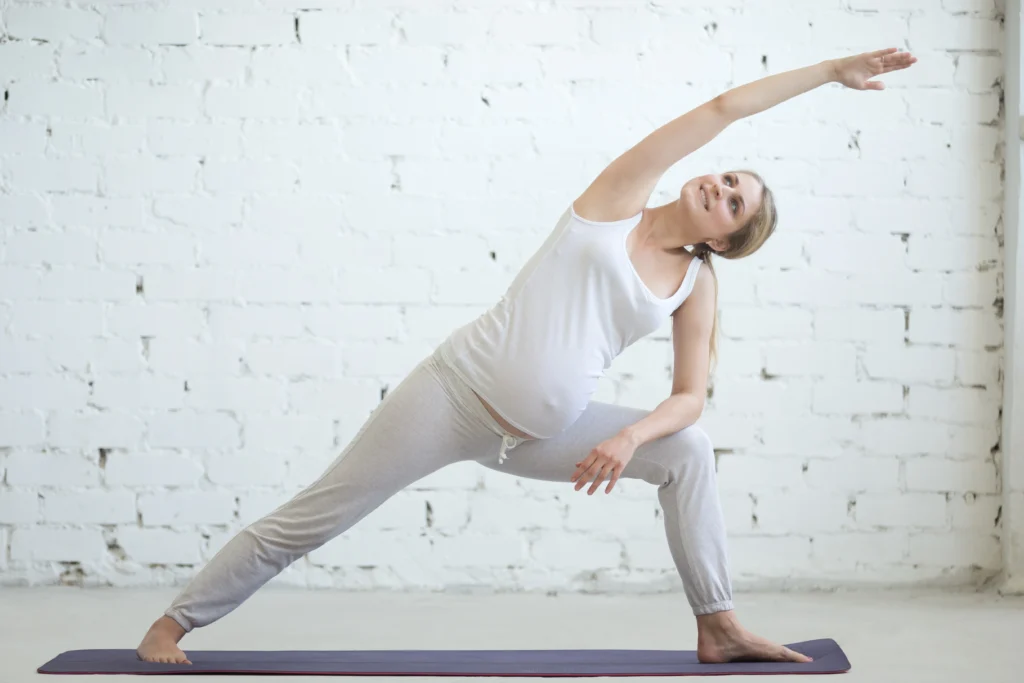
This routine takes around 15 to 20 minutes.
You do not need fancy equipment.
A yoga mat, pillow, and stable chair are enough.
1. Rib Cage Breathing Stretch
Why Physiotherapists Love This Exercise
Most pregnant women think breathing changes only during the third trimester.
Actually, breathing mechanics start changing much earlier.
As the rib cage expands and posture shifts, many women begin shallow chest breathing without realizing it.
That often contributes to:
- Neck tightness
- Upper back tension
- Fatigue
- Feeling breathless quickly
This stretch gently opens the rib cage and improves breathing awareness.
How to Do It
- Sit comfortably.
- Place hands around the sides of your ribs.
- Inhale slowly through the nose.
- Feel the ribs expand sideways.
- Exhale gently through the mouth.
Repeat for 8 slow breaths.
A lot of women are surprised how stiff their ribs feel during pregnancy.
That rib stiffness can actually affect posture and comfort more than expected.
(Davenport et al. 2018) discussed how prenatal physical activity may improve maternal comfort and overall health outcomes.
2. Cat-Cow Stretch
One of the Most Helpful Morning Pregnancy Stretches
This movement looks simple, but it is extremely effective.
Especially in the morning.
Why?
Because pregnancy often creates prolonged spinal stiffness overnight.
The cat-cow stretch introduces gentle spinal movement without excessive strain.
Benefits
- Reduces lower back tightness
- Encourages pelvic mobility
- Improves spinal movement
- Helps stiffness after sleeping
How to Do It
- Come onto hands and knees.
- Inhale and gently arch the back.
- Exhale and slowly round the spine.
- Move with your breathing.
Do not exaggerate the movement.
Slow movement works better than aggressive stretching here.
3. Side-Lying Hip Opener
A Stretch Many Pregnancy Articles Ignore
This is one of my favorite physiotherapy-based pregnancy stretches because it targets muscles that become overloaded from sleeping positions.
Many pregnant women sleep on their sides for months.
That constant side positioning can tighten:
- Hip rotators
- Glute muscles
- Outer hips
How to Do It
- Lie on your side with pillow support.
- Bend the top knee slightly.
- Slowly open the knee upward.
- Move gently without forcing range.
This is less about stretching deeply and more about restoring morning hip mobility.
4. Pelvic Tilts Against the Wall
Helpful for Lower Back Pressure
Pregnancy posture changes gradually pull the pelvis forward.
This increases stress on the lumbar spine.
Pelvic tilts gently wake up deep support muscles without overloading the abdomen.
Steps
- Stand against a wall.
- Keep knees soft.
- Gently flatten the lower back toward the wall.
- Release slowly.
Repeat 10 times.
A lot of women notice immediate relief after this exercise.
5. Calf Pump Stretch
Especially Helpful if Your Legs Feel Heavy in the Morning
Here is something many women are never told:
Calf muscles act like circulation pumps.
During pregnancy, swelling and fluid retention may reduce circulation efficiency, especially overnight.
That is why some women wake up with:
- Heavy legs
- Puffy feet
- Tight calves
- Morning ankle stiffness
Simple Morning Calf Activation
- Sit comfortably.
- Point toes away.
- Pull toes back toward you.
- Repeat slowly for 20 repetitions.
Then follow with a gentle standing calf stretch.
This small movement can make walking feel easier within minutes.
6. Modified Child’s Pose
A Relaxing Stretch for the Entire Back
Child’s Pose stretch feels especially comforting during the second trimester.
How to Modify Safely
- Keep knees wider apart.
- Use pillows if needed.
- Rest arms forward comfortably.
- Avoid compressing the belly.
Why Women Love It
This position often reduces:
- Mid-back tightness
- Hip stiffness
- Mental stress
Many pregnant women describe this stretch as the first moment their body relaxes all day.
7. Gentle Thoracic Rotation
Pregnancy Does Not Only Affect the Lower Back
This is another lesser-known fact.
Many pregnant women develop stiffness through the middle back because:
- Breast size changes
- Rib cage expands
- Posture becomes more rounded
Thoracic stiffness often contributes to:
- Neck pain
- Shoulder tension
- Breathing discomfort
How to Do It
- Sit cross-legged or on a chair.
- Place hands across chest.
- Rotate gently side to side.
Move slowly.
This is mobility work, not aggressive twisting.
8. Butterfly Stretch
Still Useful When Done Correctly
This stretch is common online, but most women perform it incorrectly.
The goal is not forcing the knees downward.
The goal is gentle hip opening.
Steps
- Sit comfortably.
- Bring soles of feet together.
- Relax knees outward naturally.
- Lean slightly forward only if comfortable.
Pregnancy hormones already loosen ligaments, so aggressive pressure is unnecessary.
9. Ankle Circles in Bed
One of the Simplest Yet Most Effective Pregnancy Habits
Before even standing up:
- Rotate ankles slowly
- Move feet up and down
- Wiggle toes
This improves circulation before weight-bearing.
Small habit. Huge difference.
Especially during the third trimester.
10. Supported Deep Squat Hold
Only If Comfortable
Not every pregnant woman enjoys squats.
That is completely okay.
But supported squats may help:
- Open hips
- Improve pelvic mobility
- Stretch ankles gently
Safety Tip
Use:
- A chair
- Wall
- Counter support
Avoid deep unsupported squats if you feel pelvic pressure or instability.
Pregnancy Stretching Mistakes I Commonly See
Stretching Too Deeply
Pregnancy is not the time to chase flexibility goals.
Relaxin increases ligament laxity.
Overstretching may actually worsen joint discomfort.
Holding Breath During Movement
This happens constantly without women realizing it.
Breathing should stay relaxed throughout stretches.
Copying Intense Online Pregnancy Workouts
Some online routines are designed more for views than safety.
A good pregnancy routine should feel sustainable, not exhausting.
Ignoring Pelvic Pain
Pain around the pubic bone or sacroiliac joints should not be pushed through.
That usually needs assessment and movement modification.
Why Morning Movement Feels Better Than Evening Workouts
This is interesting.
Many women tell me they tolerate morning movement better than evening exercise during pregnancy.
There are several possible reasons:
- Less swelling earlier in the day
- Lower fatigue levels
- Reduced pelvic heaviness
- Better mental energy
Morning movement also tends to improve posture awareness throughout the day.
Lesser-Known Pregnancy Stretching Facts
Tight Hip Flexors Can Affect Breathing
This surprises many women.
When posture shifts forward during pregnancy, hip flexor tightness may indirectly affect rib positioning and breathing mechanics.
The body works as a chain.
Your Feet Change During Pregnancy Too
Research suggests pregnancy may alter foot mechanics and arch height due to ligament laxity and weight changes.
That is one reason supportive footwear becomes so important. (Segal et al. 2013)
Pelvic Floor Relaxation Matters Too
A lot of women focus only on strengthening.
But learning how to relax the pelvic floor matters equally during pregnancy and labor preparation.
The Goal Is Comfort, Not Perfection
Some mornings you may complete the full routine.
Some mornings you may only do breathing and calf stretches.
That still counts.
Consistency matters more than intensity during pregnancy.
A Simple 15-Minute Pregnancy Morning Stretch Routine
| Exercise | Time |
|---|---|
| Rib Cage Breathing | 2 minutes |
| Cat-Cow Stretch | 2 minutes |
| Side Hip Opener | 2 minutes |
| Pelvic Tilts | 2 minutes |
| Calf Pumps + Stretch | 2 minutes |
| Child’s Pose | 2 minutes |
| Thoracic Rotation | 2 minutes |
| Butterfly Stretch | 1 minute |
Final Thoughts
Pregnancy changes movement in ways most women are never properly prepared for.
You may suddenly feel stiff in places that never bothered you before.
Your walking pattern changes.
Your posture changes.
Even breathing feels different some days.
That does not mean your body is weak.
It means your body is adapting constantly.
Gentle morning stretch routine during pregnancy gives the body a smoother transition into the day.
It improves circulation, reduces stiffness, supports posture, and often helps women feel more comfortable emotionally too.
And honestly, that quiet 15-minute routine in the morning sometimes becomes less about exercise and more about reconnecting with yourself before the day gets busy.
Listen to your body.
Move gently.
And remember that pregnancy movement should support you, not exhaust you.
Frequently Asked Questions
1. Is it good to stretch every morning during pregnancy?
Yes, gentle morning stretching may help reduce stiffness, improve circulation, support posture, and ease lower back discomfort during pregnancy.
2. Which stretches are safest during pregnancy?
Exercises like cat-cow stretches, pelvic tilts, butterfly stretches, calf stretches, rib breathing exercises, and supported hip openers are commonly recommended during healthy pregnancies.
3. Can stretching reduce pregnancy back pain?
Gentle mobility exercises and physiotherapy-based stretching routines may help reduce muscular tension and improve spinal comfort during pregnancy.
4. How long should a pregnancy stretching routine be?
A simple 15 to 20 minute routine is usually enough for most pregnant women to improve mobility and reduce morning stiffness.
5. Is it normal to feel stiff after waking up during pregnancy?
Yes, many pregnant women experience morning stiffness because of posture changes, fluid retention, ligament laxity, and prolonged sleeping positions.
6. Are deep stretches safe during pregnancy?
Deep stretching is generally not advised because pregnancy hormones make joints and ligaments more flexible, increasing the risk of overstretching.
7. Can stretching help prepare the body for labor?
Gentle stretching may improve pelvic mobility, breathing awareness, relaxation, and body control, which can support labor preparation.
8. When should I stop stretching during pregnancy?
Stop exercising and contact your healthcare provider if you experience dizziness, bleeding, contractions, chest pain, or severe pelvic discomfort.
Stay tuned with us for more health related topics.
Follow us on LinkedIn and Instagram for more.
More Read


Medical Disclaimer!
This article has been reviewed and written under the guidance of our Head Physiotherapist, Dr. Kruti Raj (PT, MUHS,CPT,CMPT). The information shared is intended for educational purposes only and should not be considered a substitute for personalized medical advice, diagnosis, or treatment.
Please consult us or any other qualified healthcare professional before beginning any exercise program, especially if you are experiencing pain, recovering from injury, or managing a medical condition.


