


Physiotherapy for endometriosis pain may help :
reduce pelvic discomfort, improve mobility, and address muscle tension that often accompanies endometriosis.
If you have endometriosis, you’ve probably heard plenty of advice about medications, hormone therapy, surgery, anti-inflammatory diets, and pain management strategies.
What many women are not told is that endometriosis pain is often more complex than the visible disease itself.
The best physiotherapy for endometriosis pain depends on the individual but often includes pelvic floor relaxation training, manual therapy, breathing retraining, movement therapy, pain neuroscience education, and post-surgical rehabilitation when needed. Physiotherapy does not cure endometriosis, but it can help address muscle tension, movement restrictions, nervous system sensitivity, and pelvic floor dysfunction that commonly contribute to ongoing pain.
As a physiotherapist,
I regularly meet women who have been told :
- their scans look better,
- their surgery was successful,
- their lesions have been removed,
yet they continue to experience:
- pelvic pain,
- painful periods,
- painful intercourse,
- bladder symptoms,
- bowel discomfort, or
- persistent tightness in the pelvic region.
This can be frustrating.
It can also be confusing.
Many women begin wondering whether the pain is “all in their head” or whether something has been missed.
The reality is that endometriosis pain involves much more than endometrial tissue growing outside the uterus.
Over time, the muscles, nerves, connective tissues, and even the nervous system itself can become involved.
This is where physiotherapy may play an important role.
Physiotherapy cannot cure endometriosis.
However, it can help address some of the secondary factors that often contribute to persistent pain and reduced quality of life.
Understanding those factors is the first step toward finding a treatment plan that addresses the whole person rather than focusing only on the diagnosis.
Why Endometriosis Pain Is Complex
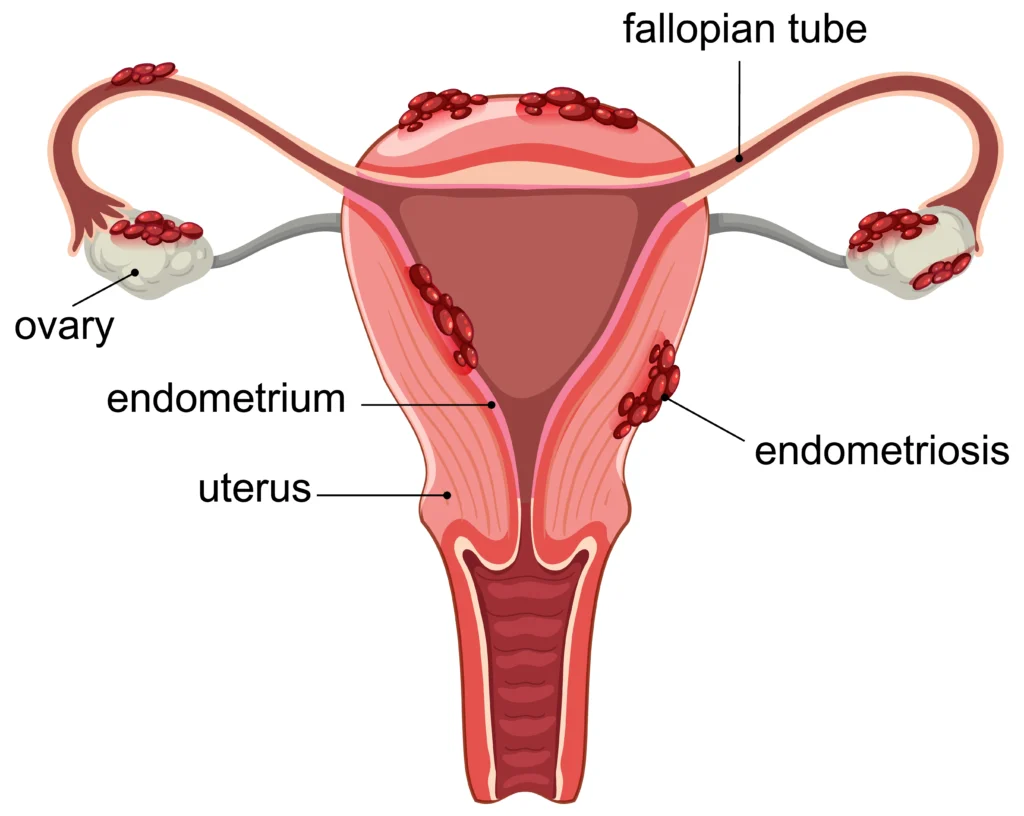
When most people think about endometriosis pain, they imagine lesions causing inflammation and discomfort.
That certainly happens.
However, chronic pain conditions rarely remain confined to one structure.
The body adapts.
Sometimes those adaptations become part of the problem.
For example, imagine spraining your ankle.
Initially, the injury causes pain.
Over time, you may begin walking differently to protect the area.
Months later, you could develop knee pain, hip pain, or back pain because of those compensations.
A similar process can occur with endometriosis.
The body may begin protecting the pelvis.
Muscles may tighten.
Breathing patterns may change.
Movement may become restricted.
The nervous system may become increasingly sensitive.
Even when inflammation improves, these protective responses can continue.
That does not mean the pain is imaginary.
It means the pain experience has become more complex.
Recent research continues to show that endometriosis is associated with significant effects on physical function, quality of life, sexual wellbeing, and pain processing, highlighting the need for multidisciplinary care approaches. (Lydia et al. 2024)
Can Physiotherapy Really Help Endometriosis Pain?
This is one of the most common questions I hear.
The answer is yes, but perhaps not in the way many people expect.
Physiotherapy does not remove endometriosis lesions.
It does not replace medical care.
It does not eliminate the need for gynecological evaluation.
What physiotherapy can do is address the physical consequences that often develop alongside endometriosis.
These may include:
- Pelvic floor muscle tension
- Abdominal wall tightness
- Breathing dysfunction
- Movement avoidance
- Pain-related muscle guarding
- Scar tissue restrictions
- Reduced mobility
- Nervous system sensitization
Many women discover that these factors have been contributing to their symptoms for years without anyone identifying them.
The goal of physiotherapy is not simply to reduce pain.
The goal is to improve function, confidence, movement, and quality of life.
What Happens to the Pelvic Floor in Endometriosis?
One of the most overlooked aspects of endometriosis care involves the pelvic floor.
The pelvic floor is a group of muscles that supports the pelvic organs and contributes to bladder function, bowel function, sexual function, and core stability.
When pain persists for months or years, these muscles often respond.
In many cases, they become overactive.
Rather than relaxing normally, they remain partially contracted.
This creates a cycle that can be difficult to break.
Pain leads to tension.
Tension leads to more pain.
The cycle continues.
Some women with endometriosis have never been told that their pelvic floor muscles may be contributing to their symptoms.
Instead, they spend years focusing solely on hormonal treatments while the muscular component remains untreated.
The Pelvic Floor Is Not Always Weak
One of the biggest myths surrounding pelvic health is that every problem is caused by weakness.
In women with endometriosis, the opposite is often true.
The pelvic floor may become excessively tight.
As physiotherapists, we frequently see patients who have been performing strengthening exercises for months despite having muscles that are already struggling to relax.
This is why assessment matters.
Tight pelvic floor muscles does not automatically need strengthening.
Sometimes it needs relaxation, coordination, and improved movement.
Signs You May Benefit from Pelvic Floor Physiotherapy
Not every woman with endometriosis requires pelvic floor treatment.
However, certain symptoms often suggest that a physiotherapy assessment may be helpful.
Persistent Pelvic Pain
Pain that continues between menstrual cycles is often a sign that additional factors may be contributing.
Pain During Intercourse
Pain with penetration is commonly associated with pelvic floor muscle tension.
Many women are surprised to learn that muscles can contribute significantly to this symptom.
Urinary Symptoms
Some women experience:
- Urinary urgency
- Frequent urination
- Bladder discomfort
- Difficulty emptying the bladder
These symptoms may coexist with endometriosis.
Bowel Symptoms
Painful bowel movements and constipation are frequently reported.
Muscle tension can sometimes contribute to these difficulties.
Pain While Sitting
Women often describe feeling uncomfortable after prolonged sitting posture.
This symptom may indicate involvement of the pelvic floor, connective tissues, or surrounding muscles.
- Persistent pelvic pain between periods
- Pain during intercourse
- Pelvic floor tightness or pressure
- Bladder urgency or frequency
- Painful bowel movements
- Lower back or hip pain related to pelvic symptoms
- Pain after endometriosis surgery
- Difficulty exercising because of pain
- Feeling restricted or guarded around the pelvis
- Symptoms affecting daily activities and quality of life
Why Muscles Stay Tight for So Long
One question patients often ask is:
“If the pain started years ago, why are my muscles still tight now?”
The answer involves protection.
The body’s primary goal is safety.
When an area repeatedly experiences pain, the nervous system may increase muscle activity around that region.
Initially, this response is helpful.
It protects sensitive tissues.
Over time, however, the protective response can become excessive.
The muscles remain guarded even when they no longer need to.
This is not a conscious choice.
Most people have no idea they are holding tension.
They simply know they feel uncomfortable.
The Nervous System’s Role in Endometriosis Pain
Modern pain science has changed how we understand chronic pain conditions.
Pain is not produced solely by injured tissues.
The nervous system also plays an important role.
With persistent pain conditions such as endometriosis, the nervous system can become more sensitive.
This process is often referred to as central sensitization.
A sensitive nervous system does not mean the pain is psychological.
It means the body’s alarm system has become more reactive.
As a result, normal sensations may feel more intense.
Muscle tension may increase.
Pain may persist longer than expected.
Research increasingly supports the importance of addressing both peripheral and central contributors to endometriosis-related pain. (Matteo Morotti et al. 2024)
Why Breathing Matters More Than Most Women Realize
At first glance, breathing and endometriosis may seem completely unrelated.
In reality, they are closely connected.
The diaphragm and pelvic floor work together throughout the day.
When breathing becomes shallow, the coordination between these structures may become less efficient.
Many women with chronic pelvic pain develop upper-chest breathing patterns without realizing it.
This often occurs because pain changes how the body moves.
Improving breathing mechanics does not cure endometriosis.
However, it can reduce unnecessary muscle tension and improve pelvic floor function.
In clinical practice, this is often one of the simplest yet most overlooked interventions.
The Hidden Impact of Scar Tissue
Women who have undergone laparoscopic surgery for endometriosis sometimes assume healing is complete once the incisions close.
The story does not always end there.
Scar tissue can influence movement patterns.
It can affect tissue mobility.
It may contribute to discomfort in certain cases.
This does not mean every scar causes pain.
Most do not.
However, assessing tissue mobility after surgery can be an important part of rehabilitation.
A physiotherapy evaluation often helps determine whether scar-related restrictions are contributing to ongoing symptoms.
What I Often Hear in Clinic
One conversation repeats itself again and again.
A woman arrives after years of managing endometriosis.
She has tried multiple treatments.
Some have helped.
Others have not.
Then she says:
“I thought the pain was only coming from the endometriosis.”
That statement makes perfect sense.
Most people are never told about the muscular and nervous system components of chronic pelvic pain.
Once they understand the bigger picture, many feel relieved.
Not because the pain suddenly disappears.
But because they finally have an explanation that makes sense.
Understanding why pain persists is often the first step toward improving it.
Why a Whole-Body Approach Matters
Endometriosis affects far more than the reproductive system.
It influences movement.
It influences sleep.
It influences exercise habits.
It influences stress levels.
It influences confidence and quality of life.
The best physiotherapy programs recognize this reality.
Rather than focusing on one muscle or one exercise, they examine how the entire body is responding to chronic pain.
This broader perspective often produces better long-term outcomes than chasing symptoms in isolation.
The goal is not simply to make pain disappear for a day.
The goal is to help the body move, function, and recover more effectively over time.
Best Physiotherapy Treatments for Endometriosis Pain
When women hear the term physiotherapy, they often imagine a list of exercises.
In reality, effective physiotherapy for endometriosis is usually much more comprehensive.
The best treatment plan depends on the individual’s symptoms, medical history, movement patterns, and pain presentation.
There is no single exercise that works for everyone.
Instead, treatment often combines several approaches to address the muscular, nervous system, and movement-related factors contributing to pain.
- Pelvic Floor Relaxation Training
- Manual Therapy
- Myofascial Release Techniques
- Breathing and Diaphragm Retraining
- Pain Neuroscience Education
- Movement and Exercise Therapy
- Postural Retraining
- Scar Tissue Mobility Work
- Core and Pelvic Stability Training
- Post-Surgical Rehabilitation
Manual Therapy
Manual therapy is one of the most commonly used physiotherapy techniques for endometriosis-related pain.
This involves hands-on treatment designed to improve tissue mobility and reduce excessive muscle tension.
Depending on the individual, treatment may focus on:
- Abdominal tissues
- Hip muscles
- Lower back muscles
- Connective tissue restrictions
- Pelvic floor muscles
The goal is not to “break up scar tissue” as is sometimes claimed online.
Instead, the aim is to improve mobility, reduce protective muscle guarding, and help the body move more comfortably.
Many women report feeling less restricted after manual therapy sessions, particularly when muscle tension has been present for a long time.
Pelvic Floor Relaxation Training
One of the biggest surprises for many patients is learning that relaxation may be more important than strengthening.
Women with chronic pelvic pain frequently develop an overactive pelvic floor.
The muscles remain partially contracted throughout the day.
Over time, this can contribute to:
- Pelvic pain
- Bladder symptoms
- Bowel symptoms
- Pain during intercourse
Relaxation training focuses on teaching the muscles how to let go of unnecessary tension.
This may include:
- Breathing exercises
- Positioning strategies
- Gentle mobility work
- Awareness training
For many women, this becomes one of the most valuable components of treatment.
Breathing and Diaphragm Retraining
This is an area that is often overlooked.
The diaphragm and pelvic floor work together as part of the body’s pressure management system.
When breathing becomes shallow or restricted, pelvic floor function may also be affected.
Many women with endometriosis unknowingly breathe predominantly through their upper chest.
This pattern is understandable.
Pain changes movement.
Stress changes breathing.
The body adapts.
Teaching efficient breathing mechanics can help reduce unnecessary tension and improve overall movement quality.
Some women notice improvements in pelvic comfort simply by learning how to breathe differently.
Pain Neuroscience Education
This may sound complicated, but the concept is simple.
Understanding pain can reduce fear.
Many women living with endometriosis spend years feeling confused by their symptoms.
They may wonder:
- Why does the pain persist?
- Why do symptoms fluctuate?
- Why does stress seem to make things worse?
- Why does pain continue after treatment?
Pain neuroscience education helps answer these questions.
Research has shown that understanding how pain works can improve confidence and reduce fear-related behaviors in people with chronic pain conditions.
The goal is not to convince someone that the pain is psychological.
The goal is to help them understand why pain can persist even when the situation is more complex than ongoing tissue damage alone.
Movement Therapy
One of the most common consequences of chronic pain is reduced movement.
This is completely understandable.
When movement hurts, avoiding it feels logical.
Unfortunately, long-term avoidance can sometimes create additional problems.
Muscles become less conditioned.
Stiffness increases.
Confidence decreases.
Movement therapy focuses on helping women return to activities safely and gradually.
This does not mean pushing through severe pain.
It means rebuilding trust in the body.
Depending on the individual, treatment may include:
- Walking programs
- Gentle strength training
- Mobility exercises
- Functional movement retraining
- Core rehabilitation
The goal is progress, not perfection.
Physiotherapy After Endometriosis Surgery
Many women assume surgery is the final step in treatment.
For some, surgery provides significant relief.
For others, symptoms continue despite successful procedures.
Post-surgical physiotherapy can help address factors such as:
- Scar tissue mobility
- Muscle guarding
- Pelvic floor tension
- Reduced activity levels
- Fear of movement
Recovery is about more than healing an incision.
It is about helping the body regain confidence and function.
This is one reason many pelvic health specialists recommend rehabilitation as part of a broader treatment plan.
Can Exercise Make Endometriosis Pain Worse?
This is a question that comes up frequently.
The answer depends on the type of exercise and the individual.
Certain activities may aggravate symptoms in some women.
Others may feel significantly better with regular movement.
What matters most is finding the right level of activity.
A common mistake is moving from complete inactivity to intense exercise too quickly.
The body generally responds better to gradual progression.
The goal is to challenge the system without overwhelming it.
Common Mistakes Women Make
Many women with endometriosis work incredibly hard to manage their symptoms.
Unfortunately, some common mistakes can make recovery more difficult.
Ignoring Pelvic Floor Dysfunction
Many women are never screened for pelvic floor dysfunction involvement.
As a result, muscular contributors to pain may go untreated for years.
Stretching Aggressively
More stretching is not always better.
Overly aggressive stretching can sometimes irritate sensitive tissues.
Chasing Pain Relief Alone
Pain reduction is important.
However, focusing exclusively on pain may cause women to overlook other meaningful improvements such as:
- Better sleep
- Improved mobility
- Increased confidence
- Better bladder function
- Improved quality of life
Comparing Recovery to Someone Else
Endometriosis affects every woman differently.
Recovery timelines vary.
Treatment responses vary.
Comparisons are rarely helpful.
Myth: Physiotherapy cannot help endometriosis because it is a gynecological condition.
Fact: Physiotherapy can help address pelvic floor dysfunction, movement restrictions, muscle tension, and pain-related adaptations.
Myth: Pain always comes directly from endometriosis lesions.
Fact: Muscles, nerves, connective tissues, and the nervous system may also contribute to pain.
Myth: Surgery automatically fixes every aspect of endometriosis pain.
Fact: Some women continue to experience symptoms because muscular and nervous system factors remain involved.
Myth: Resting completely is the best way to manage endometriosis pain.
Fact: Appropriate movement and physiotherapy-guided activity often support long-term recovery and function.
Lifestyle Factors That Support Physiotherapy
Physiotherapy is most effective when combined with healthy lifestyle habits.
This does not mean perfection.
It means creating an environment that supports recovery.
Sleep
Sleep plays an important role in pain regulation.
Poor sleep may increase pain sensitivity and fatigue.
Calculate your ideal sleep timings here: “Sleep Calculator“
Stress Management
Stress does not cause endometriosis.
However, stress can influence pain perception and muscle tension.
Finding strategies that support emotional wellbeing may complement physiotherapy treatment.
Consistent Movement
Small amounts of movement performed regularly often produce better results than occasional intense efforts.
Pacing
Learning when to push forward and when to recover is an important skill for managing chronic conditions.
What I Tell My Patients
There is one conversation I have with nearly every woman who comes to see me for endometriosis-related pain.
I tell them that improvement is rarely about finding a miracle exercise.
It is usually about understanding the bigger picture.
Pain can involve:
- Muscles
- Nerves
- Connective tissues
- Movement habits
- Breathing patterns
- Stress responses
Addressing only one piece of the puzzle may leave other contributors untouched.
The women who often do best are those who adopt a broader perspective.
They stop searching for a quick fix and start building a comprehensive management strategy.
That shift can be incredibly empowering.
One of the most important things I tell women with endometriosis is that persistent pain does not automatically mean you are doing something wrong or that your body is damaged beyond repair. Chronic pelvic pain is often influenced by muscles, nerves, movement patterns, stress responses, and the nervous system itself. The goal of physiotherapy is not to convince you the pain is psychological. The goal is to help you understand all the factors that may be contributing to your symptoms and provide practical tools that improve comfort, confidence, and daily function.
When Should You See a Pelvic Health Physiotherapist?
You may benefit from an assessment if you experience:
- Ongoing pelvic pain
- Pain during intercourse
- Bladder symptoms
- Bowel symptoms
- Persistent muscle tension
- Pain after endometriosis surgery
- Difficulty exercising because of symptoms
Seeking help does not mean your symptoms are severe.
It simply means you want a better understanding of what may be contributing to them.
Early intervention is often easier than trying to reverse years of compensatory patterns.
The Future of Endometriosis Care
One of the most encouraging developments in recent years is the growing recognition that endometriosis requires multidisciplinary care.
Healthcare providers increasingly acknowledge that medications and surgery are important, but they are not always the complete solution.
The future of endometriosis management is likely to involve greater collaboration between:
- Gynecologists
- Physiotherapists
- Pain specialists
- Dietitians
- Mental health professionals
This whole-person approach reflects the reality of living with a complex chronic condition.
- Endometriosis pain often involves muscles, nerves, connective tissues, and the nervous system, not just endometrial lesions.
- Pelvic floor dysfunction is common in women living with chronic pelvic pain.
- Pelvic floor muscles may become overly tight and contribute to ongoing symptoms.
- Physiotherapy can help improve mobility, function, and quality of life.
- Manual therapy may help reduce muscle guarding and movement restrictions.
- Breathing retraining can improve pelvic floor coordination and reduce unnecessary tension.
- Pain neuroscience education helps women better understand persistent pain.
- Movement therapy focuses on rebuilding confidence and physical function.
- Post-surgical physiotherapy can be beneficial after endometriosis surgery.
- The most effective treatment plans are individualized rather than based on a single exercise or technique.
Final Thoughts
The best physiotherapy for endometriosis pain is not a single technique.
It is an individualized approach that considers the many ways chronic pain can affect the body.
For some women, the focus may be pelvic floor relaxation.
For others, it may involve movement retraining, scar tissue management, breathing exercises, or pain education.
The most important lesson is that persistent pain does not always mean ongoing damage.
Sometimes muscles are protecting.
Sometimes the nervous system has become sensitized.
Sometimes movement patterns have changed after years of discomfort.
These factors deserve attention.
Physiotherapy cannot cure endometriosis.
What it can do is help address many of the physical consequences that often accompany it.
For countless women, that support can make daily life more comfortable, movement more enjoyable, and symptoms far more manageable.
And perhaps most importantly, it can provide something many women with endometriosis have been searching for a long time:
A better understanding of what their body is experiencing and a practical plan for moving forward.
Frequently Asked Questions
Can physiotherapy help endometriosis pain?
Yes. Physiotherapy can help manage many physical factors associated with endometriosis pain, including pelvic floor dysfunction, muscle tension, movement restrictions, breathing dysfunction, and nervous system sensitivity. While it does not cure endometriosis, it can significantly improve comfort, mobility, and quality of life.
What type of physiotherapy is best for endometriosis?
The best physiotherapy approach depends on individual symptoms. Treatment may include pelvic floor relaxation training, manual therapy, breathing exercises, movement therapy, pain neuroscience education, and post-surgical rehabilitation.
Can a tight pelvic floor make endometriosis symptoms worse?
Yes. Many women with endometriosis develop an overactive pelvic floor due to chronic pain and muscle guarding. This may contribute to pelvic pain, painful intercourse, urinary symptoms, and bowel discomfort.
Does physiotherapy help after endometriosis surgery?
Yes. Physiotherapy can help improve scar mobility, reduce muscle tension, restore movement, and support recovery after laparoscopic or other endometriosis-related surgeries.
Can physiotherapy reduce painful intercourse caused by endometriosis?
For some women, yes. Pelvic floor physiotherapy may help reduce muscle tension, improve pelvic floor relaxation, and address factors that contribute to pain during intercourse.
How long does physiotherapy take to help endometriosis pain?
Results vary from person to person. Some women notice improvements within a few sessions, while others require a longer-term treatment plan depending on symptom severity, pain duration, and individual goals.
Can exercise make endometriosis pain worse?
Certain exercises may aggravate symptoms in some women, particularly during pain flare-ups. A physiotherapist can help identify appropriate activities and create a personalized exercise plan.
When should I see a pelvic health physiotherapist for endometriosis?
Consider seeking professional help if you experience persistent pelvic pain, pain during intercourse, bladder or bowel symptoms, pain after surgery, or symptoms that interfere with daily activities and wellbeing.
Stay tuned with us for more health related topics.
Follow us on LinkedIn and Instagram for more.
More Read


Medical Disclaimer!
This article has been reviewed and written under the guidance of our Head Physiotherapist, Dr. Kruti Raj (PT, MUHS,CPT,CMPT). The information shared is intended for educational purposes only and should not be considered a substitute for personalized medical advice, diagnosis, or treatment.
Please consult us or any other qualified healthcare professional before beginning any exercise program, especially if you are experiencing pain, recovering from injury, or managing a medical condition.


