


Wrist pain during pregnancy is a not common complaint.
When people talk about pregnancy discomforts, they usually mention back pain, swollen feet, pelvic pressure, or morning sickness.
Rarely does anyone mention wrist pain.
That is why many pregnant women are surprised when they wake up one morning with aching wrists, numb fingers, or a tingling sensation running through their hands.
Some women struggle to hold a coffee mug.
Others find it difficult to grip a steering wheel.
Some wake up repeatedly at night because their hands feel numb or “asleep.”
Quick Answer
Wrist pain during pregnancy is often caused by fluid retention that increases pressure inside the carpal tunnel, a narrow passageway in the wrist that contains the median nerve. This pressure can lead to pain, numbness, tingling, weakness, and hand discomfort, particularly during the second and third trimesters. The good news is that symptoms often improve after childbirth as pregnancy-related swelling decreases.
As a women’s health physiotherapist, I see this more often than many people realize.
In fact, wrist pain and hand symptoms are relatively common during pregnancy, especially during the second and third trimesters.
The good news is that in most cases, these symptoms are not caused by injury.
Instead, they are often related to normal pregnancy changes such as fluid retention, hormonal shifts, and nerve compression.
Understanding why wrist pain develops during pregnancy can help reduce anxiety and make it easier to manage symptoms effectively.
Key Takeaways
- Wrist pain is a common but often overlooked pregnancy symptom.
- Fluid retention is one of the main causes of pregnancy-related wrist discomfort.
- Increased pressure inside the carpal tunnel can compress the median nerve.
- Symptoms often include pain, tingling, numbness, burning, and weakness in the hand.
- Many women notice symptoms becoming worse at night.
- The thumb, index finger, middle finger, and part of the ring finger are most commonly affected.
- Hormonal changes and tissue swelling may contribute to symptom development.
- Typing, texting, gripping, and repetitive hand movements may aggravate symptoms.
- Night splints and activity modification may help reduce discomfort.
- Many women experience significant improvement after delivery.
Why Wrist Pain Is More Common Than You Think
Many women assume wrist pain must be caused by overuse or injury.
While repetitive activities can contribute, pregnancy itself can create the perfect conditions for wrist discomfort.
Pregnancy Changes More Than The Belly
Pregnancy affects:
- Blood circulation
- Fluid balance
- Hormones
- Connective tissues
- Nerve function
These changes occur throughout the body, including the wrists and hands.
Symptoms Often Appear Gradually
Most women do not experience wrist pain overnight.
Instead, symptoms often develop gradually over weeks.
At first, there may be occasional tingling.
Later, discomfort becomes more noticeable.
Some women only notice symptoms at night.
Others experience them throughout the day.
Understanding The Carpal Tunnel
To understand pregnancy-related wrist pain, it helps to understand a structure called the carpal tunnel.
What Is The Carpal Tunnel?
The carpal tunnel is a narrow passageway located on the palm side of the wrist.
Several important structures pass through this space, including:
- Tendons that move the fingers
- The median nerve
Why Space Matters
The carpal tunnel has limited room.
When pressure increases within this area, the median nerve can become compressed.
This may lead to symptoms commonly known as carpal tunnel syndrome. (Mayo Clinic)
Why The Median Nerve Matters
The median nerve provides sensation to parts of the:
- Thumb
- Index finger
- Middle finger
- Part of the ring finger
Compression of this nerve can cause pain, tingling, numbness, and weakness.
How Pregnancy Causes Wrist Problems
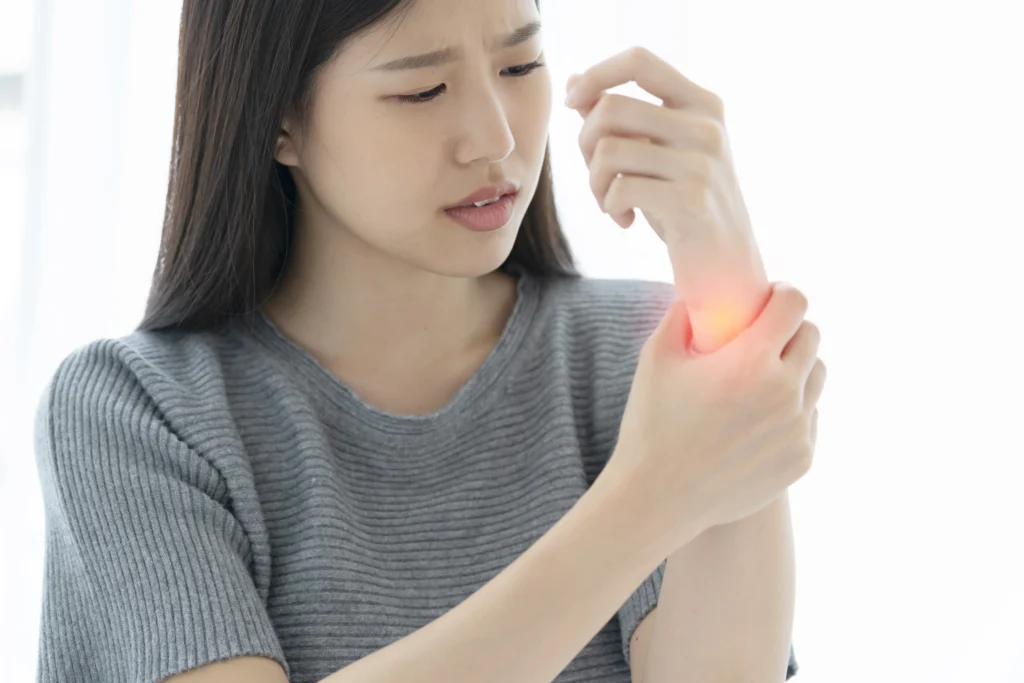
One of the biggest misconceptions is that pregnancy wrist pain occurs because women are using their hands differently.
In reality, pregnancy itself often creates the underlying problem.
The Body Holds More Fluid
During pregnancy, the body naturally retains more fluid.
This helps support:
- Increased blood volume
- Placental circulation
- Fetal growth
While beneficial overall, fluid retention can also increase pressure in confined spaces such as the carpal tunnel.
More Pressure Means Less Space
As tissues become swollen, there is less room available for the median nerve.
The result may be nerve compression and discomfort. (American Academy of orthopedic Surgeons)
Why Symptoms Often Appear Later
Fluid retention typically becomes more noticeable during the second and third trimesters.
This is one reason wrist symptoms often develop later in pregnancy.
The Role Of Fluid Retention
Fluid retention is one of the biggest contributors to pregnancy-related wrist pain.
Why The Body Retains Fluid
Pregnancy hormones encourage the body to hold onto additional fluids.
These fluids support important physiological changes.
Swelling Is Not Limited To The Feet
Many women associate pregnancy swelling with:
- Ankles
- Feet
- Legs
However, swelling can also affect:
- Hands
- Fingers
- Wrists
The Hidden Effect
Even small increases in tissue swelling inside the wrist can create significant pressure on nerves.
Because the carpal tunnel is already narrow, minor swelling can have a noticeable impact.
Why Symptoms Often Feel Worse At Night
Many women report that wrist pain becomes especially troublesome during sleep.
The Nighttime Pattern
Common nighttime symptoms include:
- Tingling fingers
- Hand numbness
- Burning sensations
- Wrist discomfort
Some women wake up several times each night.
Why Does This Happen?
Several factors may contribute.
Fluid Redistribution
When lying down, body fluids redistribute differently than they do during the day.
This may increase pressure in the hands and wrists.
Wrist Positioning
Many people sleep with their wrists bent.
This position can further increase pressure within the carpal tunnel.
Less Distraction
At night, there are fewer competing sensations and activities.
As a result, symptoms often feel more noticeable.
Did You Know?
Many pregnant women wake up with numb or tingling hands because fluid naturally redistributes throughout the body while sleeping. This can increase pressure inside the wrist and temporarily worsen carpal tunnel symptoms overnight.
Common Symptoms To Watch For
Pregnancy-related wrist problems can affect women differently.
Typical Symptoms
Common complaints include:
- Wrist pain
- Tingling fingers
- Hand numbness
- Burning sensations
- Weak grip strength
- Hand fatigue
Finger Distribution Matters
Symptoms often affect:
- Thumb
- Index finger
- Middle finger
- Ring finger
The little finger is usually unaffected because it is supplied by a different nerve.
Morning Symptoms
Many women wake up with stiff or numb hands that gradually improve after movement.
This pattern is particularly common in pregnancy-related carpal tunnel syndrome.
Is It Always Carpal Tunnel Syndrome?
Not necessarily.
Although carpal tunnel syndrome is common, it is not the only possible cause of wrist pain during pregnancy.
Other Possibilities
Symptoms may also be related to:
- Tendon irritation
- Joint inflammation
- Swelling around soft tissues
- Postural changes
- Neck-related nerve irritation
Why Proper Assessment Matters
Persistent symptoms deserve professional evaluation to identify the true source of discomfort.
The correct diagnosis helps guide treatment.
How Daily Activities Can Make Symptoms Worse
Pregnancy may create the underlying problem, but daily activities can sometimes aggravate symptoms.
Repetitive Hand Movements
Examples include:
- Typing
- Texting
- Gripping objects
- Knitting
- Repetitive household tasks
These activities may increase irritation around already sensitive tissues.
Smartphone Use
One lesser-known contributor is prolonged phone use.
Holding a phone for extended periods may place additional strain on the wrist and hand muscles.
Gripping Activities
Strong gripping can increase pressure around tendons passing through the carpal tunnel.
This may worsen symptoms temporarily.
The Connection Between Hormones And Wrist Pain
Hormones influence far more than mood and energy levels.
They also affect connective tissues.
Relaxin And Tissue Changes
Pregnancy hormones help prepare the body for childbirth.
Some of these hormones affect ligaments and connective tissues throughout the body.
Why This Matters
Changes in tissue properties may alter how structures move and interact within joints.
Although fluid retention remains the primary factor, hormonal influences may contribute to symptom development.
A Physiotherapist’s Perspective On Wrist Pain During Pregnancy
One of the most important things I tell pregnant women is that wrist pain is often temporary.
Many women worry they have permanently damaged something.
In most cases, that is not what is happening.
The Goal Is To Reduce Pressure
Treatment often focuses on minimizing irritation and reducing pressure on sensitive structures.
Understanding Patterns Helps
Pay attention to:
- Activities that worsen symptoms
- Sleep positions
- Times of day symptoms occur
These clues can help identify useful strategies.
Early Intervention Matters
Addressing symptoms early may prevent them from becoming more disruptive later in pregnancy.
Simple Strategies That May Help
While every woman is different, several approaches often provide relief.
Maintain Neutral Wrist Positions
Try to avoid prolonged wrist bending when possible.
Keeping the wrist relatively straight may reduce pressure within the carpal tunnel.
Modify Activities
Frequent breaks may help during:
- Typing
- Phone use
- Repetitive tasks
Gentle Hand Movements
Regular movement can encourage circulation and reduce stiffness.
Manage Swelling
General strategies that support circulation may help reduce fluid accumulation.
Examples include:
- Staying active
- Gentle exercise
- Appropriate hydration
Wrist Splints
Some women benefit from wearing a wrist splint at night.
Splints help maintain a more neutral wrist position during sleep. (Kenner 2025)
Physiotherapist’s Advice
Try to keep your wrists in a neutral position during daily activities and while sleeping. Avoid prolonged wrist bending when using phones, keyboards, or holding objects. Small adjustments in wrist posture can significantly reduce pressure on the median nerve and improve comfort.
What Happens After Delivery?
One of the most reassuring aspects of pregnancy-related wrist pain is that symptoms often improve after childbirth.
Why Improvement Occurs
After delivery:
- Fluid retention decreases
- Hormone levels change
- Tissue pressure often reduces
As swelling improves, pressure on the median nerve frequently decreases as well.
Recovery Takes Time
For some women, improvement occurs quickly.
For others, symptoms gradually improve over several weeks or months.
Breastfeeding Considerations
New baby care activities can sometimes place additional stress on the wrists.
Proper positioning and support remain important during the postpartum period.
When To Seek Medical Advice
Although pregnancy-related wrist pain is often harmless, medical evaluation is important if symptoms become severe.
Seek professional advice if you experience:
- Persistent numbness
- Significant weakness
- Difficulty gripping objects
- Severe pain
- Symptoms that continue worsening
Early assessment can help determine the most appropriate management strategy.
Final Thoughts
Wrist pain may not be one of the most talked-about pregnancy symptoms, but for women who experience it, the impact can be significant.
Simple activities such as sleeping, typing, holding a phone, or carrying groceries may suddenly become uncomfortable.
Fortunately, understanding the cause often brings reassurance.
In most cases, pregnancy-related wrist pain is not the result of injury.
It is usually a consequence of the body’s normal adaptations to support a growing baby.
As a physiotherapist,
I encourage women to pay attention to symptoms early, support healthy wrist positions, manage swelling where possible, and seek professional guidance when needed.
Most importantly, remember that for many women, these symptoms improve after pregnancy.
Your body is adapting to an extraordinary journey, and sometimes even your wrists become part of that story.
Frequently Asked Questions About Wrist Pain During Pregnancy
Why do my wrists hurt during pregnancy?
Pregnancy-related fluid retention can increase pressure inside the wrist, compressing the median nerve and causing pain, tingling, or numbness.
What is pregnancy carpal tunnel syndrome?
Pregnancy carpal tunnel syndrome occurs when swelling within the wrist compresses the median nerve, leading to hand and wrist symptoms.
Why is wrist pain worse at night during pregnancy?
Fluid redistribution and sleeping with bent wrists may increase pressure inside the carpal tunnel, making symptoms more noticeable overnight.
Which fingers are usually affected?
The thumb, index finger, middle finger, and part of the ring finger are most commonly affected because they are supplied by the median nerve.
Can typing and phone use make symptoms worse?
Yes. Repetitive hand movements and prolonged gripping activities may increase irritation and worsen symptoms.
Will pregnancy wrist pain go away after birth?
For many women, symptoms improve significantly after delivery as fluid retention decreases and pressure on the median nerve reduces.
Can a wrist splint help?
Yes. Wearing a wrist splint at night may help maintain a neutral wrist position and reduce nerve compression.
When should I seek medical advice?
Seek medical evaluation if symptoms become severe, persistent, or are associated with significant weakness or loss of hand function.
Stay tuned with us for more health related topics.
Follow us on LinkedIn and Instagram for more.
More Read




Medical Disclaimer!
This article has been reviewed and written under the guidance of our Head Physiotherapist, Dr. Kruti Raj (PT, MUHS,CPT,CMPT). The information shared is intended for educational purposes only and should not be considered a substitute for personalized medical advice, diagnosis, or treatment.
Please consult us or any other qualified healthcare professional before beginning any exercise program, especially if you are experiencing pain, recovering from injury, or managing a medical condition.


