Why am I losing fat but not losing weight?
This confusing situation is more common than you think, and the scale may not show every change happening in your body.
You have been eating better, walking regularly, and exercising consistently.
Your jeans fit more comfortably, your waist looks smaller, and you feel stronger than you did a few months ago.
But every time you step on the scale, the number barely changes.
It is one of the most frustrating experiences during a weight-loss journey.
Quick Answer
Yes, you can lose fat without losing weight.
Your body weight includes fat, muscle, water, glycogen, and other tissues. If you lose fat while maintaining or gaining muscle, the scale may stay the same even though your body composition is improving.
A smaller waist, looser clothes, better fitness, and increased strength can all be signs of fat loss-even if the number on the scale barely changes.
Many people assume that if the scale is not moving, they are not making progress.
In reality, your body can lose fat while your total body weight stays the same.
This happens because the scale measures everything in your body, not just fat.
Water, muscle, glycogen, food in your digestive system, and even hydration levels can all influence your weight from one day to the next.
Understanding the difference between fat loss and weight loss can help you measure progress more accurately and avoid giving up too soon.
Key Takeaways
- Fat loss and weight loss are not the same thing.
- You can lose body fat while maintaining or gaining muscle.
- Water retention and glycogen storage can temporarily hide fat loss.
- Body recomposition is possible, especially for beginners and those returning to exercise.
- Resistance training and adequate protein help preserve lean muscle mass.
- Waist measurements, progress photos, and clothing fit often reveal changes before the scale does.
- Daily weight fluctuations are normal and do not always reflect fat gain or fat loss.
- Long-term healthy habits matter more than short-term changes on the scale.
Fat Loss and Weight Loss Are Different
Although the two terms are often used interchangeably, they are not the same.
Weight loss simply means your total body weight has decreased.
Fat loss means your body has reduced the amount of stored fat it carries.
Your body weight is made up of several components:
- Body fat
- Muscle
- Water
- Bones
- Organs
- Glycogen stores
- Food and fluids in the digestive system
If you lose fat while maintaining or increasing muscle mass, your body composition improves even if the scale remains relatively stable.
This is one reason many health professionals encourage people to focus on body composition instead of body weight alone.
Research comparing different exercise approaches has shown that body composition can improve through reductions in fat mass and improvements in lean body mass. (Willis et al. 2012)
Why the Scale Does Not Always Reflect Fat Loss
The scale provides only one piece of information.
It cannot tell whether a change in weight comes from fat, muscle, or water.
Several normal body processes can temporarily hide fat loss.
Water Retention
The human body constantly regulates fluid balance.
A salty meal, hormonal changes, stress, increased carbohydrate intake, or a challenging workout can all cause temporary water retention.
These short-term changes can make it appear that you are not losing fat, even when positive changes are happening.
Glycogen Storage
Your body stores carbohydrates as glycogen in the muscles and liver.
Each gram of glycogen is stored together with water.
If you start exercising regularly, your muscles may hold more glycogen, which can slightly increase body weight.
This additional weight is not body fat.
Muscle Recovery
After resistance training or a more intense workout than usual, muscles may temporarily hold extra fluid as part of the recovery process.
This is a normal response and should not be mistaken for fat gain.
What Is Body Recomposition?
Body recomposition refers to improving the ratio of fat mass to lean mass.
Instead of focusing only on losing kilograms, the goal is to reduce body fat while maintaining or increasing muscle.
For many people, especially beginners, individuals returning to exercise, and those carrying excess body fat, this process is possible.
Body recomposition is usually supported by:
- Resistance training
- Adequate protein intake
- Regular physical activity
- Consistent healthy eating habits
Research suggests that muscle gain and fat loss can occur simultaneously under the right conditions. (Barakat et al. 2020)
Body Recomposition: Can Trained Individuals Build Muscle While Losing Fat?
This means that your body may become leaner even when the scale changes very little.
Can You Gain Muscle and Lose Fat at the Same Time?
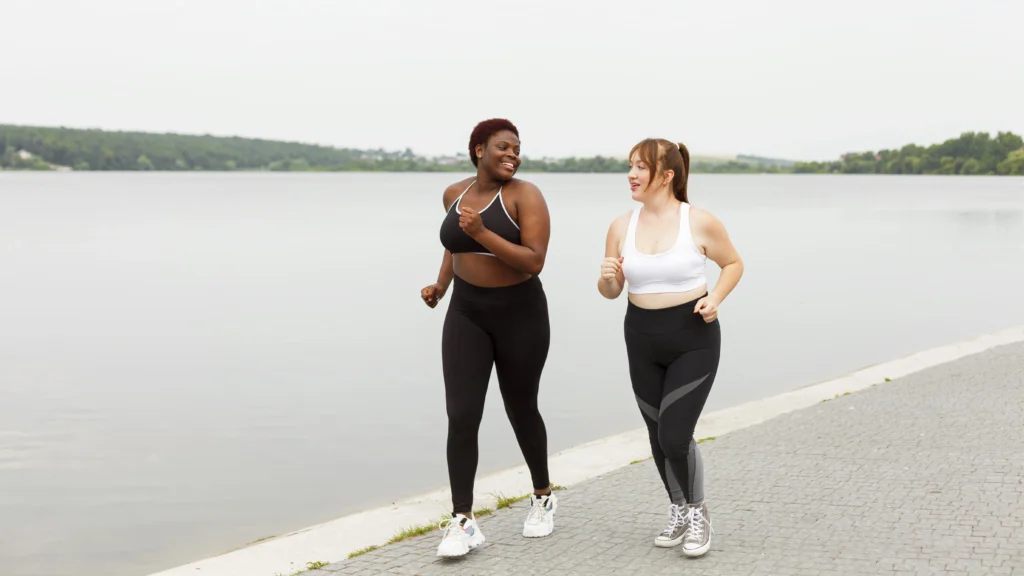
Yes, although the process varies from person to person.
People who are new to exercise often experience the greatest changes because their bodies respond quickly to training.
Those returning after a long break may also see improvements in muscle and reductions in fat at the same time.
Even experienced exercisers can improve body composition, although the process may happen more slowly.
One important factor is preserving muscle during fat loss.
If you lose weight very rapidly through severe calorie restriction, you may lose muscle along with fat.
Maintaining muscle is important because it supports physical function, strength, and overall body composition.
Why Protein Matters
Protein provides the building blocks needed to maintain and repair muscle tissue.
People trying to lose fat often benefit from consuming enough protein while remaining physically active.
This does not mean following an extreme diet or eliminating entire food groups.
Instead, a balanced eating pattern that includes adequate protein can help support lean body mass.
A large systematic review found that protein supplementation combined with resistance exercise enhances gains in muscle mass and strength. (Morton et al. 2018)
For people interested in body recomposition, preserving muscle can be just as important as reducing fat.
Signs You May Be Losing Fat
The scale is not the only way to measure progress.
In fact, many people notice other changes before they notice significant weight loss.
Your Clothes Fit Better
Looser clothing often indicates changes in body shape and reductions in body fat.
Your Waist Measurement Is Smaller
Tracking waist circumference over time may reveal improvements that are not obvious on the scale.
You Feel Stronger
Being able to lift heavier weights, walk farther, or complete daily activities more easily can indicate positive physical changes.
Your Progress Photos Look Different
Small changes are often easier to see in photographs than in the mirror.
Your Fitness Has Improved
Better endurance and strength are valuable health improvements, even if body weight changes slowly.
Why Strength Training Is Important
Many people rely entirely on walking or cardio exercise for weight loss.
While these activities provide significant health benefits, resistance training can help preserve lean muscle mass during fat loss.
The World Health Organization recommends muscle-strengthening activities involving major muscle groups on two or more days each week. (Bull et al. 2020)
Resistance training does not have to involve heavy weights or a gym membership.
Bodyweight exercises, resistance bands, and simple home workouts can also help support muscle maintenance.
Better Ways to Track Progress
If your goal is to improve body composition, relying only on the scale can be misleading.
Consider using several measurements together.
Body Weight
Track long-term trends rather than daily fluctuations.
Waist Circumference
A shrinking waist may indicate fat loss.
Progress Photos
Monthly photographs can help reveal subtle physical changes.
Clothing Fit
Many people notice this before they see large changes on the scale.
Strength and Fitness
Improvements in physical performance are meaningful signs of progress.
Using multiple indicators provides a more complete picture of your health journey.
Should You Stop Using the Scale?
Not necessarily.
The scale is a useful tool, but it should not be the only one.
It works best when combined with other measures of body composition and physical fitness.
A single weigh-in cannot tell you whether you have lost fat, gained muscle, or simply retained more water.
Common Mistakes People Make
Believing the Scale Tells the Whole Story
Body weight alone cannot measure body composition.
Expecting Daily Progress
Normal fluctuations are part of human biology.
Ignoring Strength Training
Maintaining muscle is an important part of healthy fat loss.
Chasing Rapid Weight Loss
Extreme diets may increase the risk of losing lean muscle.
Comparing Yourself to Other People
Everyone responds differently to nutrition and exercise.
Your progress should be measured against your own starting point.
How Is Body Composition Actually Measured?
In research settings, body composition can be measured using methods such as dual-energy X-ray absorptiometry (DXA).
These assessments provide information about fat mass and lean mass that a standard scale cannot provide. (Shepherd et al. 2017)
Most people do not need sophisticated testing, but understanding that these tools exist reinforces an important point: body weight and body fat are not identical.
The Bottom Line
Yes, you can absolutely be losing fat without losing weight.
Changes in water balance, glycogen storage, muscle maintenance, and body recomposition can all hide positive progress on the scale.
If your clothes fit better, your waist measurement is smaller, your strength has improved, and you feel healthier, those are meaningful signs that your efforts are working.
Rather than letting one number define your success, look at the bigger picture.
The goal is not simply to become lighter.
The goal is to become healthier, stronger, and leaner in a way that you can maintain for the long term.
Final Thoughts
Body weight is only one measure of progress. Losing fat while maintaining muscle can make you healthier and leaner, even when the scale barely moves.
Focus on long-term habits and body composition rather than a single number.
Frequently Asked Questions
Yes. You may lose fat while maintaining or gaining muscle, and temporary water retention can also keep the scale stable.
Yes. This process is known as body recomposition and is often seen in beginners, people returning to exercise, and those with higher body fat levels.
You may be reducing body fat while preserving muscle. Since muscle is denser than fat, body shape can improve without major weight changes.
Yes. Salt intake, hormones, exercise, and glycogen storage can temporarily increase water weight.
Yes. Resistance training helps preserve lean muscle mass, which supports healthy body composition.
Adequate protein intake can support muscle maintenance and recovery during fat-loss efforts.
Using multiple methods such as waist measurements, progress photos, clothing fit, and fitness improvements provides a better picture than relying on the scale alone.
Not necessarily. The scale can still be useful, but it should be combined with other indicators of progress.
Stay tuned with us for more health related topics.
Follow us on LinkedIn and Instagram for more.
More Read





Medical Disclaimer!
This article has been reviewed and written under the guidance of our Head Physiotherapist, Dr. Kruti Raj (PT, MUHS,CPT,CMPT). The information shared is intended for educational purposes only and should not be considered a substitute for personalized medical advice, diagnosis, or treatment.
Please consult us or any other qualified healthcare professional before beginning any exercise program, especially if you are experiencing pain, recovering from injury, or managing a medical condition.