


Signs of fertilization after ovulation can be difficult to identify because fertilization itself usually causes no noticeable symptoms.
If you are trying to conceive, the days between ovulation and your expected period can feel full of questions.
You may notice mild cramping, breast tenderness, fatigue, changes in vaginal discharge or simply feel different and wonder whether these could be early signs after ovulation that fertilization has occurred.
Quick Answer
There is usually no reliable symptom that can tell you fertilization has occurred. Fertilization itself happens inside the fallopian tube and is generally not felt. Possible early pregnancy symptoms become more relevant after implantation, when hCG begins to rise. A pregnancy test taken at the appropriate time is much more reliable than trying to identify physical signs of fertilization.
The confusing part is that fertilization itself usually does not produce a noticeable symptom.
It occurs inside the fallopian tube, and the early embryo must then travel toward the uterus before implantation can occur.
In successful pregnancies, implantation most commonly occurs around 6 to 12 days after ovulation, with many implantations occurring around days 8 to 10. (Wilcox et al. 1999)
This means that symptoms experienced immediately after intercourse or within the first few days after ovulation generally cannot reliably confirm that fertilization has happened.
At this stage, the body may not yet be producing enough pregnancy-related hormonal changes to cause recognizable symptoms.
Key Takeaways
- Fertilization itself usually cannot be felt.
- Symptoms immediately after sex or ovulation cannot reliably confirm fertilization.
- After fertilization, the developing embryo travels toward the uterus.
- Implantation occurs several days after ovulation, not immediately after intercourse.
- hCG begins rising after implantation and is the hormone detected by pregnancy tests.
- Breast tenderness, fatigue, cramping and bloating can occur with or without pregnancy.
- Light spotting cannot reliably confirm implantation.
- A missed period can be an early sign of pregnancy, particularly with regular cycles.
- Testing too early can result in a negative pregnancy test even when pregnancy has occurred.
- A pregnancy test is more reliable than trying to interpret individual symptoms.
Can You Feel Fertilization Happening?
Is Fertilization Something You Can Physically Feel?
Usually, no.
Fertilization occurs when a sperm successfully fuses with an egg, typically in the fallopian tube.
The process is microscopic and does not normally produce a sensation that a person can identify as “fertilization.”
You may experience pelvic sensations around this time, but they are not reliable evidence that an egg has been fertilized.
What Happens After Fertilization?
After fertilization, the newly formed zygote begins dividing as it travels through the fallopian tube toward the uterus.
During these early stages, there may be no noticeable symptoms at all.
This is why trying to identify pregnancy based on physical sensations immediately after ovulation can be misleading.
When Do Early Pregnancy Symptoms Actually Begin?
Many symptoms associated with early pregnancy become more relevant after implantation, rather than immediately after fertilization.
Once implantation begins, the developing pregnancy starts producing human chorionic gonadotropin (hCG).
This hormone eventually becomes detectable in blood and urine and is the basis of pregnancy testing.
Research has shown that detectable hCG appears after implantation rather than immediately following fertilization. (Catt et al. 1975)
This distinction is important:
Fertilization → early embryo development → implantation → hCG production → detectable pregnancy → possible symptoms
What Symptoms Might Occur After Implantation?
Some people notice changes during the period when implantation and early hormonal changes occur, while others experience no symptoms whatsoever.
Possible early changes can include:
- Mild pelvic cramping
- Breast tenderness or fullness
- Fatigue
- Increased sensitivity to smells
- Changes in vaginal discharge
- Bloating
- Mood changes
- A small amount of spotting
However, these symptoms are not specific to pregnancy.
Many can also occur because of normal hormonal changes during the luteal phase before menstruation.
Can Symptoms Confirm That Fertilization Happened?
No.
Symptoms alone cannot confirm that fertilization occurred.
For example, breast tenderness may occur because progesterone rises after ovulation.
Fatigue can have many causes, and mild cramping may occur during the normal menstrual cycle.
A pregnancy test is much more reliable because it detects hCG, rather than attempting to interpret nonspecific physical symptoms.
What Happens Between Fertilization and Implantation?
After fertilization, the newly formed zygote begins dividing as it travels through the fallopian tube toward the uterus.
This early development happens before most people would have any reliable way to know that conception has occurred.
How Does the Embryo Develop After Fertilization?
The fertilized egg undergoes a series of cell divisions as it moves toward the uterus.
It progresses from a single-cell zygote into increasingly complex stages, eventually forming a blastocyst.
The embryo must then reach the uterus and interact successfully with the uterine lining before an ongoing pregnancy can become established.
Can You Feel the Embryo Traveling to the Uterus?
No.
The movement of the early embryo through the fallopian tube is microscopic and does not normally produce a sensation that can be identified as embryo movement.
If you experience cramping during this period, it cannot reliably tell you whether fertilization or embryo transport has occurred.
What Is Implantation?
Implantation is the process in which the developing blastocyst attaches to and begins to embed within the lining of the uterus.
This is an important milestone because pregnancy-related hormonal changes become more detectable after implantation begins.
When Does Implantation Usually Occur?
Implantation does not happen immediately after sex or fertilization.
It generally occurs several days after ovulation.
Research examining early pregnancy has found that implantation can occur across a range of days after ovulation, with most successful implantations occurring around 8 to 10 days after ovulation. (Wilcox et al. 1999)
This is why symptoms immediately after intercourse should not be interpreted as proof of fertilization or implantation.
Can Implantation Cause Symptoms?
Possibly, but symptoms are not reliable enough to confirm implantation.
Some people report mild cramping or light spotting around the time implantation may occur.
However, these experiences can overlap with normal premenstrual symptoms.
What About Implantation Bleeding?
The term “implantation bleeding” is commonly used to describe light spotting that occurs around the time an early pregnancy may implant.
However, spotting by itself cannot confirm implantation.
Light bleeding can have several causes, and not everyone who becomes pregnant experiences it.
If bleeding is heavy, persistent or accompanied by significant pain, it should not simply be assumed to be implantation-related.
When Does the Pregnancy Hormone hCG Appear?
After implantation begins, cells associated with the developing pregnancy produce human chorionic gonadotropin (hCG).
hCG is particularly important because it provides the biological signal detected by pregnancy tests.
Why Does hCG Matter?
Before implantation, there is generally not enough pregnancy-derived hCG for a standard home pregnancy test to detect.
As hCG levels rise, a pregnancy test becomes increasingly capable of detecting pregnancy.
This is why testing too early can produce a negative result even when conception has occurred.
Can You Have Pregnancy Symptoms Before a Positive Test?
It is possible to notice bodily changes before a test becomes positive, but these symptoms cannot reliably distinguish pregnancy from the normal hormonal changes that occur after ovulation.
For example, progesterone naturally rises after ovulation and can cause:
- Breast tenderness
- Bloating
- Fatigue
- Mood changes
- Mild cramping
- Changes in appetite
These symptoms can occur during both pregnant and non-pregnant cycles.
What Are the Earliest Reliable Signs of Fertilization After Ovulation?
A positive pregnancy test is more reliable than trying to interpret individual symptoms.
Home urine tests detect hCG, although their accuracy depends on factors such as when implantation occurred, the sensitivity of the test and how soon testing is performed relative to the expected period.
When Should You Take a Pregnancy Test?
Testing around the time of the expected menstrual period is generally more reliable than testing immediately after intercourse or ovulation.
If a test is negative but your period does not arrive, repeating the test after some time can be useful because hCG levels increase during early pregnancy.
Does Fertilization Always Lead to Pregnancy?
No.
Fertilization is an important step, but it does not guarantee an ongoing pregnancy.
The embryo must continue developing normally, reach the uterus, successfully implant and establish the biological processes required to maintain pregnancy.
Early pregnancy loss can occur before a person even realizes they were pregnant, which is another reason that fertilization and confirmed pregnancy should not be treated as exactly the same event.
Can You Know the Exact Day Fertilization Happened?
Usually, no.
Even when ovulation is estimated accurately, the exact moment of fertilization generally cannot be identified from symptoms.
Sperm can remain viable for several days under favorable conditions, while the egg has a much shorter period of viability after ovulation.
Consequently, intercourse several days before ovulation can potentially result in fertilization later.
This makes it more useful to think in terms of the fertile window rather than trying to identify an exact moment of conception.
What Signs May Suggest That Pregnancy Has Begun?
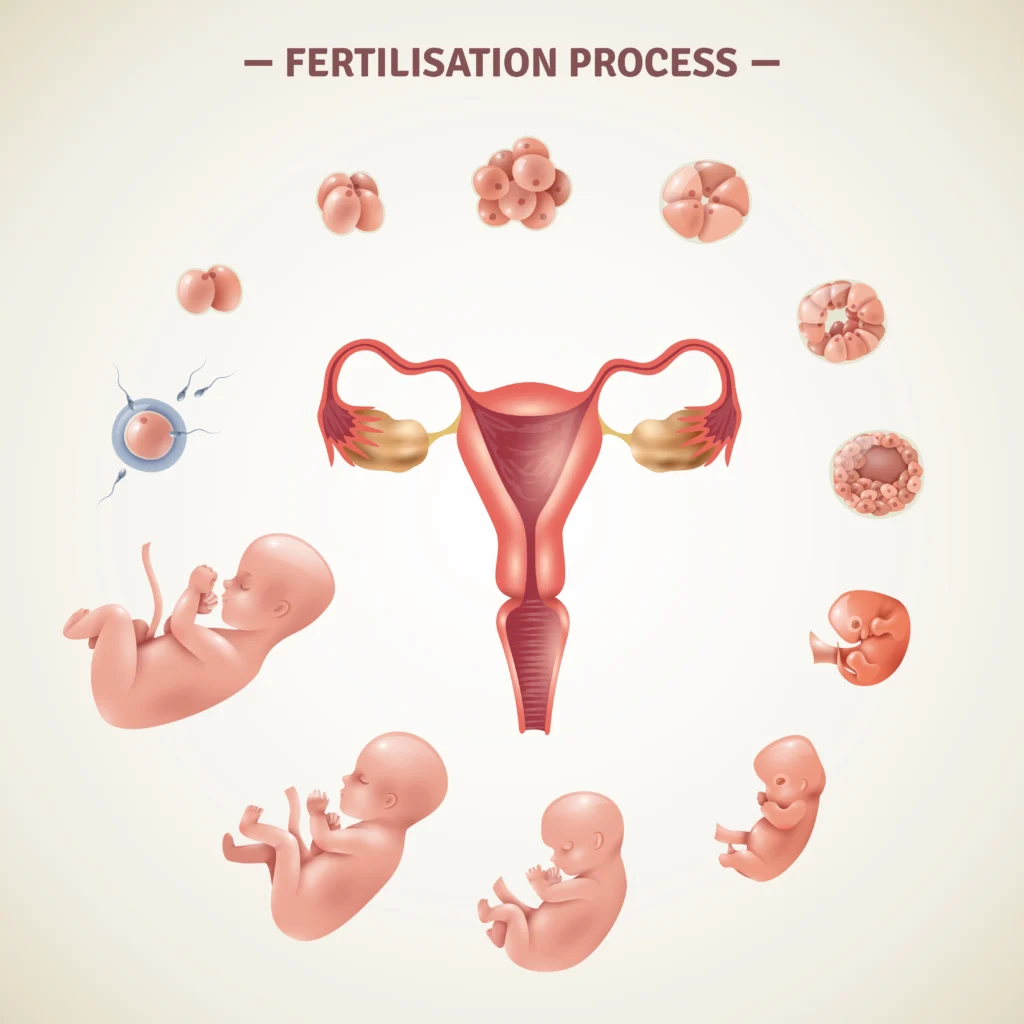
After fertilization and implantation, hormonal changes gradually become more noticeable.
However, there is an important distinction between possible early pregnancy symptoms and symptoms that can actually confirm pregnancy.
A missed period, breast tenderness, fatigue, nausea, increased urination and changes in vaginal discharge can occur during early pregnancy, but many of these symptoms can also occur during a normal menstrual cycle.
Is a Missed Period a Sign of Pregnancy?
For someone with a usually regular menstrual cycle, a missed period can be one of the earliest noticeable signs of pregnancy.
However, a late period does not always mean pregnancy.
Stress, illness, changes in weight, intense exercise, hormonal fluctuations and changes in ovulation timing can all affect when menstruation occurs.
This is why a pregnancy test is more useful than relying on the menstrual cycle alone.
What About Breast Tenderness?
Breast tenderness, fullness or sensitivity can occur during early pregnancy as hormone levels change.
But breast symptoms are also common during the normal luteal phase after ovulation.
Progesterone rises naturally after ovulation and can produce sensations that are very similar to those experienced in early pregnancy.
Therefore, breast tenderness cannot tell you whether fertilization occurred.
Can Fatigue Be an Early Pregnancy Sign?
Yes, fatigue can occur during early pregnancy.
Hormonal changes, particularly increasing progesterone and the physiological adjustments associated with early pregnancy, may contribute to feeling unusually tired.
However, fatigue is extremely nonspecific.
Poor sleep, stress, illness, emotional changes and normal premenstrual hormonal changes can produce the same sensation.
Does Nausea Mean Fertilization Happened?
Nausea is strongly associated with pregnancy, but it generally becomes more relevant after pregnancy has been established, rather than immediately after fertilization.
Feeling nauseated a few days after intercourse is therefore not a reliable indication that fertilization has occurred.
When Does Pregnancy Nausea Usually Become Noticeable?
Pregnancy-related nausea commonly develops later than the earliest implantation period.
Some people experience it early, while others never experience significant nausea during pregnancy.
The timing varies substantially between individuals, so nausea should not be used to estimate the exact day of fertilization.
Can Vaginal Discharge Change After Conception?
Vaginal discharge can change throughout the menstrual cycle because reproductive hormones influence cervical secretions.
Some people notice increased or different-looking discharge during early pregnancy, but discharge alone cannot confirm pregnancy.
Normal discharge can vary in amount, consistency and appearance even when pregnancy has not occurred.
What About Light Spotting?
Light spotting is frequently described online as “implantation bleeding.”
However, the evidence does not support using light bleeding as a reliable sign that implantation has occurred.
In a prospective study of women attempting to conceive, early bleeding was uncommon around the estimated time of implantation, and the researchers found no support for the idea that implantation itself commonly causes vaginal bleeding. (Harville et al. 2003)
Should You Worry About Any Bleeding?
Not every episode of early pregnancy bleeding indicates a serious problem, but heavy bleeding, significant abdominal or pelvic pain, dizziness, fainting or severe one-sided pain should not simply be assumed to be implantation bleeding.
Such symptoms warrant prompt medical assessment.
When Can a Pregnancy Test Detect Pregnancy?
A pregnancy test detects hCG, rather than fertilization itself.
Because hCG production increases after implantation, testing immediately after intercourse or immediately after ovulation can be too early.
A recent prospective study of people trying to conceive found that home pregnancy test sensitivity was substantially lower when testing several days before the expected period and increased as the expected menstrual date approached. (Sundermann et al. 2026)
What If the Test Is Negative?
A negative test does not always mean pregnancy is impossible if testing was performed very early.
If your period has not arrived, repeating the test later can provide a more reliable answer.
Testing according to the instructions supplied with the particular pregnancy test is also important.
Can You Know That Fertilization Happened Before a Positive Test?
Usually, no.
There is currently no reliable physical symptom that can tell you with certainty that fertilization has occurred.
You may notice cramping, breast changes, fatigue or other sensations during the days after ovulation, but these cannot distinguish fertilization from ordinary hormonal changes.
The most dependable progression is:
Ovulation → possible fertilization → embryo development → implantation → rising hCG → positive pregnancy test
Did You Know?
Fertilization and pregnancy are not exactly the same event. Fertilization occurs when sperm and egg unite, but an ongoing pregnancy requires subsequent embryo development and successful implantation in the uterus. Pregnancy tests detect hCG produced after implantation rather than detecting fertilization itself.
Lesser-Known Fact
Implantation Timing Can Vary by Several Days
A lesser-known fact is that implantation does not happen on one fixed day for everyone.
In pregnancies that continued for at least six weeks, research found that implantation occurred 6 to 12 days after ovulation, with most occurring around days 8 to 10.
Later implantation was also associated with a higher risk of early pregnancy loss in that study. (Wilcox et al. 1999)
This variation helps explain why two people who ovulate at approximately the same time may receive positive pregnancy tests on different days.
When Should You Seek Medical Advice?
If you think you may be pregnant, contact a healthcare professional if you experience concerning symptoms such as:
- Heavy vaginal bleeding
- Severe abdominal or pelvic pain
- Severe pain on one side
- Fainting or significant dizziness
- Shoulder pain associated with abdominal pain or bleeding
- A positive pregnancy test accompanied by significant pain or bleeding
These symptoms can have causes that require medical evaluation and should not automatically be attributed to normal implantation.
Early Pregnancy Signs: Myth vs Fact
| Myth | Fact |
|---|---|
| You can feel fertilization happening. | Fertilization occurs at a microscopic level and is not normally something you can physically feel. |
| Cramping immediately after sex means fertilization occurred. | Cramping has many possible causes and cannot reliably confirm fertilization. |
| Implantation happens immediately after fertilization. | The developing embryo needs several days to travel toward the uterus before implantation can occur. |
| Implantation always causes bleeding. | Not everyone experiences spotting, and bleeding cannot reliably confirm implantation. |
| Breast tenderness proves pregnancy. | Breast tenderness can occur during both early pregnancy and the normal menstrual cycle. |
| Nausea a few days after sex means you are pregnant. | Nausea shortly after intercourse is not a reliable indicator of pregnancy. |
| No symptoms means fertilization did not happen. | Many people have no noticeable symptoms during the earliest stages of pregnancy. |
| A negative test immediately after ovulation means you are not pregnant. | Testing too early may occur before enough hCG is present to be detected. |
| A positive pregnancy test detects fertilization directly. | Pregnancy tests detect hCG, which rises after implantation. |
What Is the Most Reliable Way to Know If Fertilization Led to Pregnancy?
Rather than trying to interpret every physical sensation, use a pregnancy test at an appropriate time.
Symptoms can provide clues, but they cannot confirm fertilization.
A test that detects hCG provides much stronger evidence that implantation and an early pregnancy have occurred.
If the test is positive, appropriate prenatal care can then help confirm and monitor the pregnancy.
Final Thoughts
Fertilization itself usually does not produce a noticeable symptom. The early stages of pregnancy happen gradually, from fertilization and embryo development to implantation and rising hCG.
If you are trying to conceive, do not worry if you do not notice any early symptoms. A missed period and an appropriately timed pregnancy test are much more useful than trying to identify a specific “fertilization symptom.”
Conclusion
There is usually no way to feel fertilization itself, and most symptoms immediately after ovulation cannot confirm that sperm successfully fertilized an egg.
The meaningful biological milestones happen in sequence: fertilization is followed by early embryo development, implantation and then increasing hCG production.
Only after these processes occur do recognizable pregnancy symptoms and positive pregnancy tests become more likely.
So, if you are watching closely for signs after trying to conceive, remember that absence of symptoms does not mean conception did not occur, and the presence of symptoms does not necessarily mean that it did.
A pregnancy test taken at an appropriate time remains far more reliable than trying to identify a specific “fertilization symptom.”
Frequently Asked Questions About Fertilization
1. Can you feel fertilization happening?
Usually, no. Fertilization occurs at a microscopic level inside the fallopian tube and does not normally produce a sensation that can be identified as fertilization.
2. What are the first signs that fertilization occurred?
There are no reliable symptoms that can confirm fertilization itself. Possible pregnancy symptoms generally become more relevant after implantation and rising hCG.
3. How many days after fertilization does implantation occur?
Implantation generally occurs several days after ovulation, with research showing that successful implantation can occur across a range of days rather than on one fixed day.
4. Can implantation cause cramping?
Some people report mild cramping around the time implantation may occur, but cramping is not specific enough to confirm implantation or pregnancy.
5. Is implantation bleeding a reliable pregnancy sign?
No. Light spotting can occur for several reasons and does not reliably confirm implantation or pregnancy.
6. When can a pregnancy test detect pregnancy?
Pregnancy tests detect hCG after implantation. Testing around the expected menstrual period is generally more reliable than testing immediately after intercourse or ovulation.
7. Can you have pregnancy symptoms before a positive test?
You may notice physical changes before a test becomes positive, but many early symptoms overlap with normal hormonal changes after ovulation and cannot confirm pregnancy.
8. What is the most reliable way to know if you are pregnant?
A pregnancy test that detects hCG is much more reliable than trying to interpret individual symptoms. Testing at an appropriate time improves accuracy.
Stay tuned with us for more health related topics.
Follow us on LinkedIn and Instagram for more.
More Read


Medical Disclaimer!
This article has been reviewed and written under the guidance of our Head Physiotherapist, Dr. Kruti Raj (PT, MUHS,CPT,CMPT). The information shared is intended for educational purposes only and should not be considered a substitute for personalized medical advice, diagnosis, or treatment.
Please consult us or any other qualified healthcare professional before beginning any exercise program, especially if you are experiencing pain, recovering from injury, or managing a medical condition.


