


Getting an IUD does not mean giving up your usual workout routine.
But if you run, lift weights, practice yoga or do high-intensity workouts, you may wonder whether all that movement can make the device shift.
Quick Answer: Can Exercise Dislodge an IUD?
Normal physical activity is not generally considered a cause of IUD expulsion. Most women can continue activities such as walking, running, strength training, yoga, swimming and cycling after recovering from IUD insertion.
However, severe pelvic pain, unusual bleeding, a significant change in IUD strings, pain during sex or suspected expulsion should be medically assessed rather than automatically blamed on exercise.
The good news is that normal physical activity is not generally considered a cause of IUD expulsion.
An IUD is placed inside the uterus by a trained healthcare professional, and most women can continue being physically active once they feel comfortable after insertion.
WHO identifies expulsion as a possible complication of IUD use, but does not list ordinary exercise as a reason to avoid IUDs.
From a physiotherapy perspective, the more useful question is often not whether exercise can “knock an IUD loose.”
It is whether exercise is producing pelvic pain, pressure, muscle tension or other symptoms that need attention.
Key Takeaways
- Normal exercise is not generally considered a cause of IUD expulsion.
- Running, strength training, yoga, swimming and cycling can generally be continued with an IUD.
- Heavy lifting and abdominal exercises do not automatically mean that an IUD will move.
- Pelvic pain during exercise does not necessarily mean that the IUD has been displaced.
- A change in IUD strings, severe pelvic pain or unusual bleeding should be medically assessed.
- Physiotherapy may help when pelvic-floor or musculoskeletal factors contribute to exercise-related pelvic pain.
- Physiotherapy does not reposition, remove or medically assess the position of an IUD.
Can Exercise Dislodge an IUD?
There is no good evidence that normal activities such as walking, running, strength training or yoga routinely cause a correctly positioned IUD to become displaced.
IUD expulsion can happen, but it is a recognized complication of the contraceptive method itself rather than something that should automatically be blamed on a workout.
WHO lists expulsion among the uncommon risks associated with IUD use.
This means most women do not need to avoid exercise simply because they have an IUD.
However, the timing of symptoms matters.
If significant pelvic pain or unusual bleeding begins during exercise, it is better to investigate the symptom than to assume that exercise has moved the device.
Can You Exercise After IUD Insertion?
There is no universal requirement for prolonged exercise restriction after IUD insertion.
Your immediate recovery may be influenced by cramping, bleeding, dizziness or discomfort from the procedure.
If you feel well, activity can usually be resumed according to your healthcare professional’s advice and your own comfort.
A gentle return can be useful if you are experiencing post-insertion soreness.
Walking
Walking is a practical first activity because it allows you to stay mobile without placing a high physical demand on the body.
If walking feels comfortable, you can gradually return to your usual activity.
Running
Running does not normally need to be avoided simply because you have an IUD.
If running produces new pelvic pain, significant cramping or unusual bleeding, reduce the intensity and consider getting the symptoms assessed.
Strength Training
Squats, lunges, resistance exercises and weight training can generally remain part of an active lifestyle.
Strength training increases abdominal pressure, particularly when you brace during a heavy lift.
However, this does not mean that the pressure is directly pushing the IUD out of the uterus.
If lifting repeatedly produces pelvic heaviness, pain or unusual bleeding, the symptom deserves attention rather than simply increasing tolerance through it.
Yoga and Stretching
Yoga and stretching do not normally cause an IUD to move.
Some positions can nevertheless make existing pelvic or abdominal discomfort more noticeable.
In that situation, modifying the position may be appropriate while the underlying symptom is assessed.
Can Heavy Lifting Dislodge an IUD?
Heavy lifting is one of the activities that can create anxiety after IUD insertion.
During a heavy lift, the abdominal muscles and diaphragm work together to create pressure and stabilize the trunk.
The pelvic floor also contributes to this pressure-management system.
That does not mean that lifting a heavy weight pushes directly against the IUD.
The IUD is positioned within the uterine cavity, and normal increases in abdominal pressure during exercise are not generally regarded as a mechanism for expulsion.
However, this does not mean that pelvic pain during lifting should be ignored.
If you repeatedly experience pelvic pressure, pain, unusual bleeding or a new sensation of something descending during heavy exercise, stop the provoking activity and seek appropriate assessment.
Can Abdominal Exercises Affect an IUD?
Planks, crunches, leg raises and similar exercises can increase abdominal muscle activity and intra-abdominal pressure.
Some women may therefore become more aware of their abdomen or pelvis while performing them.
That sensation alone does not indicate that an IUD has moved.
Planks
Planks require sustained abdominal and trunk activation.
If a plank feels comfortable, there is generally no reason to avoid it solely because you have an IUD.
If it causes pelvic pain or pressure, modify the exercise rather than forcing yourself through the symptom.
Crunches
Crunches repeatedly contract the abdominal muscles.
They do not normally dislodge an IUD, but they can aggravate existing abdominal or pelvic symptoms in some women.
The response of your body is more important than the exercise’s reputation.
Squats and Lunges
Squats and lunges involve the hips, trunk and pelvic floor working together.
They are not inherently unsafe for women with an IUD.
If these exercises cause pain, a physiotherapist can assess breathing, bracing strategy, hip mobility, pelvic-floor coordination and movement mechanics when appropriate.
Can Yoga or Deep Stretching Move an IUD?
Yoga does not normally cause an IUD to shift.
Even deep hip-opening positions do not directly pull the device out of the uterus.
However, some positions can reveal pelvic-floor tension or make an existing pain problem more noticeable.
Therefore, discomfort during a particular yoga position should be treated as information about your symptoms, not automatically as evidence of IUD displacement.
What About High-Impact Exercise?
Running, jumping and sports involving repeated impact are common sources of concern.
There is currently no strong evidence that routine high-impact exercise causes IUD expulsion in otherwise healthy IUD users.
If you have been exercising regularly without symptoms, an IUD does not automatically mean that you need to stop high-impact activity.
However, if jumping or running suddenly causes significant pelvic pain, unusual bleeding or a new sensation of pressure, reduce the activity and seek appropriate advice.
Can Exercise Cause IUD Cramping?
Exercise can make an existing sensation of cramping more noticeable, particularly soon after insertion.
Other factors can also contribute to pelvic discomfort during exercise, including menstrual-cycle changes, muscle fatigue, abdominal bracing and pelvic-floor muscle tension.
Mild, temporary discomfort does not automatically mean that the IUD has moved.
Severe, persistent or worsening pelvic pain is different and should be medically assessed.
How Can You Tell If an IUD Has Moved?
You cannot reliably determine IUD position based only on how your pelvis feels during exercise.
Possible signs of expulsion or displacement include:
- A noticeable change in the length of the IUD strings
- Being unable to feel the strings when they were previously easy to locate
- Feeling the hard part of the device in the vagina
- New or severe pelvic pain
- Unusual or heavy bleeding
- New pain during intercourse
- Suspected pregnancy
WHO notes that IUD expulsion and uterine perforation are rare but possible complications.
It also states that IUDs do not normally move to other parts of the body.
These symptoms do not prove that an IUD has moved, but they are reasons to contact a healthcare professional.
What Should You Do If You Think Your IUD Has Moved?
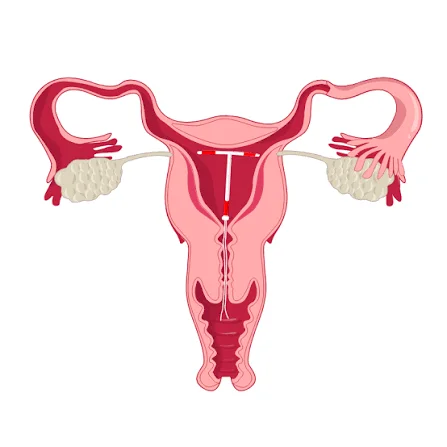
Do not attempt to push an IUD back into position.
If you suspect that the device has moved or partially expelled, contact your healthcare professional.
Depending on the situation, assessment may include checking the strings, pelvic examination and, when necessary, ultrasound to determine where the device is located.
WHO guidance notes that additional assessment, including pelvic examination or ultrasound when available, may be appropriate when IUD displacement is suspected.
If you suspect expulsion or displacement, do not assume that the IUD is still providing reliable contraception until you have received appropriate medical advice.
When Should You Stop Exercising?
You do not need to stop exercising simply because you have an IUD.
But temporarily stopping or modifying an activity is sensible if you develop:
- Severe or worsening pelvic pain
- Sudden abdominal pain
- Heavy or unusual bleeding
- Fever or chills
- Foul-smelling vaginal discharge
- New significant pain during sex
- Dizziness or fainting
- Symptoms suggesting pregnancy
- A suspected change in IUD position
The reason for stopping is not necessarily that exercise caused the problem.
It is because significant new symptoms should be assessed before you continue pushing through the activity.
Can You Return to Exercise Normally After IUD Insertion?
For many women, yes.
The first few hours or days may feel different because cramping and light bleeding can occur after insertion.
Your recovery should therefore be guided by symptoms and the advice provided by your healthcare professional.
You do not need a special long-term exercise programme simply because you have an IUD.
Once you feel comfortable, you can generally work back toward your normal activities.
Where Does Physiotherapy Fit In?
This is where the article has a genuine women’s-health physiotherapy connection.
Physiotherapy does not check the position of an IUD, remove it or reposition it.
If there is suspected expulsion, perforation, infection or another gynaecological complication, medical assessment comes first.
Physiotherapy becomes relevant when medical assessment has not identified a device-related problem and the woman continues to experience pelvic pain, painful intercourse, difficulty relaxing the pelvic floor or movement-related symptoms.
The pelvic floor works together with the diaphragm, abdominal muscles and surrounding muscles of the pelvis and trunk during breathing, lifting and exercise.
If these muscles are not coordinating well, some women may experience unnecessary tension or difficulty managing pressure during movement.
A systematic review found that pelvic-floor physical therapy may be beneficial for pelvic-floor hypertonicity and associated conditions such as chronic pelvic pain and dyspareunia, although the quality and size of the evidence varied between studies (van Reijn-Baggen et al., 2022).
What Can a Pelvic-Health Physiotherapist Assess?
When appropriate, a pelvic-health physiotherapist may assess:
- Pelvic-floor muscle coordination
- Ability to relax the pelvic floor
- Breathing during exercise
- Abdominal pressure management
- Hip and pelvic mobility
- Trunk and pelvic movement
- Muscle tension
- Exercise technique
- Movement patterns associated with pain
The goal is not to determine whether the IUD has moved.
Instead, the assessment looks for physical factors that may be contributing to symptoms.
Treatment may involve breathing strategies, relaxation techniques, movement modification, mobility work, graded strengthening or other individualized approaches.
A 2024 systematic review and meta-analysis found that multimodal physical therapy was associated with lower pain intensity in women with chronic pelvic pain,
although this evidence applies to chronic pelvic pain broadly and should not be interpreted as evidence that physiotherapy treats IUD displacement (Starzec-Proserpio et al., 2024).
Do You Need Kegel Exercises If You Have an IUD?
No.
Having an IUD does not automatically mean that you need pelvic-floor strengthening exercises.
Kegel exercises strengthen the pelvic-floor muscles, but pelvic-floor problems can also involve excessive muscle activity or difficulty relaxing.
If pelvic pain is present, repeatedly tightening the pelvic floor without assessment may not be appropriate.
A physiotherapist may instead focus on relaxation, breathing, coordination or movement strategies depending on the individual’s findings.
Research on pelvic-floor muscle training for dyspareunia also shows considerable variation in treatment protocols, supporting individualized exercise selection rather than giving every woman the same pelvic-floor routine (Cavalcanti et al., 2025).
Can an IUD Affect Exercise Performance?
Having an IUD does not automatically mean that exercise capacity will decrease.
A small 2024 study examining physically active women found that hormonal IUD users and women without an IUD had equivalent whole-body heat loss and body-temperature responses during controlled exercise in a warm environment.
This does not answer the question of IUD displacement, but it provides some evidence that a hormonal IUD does not inherently impair thermoregulation during exercise. (Kirby et al., 2024).
Individual experiences can still differ, particularly if menstrual symptoms, pelvic pain or another health condition affects exercise tolerance.
Does Exercise Affect Copper and Hormonal IUDs Differently?
From the perspective of mechanical safety, neither type should be considered fragile during normal exercise.
The main differences between copper and hormonal IUDs relate to their contraceptive mechanisms and menstrual effects.
Copper IUDs can cause heavier or longer periods and stronger cramps, particularly during the first few months.
Hormonal IUDs may make periods lighter or stop bleeding altogether for some women.
Therefore, the type of IUD may affect how comfortable exercise feels during different parts of the menstrual cycle, but having either type does not automatically require a special exercise restriction.
Can Exercise Cause IUD Expulsion?
It is important to distinguish timing from causation.
If an IUD is expelled after a workout, it may be tempting to assume that the workout caused it.
That conclusion cannot be made simply because the two events happened close together.
IUD expulsion is a recognized complication, and several factors can influence expulsion risk.
Research on postpartum IUDs, for example, has identified factors related to timing of insertion and postpartum circumstances rather than ordinary exercise as significant predictors of expulsion (Muhumuza et al., 2021).
The practical response is therefore to assess the device if expulsion is suspected rather than assuming that a specific exercise was responsible.
Myth vs Fact: Exercise and IUDs
Myth: Heavy lifting can push an IUD out.
Fact: Heavy lifting increases abdominal pressure, but normal exercise is not generally considered a cause of IUD expulsion. Persistent pain or unusual symptoms should still be assessed.
Myth: If exercise causes pelvic pain, the IUD must have moved.
Fact: Pelvic pain can have several causes, including muscular tension, pelvic-floor dysfunction or other medical conditions. Pain alone cannot confirm IUD displacement.
Myth: Women with an IUD should avoid abdominal exercises.
Fact: Exercises such as planks, crunches and squats can generally be performed when comfortable. They should be modified if they consistently cause pain or other concerning symptoms.
Myth: Kegel exercises are necessary because you have an IUD.
Fact: An IUD does not automatically require pelvic-floor strengthening. Some women with pelvic pain may actually have difficulty relaxing the pelvic-floor muscles.
Lesser-Known Fact
An IUD does not normally “travel” around the body.
WHO states that IUDs remain within the uterus and do not move to other parts of the body under normal circumstances.
Very rarely, uterine perforation can occur during insertion, allowing the device to pass through the uterine wall.
This is a medical complication and is not the same thing as an IUD being pushed around by normal exercise.
When Should You See a Physiotherapist?
A pelvic-health physiotherapy assessment may be useful when:
- Pelvic pain continues after appropriate medical evaluation
- Exercise consistently triggers pelvic discomfort
- You experience pain during intercourse
- You have difficulty relaxing your pelvic floor
- You feel excessive pelvic or abdominal tension during exercise
- You have difficulty returning to exercise because of pelvic symptoms
- You want help modifying exercise while recovering from a pelvic pain problem
Physiotherapy is most appropriate when a physical, musculoskeletal or pelvic-floor component is contributing to symptoms.
It should complement medical care rather than replace assessment of suspected IUD complications.
Final Thoughts
Having an IUD does not mean you need to stop exercising. For most women, activities such as running, strength training, yoga, swimming and cycling can remain part of an active lifestyle.
The important distinction is between normal exercise sensations and symptoms that require assessment. Severe pelvic pain, unusual bleeding, a significant change in IUD strings, pain during sex or suspected expulsion should not simply be blamed on a workout.
When medical assessment has ruled out an IUD-related problem, pelvic-health physiotherapy can help address pelvic-floor or musculoskeletal factors that may contribute to pain or difficulty with movement.
Final Thoughts
Having an IUD does not mean you need to stop exercising.
For most women, running, strength training, yoga, swimming, cycling and abdominal exercises can remain part of an active lifestyle.
The important distinction is between normal exercise sensations and symptoms that need assessment.
A sudden change in IUD strings, severe pelvic pain, unusual bleeding, significant pain during sex or suspected expulsion should not simply be blamed on a workout.
If medical assessment confirms that the IUD is correctly positioned and there is no gynaecological complication, pelvic-health physiotherapy can be useful when pelvic-floor or musculoskeletal factors contribute to pain or difficulty with movement.
The goal is not to make women afraid of exercise after getting an IUD. It is to help them understand their symptoms, recognize warning signs and return to physical activity with confidence.
Frequently Asked Questions About Exercise and IUDs
1. Can exercise dislodge an IUD?
Normal physical activity is not generally considered a cause of IUD expulsion. However, expulsion can occur as a recognized complication of IUD use, so unusual symptoms should be assessed.
2. Can I run with an IUD?
Most women can continue running with an IUD. If running causes significant pelvic pain, unusual bleeding or other new symptoms, reduce the activity and seek appropriate advice.
3. Can heavy lifting move an IUD?
Heavy lifting increases abdominal pressure but is not generally considered a cause of IUD expulsion. Persistent pelvic pain or pressure during lifting should be evaluated.
4. Can I do abdominal exercises with an IUD?
Exercises such as planks, crunches and leg raises can generally be performed if they are comfortable. Pain during exercise is a reason to modify the activity and investigate the cause.
5. Can yoga dislodge an IUD?
Yoga and stretching do not normally cause an IUD to move. If a particular position causes pelvic pain, modify the position and consider assessment if symptoms persist.
6. How do I know if my IUD has moved?
Possible warning signs include a significant change in string length, inability to feel previously palpable strings, feeling the device itself, severe pelvic pain, unusual bleeding or suspected pregnancy.
7. Can physiotherapy help with exercise-related pelvic pain while using an IUD?
Yes, when medical assessment has ruled out an IUD-related complication and pelvic-floor or musculoskeletal factors contribute to the pain. Physiotherapy does not reposition or remove an IUD.
Stay tuned with us for more health related topics.
Follow us on LinkedIn and Instagram for more.
More Read


Medical Disclaimer
This article is intended for educational purposes only and does not replace medical diagnosis, contraception counselling or individualized treatment. If you experience severe pelvic pain, heavy or unusual bleeding, fever, suspected pregnancy, suspected IUD expulsion or a significant change in IUD strings, seek assessment from an appropriately qualified healthcare professional. Physiotherapy does not replace medical evaluation of suspected IUD complications.


