


If you have developed back pain after stopping birth control, it is understandable to wonder whether the two are connected.
The important distinction is that stopping birth control is not established as a direct cause of back pain.
However, an indirect relationship can exist.
If hormonal contraception had been reducing your menstrual cramps or pelvic pain, those symptoms may return after stopping and can sometimes include discomfort in the lower back.
Quick Answer
Stopping birth control is not known to directly cause back pain. However, if hormonal contraception had been reducing your menstrual cramps or pelvic pain, those symptoms may return after stopping and can sometimes be felt in the lower back. Back pain can also have unrelated causes such as muscle strain, prolonged sitting, exercise changes, poor sleep or other musculoskeletal problems.
At the same time, back pain is extremely common and may have nothing to do with contraception.
Changes in exercise, prolonged sitting, lifting, sleep, stress, previous injuries or other musculoskeletal problems can all contribute.
The timing of the pain, its relationship to your menstrual cycle and the symptoms that occur alongside it can therefore be more informative than the fact that you stopped birth control.
Key Takeaways
- Stopping birth control is not established as a direct cause of back pain.
- Menstrual cramps or pelvic pain may return after stopping hormonal contraception.
- Menstrual pain can sometimes be felt in the lower back.
- Back pain may also come from unrelated musculoskeletal factors.
- A strong menstrual pattern can provide useful information about the possible source of symptoms.
- Severe or progressively worsening back or pelvic pain should be medically assessed.
- Physiotherapy may help with musculoskeletal, pelvic-floor and movement-related contributors when appropriate.
Can Stopping Birth Control Cause Back Pain?
There is currently no strong evidence that stopping birth control directly causes back pain.
Hormonal contraception can, however, change menstrual bleeding and pain.
Combined oral contraceptives are used in the management of primary dysmenorrhea, and evidence shows that they can reduce menstrual pain in some women (Schroll et al., 2023).
If your contraception had been reducing your period pain, stopping it may allow those symptoms to return.
Because menstrual pain can extend beyond the lower abdomen, you may experience discomfort in the pelvis, thighs or lower back.
In that situation, the back pain may be part of a broader menstrual pain pattern rather than a new spinal problem caused by stopping contraception.
Why Can Period Pain Feel Like Back Pain?
Menstrual pain does not always stay in one location.
Women with dysmenorrhea can experience pain in different areas and may also report fatigue, gastrointestinal symptoms and other physical effects that interfere with everyday activities (Moreno Gómez et al., 2023).
Some women experience aching across the lower back around the beginning of their period.
A useful clue is whether your back pain follows a predictable menstrual pattern.
For example, it may:
- Begin shortly before your period
- Become worse during menstruation
- Occur alongside abdominal cramps
- Be accompanied by pelvic discomfort
- Improve when your period ends
This pattern does not prove that the pain is gynecological, but it is useful information to share with a healthcare professional.
Why Might Back Pain Become Noticeable After Stopping Birth Control?
There are several possible explanations.
Your Menstrual Pain May Have Returned
If hormonal contraception had been reducing your menstrual cramps, those symptoms may return when you stop.
Your lower back may therefore become painful during menstruation even if you did not notice this symptom while taking birth control.
This is better understood as a return of previously controlled symptoms rather than a direct back-pain side effect of stopping contraception.
Your Periods May Become Heavier
Some hormonal contraceptives make menstrual bleeding lighter.
When you stop, your natural bleeding pattern may return.
For some women, heavier or more painful periods are accompanied by greater pelvic or lower-back discomfort.
However, very heavy bleeding or severe pain should not automatically be attributed to stopping birth control.
Your Routine May Have Changed
The timing can also be coincidental.
You may have stopped contraception around the same time that you changed your exercise routine, became less active, travelled, worked longer hours, changed your sleeping position or spent more time sitting.
These factors can contribute to back pain independently of contraception.
Could Endometriosis Be Related to the Back Pain?
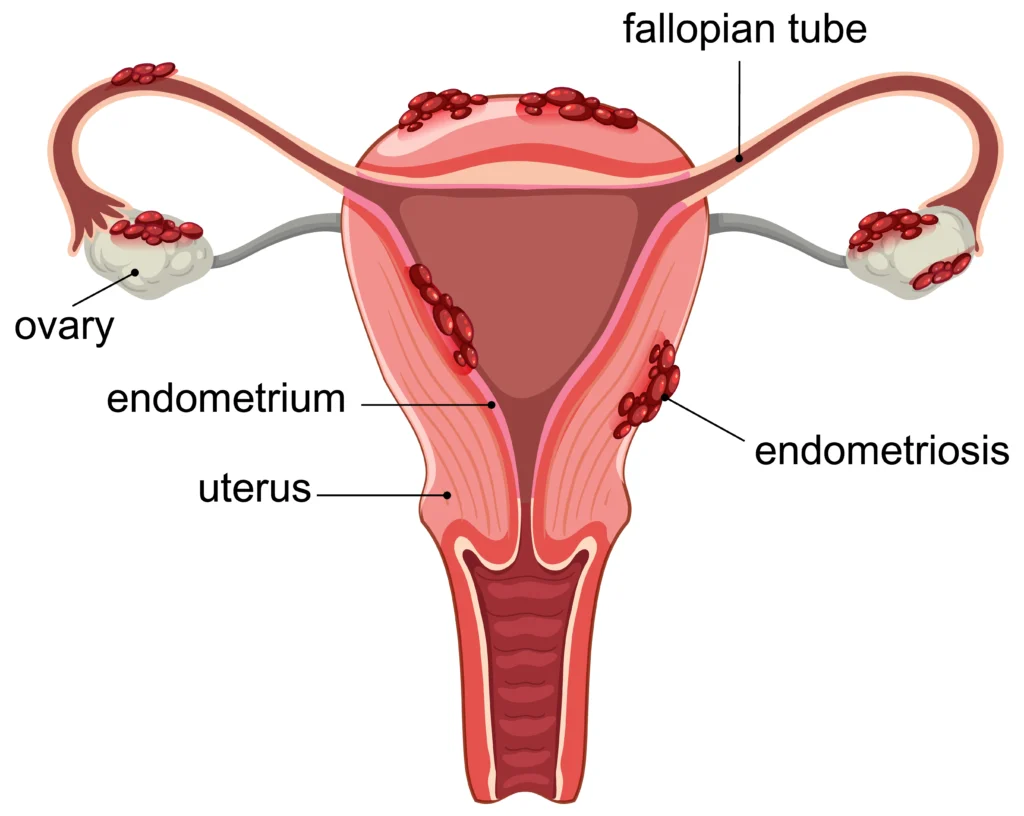
It is possible, but back pain alone does not mean you have endometriosis.
Endometriosis can cause painful periods, pelvic pain and pain during sex, and symptoms may also occur outside menstruation.
Hormonal contraceptives can reduce endometriosis-associated pain in some women.
A systematic review found clinically meaningful reductions in dysmenorrhea with combined hormonal and progestin-only contraceptive treatments in women with endometriosis (Grandi et al., 2019).
Therefore, if contraception had been controlling endometriosis-related symptoms, stopping it could make those symptoms noticeable again.
That is very different from saying that stopping birth control causes endometriosis.
Back pain becomes more relevant to a gynecological assessment when it occurs together with severe menstrual pain, chronic pelvic pain, painful intercourse, bowel symptoms, bladder symptoms or a strong cyclical pattern.
Could Adenomyosis Cause Lower-Back Pain?
Adenomyosis is another possible cause of painful menstruation.
It can be associated with dysmenorrhea, heavy menstrual bleeding and pelvic pain.
Some women may also experience discomfort extending into the lower back.
If your periods become substantially more painful or heavier after stopping hormonal contraception, adenomyosis may be one of several conditions a healthcare professional considers.
However, lower-back pain by itself cannot diagnose adenomyosis.
The overall pattern of menstrual symptoms, bleeding, pelvic pain and other symptoms matters.
Could the Pelvic Floor Be Involved?
The pelvic floor works together with the abdominal muscles, diaphragm, hips and trunk to support movement and control pressure within the abdomen and pelvis.
In some women with chronic pelvic pain, pelvic-floor muscles may become overactive or difficult to relax.
This can coexist with pelvic, abdominal, hip or lower-back symptoms.
A systematic review found that pelvic-floor physical therapy may benefit people with pelvic-floor hypertonicity and associated chronic pelvic pain conditions, although the studies varied in quality and further high-quality research is needed (van Reijn-Baggen et al., 2022).
This does not mean that every woman with back pain has pelvic-floor dysfunction.
A physical assessment is needed to determine whether the pelvic floor is actually contributing to the symptoms.
Where Does Physiotherapy Fit In?
Physiotherapy does not treat the hormonal effects of stopping birth control.
Its role is to assess and manage physical factors that may be contributing to pain or limiting movement.
Depending on the presentation, a physiotherapist may assess:
- Lumbar and pelvic movement
- Hip mobility and strength
- Abdominal and trunk muscle function
- Pelvic-floor muscle activity
- Breathing and pressure-management strategies
- Posture and movement habits
- Exercise tolerance
- Pain-related movement patterns
For women with chronic pelvic pain, the evidence for physiotherapy is becoming stronger.
A 2024 systematic review and meta-analysis of 38 randomized controlled trials involving 2,168 women found that multimodal physical therapy was associated with lower pain intensity in the short and intermediate term (Starzec-Proserpio et al., 2025).
The important point is that this evidence applies to chronic pelvic pain, not specifically to back pain caused by stopping birth control.
Physiotherapy should therefore be based on the individual’s symptoms and assessment.
Can Physiotherapy Help With Menstrual-Related Back Pain?
It may help when the pain has a musculoskeletal or movement-related component.
Research on physiotherapy for primary dysmenorrhea has identified potential benefits from several physical approaches, although the quality and consistency of evidence varies between interventions (López-Liria et al., 2021).
More recent evidence has also examined lumbopelvic exercise-based interventions for primary dysmenorrhea, making exercise-based rehabilitation particularly relevant when menstrual pain is accompanied by lumbopelvic symptoms. (Alghosi et al., 2026).
This does not mean that every woman with menstrual back pain needs physiotherapy.
The treatment should depend on the symptoms, examination findings and individual’s goals.
Do You Need Pelvic-Floor Exercises for Back Pain?
Not automatically.
Back pain does not mean that your pelvic floor is weak.
Some women with pelvic pain have muscles that are overactive or difficult to relax rather than weak.
For that reason, automatically prescribing Kegel exercises to every woman with pelvic or lower-back pain is not appropriate.
A physiotherapist may instead recommend relaxation, breathing, mobility, coordination or strengthening depending on the assessment.
The goal is to match the intervention to the actual physical problem rather than assuming that strengthening is always the answer.
Can Exercise Help?
If your back pain is mild and movement feels comfortable, staying active can be useful.
Walking, gentle mobility exercises, appropriately prescribed strengthening and gradual return to normal activity can help maintain physical function.
You do not need to stop exercising simply because you have stopped birth control.
However, exercise should not be used to “balance your hormones” or force severe pain away.
If a particular activity repeatedly increases your symptoms, the activity may need to be modified while the underlying cause is assessed.
What If the Back Pain Only Happens During Your Period?
A clear menstrual pattern is worth paying attention to.
If your back pain appears predictably before or during menstruation and then improves afterward, tell your healthcare professional.
A cyclical pattern may suggest that the back symptoms are associated with your menstrual or pelvic symptoms, although it does not establish the cause.
A simple symptom diary can be useful.
Record:
- The first day of your period
- Back-pain intensity
- Location of the pain
- Abdominal or pelvic cramps
- Bleeding pattern
- Pain during sex
- Bowel or bladder symptoms
- Exercise and activity levels
Tracking these details over several cycles can make patterns easier to identify.
What If the Back Pain Happens Every Day?
Back pain that continues throughout the month is less likely to be explained solely by menstrual changes.
Other contributors may include prolonged sitting, lifting, exercise changes, previous injuries, poor sleep or spinal and musculoskeletal conditions.
Persistent pelvic pain can also coexist with back pain, so the complete symptom pattern matters.
A physiotherapist can assess musculoskeletal and movement-related factors, while a medical professional can investigate gynecological or other medical causes when appropriate.
Myth vs Fact
Myth: Stopping birth control directly causes back pain.
Fact: There is no strong evidence that stopping contraception directly causes back pain. The relationship may instead be indirect through the return of menstrual or pelvic pain.
Myth: Back pain after stopping birth control means you have endometriosis.
Fact: Endometriosis is one possible cause of pelvic symptoms, but back pain alone cannot diagnose it.
Myth: Every woman with back pain needs pelvic-floor exercises.
Fact: Pelvic-floor muscles can be weak, overactive, poorly coordinated or functioning normally. Exercise should be based on individual assessment.
Myth: You should stop exercising because you stopped birth control.
Fact: Stopping birth control does not automatically require an exercise restriction. Activity can generally continue according to symptoms, fitness and comfort.
Lesser-Known Fact: The Timing of the Pain Can Be More Informative Than Its Location
A frequently overlooked detail is when the pain occurs.
Lower-back pain that repeatedly appears around menstruation and then settles can present a different clinical picture from back pain that remains constant throughout the month.
The location of pain alone cannot tell you what is causing it.
Tracking the timing of your pain alongside your menstrual cycle, bleeding and other symptoms can provide much more useful information.
When Should You Have Your Back Pain Medically Assessed?
Speak with a healthcare professional if your back pain:
- Is severe or progressively worsening
- Continues throughout the month
- Occurs with severe period pain
- Is associated with unusually heavy bleeding
- Occurs with pain during sex
- Is associated with bowel or bladder symptoms
- Causes unexplained fatigue, dizziness or weakness
- Significantly affects sleep, work or daily activities
Seek urgent medical assessment for sudden severe pain, new leg weakness or numbness, loss of bladder or bowel control, fainting, fever, or severe pelvic pain when pregnancy is possible.
Final Thoughts
Back pain after stopping birth control is not usually caused directly by stopping contraception. However, if birth control had previously reduced menstrual cramps or pelvic pain, those symptoms may become noticeable again after stopping it and may sometimes be felt in the lower back. Persistent, severe, or unusual pain should be medically assessed to identify the underlying cause. Physiotherapy can be useful when a musculoskeletal or pelvic-floor component is contributing to the symptoms, particularly when movement, muscle tension, or chronic pelvic pain is involved.
Conclusion
Back pain after stopping birth control is not automatically caused by stopping contraception.
For some women, the connection may be indirect.
Hormonal contraception may have been reducing menstrual cramps or pelvic pain, and those symptoms can become noticeable again after the contraceptive is stopped.
Because menstrual pain can involve the lower back, it may feel like a new back problem.
However, back pain can also arise from ordinary musculoskeletal causes that have nothing to do with contraception.
From a physiotherapy perspective, the most useful approach is to assess the whole symptom and movement pattern.
Physiotherapy may be appropriate when pelvic-floor dysfunction, lumbopelvic movement problems, exercise limitations or other musculoskeletal contributors are present.
It does not regulate reproductive hormones or replace assessment for gynecological conditions.
If the pain is severe, persistent, progressively worsening or accompanied by significant menstrual or pelvic symptoms, medical evaluation should come first.
Frequently Asked Questions
1. Can stopping birth control cause back pain?
Stopping birth control is not established as a direct cause of back pain. However, menstrual cramps or pelvic pain that had been reduced by hormonal contraception may return and sometimes involve the lower back.
2. Why does my lower back hurt after stopping birth control?
Your natural menstrual symptoms may have returned after stopping contraception. Lower-back pain can also have unrelated causes such as muscle strain, prolonged sitting, exercise changes or other musculoskeletal problems.
3. Can period pain cause lower-back pain?
Yes. Some women experience menstrual discomfort in the lower back as well as the abdomen and pelvis. A predictable relationship with menstruation can be useful information for a healthcare professional.
4. Can stopping birth control reveal endometriosis?
Stopping birth control does not cause endometriosis. However, hormonal contraception may have been controlling endometriosis-related symptoms, which can become noticeable after stopping.
5. Do I need pelvic-floor exercises for back pain?
Not automatically. Pelvic-floor muscles can be weak, overactive or poorly coordinated. A physiotherapy assessment can help determine whether strengthening, relaxation, coordination or another approach is appropriate.
6. Can physiotherapy help with back pain after stopping birth control?
Physiotherapy may help when musculoskeletal, lumbopelvic or pelvic-floor factors contribute to symptoms. It does not regulate reproductive hormones or treat gynecological conditions such as endometriosis itself.
7. When should I see a doctor for back pain after stopping birth control?
Seek medical advice if the pain is severe, persistent, progressively worsening, associated with severe menstrual or pelvic symptoms, heavy bleeding, neurological symptoms, or other concerning changes.
More Read


Medical Disclaimer
This article is intended for general educational purposes only and should not be considered a substitute for individualized medical advice, diagnosis or treatment. Back pain and menstrual or pelvic pain can have many different causes. If symptoms are severe, persistent, progressively worsening, associated with heavy bleeding, neurological changes, severe pelvic symptoms or possible pregnancy, seek appropriate medical evaluation. Physiotherapy should complement, not replace, medical assessment when a gynecological or other medical cause is suspected.


