


Hip pain when standing up after sitting can make everyday activities uncomfortable.
You might notice it when getting out of a car, rising from your office chair, standing after watching television, or taking your first few steps in the morning.
Sometimes the discomfort eases after walking briefly, while in other cases it persists throughout the day.
Quick Answer: Hip Pain After Sitting
Hip pain when standing up after sitting may be associated with osteoarthritis, gluteal tendinopathy, hip flexor irritation, other hip joint problems or pain referred from the lower back. The location of the pain and whether it eases after a few steps can provide useful clues, but they cannot confirm a diagnosis.
Physiotherapy may help through individualised mobility exercises, progressive strengthening, movement retraining and activity modification. Persistent or worsening pain should be assessed by a healthcare professional.
Hip pain after sitting can be associated with osteoarthritis, tendon irritation, hip flexor problems, reduced movement tolerance or pain referred from the lower back.
The location of the pain, how long it lasts and which movements aggravate it can help identify the likely cause.
Physiotherapy may help improve mobility, strength and movement control, but the treatment needs to match the underlying condition.
Understanding why the pain occurs is the first step towards managing it safely.
Key Takeaways
- Hip pain when standing up after sitting can have several causes, including osteoarthritis, tendon problems and referred pain from the lower back.
- Pain in the groin, outer hip or buttock may provide clues, but location alone cannot establish a diagnosis.
- Discomfort that eases after a few steps may be related to stiffness or tissue sensitivity.
- Physiotherapy may improve strength, mobility and movement control when treatment matches the underlying condition.
- Regular movement breaks, a suitable chair height and controlled sit-to-stand movements may help reduce discomfort.
- Sudden severe pain, inability to bear weight, or hip pain accompanied by fever requires urgent medical assessment.
Why Does Your Hip Hurt When You Stand Up After Sitting?
Sitting keeps your hips bent for an extended period.
When you stand, the hip muscles and surrounding tissues must accommodate a change in position while the joints begin supporting your body weight.
If a joint, tendon or surrounding structure is sensitive, this transition may trigger discomfort.
Pain that appears when movement resumes after rest is sometimes described as start-up pain.
It can occur in several musculoskeletal conditions and does not identify one specific diagnosis.
Several factors may contribute to this pattern:
- Joint stiffness after remaining in one position.
- Sensitivity in tendons around the hip.
- Pain during the transition from sitting to weight-bearing.
- Reduced strength or tolerance for repeated movements.
- Irritation of structures within or around the hip joint.
The important distinction is whether the pain settles after a few steps, continues during walking, or gradually becomes more severe.
These patterns can help guide a clinical assessment.
Common Causes of Hip Pain After Sitting
1. Hip osteoarthritis
Hip osteoarthritis involves changes to the cartilage and other tissues within the joint. It can cause pain, stiffness and difficulty moving the hip comfortably.
You may notice discomfort when rising from a chair, climbing stairs, walking for longer periods or bending to put on socks.
Pain is often felt in the groin or front of the thigh, although it can also affect the buttock.
Stiffness after rest is common, and movement may feel easier once you begin walking.
However, symptoms vary between individuals, and hip osteoarthritis cannot be diagnosed from this pattern alone.
2. Gluteal tendinopathy
Gluteal tendinopathy affects the tendons of muscles that help stabilize the pelvis during walking and standing.
It commonly causes pain on the outer side of the hip.
Symptoms may become more noticeable when standing after sitting, climbing stairs, walking uphill or lying on the affected side.
Some people experience tenderness around the bony prominence on the outside of the hip.
Treatment often involves education about managing tendon loading and a progressive exercise program.
A clinical trial found that education combined with exercise improved outcomes in people with gluteal tendinopathy compared with a wait-and-see approach. (Mellor et al., 2018)
3. Hip flexor irritation
The hip flexors help lift the thigh and move the leg forward.
Irritation involving these muscles or their tendons may cause pain at the front of the hip or in the groin.
Discomfort may occur when standing up, lifting the knee, taking long strides or climbing stairs.
It may be associated with a sudden increase in exercise, repeated kicking, sprinting or other demanding activities.
Although prolonged sitting keeps the hip flexed, sitting alone does not necessarily injure the hip flexors.
Persistent symptoms need assessment to distinguish muscle or tendon problems from pain originating inside the joint.
4. Hip impingement or labral problems
Femoroacetabular impingement involves contact between structures around the ball and socket during certain movements.
The hip labrum is a ring of cartilage that helps deepen the socket and contributes to joint stability.
These conditions may cause groin pain during deep hip flexion, twisting or rising from a low chair.
Some people also report clicking, catching or restricted movement.
However, clicking does not automatically indicate a labral injury.
Clinical assessment is needed to determine whether these conditions are likely to explain the symptoms. (Enseki et al., 2023)
5. Pain referred from the lower back
Not all pain felt around the hip originates in the hip joint.
Problems involving the lumbar spine or nearby nerves may cause discomfort in the buttock, outer hip or thigh.
Possible clues include lower-back pain, tingling, numbness or discomfort that travels down the leg.
Symptoms that change with spinal movements may also suggest a source outside the hip joint.
A physiotherapist may assess both the hip and lower back to determine which structures are most likely contributing to the symptoms.
6. Reduced strength or movement tolerance
The sit-to-stand movement requires coordinated effort from the hip, thigh and trunk muscles.
If you have reduced your usual activity or have difficulty tolerating repeated loading, the movement may feel more demanding.
However, muscle weakness should not automatically be blamed for recurring hip pain.
Osteoarthritis, tendon problems and other conditions can also make standing uncomfortable.
The appropriate treatment depends on the findings of an assessment.
Why Does the Pain Ease After a Few Steps?
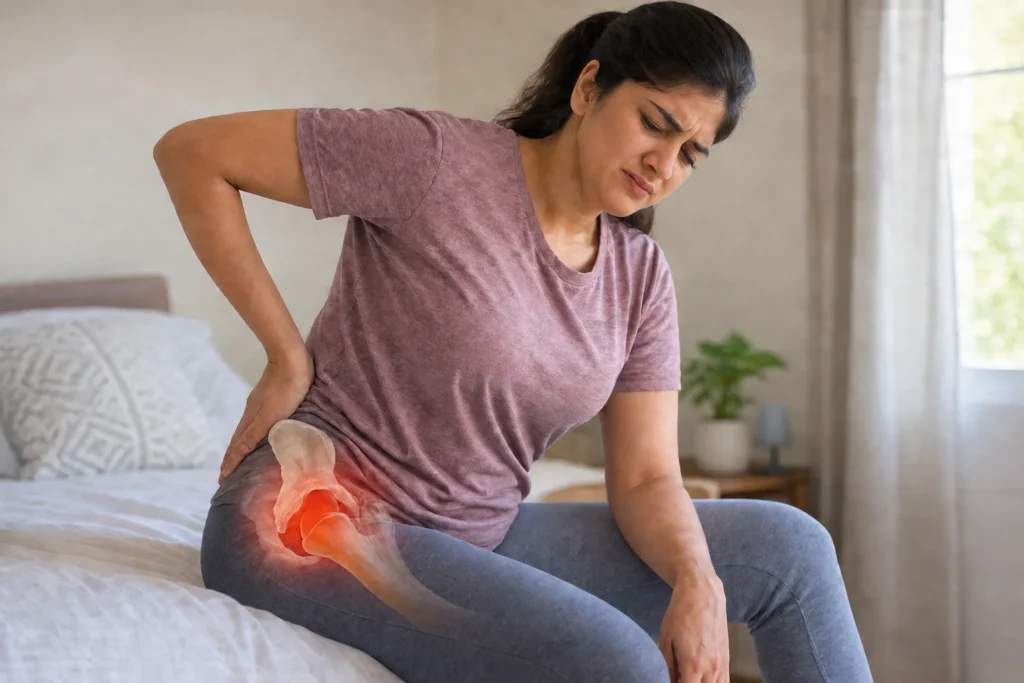
When discomfort appears during the first few movements and then settles, joint stiffness, tendon sensitivity or pain-related muscle guarding may be contributing.
Movement may help a stiff hip feel more comfortable, but temporary improvement does not mean the underlying problem has resolved.
Some people with hip osteoarthritis experience pain after rest, while tendon-related pain may fluctuate with the amount of load placed on the affected area.
Pay attention to the overall pattern. Does the pain settle quickly?
Does it return after another period of sitting? Does walking for longer make it worse?
These details can help a healthcare professional understand the problem more accurately than the symptom alone.
Where Do You Feel the Pain?
The location of your pain offers useful clues, although it cannot confirm a diagnosis by itself.
| Pain location | Possible causes |
|---|---|
| Front of the hip or groin | Hip osteoarthritis, hip flexor problems or impingement |
| Outer side of the hip | Gluteal tendinopathy or greater trochanteric pain syndrome |
| Buttock or back of the hip | Referred pain from the lower back or surrounding tissues |
| Hip or thigh with tingling | Possible nerve involvement or spinal referral |
Several conditions can coexist, and pain may spread beyond its original location.
Use these patterns as general information rather than a way to self-diagnose.
How Is Hip Pain After Sitting Diagnosed?
A doctor or physiotherapist will usually begin by asking when the pain started, how long you sit, which movements aggravate it and whether symptoms improve after walking.
A physiotherapy assessment may include:
- Hip mobility: Checking how comfortably the hip bends, rotates and extends.
- Muscle strength: Assessing the muscles that support the pelvis and control the hip.
- Functional movement: Observing how you rise from a chair, walk or climb a step.
- Lower-back assessment: Checking for signs of referred pain or nerve involvement when indicated.
- Activity history: Understanding changes in exercise, work demands and daily movement.
Imaging is not necessary for every episode of hip pain.
An X-ray or MRI may be considered when the clinical findings suggest a particular structural problem, symptoms persist or imaging would change the treatment plan.
Physiotherapy for Hip Pain When Standing Up
Physiotherapy aims to improve movement, strength and tolerance for everyday activities.
The program should be tailored to the likely cause of pain rather than relying on the same exercises for everyone.
Exercise is an important part of evidence-based management for hip osteoarthritis and may improve pain and physical function. (Hinman et al., 2023)
1. Practice a controlled sit-to-stand movement
- Sit on a stable chair at a comfortable height.
- Place your feet flat on the floor, approximately hip-width apart.
- Lean slightly forward from your hips.
- Push through your feet and stand up steadily.
- Lower yourself back into the chair with control.
Start with a few comfortable repetitions.
Use your hands for support if needed.
Stop if the movement causes sharp or increasing pain.
2. Try gentle hip mobility exercises
If stiffness is the main limitation, gentle hip movements may help maintain comfortable range of motion.
A physiotherapist can recommend appropriate movements based on your symptoms and assessment.
Avoid forcing deep hip flexion or rotation if these positions provoke groin pain, catching or significant discomfort.
3. Strengthen the hip muscles
Depending on the diagnosis, a physiotherapist may introduce gluteal contractions, supported standing hip abduction, bridges or progressive sit-to-stand exercises.
Strengthening should begin at a manageable level and progress according to symptoms and function.
Current clinical guidance for hip osteoarthritis supports individualized therapeutic exercise and progression. (Koc et al., 2025)
4. Build walking tolerance gradually
Short, comfortable walks can help maintain activity without placing too much demand on the hip at once.
Increase your walking duration gradually if symptoms remain manageable.
If walking causes progressively worse pain or a noticeable limp, reduce the load and seek professional advice rather than pushing through it.
5. Consider hands-on treatment when appropriate
A physiotherapist may use selected manual techniques to support mobility or provide short-term symptom relief.
Their suitability depends on the underlying condition and assessment findings.
Manual therapy should complement an active rehabilitation program rather than replace exercise, education and appropriate activity modification.
What Can You Do at Home?
Small changes to your daily routine may make standing more comfortable.
- Break up prolonged sitting: Stand and move regularly rather than waiting until the hip becomes very stiff.
- Choose a suitable chair: A stable seat that is not too low can make rising easier.
- Rise without rushing: Position your feet securely and use your hands for support when necessary.
- Modify aggravating activities: Temporarily reduce movements that consistently trigger sharp pain.
- Stay active within your tolerance: Avoid unnecessary inactivity unless a clinician advises otherwise.
- Track your symptoms: Note whether pain improves after movement, worsens with walking or appears alongside back or leg symptoms.
These measures may help manage discomfort, but recurring pain should be assessed if it interferes with work, sleep, walking or other daily activities.
What Should You Avoid If Your Hip Hurts After Sitting?
Avoiding all movement is rarely helpful for persistent musculoskeletal pain, but repeatedly provoking symptoms can make daily activities harder.
Consider modifying very low chairs, sudden movements, deep squats or lunges that cause sharp pain, and exercises that noticeably worsen your symptoms.
Avoid repeatedly forcing the hip into a painful range to test whether it has improved.
The aim is not to avoid every uncomfortable movement indefinitely.
It is to find a tolerable level of activity and gradually restore function with appropriate guidance.
Hip Pain After Sitting: Myth vs Fact
Myth: Hip pain after sitting always means arthritis.
Fact: Osteoarthritis is one possible cause, but tendon irritation, hip flexor problems and referred pain from the lower back can produce similar symptoms.
Myth: If the pain eases after walking, there is nothing to worry about.
Fact: Temporary improvement does not identify the cause or rule out an underlying problem. Recurrent, worsening or activity-limiting pain deserves assessment.
Myth: Stretching is the best treatment for every type of hip pain.
Fact: Treatment depends on the cause. Some people benefit from mobility work, while others need progressive strengthening, activity modification or further medical investigation.
Myth: You should stop moving whenever your hip hurts.
Fact: Comfortable movement is often useful, but activities that cause sharp or escalating pain should be modified. Severe pain or difficulty bearing weight needs medical assessment.
When Should You Seek Medical Attention?
Seek urgent medical care for sudden, severe hip pain, especially after an injury, or if you cannot bear weight on the affected leg.
Hip pain accompanied by fever, chills, a hot or swollen joint, or feeling seriously unwell also requires urgent assessment because a joint infection must be considered. (NHS)
Arrange a clinical assessment if pain repeatedly returns, stiffness worsens, sleep is disrupted or walking becomes difficult.
Persistent numbness, tingling or pain travelling down the leg also warrants assessment, particularly if symptoms are progressing.
A Lesser-Known Fact About Hip Pain After Sitting
The first few steps after sitting may feel more uncomfortable than the movement that follows.
This pattern can occur when a sensitive joint or tendon begins taking load after rest.
However, pain that eases with movement does not automatically indicate arthritis, and pain that persists does not necessarily mean serious damage.
The full symptom pattern, medical history and clinical examination matter more than this single feature.
Final Thoughts
Hip pain when standing up after sitting can have several causes, from joint stiffness and tendon irritation to problems involving the lower back. Paying attention to where the pain occurs and how it changes with movement can help guide the next steps, but an assessment is needed to identify the cause.
Physiotherapy may help restore comfortable movement and improve strength through a suitable rehabilitation plan. Avoid forcing painful movements, stay active within your tolerance and seek professional advice if symptoms persist or worsen.
Conclusion
Hip pain when standing up after sitting can arise from osteoarthritis, tendon problems, hip flexor irritation, other joint conditions or referred pain from the lower back.
The location of the discomfort and how it changes with movement can help guide assessment, but they cannot establish the diagnosis alone.
Physiotherapy may help improve mobility, strength and everyday function through individualized exercises, movement retraining and activity modification.
The best approach depends on the underlying condition, so avoid forcing painful movements or relying on a generic exercise routine.
If the pain keeps returning, worsens or limits walking, seek professional assessment to identify the cause and choose an appropriate treatment plan.
Frequently Asked Questions About Hip Pain After Sitting
1. Why does my hip hurt when I stand up after sitting?
Hip pain after sitting may be associated with osteoarthritis, tendon irritation, hip flexor problems, other joint conditions or pain referred from the lower back. An assessment can help identify the likely cause.
2. Why does my hip pain improve after a few steps?
Joint stiffness, tendon sensitivity or pain-related muscle guarding may contribute to discomfort when movement resumes after rest. Improvement after walking does not establish a diagnosis.
3. Can sitting too long cause hip pain?
Prolonged sitting may contribute to stiffness or make an existing hip problem more noticeable when you stand. However, sitting alone does not necessarily cause an injury, and recurring pain may have another underlying cause.
4. What exercises help hip pain after sitting?
Depending on the cause, a physiotherapist may recommend controlled sit-to-stand practice, gentle mobility exercises, progressive hip strengthening and walking. Exercise selection should reflect your symptoms and assessment findings.
5. Can physiotherapy help hip pain when standing up?
Yes, physiotherapy may help improve strength, mobility and everyday function. Treatment can include exercise, movement retraining and activity modification, depending on the underlying condition.
6. When should I see a doctor for hip pain after sitting?
Seek urgent medical care for sudden severe pain, inability to bear weight, or hip pain accompanied by fever or chills. Arrange an assessment if pain persists, worsens or interferes with daily activities.
Stay tuned with us for more health related topics.
Follow us on LinkedIn and Instagram for more.
More Read


Medical Disclaimer
This article is intended for general educational purposes only and does not replace professional medical advice, diagnosis or treatment. Hip pain can have several underlying causes, and the exercises or rehabilitation approaches discussed may not be suitable for everyone. Consult a qualified healthcare professional for an individual assessment before starting a new exercise program. Seek urgent medical care for sudden severe hip pain, inability to bear weight, or symptoms accompanied by fever or chills.


