


Recovering from hip replacement surgery becomes easier and safer when you follow the right hip replacement recovery tips.
Hip replacement surgery can make a remarkable difference to people struggling with severe hip pain, stiffness, and difficulty walking.
However, the operation is only the beginning.
The way you move, exercise, rest, manage swelling, and gradually return to daily activities can influence how confidently you recover.
Quick Answer
After hip replacement surgery, walk as advised, follow your prescribed physiotherapy exercises, protect your incision, take medication as directed, and increase activity gradually.
Avoid: Sudden twisting, unsafe walking, premature heavy lifting, unapproved movements, and forcing painful exercises. Seek urgent medical care for sudden breathlessness, chest pain, suspected hip dislocation, or other serious warning signs.
As a physiotherapist, I want patients to understand one important point: protecting your new hip does not mean avoiding movement.
It means learning which movements are appropriate for your recovery stage and progressing at the right pace.
Some traditional hip replacement precautions are now being questioned by research, while other recommendations, such as early mobilisation, fall prevention, and individualised rehabilitation, remain central to recovery.
A 2023 systematic review involving 8,835 patients found no clear evidence that routine hip precautions improved early outcomes after posterior-approach total hip replacement, although the certainty of evidence was limited. (MJS)
This guide covers the essential dos and don’ts after hip replacement surgery, including walking, sleeping, sitting, physiotherapy exercises, driving, wound care, nutrition, and warning signs that require medical attention.
Important medical advice
Hip replacement precautions differ according to the surgical approach, implant, tissue repair, and individual risk factors.
Always follow your own surgeon’s instructions.
Do not change prescribed restrictions or medication based on general online advice.
Key Takeaways
- Start walking when your medical team permits.
- Follow your personalised physiotherapy programme.
- Use your prescribed walking aid until you can progress safely.
- Follow your surgeon’s individual movement precautions.
- Maintain appropriate nutrition, hydration, and wound care.
- Prepare your home to reduce falls and make daily activities easier.
- Seek prompt assessment for increasing wound symptoms or new calf swelling.
General educational guidance only. Your surgeon’s and physiotherapist’s instructions take priority.
Why physiotherapy is important after hip replacement
Total hip replacement, also called total hip arthroplasty, replaces damaged joint surfaces with artificial components.
It is commonly performed for advanced osteoarthritis and other conditions that cause persistent pain and disability.
Although surgery addresses the damaged joint, it does not automatically restore muscle strength, balance, endurance, or normal walking mechanics.
For example, someone who has limped for years because of hip pain may continue leaning towards one side after surgery.
The pain may improve before the hip abductors, which help stabilise the pelvis during walking, regain sufficient strength and control.
The recommends physiotherapy or occupational therapy rehabilitation on the day of surgery, if possible, and within 24 hours for eligible patients.
Rehabilitation includes advice on everyday activities, mobilisation, and home exercises.
This does not mean everyone needs the same number of physiotherapy sessions.
NICE recommends supervised outpatient rehabilitation when patients have difficulty managing daily activities, ongoing functional problems, or inadequate progress with self-directed rehabilitation. (NICE Guidelines)
From a physiotherapy perspective, recovery should be measured by practical improvements: getting out of bed safely, walking with better control, climbing stairs, dressing independently, and returning to meaningful activities.
The Dos After Hip Replacement Surgery
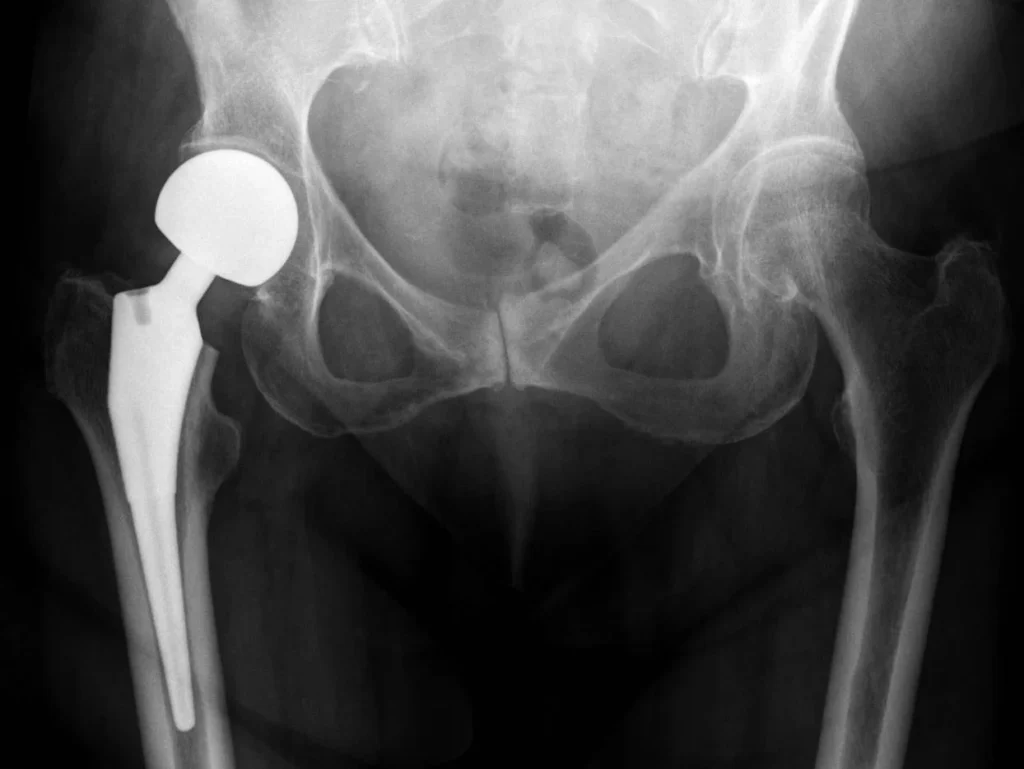
1. Do start walking early, but follow your prescribed limits
Early mobilisation is a key part of modern hip replacement recovery.
Many patients begin standing and walking with assistance on the day of surgery or within 24 hours, depending on their medical condition and surgical instructions.
Start with short, manageable walks using your prescribed walking aid.
Concentrate on controlled steps, a comfortable pace, and safe turns rather than trying to cover a particular distance.
The support early mobilisation after hip and knee replacement.
Early movement helps patients regain function and reduces the disadvantages associated with prolonged bed rest.
A practical tip: Several short walks spread throughout the day may be easier to tolerate than one long walk.
If your pain, swelling, or fatigue increases substantially after an activity, discuss adjusting your walking plan with your physiotherapist.
2. Do perform your prescribed physiotherapy exercises
Your early programme may include ankle pumps, quadriceps contractions, gluteal contractions, and selected hip movements.
As recovery progresses, your physiotherapist may introduce standing exercises, progressive strengthening, balance training, and more challenging walking tasks.
The describes commonly used exercises for restoring mobility and strength.
However, exercises are not interchangeable.
Your surgical approach, tissue repair, weight-bearing instructions, pain, and overall health determine which movements are appropriate.
Physiotherapist’s advice: Prioritise good movement quality over the number of repetitions.
Do not add resistance, increase repetitions, or copy an advanced exercise routine simply because another patient has progressed faster.
3. Do learn how to sit down and stand up safely
Choose a stable chair with armrests and a seat height that allows you to stand without excessive effort. Avoid unstable stools and very low sofas during early recovery if they make transfers difficult.
When sitting down, approach the chair carefully, move back until you feel the seat behind your legs, and lower yourself with control.
Use the armrests when appropriate.
To stand, position your feet securely and use your arms for assistance as instructed.
If your surgeon has restricted deep hip bending, crossing your legs, or particular combinations of movements, follow those restrictions during transfers.
The provides additional advice about sitting and everyday activities.
4. Do keep using your walking aid until you can safely progress
A walker or crutches reduce the demands placed on balance while you regain strength and confidence.
Switching to a cane, or walking without an aid, should depend on your functional ability rather than a particular postoperative date.
Your physiotherapist may assess your walking pattern, balance, turning, step control, and ability to bear weight safely.
Do not stop using your aid just because the pain has decreased.
Pain relief can occur before your strength and movement control have fully recovered.
5. Do follow your wound-care instructions carefully
Keep the surgical incision protected according to the hospital’s instructions.
Follow advice about dressing changes, showering, bathing, and when it is safe to immerse the wound in water.
Avoid applying unprescribed creams, oils, powders, or herbal preparations directly to the incision.
Do not pick at the wound or remove closure materials yourself.
Contact your surgical team if you notice increasing redness, worsening pain around the incision, cloudy drainage, or fever.
These may indicate a surgical-site infection, which can sometimes involve implanted material. .
6. Do eat enough to support healing and muscle recovery
Recovery requires sufficient energy and nutrients.
Protein is particularly important for maintaining and rebuilding muscle, especially in older adults and patients who have reduced their activity before surgery.
Include foods such as lentils, beans, milk, yoghurt, paneer, tofu, eggs, fish, or lean meat, depending on your dietary preferences.
Eat a varied diet with vegetables, fruit, and whole grains.
If you have a poor appetite, significant weight loss, diabetes, kidney disease, or another condition affecting nutrition, ask your clinician or dietitian for individual advice.
Avoid starting high-dose supplements without checking whether they are appropriate for you.
The support an early return to normal eating after surgery when clinically appropriate.
7. Do make your home safer before discharge
A fall during early recovery can cause serious injury, including a fracture around the implant.
Before returning home, remove loose rugs and clutter, secure electrical cables, improve lighting, and keep frequently used items within easy reach.
Arrange assistance with shopping, bathing, dressing, and household chores if needed.
If stairs are unavoidable, ask your physiotherapist to teach you the appropriate technique before attempting them independently.
A handrail and prescribed walking aid may be useful.
One often-overlooked issue is nighttime mobility.
Keep the route to the bathroom clear and adequately lit, especially if you need to get up frequently or are taking medication that makes you dizzy.
8. Do manage pain and swelling without abandoning movement
Some discomfort, stiffness, and swelling around the hip, thigh, ankle, or foot can occur after surgery.
Symptoms should generally improve over time, although recovery is rarely perfectly linear.
Take prescribed pain medication as directed.
Use cold therapy only if recommended, protect the skin, and keep the dressing dry. Rest when needed, but continue your prescribed mobility programme.
If swelling or pain increases significantly, particularly in one calf, do not assume it is simply an effect of exercise.
Seek prompt medical assessment.
The explains symptoms that require medical attention.
The Don’ts After Hip Replacement Surgery
1. Don’t assume everyone needs identical hip precautions
Traditional precautions may include avoiding hip flexion beyond 90 degrees, crossing the legs, or combining certain hip movements.
They have commonly been prescribed to reduce the risk of dislocation, particularly after posterior-approach surgery.
However, research has challenged the need for routine restrictions in some patient groups.
A included nine studies involving 8,835 patients after posterior-approach total hip replacement.
It found no clear evidence that routine precautions reduced early dislocation rates.
The authors emphasised that the certainty of evidence was low or very low for several outcomes.
A also examined the evidence on postoperative restrictions, functional outcomes, and return to sport.
The studies were heterogeneous, so the findings do not justify removing precautions for every patient. (PubMed)
What should you do?
Follow the restrictions given by your own surgeon.
Do not treat research findings as permission to disregard instructions tailored to your operation and risk profile.
2. Don’t pivot sharply on your operated leg
A sudden turn while your foot remains planted can create unnecessary rotational stress and increase the risk of losing balance.
Instead, take several small steps to turn your whole body in the desired direction.
Avoid rushing through doorways, turning suddenly when someone calls you, or carrying objects that block your view.
This becomes especially important when you are tired or distracted, or when you are still learning to coordinate your walking aid.
3. Don’t push through sharp or worsening pain
Mild soreness during rehabilitation is not necessarily a sign of harm.
Sharp pain, a sudden deterioration in walking, or progressively worsening symptoms should not be dismissed as normal exercise discomfort.
Stop the activity that provokes the symptoms and contact your clinical team if they persist or worsen.
Sudden severe hip pain, a new abnormal leg position, or inability to bear weight requires urgent assessment.
4. Don’t remain in bed all day unless your medical team instructs you to
Rest is important, but prolonged immobility can contribute to muscle loss, reduced exercise tolerance, and blood-clot risk.
Follow your prescribed mobilisation plan, perform permitted circulation exercises, and take regular movement breaks when awake.
If another medical condition limits movement, ask your team how to balance rest and safe activity.
The identifies early mobilisation as an important component of enhanced recovery after joint replacement.
5. Don’t stop blood-clot prevention medication on your own
Hip replacement increases the risk of venous thromboembolism, including deep vein thrombosis and pulmonary embolism.
Your surgical team will select an appropriate prevention strategy based on your risks and circumstances.
This may include medication, mechanical compression, mobilisation, or a combination of measures.
The medication and duration vary between patients.
Never skip doses intentionally, double a missed dose without instructions, or replace prescribed medication with aspirin or herbal products without medical advice.
See the for evidence-based prevention recommendations.
6. Don’t return to driving, heavy lifting, or sport too early
Driving requires adequate strength, coordination, reaction time, and the ability to perform an emergency stop.
Pain medication can also impair safe driving.
Heavy lifting, running, jumping, and sports involving rapid turns place different demands on the new hip and surrounding muscles.
Your return to these activities should depend on your functional recovery, surgical instructions, and the demands of the activity. Do not rely on a fixed number of weeks as automatic clearance.
The emphasises providing patients with information about returning to work, driving, sport, and usual activities.
Sleeping, sitting, and everyday activities after hip replacement
Which sleeping positions are safe?
Sleeping comfortably can be difficult during the first few weeks because of incision tenderness, stiffness, and difficulty changing positions.
- On your back: This may be a convenient early option if comfortable. Use pillows for support as recommended by your physiotherapist.
- On your non-operated side: This may be possible when your surgical team permits it. A pillow between your legs can improve comfort and help maintain your prescribed position.
- On your operated side: Ask your surgeon when this is appropriate, particularly while the wound is healing.
There is no universal rule that every patient must sleep on their back for a particular number of weeks.
Your surgical approach and individual precautions matter more than a generic timeline.
If you wake up in a different position, do not panic.
Reposition yourself gently and seek advice if you develop new pain or other concerning symptoms.
For further guidance, consult the .
Can you sit cross-legged or bend forward?
Do not assume that crossing your legs, bending deeply to reach your feet, or sitting on the floor is safe immediately after surgery.
Some patients receive restrictions on deep hip bending or combined movements because of their surgical approach or individual risk factors.
Others may have a more flexible rehabilitation plan.
Ask your surgeon when you can safely resume activities such as putting on socks, cutting your toenails, sitting cross-legged, or using a low toilet seat.
An occupational therapist can recommend dressing aids and other equipment that make daily tasks easier.
The important distinction is between a temporary precaution and a permanent restriction.
Do not continue avoiding normal movements indefinitely after your clinical team has cleared you to resume them.
When can you return to work and sexual activity?
Return to work depends on the physical demands of your job.
Desk-based work may be possible earlier than a job involving prolonged standing, lifting, climbing, or manual labour.
Plan regular movement breaks if you return to prolonged sitting.
Sexual activity can often resume when pain, mobility, and comfort permit, but the timing and appropriate positions depend on your surgical precautions.
Ask your clinician for personalised advice rather than relying on a fixed date.
NICE recommends discussing return to work and usual activities as part of joint replacement care.
A physiotherapist’s guide to recovery milestones
Recovery is individual. These stages describe common rehabilitation priorities, not mandatory deadlines.
Early phase
Safe mobility and daily activities
Practise getting in and out of bed, standing, walking short distances, and using the bathroom safely.
Learn your movement precautions and home exercise programme.
Building phase
Strength, balance, and walking control
Gradually increase walking tolerance and introduce appropriate strengthening and balance exercises.
Work on reducing a limp and improving transfers.
Later phase
Return to meaningful activities
Progress towards longer walks, work, household tasks, and recreational activities according to your goals and clinical assessment. Higher-impact activities need individual clearance.
Exercises commonly used after hip replacement
Your physiotherapist may include the following exercises when appropriate:
- Ankle pumps: Gently move your feet up and down.
- Quadriceps sets: Tighten the muscles at the front of your thigh without moving the leg.
- Gluteal sets: Gently contract your buttock muscles.
- Supported standing and walking: Practise safe weight-bearing using your prescribed aid.
- Progressive hip strengthening: Introduced as healing and movement control improve.
Do not perform every exercise you find online.
The suitability of hip flexion, leg lifts, resistance exercises, and other movements varies according to your procedure and rehabilitation stage.
Your individual programme takes priority over a general exercise list.
The provides examples of commonly prescribed movements.
Lesser-known mistakes that can slow recovery
Mistake 1: Judging recovery only by pain
Pain relief is encouraging, but it does not necessarily mean that muscle strength, balance, and walking mechanics have returned to normal.
What to do instead: Monitor practical milestones, such as safe transfers, controlled turning, stair confidence, and walking quality.
Ask your physiotherapist to reassess persistent limping rather than simply increasing your walking distance.
Mistake 2: Doing too much on a good day
It is tempting to walk much farther or complete extra exercises when your hip feels better.
However, a sudden increase in activity can lead to greater discomfort or swelling later that day or the following morning.
What to do instead: Increase activity gradually and change one variable at a time, such as walking duration or exercise difficulty.
If symptoms repeatedly worsen after a particular activity, discuss modifying the plan.
Mistake 3: Assuming all swelling is harmless
Some postoperative swelling is expected.
However, a new increase in calf swelling, warmth, or pain may indicate a blood clot rather than ordinary recovery.
What to do instead: Seek prompt medical assessment for new or worsening calf symptoms.
Do not massage the calf to try to relieve suspected clot-related symptoms.
Mistake 4: Continuing restrictions after they are no longer needed
Fear of dislocation can make patients reluctant to resume ordinary movements even after their surgeon has cleared them.
What to do instead: Ask for clear guidance on which restrictions apply, how long they are expected to last, and how to resume activities safely.
Evidence questioning routine hip precautions in selected patients is not a reason to ignore individual instructions.
Mistake 5: Ignoring balance because walking feels comfortable
Walking on a flat, familiar surface does not fully test your ability to manage uneven ground, unexpected obstacles, or sudden changes in direction.
What to do instead: Progress balance exercises under professional guidance.
Do not attempt unsupported single-leg exercises or challenging balance drills before you are ready.
Red flags: When should you seek medical help?
Contact your surgical team promptly if you experience increasing redness around the incision, worsening wound pain, cloudy drainage, fever, or a deterioration in your recovery.
These symptoms may indicate infection. .
Seek urgent medical assessment for new calf pain, swelling, tenderness, or unusual warmth because these symptoms can indicate deep vein thrombosis.
Call emergency services immediately if you develop sudden breathlessness, chest pain, coughing up blood, or fainting.
These may indicate a pulmonary embolism or another serious emergency.
Sudden severe hip pain, a new abnormal position of the operated leg, or inability to bear weight after a fall also requires urgent assessment for possible dislocation or fracture.
Do not wait for your next routine follow-up if you develop these warning signs.
Frequently asked questions about hip replacement surgery
1. How long does recovery from hip replacement surgery take?
Many patients resume light daily activities within approximately three to six weeks, although recovery varies.
Strength, endurance, balance, and confidence can continue improving for several months.
Your health, surgical procedure, and rehabilitation needs influence the timeline.
Source: .
2. Can I climb stairs after hip replacement?
Many patients practise stairs before leaving hospital with physiotherapy instruction.
Use the prescribed walking aid and handrail where appropriate.
Attempt stairs independently only when your physiotherapist confirms you can do so safely.
Source: .
3. Can I sleep on my side after hip replacement?
Side sleeping may be possible depending on your surgical approach, wound comfort, and prescribed precautions.
Ask your surgeon or physiotherapist when it is appropriate and whether a pillow between your legs would help.
Source: .
4. Should I walk every day after hip replacement?
Walking is usually an important part of recovery.
Begin with short, manageable walks and increase gradually according to your prescribed plan.
Do not push through severe pain, dizziness, or unusual symptoms.
Source: .
5. When can I drive after hip replacement?
There is no universal date that guarantees driving readiness.
You need adequate control, reaction time, and the ability to perform an emergency stop safely.
You must also be free from impairing medication and meet your clinician’s and local legal requirements.
Source: .
6. Can I sit cross-legged after hip replacement?
Do not assume this position is safe during early recovery.
Certain patients need restrictions on combined hip movements.
Ask your surgeon when you can resume sitting cross-legged or sitting on the floor.
Source: .
7. Is physiotherapy necessary after hip replacement?
Every patient needs appropriate postoperative rehabilitation advice and an exercise plan.
Supervised physiotherapy is particularly useful when weakness, balance problems, difficulty with daily activities, or slower-than-expected progress requires individual assessment.
Source: .
8. What should I avoid after hip replacement surgery?
Avoid unapproved movements that conflict with your surgical precautions, sudden twisting, unsafe high-risk activities, premature heavy lifting, and exercising through sharp or worsening pain.
Do not stop prescribed medication or ignore warning signs without medical advice.
Source: .
Final word: Protect your new hip while rebuilding confidence
Hip replacement can substantially improve pain and mobility, but the operation is only one part of the recovery process.
Appropriate physiotherapy, safe walking, good wound care, adequate nutrition, and gradual progression all help you work towards independent daily activities.
My advice as a physiotherapist is straightforward: do not confuse resting with healing, and do not confuse pushing harder with progressing faster.
Follow your personalised rehabilitation plan, monitor how your body responds, and seek advice when symptoms change or progress stalls.
The goal is not simply to protect the artificial joint.
It is to regain the strength, balance, and confidence needed to return to the activities that matter to you.
Frequently Asked Questions About Hip Replacement
Practical answers to help you recover safely and confidently.
1. How long does it take to recover from hip replacement surgery?
Many patients resume light daily activities within approximately three to six weeks. However, muscle strength, balance, endurance, and confidence may continue improving for several months. Recovery depends on your health, surgical procedure, and rehabilitation progress.
2. Can I walk normally immediately after hip replacement surgery?
Most patients initially need a walker or crutches and assistance with walking. Your walking pattern improves gradually as pain, swelling, strength, and balance improve. Use your prescribed aid until your physiotherapist confirms you can progress safely.
3. What movements should I avoid after hip replacement?
Follow the movement restrictions provided by your surgeon. Depending on your surgical approach and individual risk factors, you may need to avoid certain combinations of deep hip bending, twisting, or crossing your legs during early recovery. Restrictions are not identical for every patient.
4. When can I sleep on my side after hip replacement?
Side sleeping may be possible when your surgical team permits it. The timing depends on your surgical approach, wound comfort, and prescribed precautions. Ask whether a pillow between your legs would help you maintain a comfortable position.
5. Is physiotherapy necessary after hip replacement surgery?
Every patient needs appropriate rehabilitation advice and an exercise plan. Supervised physiotherapy can be particularly helpful if you have persistent weakness, a limp, balance problems, difficulty climbing stairs, or trouble returning to daily activities.
6. Can I climb stairs after hip replacement surgery?
Many patients learn to climb stairs with assistance before leaving the hospital. Use a handrail and your prescribed walking aid as instructed. Practise independently only after your physiotherapist confirms that you can manage stairs safely.
7. Can I sit cross-legged after hip replacement?
Do not assume cross-legged sitting is safe during early recovery. Some patients need restrictions on particular hip movements. Ask your surgeon when you can resume sitting cross-legged, sitting on the floor, or using a low chair.
8. When can I drive after hip replacement surgery?
Driving readiness varies according to your recovery, the operated side, medication, and vehicle type. You must be able to control the vehicle and perform an emergency stop safely. Obtain medical clearance and follow applicable local requirements.
9. Is swelling normal after hip replacement surgery?
Some swelling around the hip, thigh, ankle, or foot can occur after surgery and should generally improve over time. New or worsening calf pain, warmth, or swelling requires prompt medical assessment because it may indicate a blood clot.
10. What warning signs should I never ignore after hip replacement?
Seek prompt medical advice for fever, worsening wound redness, drainage, or increasing pain. New calf swelling or pain needs urgent assessment. Sudden breathlessness, chest pain, coughing up blood, or fainting requires emergency medical care.
Medical note: These answers provide general information. Follow your surgeon’s instructions and individual rehabilitation plan.
Stay tuned with us for more health related topics.
Follow us on LinkedIn and Instagram for more.
More Read


Medical Disclaimer!
This article has been reviewed and written under the guidance of our Head Physiotherapist, Dr. Kruti Raj (PT, MUHS,CPT,CMPT). The information shared is intended for educational purposes only and should not be considered a substitute for personalized medical advice, diagnosis, or treatment.
Please consult us or any other qualified healthcare professional before beginning any exercise program, especially if you are experiencing pain, recovering from injury, or managing a medical condition.


