


Forward head posture is one of the most common musculoskeletal issues in the digital age. Long hours at desks, excessive smartphone use, and poor ergonomic habits gradually shift the head forward beyond its natural alignment. Simple posture correction exercises can help realign the head and reduce neck strain.
Over time, this imbalance places significant stress on the cervical spine, leading to neck pain, stiffness, headaches, shoulder tension, and reduced mobility.
The good news is that forward head posture is highly correctable with a structured, science based plan and posture correction exercises.
This comprehensive guide explains everything you need to assess, correct, and permanently improve posture using evidence informed exercises, neurological retraining, breathing correction, and ergonomic adjustments.
Read in detail: Complete Guide to Neck Pain: Causes, Symptoms, Exercises and Treatment
What Is Forward Head Posture

Forward head posture occurs when the head sits in front of the shoulders instead of aligning directly above them. Ideally, the ears should line up vertically with the shoulders when viewed from the side.
The average human head weighs about 5 kilograms. When it shifts forward even slightly, the load on the neck increases dramatically. Over time, this creates muscular imbalance, joint compression, and structural adaptation.
Forward head posture is commonly associated with upper crossed syndrome, a predictable imbalance pattern affecting the neck, shoulders, and upper back.
Also Read: Spinal Twists for Lower Back Pain Relief- A Complete Guide
Why Forward Head Posture Is a Growing Modern Health Concern
Forward head posture is no longer limited to office workers or sedentary adults. It is increasingly seen in teenagers, students, remote professionals, and even children due to prolonged screen exposure.
The widespread use of smartphones, tablets, and laptops has fundamentally changed the way people position their bodies throughout the day.
Unlike traditional physical labor related strain, this issue develops silently over months or years of sustained forward leaning posture.
One of the major concerns is that forward head posture rarely appears in isolation. It often coexists with rounded shoulders, upper back stiffness, and weakened core stability.
This interconnected dysfunction affects the entire kinetic chain, meaning the neck, shoulders, thoracic spine, and even breathing mechanics are compromised together. Over time, this imbalance can contribute to chronic pain patterns that become harder to reverse.
Another critical factor is cumulative load stress. When the head remains in a forward position for several hours daily, small mechanical stresses compound.
Muscles such as the upper trapezius and levator scapulae become overactive, while deep stabilizers weaken.
This imbalance alters joint mechanics and may accelerate degenerative changes in the cervical spine if left unaddressed.
Additionally, forward head posture has subtle systemic effects. Research suggests that altered head positioning can reduce lung capacity, affect balance control, and increase tension related headaches.
Because posture influences both musculoskeletal and neurological systems, correcting it improves not only physical alignment but also overall functional performance and energy levels.
Addressing forward head posture early is therefore not just about aesthetics. It is a proactive step toward long term spinal health, efficient breathing, and sustainable movement quality.
Prolonged Desk Work
Extended sitting with a forward lean weakens stabilizing muscles and reinforces poor alignment.
Smartphone Overuse
Looking down at a device for long periods increases cervical flexion strain.
Rounded Shoulders
Collapsed chest positioning pulls the head forward.
Weak Deep Neck Flexors
These muscles are responsible for stabilizing the cervical spine.
Tight Chest Muscles
Shortened pectoral muscles draw the shoulders and head anteriorly.
Poor Sleeping Posture
High pillows and stomach sleeping reinforce misalignment.
Limited Thoracic Mobility
A stiff mid back prevents upright posture.
Also Read: Frozen shoulder- From frozen to free !
Symptoms of Forward Head Posture
- Neck stiffness
- Upper back discomfort
- Shoulder tightness
- Tension headaches
- Jaw discomfort
- Reduced neck mobility
- Fatigue during computer work
- Shallow breathing
Also Read: Ultimate Guide to Home Physiotherapy for Back Pain
Self Assessment for Forward Head Posture
Wall Alignment Test
Stand with heels, hips, and upper back against a wall. Relax naturally. If your head cannot touch the wall without tilting upward, forward head posture may be present.
Side Profile Photo Method
Take a relaxed side photo. If the ear sits forward of the shoulder line, misalignment exists.
Measurement Method
Measure the horizontal distance between ear and shoulder line. More than 2.5 centimeters suggests moderate deviation.
Also Read: This 7 day knee strengthening exercise plan works like Miracle
Biomechanics and Structural Adaptation
Forward head posture affects more than muscles. Over time it may lead to:
- Altered cervical curve
- Increased disc stress
- Upper cervical compression
- Thoracic spine stiffness
- Ligament shortening
Correction requires progressive strengthening and motor retraining.
Also Read: Home Physiotherapy Exercises for Knee Pain That Actually Work
Three Phase Correction Model
Phase 1 Mobility Restoration
Goal is reducing tightness and restoring thoracic extension.
Exercises include:
- Doorway chest stretch
- Levator scapulae stretch
- Thoracic extension drill
- Gentle suboccipital nods
Duration is 2 to 3 weeks.
Phase 2 Activation and Stability
Goal is strengthening weak stabilizers.
Exercises include:
- Chin tucks
- Deep neck flexor holds
- Scapular retractions
- Prone Y raises
Duration is 3 to 4 weeks.
Phase 3 Functional Integration
Goal is maintaining alignment during daily tasks.
Exercises include:
- Resistance band rows
- Wall angels
- Standing posture holds
- Farmer carries with neutral neck
This phase continues long term.
Also Read: How to Understand What Really Causes You Pain?
Best Posture Correction Exercises for Forward Head Posture
1. Chin Tucks
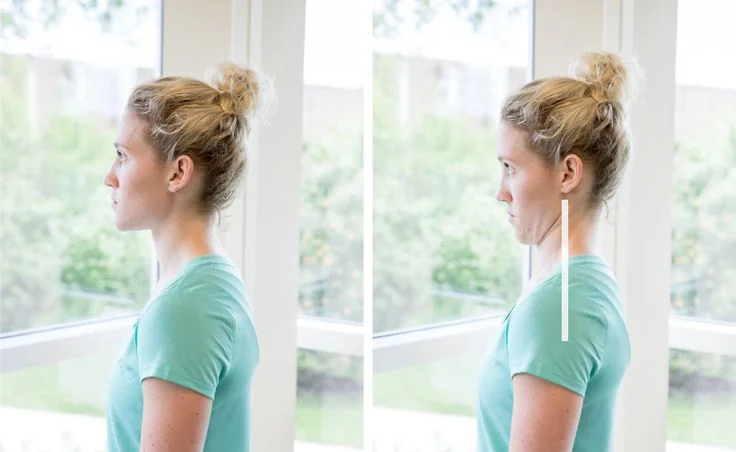
Sit upright and slide your chin straight backward. Hold for 5 to 10 seconds. Repeat 10 to 15 times.
Benefits include strengthening deep neck flexors and improving alignment.
2. Deep Neck Flexor Hold

Lie on your back. Slightly tuck chin and lift head one inch. Hold 5 seconds. Repeat 10 times.
3. Scapular Retractions

Sit tall and pull shoulder blades together. Hold 5 seconds. Repeat 15 times.
4. Prone Y Raises
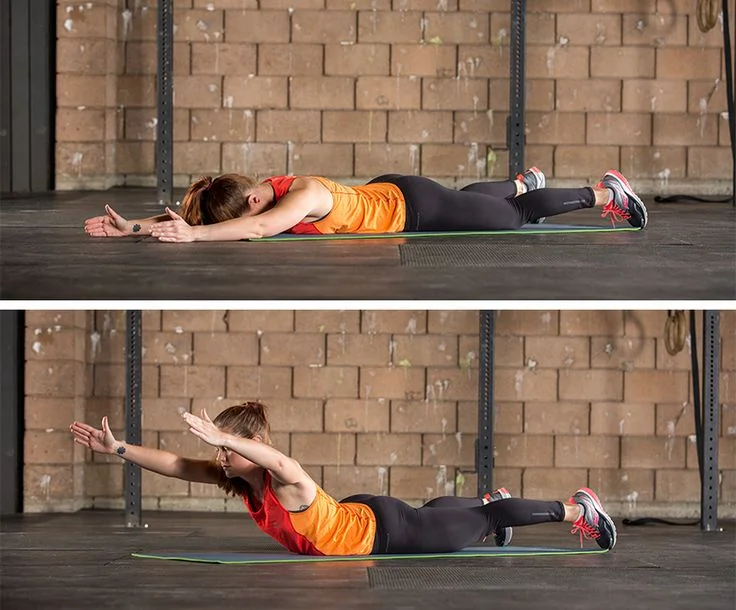
Lie face down and raise arms in a Y shape. Lift thumbs upward. Hold 3 seconds. Repeat 12 times.
5. Resistance Band Pull Apart

Hold band at shoulder height and pull apart slowly. Repeat 15 times.
6. Doorway Chest Stretch

Place forearms on door frame and step forward. Hold 30 seconds. Repeat 3 rounds.
7. Levator Scapulae Stretch
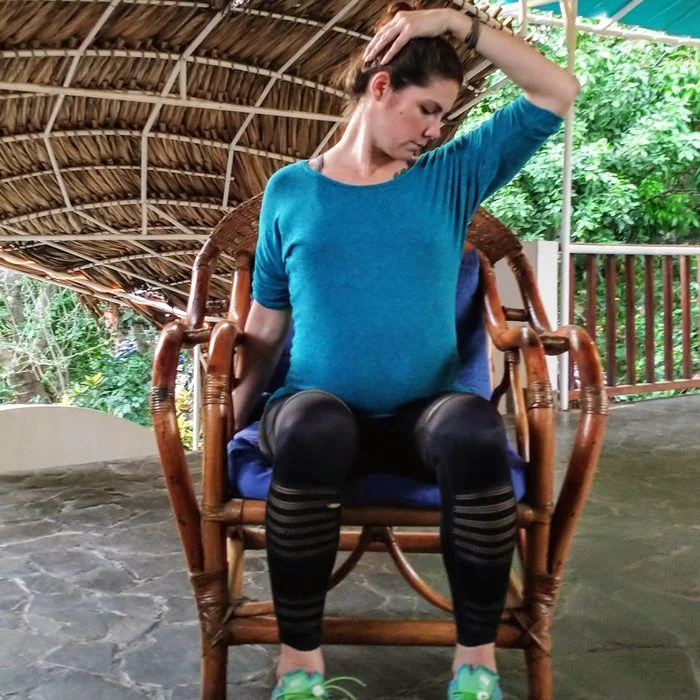
Turn head 45 degrees and look downward. Gently pull head forward. Hold 20 seconds each side.
8. Thoracic Extension Over Chair
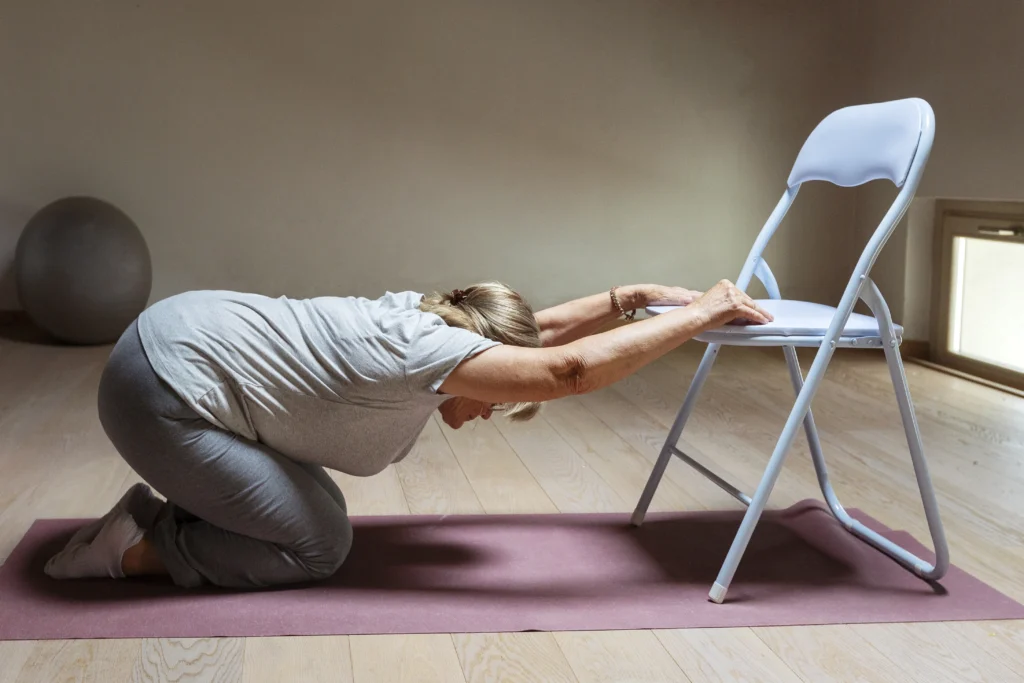
Sit upright and extend upper back over chair edge. Perform 10 slow repetitions.
9. Wall Angels

Stand against wall and slide arms upward while maintaining alignment. Repeat 10 times.
10. Cat Cow Movement

On hands and knees alternate spinal flexion and extension. Perform 10 controlled reps.
Also Read: Cat Cow Stretch Benefits for Back Pain- A Complete Guide
Breathing Correction for Posture
Forward head posture disrupts diaphragm efficiency.
90 90 Breathing Drill

Lie on your back with feet on wall and knees bent. One hand on chest, one on abdomen. Inhale into abdomen and exhale slowly. Perform 10 slow breaths.
Improved breathing supports spinal alignment.
Progressive Overload Strategy
- Weeks 1 to 2
Bodyweight exercises only.
- Weeks 3 to 4
Add light resistance bands.
- Weeks 5 to 8
Increase repetitions and hold time.
- After Week 8
Integrate functional load such as light carries.
Also Read: Ultimate Guide to Home Physiotherapy for Back Pain
Neurological Retraining
Posture is governed by the nervous system. Habitual forward positioning becomes automatic over time.
Correction requires:
- Frequent posture awareness checks
- Slow controlled movement
- Daily repetition
- Consistent cueing
Short frequent sessions are more effective than occasional long workouts.
Also Read: Knee-to-Chest Stretch for Bach Pain Relief and Spinal Flexibility- A Complete Guide
Ergonomic Optimization
- Monitor at eye level.
- Feet flat on floor.
- Keyboard close to body.
- Phone at eye height.
- Use moderate height pillow.
- Avoid stomach sleeping.
Also Read: 15 Minute Full-Body Stretch To Relieve Your Stress- Proven Ways
Behavioral Change Strategy
- Set hourly posture reminders.
- Use visual cues at desk.
- Take weekly progress photos.
- Track measurable improvement.
Also Read: 10 Best Daily Stretches for Back Pain Relief at Home
Red Flags That Require Medical Evaluation
Seek evaluation if you experience:
- Persistent numbness
- Radiating arm pain
- Grip weakness
- Severe headaches
- Dizziness
- Trauma history
Also read: Simple Thigh Stretching Exercises for Knee Pain Prevention
Realistic Timeline for Improvement
- Mild deviation improves within 4 to 6 weeks.
- Moderate cases require 8 to 12 weeks.
- Severe structural adaptation may take 3 to 6 months.
Also Read: Child’s Pose Exercise for Back Pain Relief- A Complete Guide
Long Term Maintenance Plan
- Continue strengthening twice weekly.
- Stretch chest daily.
- Maintain ergonomic setup.
- Stay physically active.
- Perform monthly posture checks.
Also Read: Wall Slides for Knee Joint Strength- A Complete Guide
Frequently Asked Questions (FAQs)
1. What causes forward head posture?
Forward head posture is commonly caused by prolonged use of smartphones, laptops, and poor sitting posture. Weak neck muscles and tight chest muscles can also contribute to this condition.
2. Can exercises really correct forward head posture?
Yes. Specific posture correction exercises strengthen the deep neck muscles, improve spinal alignment, and help bring the head back into a neutral position when performed consistently.
3. How long does it take to fix forward head posture?
With daily exercises, posture awareness, and ergonomic corrections, noticeable improvements can appear within 4 to 8 weeks. Severe cases may take longer.
4. What are the best exercises for forward head posture?
Some of the most effective exercises include chin tucks, wall angels, scapular squeezes, doorway chest stretches, and neck retraction exercises.
5. Can forward head posture cause neck pain?
Yes. Forward head posture increases stress on the cervical spine and surrounding muscles, often leading to neck pain, stiffness, headaches, and shoulder tension.
6. Is forward head posture reversible?
In most cases, forward head posture is reversible through targeted exercises, posture awareness, strengthening of upper back muscles, and reducing prolonged screen time.
7. How many times a day should I do posture correction exercises?
Most posture correction exercises can be performed 1 to 2 times daily. Consistency and correct technique are more important than doing excessive repetitions.
Conclusion
Forward head posture affects spinal health, breathing efficiency, muscle balance, and long term cervical function.
The most effective correction approach combines mobility work, strengthening, neurological retraining, ergonomic optimization, and consistent daily habits.
When applied consistently, these posture correction exercises significantly improve alignment, reduce pain, and restore confidence.
Stay tuned with us for more health related topics.
Follow us on LinkedIn and Instagram for more.
More Read


Medical Disclaimer!
This article has been reviewed and written under the guidance of our Head Physiotherapist, Dr. Kruti Raj (PT, MUHS,CPT,CMPT). The information shared is intended for educational purposes only and should not be considered a substitute for personalized medical advice, diagnosis, or treatment.
Please consult us or any other qualified healthcare professional before beginning any exercise program, especially if you are experiencing pain, recovering from injury, or managing a medical condition.


