Surgeons dedicate their careers to restoring the health of others, yet many silently struggle with chronic musculoskeletal pain. Among these conditions, neck pain has emerged as one of the most common occupational problems in surgical professionals.
Modern surgical techniques demand precision, intense concentration, and prolonged static postures. Procedures may last several hours with minimal opportunity for movement.
During this time, surgeons often maintain a forward-leaning posture, sustained neck flexion, and repetitive upper limb activity.
Recent research shows that musculoskeletal disorders affect between 66% and 94% of surgeons, with neck pain being one of the most frequently reported complaints. (SpringerLink)
From a physiotherapy perspective, neck pain in surgeons is not merely a muscular issue. It involves complex biomechanical, ergonomic, and neurological factors that accumulate over years of surgical practice.
Understanding these mechanisms is the first step toward prevention and recovery.
Read about our Complete Neck Pain Guide : Causes, Symptoms, Exercises and Treatment
Neck pain in surgeons commonly develops due to prolonged static posture, forward head positioning, and sustained cervical muscle contraction during surgical procedures. Long operating hours, use of surgical loupes, poor operating table height, and repetitive fine motor tasks place continuous stress on the cervical spine. Physiotherapy treatment focuses on ergonomic correction, deep cervical muscle strengthening, posture retraining, mobility exercises, and regular micro-breaks during surgery to prevent chronic cervical disorders.
Read about: Cervical Ligament Injury or Neck Ligament Tear
- Neck pain affects more than half of surgeons due to prolonged surgical posture.
- Forward head posture and static cervical flexion are major biomechanical causes.
- Laparoscopic and microsurgery procedures increase cervical muscle fatigue.
- Targeted physiotherapy can significantly reduce symptoms and improve endurance.
- Ergonomic operating room adjustments and micro-break exercises are essential prevention strategies.
Read in detail about: What is Cervical Spondylosis? The Truth Behind Chronic Neck Pain
How Common Is Neck Pain Among Surgeons?
Several occupational health studies have revealed alarmingly high prevalence rates of cervical pain among surgeons.
A survey among spine surgeons found that 74.4% experienced neck pain within a single month, highlighting the magnitude of the problem. (PMC)
Another investigation into orthopaedic surgeons reported that 59% experienced neck pain and nearly 23% developed cervical radiculopathy, demonstrating that symptoms may progress to nerve involvement if left untreated. (PubMed)
In minimally invasive surgery specialists, musculoskeletal disorders were reported by 90% of surgeons, with the neck being one of the most affected regions. (Taylor & Francis Online)
From a physiotherapy standpoint, these findings suggest that neck pain in surgeons is not an occasional discomfort but a widespread occupational hazard.
Read about : 15 Common Causes of Neck Pain You Should Know
Why Surgeons Are Vulnerable to Neck Pain

Prolonged Static Posture During Surgery
Most surgical procedures require surgeons to maintain a fixed position for extended periods.
Even subtle static postures can produce significant muscular strain when maintained for several hours.
The cervical extensor muscles, particularly:
- Upper trapezius
- Levator scapulae
- Semispinalis cervicis
- Suboccipital muscles
remain in constant low-level contraction.
Over time, this sustained contraction causes:
- muscle fatigue
- reduced blood circulation
- accumulation of metabolic waste
These factors collectively trigger myofascial pain.
Forward Head Posture in the Operating Room
During surgery, surgeons frequently lean forward to obtain a clear view of the surgical field.
This creates forward head posture, a biomechanical alignment where the head moves anteriorly relative to the trunk.
Biomechanically, every 2.5 cm forward shift of the head can increase cervical load by nearly 10 pounds. This dramatically increases strain on cervical joints, ligaments, and muscles.
Over years of practice, this posture contributes to:
- cervical disc degeneration
- facet joint irritation
- chronic muscular imbalance
Learn how posture affects neck pain and correction exercises in our article on Simple Posture Correction Exercises for Forward Head Posture
Surgical Loupes and Magnification Systems
Magnification loupes significantly improve surgical precision, but they also alter head posture.
Research indicates that surgeons using loupes tend to maintain greater neck flexion angles, which increases compressive forces on the cervical spine. (PMC)
If loupe declination angles are poorly adjusted, surgeons may unintentionally maintain excessive cervical flexion throughout procedures.
Minimally Invasive Surgery and Ergonomic Stress
Minimally invasive procedures require surgeons to operate while viewing external monitors rather than the surgical field directly.
This creates a unique ergonomic challenge:
- neck rotation toward screens
- shoulder elevation
- sustained upper limb positioning
Studies suggest that minimally invasive surgeons experience particularly high musculoskeletal strain due to poor operating room ergonomics. (Taylor & Francis Online)
Long Surgical Duration and Fatigue
Many surgical procedures last 4 to 8 hours without significant breaks.
Over time, fatigue affects postural muscles responsible for spinal stability.
Fatigued muscles lose their ability to maintain proper alignment, causing:
- slouched posture
- cervical hyperflexion
- compensatory muscle activation
These adaptations further increase cervical strain.
Read about : What is Cervical Facet Joint Pain, how it causes cervicogenic headaches and how to correct it naturally
Mechanism of Neck Pain in Surgeons
From a clinical physiotherapy perspective, the development of neck pain in surgeons involves several overlapping mechanisms.
1. Cervical Muscle Overload
Prolonged contraction leads to:
- reduced oxygen supply
- accumulation of inflammatory mediators
- trigger point formation
Myofascial trigger points commonly develop in the upper trapezius and levator scapulae.
2. Joint Compression
Sustained neck flexion compresses cervical facet joints.
This may lead to:
- facet irritation
- joint stiffness
- chronic cervical pain.
3. Disc Pressure
Forward bending increases pressure inside cervical discs.
Repeated stress may accelerate:
- disc degeneration
- cervical disc bulge
- radiculopathy.
4. Postural Muscle Imbalance
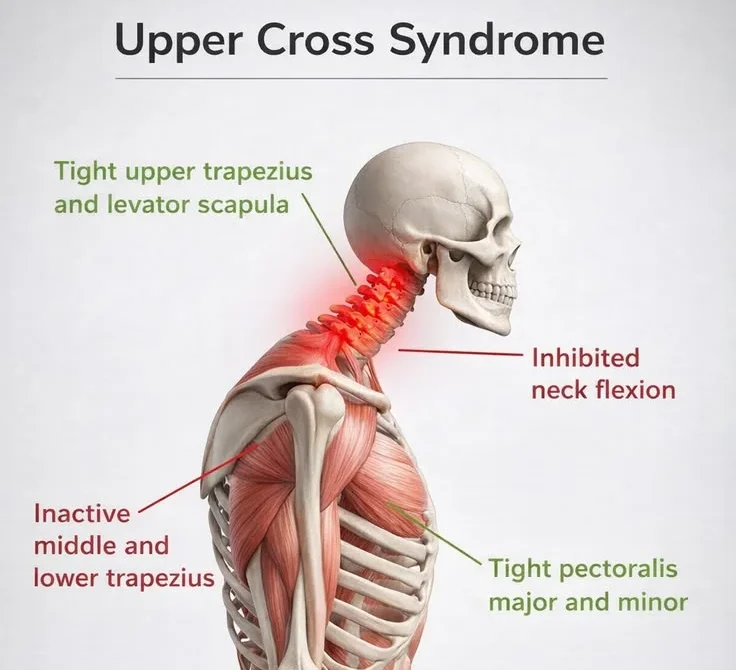
Surgeons frequently develop a pattern similar to Upper Crossed Syndrome, characterized by:
Tight muscles
- pectoralis major
- upper trapezius
- levator scapulae
Weak muscles
- deep cervical flexors
- lower trapezius
- serratus anterior
This imbalance disrupts spinal alignment.
Read in detail about: Cervical Radiculopathy: Why Neck Nerve Pain Travels to the Arm
Symptoms Surgeons Commonly Experience
Neck pain in surgeons usually develops gradually.
Common symptoms include:
Local Symptoms
- neck stiffness after surgery
- dull aching pain in the cervical region
- tight upper trapezius muscles
- reduced neck mobility
Radiating Symptoms
- shoulder pain
- arm heaviness
- tingling in the fingers
- cervical radiculopathy
Functional Symptoms
- fatigue during long surgeries
- difficulty maintaining posture
- headaches after operating
These symptoms often worsen toward the end of the workday.
Read about: How to Relieve Morning Neck Stiffness Naturally
Physiotherapy Assessment for Surgeons
When surgeons present with neck pain, a physiotherapist evaluates several factors.
Postural Assessment
- head alignment
- shoulder symmetry
- thoracic spine curvature
Muscle Strength Testing
Particular attention is given to:
- deep cervical flexors
- lower trapezius
- scapular stabilizers
Cervical Mobility
Restricted cervical rotation and extension are common findings.
Ergonomic Assessment
A detailed discussion about:
- operating table height
- loupe usage
- monitor placement
is crucial for identifying the root cause.
Read about: Effective Neck Pain Exercises At Home: A Complete Guide to Relief and Improved Mobility
Evidence-Based Physiotherapy Treatment
A targeted rehabilitation program is essential for surgeons because generic neck exercises often fail to address surgical posture demands.
1. Deep Cervical Flexor Activation
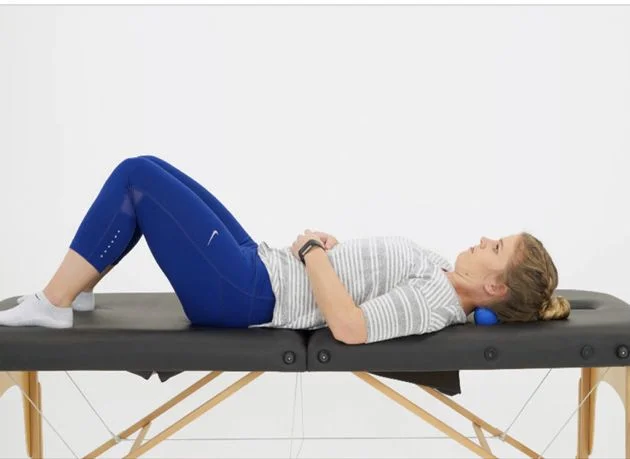
The deep cervical flexors stabilize the cervical spine.
Weakness in these muscles is strongly associated with chronic neck pain.
Exercise: Chin Tuck (Cranio-Cervical Flexion)
Steps:
- Lie on your back.
- Gently nod your head as if saying yes.
- Keep the neck long without lifting the head.
Hold for 10 seconds.
Repeat 10 times.
This exercise improves cervical stability and reduces forward head posture.
Learn : How to do Chin Tucks for Neck Pain Relief and Posture Correction
2. Scapular Stabilization Training
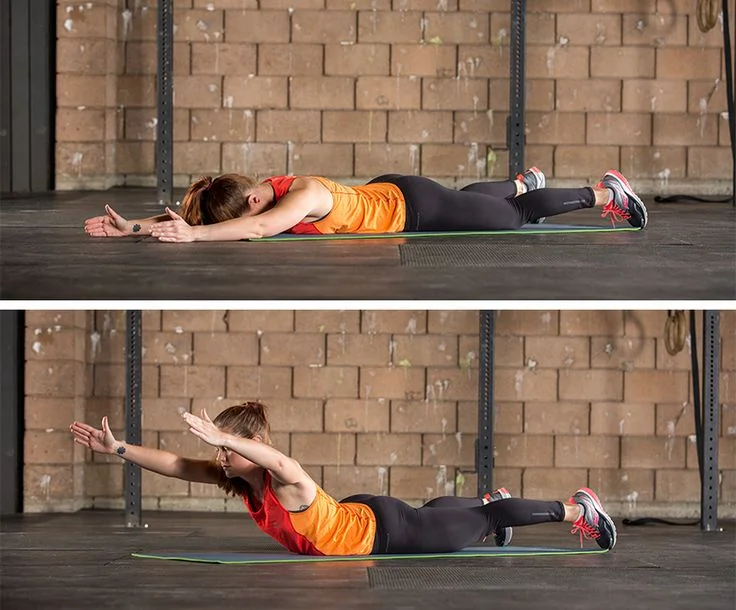
Shoulder blade muscles provide an essential support base for the neck.
Exercise: Prone Y and T Raises
Benefits:
- activates lower trapezius
- improves scapular control
- reduces upper trapezius overactivity.
Perform 3 sets of 12 repetitions.
3. Thoracic Spine Mobility Exercises

Thoracic stiffness forces the cervical spine to compensate.
Exercise: Thoracic Extension Over Foam Roller
Steps:
- Place a foam roller under the upper back.
- Support your head with hands.
- Extend gently over the roller.
Repeat 10-12 times.
4. Cervical Isometric Strengthening
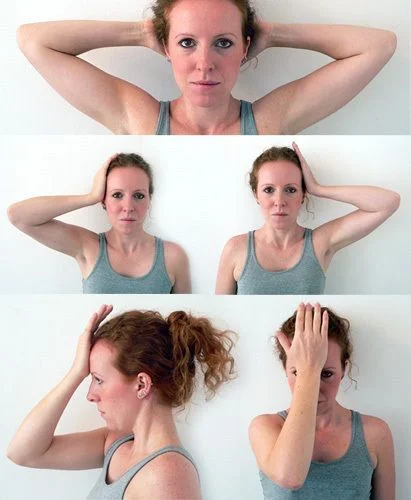
Isometric training increases endurance in neck muscles.
Exercise: Four-Direction Neck Isometrics
Press your head gently into your hand:
- forward
- backward
- left
- right
Hold 5-10 seconds.
Repeat 10 repetitions.
5. Myofascial Release Techniques

Trigger points in the upper trapezius often produce referred pain.
Physiotherapy techniques include:
- trigger point therapy
- dry needling
- instrument-assisted soft tissue mobilization.
These treatments reduce muscle tension and restore normal tissue function.
Read about: What Is Cervical Myofascial Pain Syndrome And How To Relieve Trigger Points
6. Kinesiology Taping
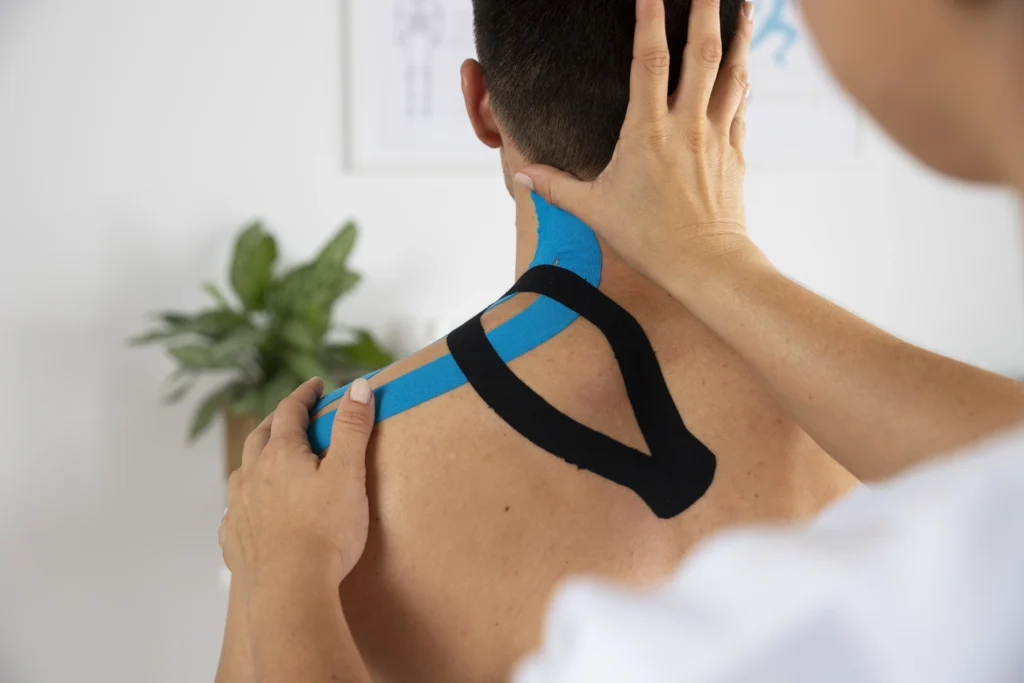
Kinesiology taping is commonly applied to the upper trapezius, levator scapulae, and cervical paraspinal muscles to support posture and reduce muscular strain.
Research published in the Journal of Bodywork and Movement Therapies found that kinesiology taping can reduce pain intensity and improve cervical range of motion in individuals with mechanical neck pain. (SpringerNature)
The tape provides mild proprioceptive feedback, encouraging the patient to maintain a more neutral cervical posture during daily activities.
For surgeons who spend several hours in the operating room, taping may help remind the body to avoid excessive forward head posture and reduce fatigue in postural muscles.
Dry Needling

Dry needling is particularly effective for treating myofascial trigger points, which commonly develop in the upper trapezius and levator scapulae due to sustained surgical posture.
Clinical trials published in Pain Medicine and Journal of Orthopaedic & Sports Physical Therapy report that dry needling can significantly reduce trigger point pain and improve neck mobility in patients with chronic neck pain. (Pain Medicine)
This technique can be especially helpful for surgeons who develop localized muscle knots after long surgical procedures.
Cupping Therapy
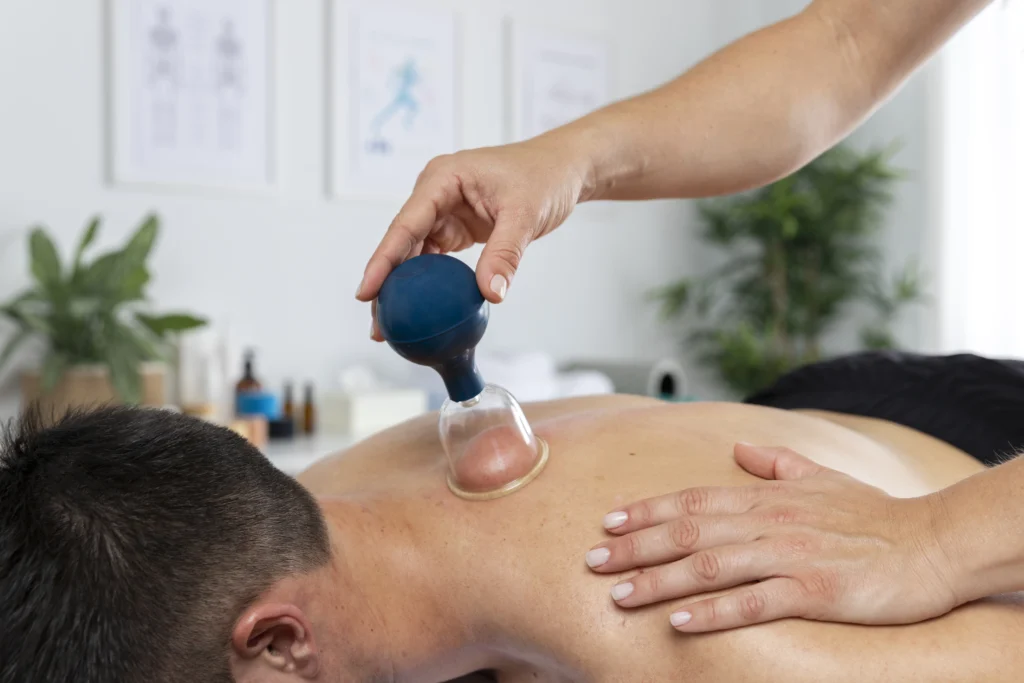
Cupping therapy is sometimes used to address myofascial tightness and fascial restrictions in the cervical and upper thoracic region.
A systematic review in Complementary Therapies in Medicine reported that cupping therapy may provide short-term pain relief and improved neck mobility in patients with chronic neck pain. (Lauche et al., 2018)
While these techniques can provide symptom relief, they should not replace the core components of rehabilitation.
6. Micro-Break Movement Strategy for Surgeons
One of the most effective preventive strategies is the micro-break protocol.
Every 30-40 minutes, surgeons should perform brief movements such as:
- shoulder rolls
- neck extension stretch
- scapular squeezes
Even 20-30 seconds of movement can reduce muscle fatigue.
Also read: How to Relieve Neck Tightness Without Equipment
Research-Based Advanced Physiotherapy and Technologies for Surgeons
Recent advances in surgical ergonomics and rehabilitation science have introduced innovative technologies that can complement traditional physiotherapy in managing neck pain among surgeons.
Passive surgical exoskeletons
One of the most promising developments is the use of passive surgical exoskeletons designed to support the head, neck, and upper back during prolonged procedures.
A 2026 study in Annals of Surgery evaluated a passive neck–back exoskeleton worn by surgeons during operations.
The device significantly reduced neck discomfort and decreased time spent in high-risk neck flexion postures, improving overall surgical ergonomics without interfering with workflow. (PubMed)
Similarly, occupational ergonomics research has shown that support exoskeletons can decrease cervical muscle activity and perceived neck strain, allowing surgeons to maintain static postures with less fatigue during long operations. (MDPI)
Wearable posture monitoring systems
Another emerging technology involves wearable posture monitoring systems using inertial sensors embedded in earphones or headgear.
These devices track cervical flexion angles in real time and provide audio alerts when surgeons maintain harmful neck positions for prolonged periods.
Such biofeedback systems help surgeons correct posture immediately, preventing cumulative cervical stress during surgery. (Academic Surgical Congress)
Robotic Devices
Advancements in robotic visualization systems and exoscopes with head-mounted displays are also improving surgeon posture.
Unlike traditional surgical microscopes that force surgeons to lean forward, these systems allow surgeons to maintain a more neutral cervical alignment while viewing the surgical field on external displays.
Studies involving neurosurgeons demonstrated improved ergonomic comfort and reduced neck strain when using these technologies. (Springer Nature)
From a physiotherapy perspective, these technologies should be combined with targeted cervical stabilization training, scapular strengthening, and ergonomic education.
Integrating advanced devices with rehabilitation programs represents the future of occupational injury prevention in surgical professionals.
Learn About: The Ultimate Neck Stretch Routine for Desk Workers in 2026
Operating Room Ergonomic Strategies
Physiotherapy management must include workplace modification.
Important ergonomic principles include:
Correct Operating Table Height
Ideally, the operating field should be at elbow level to minimize neck flexion.
Monitor Placement
For laparoscopic procedures:
- monitor should be directly in front of the surgeon
- eye level slightly below horizontal gaze.
Loupe Adjustment
The declination angle should allow surgeons to maintain a neutral cervical posture.
Read about: 10 Minutes Best Neck and Shoulder Warm Up for Swimmers
5 mins Pre-Surgery Warm-Up Routine for Surgeons
Before starting long surgical procedures, a brief warm-up routine helps prepare the cervical spine, shoulder girdle, and postural muscles for prolonged static posture.
These exercises activate stabilizing muscles, improve joint mobility, and reduce the risk of neck fatigue during surgery.
| Exercise | How to Perform | Repetitions / Duration | Physiotherapy Benefit |
|---|---|---|---|
| Cervical Rotation Mobility | Stand upright and slowly rotate your head to the right, return to center, then rotate to the left. Perform gentle neck flexion and extension afterward. | 10 repetitions each direction | Improves cervical joint mobility and prepares neck muscles for sustained posture. |
| Chin Tuck Activation | Stand against a wall and gently draw your chin backward to create a “double chin” while keeping the head level. | Hold 5 seconds × 10 repetitions | Activates deep cervical flexor muscles that stabilize the neck during surgery. |
| Shoulder Rolls | Roll both shoulders slowly backward in a circular motion and then forward. | 10 repetitions each direction | Improves circulation in shoulder muscles and reduces upper trapezius stiffness. |
| Scapular Retraction Exercise | Pull your shoulder blades together as if squeezing a pencil between them while keeping shoulders relaxed. | Hold 5 seconds × 12 repetitions | Strengthens scapular stabilizers that support proper neck posture. |
| Thoracic Extension Stretch | Place hands behind your head and gently extend your upper back while looking upward. Return slowly to neutral. | 10 repetitions | Improves thoracic mobility and reduces cervical spine strain during surgery. |
| Chest Opening Stretch | Extend arms sideways and move them backward to open the chest while keeping the spine tall. | Hold 5 seconds × 10 repetitions | Stretches tight chest muscles and corrects forward shoulder posture common in surgeons. |
Read in detail: Neck Pain from Phone Use? Here’s How to Treat Text Neck Syndrome
Prevention Strategies for Surgeons
To prevent chronic cervical disorders, surgeons should follow these recommendations.
Daily Mobility Routine
5-10 minutes of cervical and thoracic mobility before surgery.
Strength Training
Focus on:
- deep cervical flexors
- scapular stabilizers
- core muscles.
Physical Activity
A sedentary lifestyle is associated with increased neck pain risk among surgeons. (PMC)
Regular exercise improves muscular endurance.
Read About: Best Sleeping Position for Neck Pain: A Physiotherapist’s Complete Guide
Clinical Insight
Many surgeons assume neck pain is an inevitable part of their profession. However, most cases are preventable and reversible when addressed early.
In my clinical experience, surgeons who combine ergonomic correction with targeted physiotherapy exercises show remarkable improvement within 6-8 weeks.
Ignoring early symptoms, however, may lead to chronic cervical degeneration.
Read About: How to Choose the Right and Best Pillow for Neck Pain
Physio Prescription
Daily routine for surgeons:
Morning (5 minutes)
- chin tucks
- thoracic extensions
Between surgeries
- micro-break stretches
Evening strengthening
- scapular stabilization exercises
- cervical isometrics
Consistency is the key.
Read in detail: Best Desk Setup to Reduce Neck and Back Pain
Red Flags
Surgeons with neck pain should seek medical evaluation if they experience:
- arm weakness
- persistent numbness
- severe radiating pain
- loss of hand coordination.
These symptoms may indicate cervical nerve compression.
Read about: Which Is The Best Sitting Posture To Avoid Neck Pain And How To Achieve It
Myth About Surgeon Neck Pain
Myth: Neck pain is unavoidable in surgeons.
Reality: With proper ergonomics, strength training, and physiotherapy intervention, most surgeons can work pain-free for decades.
Read in detail about: How to Fix Upper Crossed Syndrome Naturally
Frequently Asked Questions
1. Why do surgeons develop neck pain?
Surgeons often maintain prolonged static postures and forward head positions during operations. These positions place continuous strain on cervical muscles and joints, leading to neck pain.
2. Is neck pain common among surgeons?
Yes. Studies suggest that more than half of surgeons experience neck pain due to occupational postures and long surgical procedures.
3. Can physiotherapy help surgeons with neck pain?
Yes. Physiotherapy treatments such as cervical strengthening, posture correction, ergonomic advice, and mobility exercises are highly effective in reducing symptoms.
4. What exercises help prevent neck pain in surgeons?
Deep cervical flexor strengthening, scapular stabilization exercises, thoracic mobility drills, and isometric neck strengthening are commonly recommended.
5. How can surgeons prevent neck pain during surgery?
Maintaining proper operating table height, adjusting surgical loupes correctly, positioning monitors at eye level, and taking short micro-breaks can significantly reduce neck strain.
Read in detail: Physiotherapy for Cervical Disc Degeneration: What Actually Works
Final Word
Surgeons dedicate their lives to healing others, yet many neglect their own musculoskeletal health.
Neck pain among surgeons is a growing occupational problem driven by modern surgical demands.
Fortunately, physiotherapy provides powerful tools to correct posture, strengthen supporting muscles, and restore cervical health.
By combining ergonomics, exercise, and early intervention, surgeons can protect their spine and maintain a long, pain-free career.
Stay tuned with us for more health related topics.
Follow us on LinkedIn and Instagram for more.
More Read


Medical Disclaimer!
This article has been reviewed and written under the guidance of our Head Physiotherapist, Dr. Kruti Raj (PT, MUHS,CPT,CMPT). The information shared is intended for educational purposes only and should not be considered a substitute for personalized medical advice, diagnosis, or treatment.
Please consult us or any other qualified healthcare professional before beginning any exercise program, especially if you are experiencing pain, recovering from injury, or managing a medical condition.