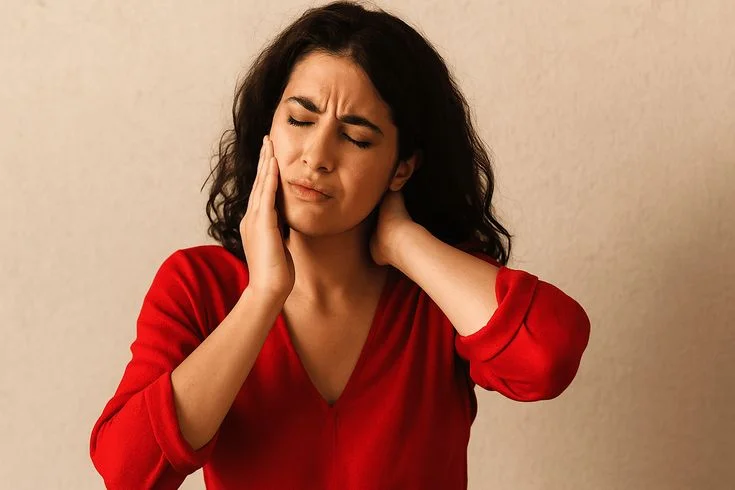

Many patients treat neck pain and jaw pain as separate problems, but clinically, they are deeply interconnected.
The temporomandibular joint (TMJ) and the upper cervical spine (C0-C3) share:
- Common nerve supply (trigeminal + upper cervical nerves)
- Fascial and muscular chains
- Brainstem processing pathways (trigeminocervical nucleus)
The Key Mechanism: Trigeminocervical Convergence
Recent neurophysiological studies show that pain signals from:
- Jaw (via trigeminal nerve)
- Upper neck (via cervical nerves)
Converge in the same brainstem region, making it difficult for the brain to differentiate the source.
This explains why:
- Jaw problems cause neck pain
- Neck dysfunction triggers jaw pain
- Pain feels “diffuse” or poorly localized
Read about our Complete Neck Pain Guide : Causes, Symptoms, Exercises and Treatment
Neck and jaw pain occurring together is usually due to shared nerve pathways between the temporomandibular joint (TMJ) and the cervical spine. Common causes include poor posture, stress-related jaw clenching, TMJ disorders, cervical dysfunction, and muscle trigger points. Treatment involves a combination of physiotherapy, posture correction, stress management, and in moderate to severe cases, medications, injections, or rarely surgery. Early integrated care gives the best long-term relief.
The Real Reason This Pain Is So Complex
Neck and jaw pain is not just “muscle tightness” or “TMJ.”
It is a multi-system disorder involving:
- Joint mechanics
- Neural convergence
- Breathing patterns
- Stress physiology
- Even systemic or medical conditions
That’s why many patients fail standard treatments.
Read about : 15 Common Causes of Neck Pain You Should Know
Causes of Neck And Jaw Pain Together
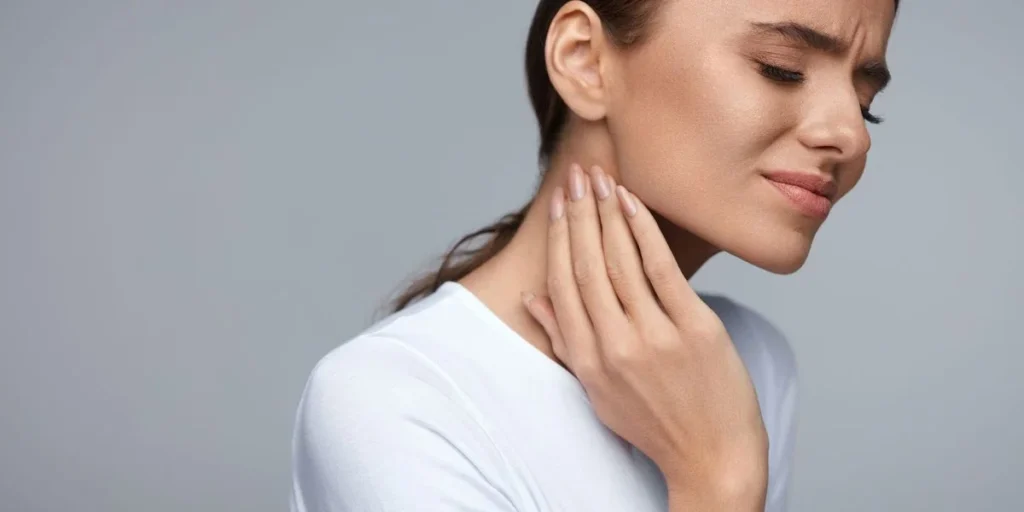
1. Temporomandibular Disorders (TMD)
TMD includes 30+ conditions affecting the jaw joint and muscles (Healthline)
Causes:
- Disc displacement
- Joint inflammation
- Overuse
- Arthritis
Leads to:
- Jaw clicking
- Neck stiffness
- Ear symptoms
Important clinical stat:
Up to 70% of TMD patients also have neck pain (American Pain Institute)
2. Trigeminocervical Convergence
The trigeminal nerve (jaw) and upper cervical nerves (neck) share pathways.
Result:
- Brain “confuses” pain source
- Jaw pain feels like neck pain
- Neck dysfunction mimics TMJ
This is why treating only one area fails.
3. Forward Head Posture
- Pushes jaw backward
- Increases TMJ compression
- Overloads cervical extensors
Creates a closed-loop pain cycle
Research confirms posture changes directly affect TMJ mechanics (cawleypt.net)
Learn how posture affects neck pain and correction exercises in our article on Simple Posture Correction Exercises for Forward Head Posture
4. Bruxism & Stress Neurobiology
Stress → sympathetic activation → muscle guarding
Leads to:
- Jaw clenching (often unconscious)
- Neck muscle co-contraction
Key finding:
Stress, depression, and neck disability are strongly linked with TMD (Healthline)
5. Myofascial Pain Syndrome
Trigger points in:
- Masseter
- SCM
- Upper trapezius
Cause:
- Referred jaw pain
- Toothache-like symptoms
- Neck stiffness
Read about: What Is Cervical Myofascial Pain Syndrome And How To Relieve Trigger Points
6. Cervical Spine Pathology
Includes:
- Disc bulge
- Facet dysfunction
- Degenerative changes
Alters:
- Jaw movement
- Muscle recruitment
Read in detail about: Cervical Disc Degeneration: The Hidden Cause of your Neck Pain
7. Dental Malocclusion
Misaligned bite:
- Changes jaw mechanics
- Causes compensatory neck tension
Often missed in physiotherapy unless assessed properly
8. Sinus & ENT Causes
Sinus pressure can radiate to:
- Jaw
- Neck
Patients often misinterpret this as musculoskeletal pain (Healthline)
9. Lymph Node Swelling / Infection
There are 300+ lymph nodes in head & neck (Healthline)
When inflamed:
- Pain during chewing
- Neck stiffness
10. Habitual Microtrauma
- Nail biting
- Chewing pens
- Gum overuse
Causes repetitive strain (Healthline)
11. Trauma & Whiplash
- Alters TMJ alignment
- Causes cervical instability
Long-term dual pain
Read in detail: Whiplash Injury After An Accident? Here’s Treatment And Expert Rehab Guide
12. Systemic Conditions
a) Arthritis (OA / RA)
- Affects both TMJ & cervical joints
- Causes stiffness + inflammation (Healthline)
b) Fibromyalgia / Central Sensitization
- Pain amplification
- Widespread symptoms
c) Post-viral conditions (e.g., COVID-related inflammation)
- Muscle pain + lymph swelling (Healthline)
13. Breathing Dysfunction
Mouth breathing:
- Alters jaw resting position
- Overuses neck muscles
Leads to chronic tension
4. Cardiovascular Red Flag
Neck + jaw pain can be a heart attack symptom, especially in females (Healthline)
Read about : What is Cervical Facet Joint Pain, how it causes cervicogenic headaches and how to correct it naturally
Advanced Mechanisms
1. Fascial Force Transmission
Jaw → skull → neck → shoulder
Tightness travels across chains
Explains widespread pain patterns
2. Motor Control Dysfunction
Not just tightness- poor coordination:
- Jaw opens asymmetrically
- Neck compensates
3. Pain Memory (Central Sensitization)
Brain becomes:
- Hyper-reactive
- Pain persists without injury
Read about: Effective Neck Pain Exercises At Home: A Complete Guide to Relief and Improved Mobility
Physiotherapy Exercises
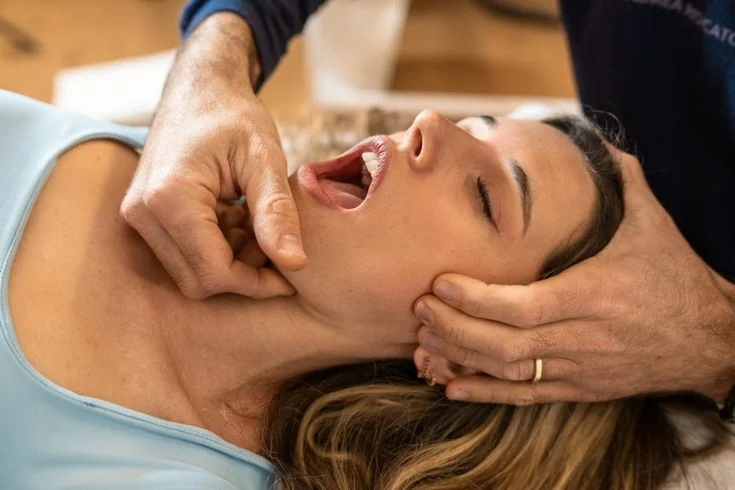
These are neuro-mechanical drills, not basic stretches.
1. Tongue–Neck Dissociation Drill
Why: Jaw and neck overwork together, thus must retrain separation
How to do:
- Place tongue on palate
- Slowly rotate neck left/right
- Keep jaw relaxed
Retrains neural control and Reduces co-contraction
2. Controlled Asymmetric Jaw Glide
Why: TMJ often moves unevenly
How to do:
- Open mouth slightly
- Gently shift jaw side-to-side in straight line
Restores disc tracking and Prevents clicking
3. Eye-Jaw-Neck Coordination Drill
Why: Brain links eye + jaw + neck movement
How to do:
- Look right
- Slowly turn head right
- Keep jaw relaxed
Improves neuromuscular integration
4. Suboccipital Decompression with Breath
Why: Upper neck controls jaw tension
How to do:
- Lie down
- Place small towel under skull
- Deep nasal breathing
Reduces trigeminal-cervical irritation
5. Silent Chewing Repatterning
Why: Most people chew asymmetrically
How:
- Chew soft food slowly
- Focus on equal bilateral movement
Rebalances muscle loading
6. Jaw Unloading Posture Reset
Why: Resting jaw tension is the real problem
Cue:
- Lips closed
- Teeth NOT touching
- Tongue on palate
This alone reduces 30-40% symptoms in many patients
7. Diagonal Fascial Stretch
Why: Fascia links jaw to opposite shoulder
How:
- Tilt head
- Open jaw slightly
- Stretch diagonally
Releases deep chains
Read about: Yoga for Neck Pain: Poses That Actually Work
Advanced Treatment Options
- TENS (pain modulation) (American Pain Institute)
- Ultrasound therapy (muscle relaxation) (American Pain Institute)
- Dry needling
- Botox (selected chronic cases) (Healthline)
- Multidisciplinary care (dentist + physio + psychologist)
Read more on : Manual Therapy for Neck Pain: A Physiotherapist’s Evidence Based Guide
Medical Treatment
As a physiotherapist, this is where we co-manage with physicians/dentists.
1. First-Line Medications (Mild to Moderate Pain)
NSAIDs (Anti-inflammatory drugs)
Examples:
- Ibuprofen
- Naproxen
- Diclofenac
Reduce inflammation + pain
Evidence:
NSAIDs are the most widely used and effective drugs for acute TMJ pain (PubMed Central)
Study:
Naproxen significantly reduced TMJ pain compared to placebo in controlled trials (Pocket Dentistry)
2. Muscle Relaxants
For Muscle Spasm Dominant Cases
Examples:
- Cyclobenzaprine
- Baclofen
- Tizanidine
Used short-term for muscle tightness
Evidence:
Recommended for acute muscle spasm-related TMJ pain (Mayo Clinic)
3. Antidepressants
In cases of Chronic Pain / Sleep Issues
Examples:
- Amitriptyline
- Nortriptyline
Used in low doses
Why:
- Reduce central sensitization
- Improve sleep
Study Insight:
Amitriptyline reduces pain transmission in chronic myofascial pain (Lippincott Journals)
4. Anti-Anxiety Medications
These are for Short-Term Use
Examples:
- Diazepam
- Alprazolam
Used when stress + bruxism is severe
Note:
Short duration only due to dependency risk (PubMed Central)
5. Neuropathic Pain Medications
Examples:
- Gabapentin
- Pregabalin
Used in nerve-related chronic pain
Evidence:
Used for neuropathic TMJ pain, though evidence is still evolving (Healthline)
6. Corticosteroids
Used for Moderate to Severe Inflammation
- Oral or intra-articular injections
Strong anti-inflammatory effect
Evidence:
Used for moderate-severe TMJ pain, often via joint injections (PubMed Central)
7. Advanced Injections
Hyaluronic Acid
- Improves joint lubrication
Study:
Improved pain and jaw function for up to 9 months (Neck Solutions)
Botulinum Toxin (Botox)
For severe muscle spasm / bruxism
Evidence:
- Some studies show pain reduction
- But overall evidence remains inconclusive (NCBI)
Read about: The Most Effective McKenzie Exercises For Neck Pain
Home Remedies for Neck and Jaw Pain
These are not just tips, they are clinically recommended first-line strategies before medications or invasive care.
1. Heat vs Ice Therapy
- Ice: acute pain, inflammation, swelling
- Heat: chronic stiffness, muscle tightness
Apply for 10-15 minutes, 2-3 times/day
Evidence:
Self-care methods like heat/ice are recommended as first-line symptom relief in TMJ disorders (Mayo Clinic)
2. Jaw Resting Position
- Tongue on palate
- Lips closed
- Teeth NOT touching
Reduces constant muscle activation
Why it works:
Decreases baseline load on TMJ and cervical muscles (clinically proven behavioral modification strategy) (Mayo Clinic)
3. Soft Diet Strategy
- Avoid: hard, chewy, crunchy foods
- Prefer: soft, easy-to-chew foods
Allows joint recovery
4. Anti-Inflammatory Nutrition
- Omega-3 fatty acids
- Turmeric (curcumin)
- Magnesium-rich foods
Study Insight:
A 2020 study showed omega-3 supplementation had effects comparable to glucocorticoids in TMJ arthritis patients (Neck Solutions)
5. Stress Reduction
- Meditation
- Breathing exercises
- Sleep hygiene
Reduces bruxism and muscle guarding
6. Avoid Microtrauma Habits
- Nail biting
- Chewing pens
- Gum chewing
These repetitive habits worsen symptoms (MedicineNet)
Also Read: Ultimate 6 Weeks Neck Rehabilitation Exercises For Pain Relief
Surgical Options
Surgery is always the last option.
1. Arthrocentesis (Minimally Invasive)
- Joint flushing
- Removes inflammatory debris
Quick recovery
Recommended when:
- Early joint dysfunction
- Limited movement (Mayo Clinic)
2. TMJ Arthroscopy
- Camera-assisted surgery
- Removes adhesions, inflammation
Less invasive than open surgery (Mayo Clinic)
3. Open Joint Surgery
- Repair or replace joint
Used in:
- Structural damage
- Tumors
- Severe degeneration (PubMed)
4. Joint Replacement
- Total TMJ replacement
For end-stage disease (MedicineNet)
Read about: How to Relieve Morning Neck Stiffness Naturally
Surgical Indications
Absolute Indications:
- Ankylosis (joint fusion)
- Tumors
- Severe deformity
Relative Indications:
- Internal derangement
- Osteoarthritis
- Trauma
Especially when conservative care fails (tnsroindia.org.in)
Also Read : Neck Cracking: Benefits, Risks, and the Truth About Stroke
Important Clinical Warning
- Medications = symptom control, not cure
- Surgery = only when necessary
- Over-reliance on drugs without physio = recurrence
Learn About: The Ultimate Neck Stretch Routine for Desk Workers in 2026
Severity-Based Treatment Approach
Mild Cases
Symptoms:
- Occasional pain
- Clicking without restriction
Treatment:
- Home remedies
- Physiotherapy
- NSAIDs
Moderate Cases
Symptoms:
- Persistent pain
- Limited mouth opening
- Muscle spasm
Treatment:
- Physiotherapy + medications
- Muscle relaxants
- Oral splints
Severe Cases
Symptoms:
- Jaw locking
- Chronic pain (>3 months)
- Functional limitation
Treatment:
- Injections (steroids, hyaluronic acid)
- Multidisciplinary care
Refractory / End-Stage Cases
Symptoms:
- Structural damage
- Severe dysfunction
- Failure of conservative care
Treatment:
- Surgical intervention
Also read: How to Relieve Neck Tightness Without Equipment
Precautionary Measures
- Never keep teeth touching at rest
- Avoid extreme jaw opening (yawning wide)
- Screen at eye level
- Manage stress actively
- Avoid one-sided chewing
- Correct pillow height
- Stop gum chewing
Read in detail about: Cervical Radiculopathy: Why Neck Nerve Pain Travels to the Arm
Lesser-Known Clinical Facts
- Jaw pain can mimic toothache, even without dental issues
- Neck stiffness can alter your bite pattern
- TMJ dysfunction is more common in females due to hormonal influence
- Emotional stress directly increases jaw muscle tone
- Even mild cervical dysfunction can trigger chronic headaches
Read more: Cervical Vertigo Explained: Why Neck Pain Make You Feel Dizzy
Prognosis: Can It Be Fully Treated?
Yes! if treated early and holistically.
Ignoring one region (only neck or only jaw) leads to:
- Recurrence
- Chronic pain
- Central sensitization
Integrated physiotherapy offers the best long-term outcomes.
Read in detail about: How to Fix Upper Crossed Syndrome Naturally
When to Seek Help
Seek immediate help if:
- Pain with chest tightness
- Sudden severe symptoms
- Neurological signs
Read more: Cervical Myelopathy: The Hidden Neck Condition Affecting Your Walking
Clinical Insight
Most patients fail treatment because, they treat the jaw OR the neck and not the system
Your nervous system doesn’t separate them, so neither should your treatment.
Read about: What Is Military Neck Or Cervical Kyphosis And How To Treat It
Myth Buster
Myth: “I just need to stretch my neck”
Truth: You need to retrain brain-jaw-neck coordination
Read in detail: Best Desk Setup to Reduce Neck and Back Pain
Final Word
Neck and jaw pain is a neuro-musculoskeletal loop, not a local issue.
Break the loop → you fix the pain
Ignore the connection → it becomes chronic
Read About: How to Choose the Right and Best Pillow for Neck Pain
Frequently Asked Questions
1. Why do neck and jaw pain occur together?
They share common nerve pathways and muscle connections. Dysfunction in one area can easily affect the other, leading to combined symptoms.
2. Can poor posture really cause jaw pain?
Yes, forward head posture alters jaw alignment and increases pressure on the temporomandibular joint, leading to pain and dysfunction.
3. What are the most common causes of neck and jaw pain?
Common causes include TMJ disorders, teeth clenching, cervical spine dysfunction, stress, and muscle trigger points. Less common causes include arthritis, infections, and sinus issues.
4. What home remedies can help relieve symptoms?
Heat or ice therapy, maintaining proper jaw resting position, eating a soft diet, avoiding clenching habits, and managing stress can significantly reduce symptoms.
5. When are medications required?
Medications like NSAIDs or muscle relaxants are used when pain is moderate to severe or does not improve with physiotherapy and self-care.
6. Can neck and jaw pain become chronic?
Yes, if not treated early, it can lead to central sensitization where the nervous system amplifies pain, making it persistent.
7. Do I need surgery for TMJ and neck pain?
Surgery is rarely needed and is only considered in severe cases such as joint damage, locking, or when conservative treatments fail.
8. What is the best treatment approach?
A combined approach including physiotherapy, posture correction, stress management, and medical support when needed provides the best results.
9. Can stress worsen neck and jaw pain?
Yes, stress increases muscle tension and jaw clenching, which can significantly worsen both neck and jaw pain.
10. When should I seek immediate medical help?
If neck and jaw pain is associated with chest pain, dizziness, neurological symptoms, or sudden severe onset, seek emergency care immediately.
Read more: Is Cervical Traction For Neck Pain Really Effective
- Neck and jaw pain are interconnected through shared nerves and biomechanical chains.
- Common causes include TMJ dysfunction, poor posture, stress-related clenching, cervical spine issues, and myofascial trigger points.
- Less obvious causes include breathing dysfunction, dental bite issues, infections, arthritis, and even cardiovascular conditions.
- First-line treatment includes home remedies like heat/ice therapy, jaw relaxation, soft diet, and stress management.
- Physiotherapy focusing on posture, neuromuscular control, and coordination is essential for long-term recovery.
- Medications such as NSAIDs, muscle relaxants, and antidepressants are used based on severity.
- Advanced treatments include injections (steroids, hyaluronic acid, Botox) for persistent cases.
- Surgery is rarely required and reserved for severe structural damage or failure of conservative care.
- Early, combined treatment of both neck and jaw prevents chronic pain and recurrence.
Stay tuned with us for more health related topics.
Follow us on LinkedIn and Instagram for more.
More Read




Medical Disclaimer!
This article has been reviewed and written under the guidance of our Head Physiotherapist, Dr. Kruti Raj (PT, MUHS,CPT,CMPT). The information shared is intended for educational purposes only and should not be considered a substitute for personalized medical advice, diagnosis, or treatment.
Please consult us or any other qualified healthcare professional before beginning any exercise program, especially if you are experiencing pain, recovering from injury, or managing a medical condition.