Neck arthritis, medically known as cervical osteoarthritis or cervical spondylosis, is a degenerative condition affecting the cervical spine joints, discs, and surrounding structures.
As a physiotherapist, I often explain it as wear and tear of the neck that gradually affects movement, posture, and nerve function.
It is extremely common, studies suggest that up to two-thirds of people may experience cervical spine degeneration during their lifetime (arXiv)
What many people don’t realize is that neck arthritis is not just about aging, it is deeply influenced by posture, lifestyle, and muscle imbalance.
Read about our Complete Neck Pain Guide : Causes, Symptoms, Exercises and Treatment
Quick Answer
Neck arthritis (cervical spondylosis) is caused by degeneration of the cervical spine. It leads to pain, stiffness, and reduced mobility. The best treatment includes physiotherapy exercises, posture correction, and strengthening of deep neck muscles. Surgery is rarely needed.
Read about: Early Signs of Cervical Spine Damage You Should Never Ignore
What Happens Inside Your Neck?
With neck arthritis, several structural changes occur:
- Disc dehydration
- Joint cartilage breakdown
- Bone spur (osteophyte) formation
- Ligament thickening
These changes lead to:
- Reduced mobility
- Increased joint compression
- Nerve irritation
A biomechanical study showed that compressive forces in painful cervical spines are up to 15% higher than normal during movement, increasing strain on joints and nerves (SpringerLink)
This explains why even simple movements start feeling stiff or painful.
Read about : 15 Common Causes of Neck Pain You Should Know
Causes of Neck Arthritis
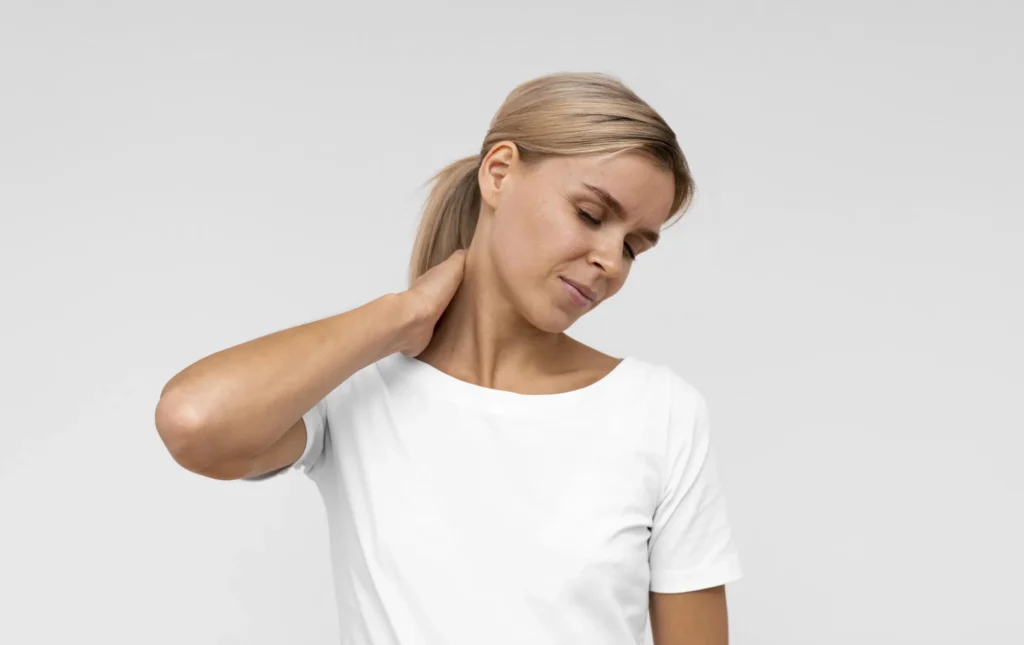
1. Poor Posture
Forward head posture from mobile/laptop use accelerates degeneration.
2. Sedentary Lifestyle
Weak deep cervical muscles, poor joint support.
3. Repetitive Strain
Long hours of desk work, driving, or surgery (yes, I see this often in clinicians too).
4. Previous Injury
Whiplash injuries can trigger early arthritis.
5. Inflammatory Conditions
Conditions like rheumatoid arthritis can severely affect cervical mobility.
A clinical study showed significant reduction in cervical range of motion, especially rotation (~26% loss) in arthritis patients (Medico Publication)
Also read: How to Relieve Neck Tightness Without Equipment
Symptoms You Should Not Ignore
Early Symptoms
- Neck stiffness (especially morning)
- Mild pain after activity
- Reduced flexibility
Progressive Symptoms
- Radiating pain to shoulders/arms
- Headaches (cervicogenic)
- Muscle tightness
Advanced Symptoms
- Numbness or tingling
- Weak grip strength
- Balance issues
Lesser-known fact:
Neck arthritis can affect proprioception (your body’s awareness of position), leading to poor balance and coordination (SpringerLink)
Read more: Cervical Disc Bulge: Causes, symptoms and treatment
Which Types of Arthritis Affect the Neck?
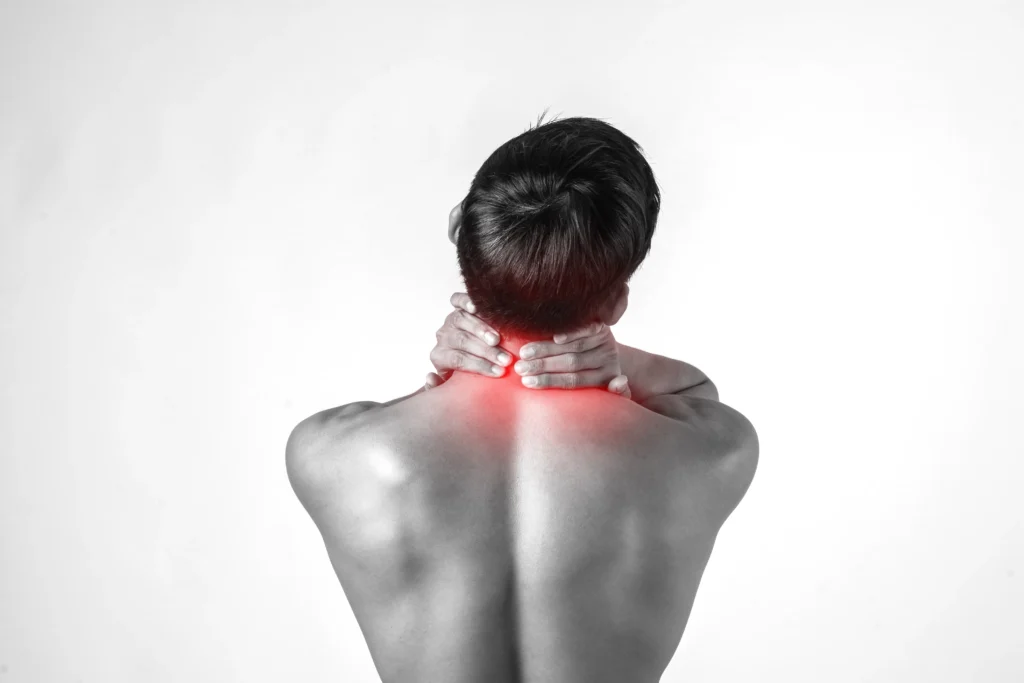
When patients hear neck arthritis, they often assume it is a single condition.
In reality, multiple types of arthritis can affect the cervical spine, each with different causes, progression patterns, and treatment approaches.
As a physiotherapist, identifying the type is crucial because rehabilitation strategies differ significantly.
1. Osteoarthritis (Cervical Spondylosis)
The Most Common Type
This is the most prevalent form of neck arthritis and is primarily age-related wear and tear of the cervical joints and discs.
- Cartilage breakdown leads to joint friction
- Bone spurs (osteophytes) may form
- Discs lose hydration and height
A large review confirms that cervical spondylosis affects more than 85% of people over age 60, making it the leading cause of chronic neck pain (NCBI)
Clinical insight:
This is the type that responds best to physiotherapy, especially strengthening and posture correction.
Read in detail about: What is Cervical Spondylosis? The Truth Behind Chronic Neck Pain
2. Rheumatoid Arthritis (RA)
Autoimmune & Progressive
Rheumatoid arthritis is an autoimmune disease where the body attacks its own joint lining (synovium). In the neck, it commonly affects the upper cervical spine (C1-C2 joint).
- Causes joint inflammation and instability
- Can lead to atlantoaxial subluxation (serious condition)
- Often associated with systemic symptoms (fatigue, swelling in other joints)
Studies show that up to 86% of RA patients may develop cervical spine involvement over time (PubMed)
Lesser-known fact:
RA in the neck may initially present as headaches rather than neck pain, making it easy to miss.
3. Ankylosing Spondylitis (AS)
Stiff Spine Disorder
This is a chronic inflammatory arthritis that primarily affects the spine and can lead to fusion of vertebrae over time.
- Progressive stiffness
- Reduced spinal mobility
- “Bamboo spine” appearance in advanced stages
Research indicates that early physiotherapy significantly slows functional decline in AS patients (BMJ)
Clinical insight:
Unlike osteoarthritis, AS patients need mobility-focused exercises, not just strengthening.
Read: How to Treat Neck Pain in Ankylosing Spondylitis
4. Psoriatic Arthritis
Inflammatory with Skin Involvement
This type occurs in individuals with psoriasis and can involve the cervical spine.
- Causes joint inflammation and stiffness
- May affect both peripheral joints and spine
- Often asymmetrical
A clinical review highlights that spinal involvement occurs in up to 40% of psoriatic arthritis cases (PMC)
5. Post-Traumatic Arthritis
After Injury
This develops after:
- Whiplash injuries
- Cervical fractures
- Repetitive microtrauma
Joint damage accelerates degeneration, leading to early onset arthritis even in younger individuals
Important insight:
Many patients in their 30s-40s with early arthritis actually have post-traumatic degeneration rather than age-related changes.
Read in detail: Whiplash Injury After An Accident? Here’s Treatment And Expert Rehab Guide
6. Crystal-Induced Arthritis
Rare but Important
Conditions like gout or pseudogout can occasionally affect the cervical spine.
- Sudden severe pain
- Inflammatory flare-ups
- May mimic infection
A study describes calcium crystal deposition in cervical joints causing acute neck pain episodes (PubMed)
Read in detail about: Cervical Radiculopathy: Why Neck Nerve Pain Travels to the Arm
Clinical Classification
From a rehab standpoint, I always classify neck arthritis into two broad categories:
- Mechanical (Osteoarthritis, Post-traumatic)- Responds best to strengthening & posture correction
- Inflammatory (RA, AS, Psoriatic)- Requires medical management + gentle mobility exercises
This distinction is critical because treating inflammatory arthritis like mechanical pain can worsen symptoms.
Read in detail about: Cervical Disc Degeneration: The Hidden Cause of your Neck Pain
Lesser-Known Clinical Facts
- Arthritis at C1–C2 (upper neck) is often missed but causes severe headaches (ScienceDirect)
- Pain severity does NOT always correlate with X-ray findings
- Muscle weakness plays a bigger role than joint damage in symptoms
- Many patients improve significantly with exercise alone
Read about : What is Cervical Facet Joint Pain, how it causes cervicogenic headaches and how to correct it naturally
Diagnosis: What Tests Actually Matter?
- Clinical assessment (most important)
- X-ray- bone changes
- MRI- nerve compression
But here’s the truth: Your symptoms + movement assessment matter more than imaging.
Read about: Effective Neck Pain Exercises At Home: A Complete Guide to Relief and Improved Mobility
Physiotherapy Treatment
Why Physiotherapy is the Gold Standard
Physiotherapy focuses on:
- Pain reduction
- Mobility restoration
- Muscle strengthening
- Posture correction
A 2025 systematic review found that cervical stabilization exercises significantly reduce pain and improve function, especially when combined with other therapies (PubMed)
Read about: Yoga for Neck Pain: Poses That Actually Work
Best Physiotherapy Exercises
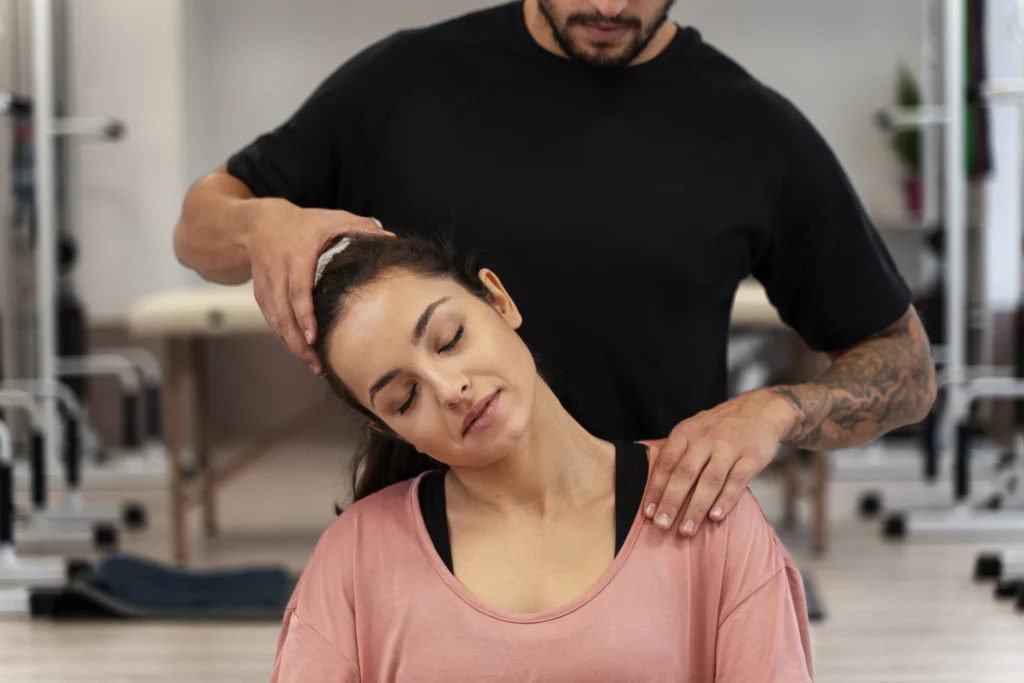
1. Deep Cervical Flexor Activation
- Lie down
- Gently nod (like saying yes)
- Hold 5-10 sec
Activates deep stabilizers
2. Cervical Isometric Exercises
- Press head into hand (front/back/side)
- Hold 5-10 sec
A randomized trial showed significant reduction in pain and disability within 4 weeks using isometric exercises (SpringerLink)
3. Scapular Retraction
- Pull shoulders back and down
- Hold 10 seconds
4. Cervical Stabilization Training
- Controlled neck movements
- Focus on precision, not force
A 2024 RCT showed improved proprioception and quality of life with cervical stabilization programs (PubMed)
5. Thoracic Extension Mobility
- Foam roller extension
- Improves neck load distribution
Read more on : Manual Therapy for Neck Pain: A Physiotherapist’s Evidence Based Guide
Advanced Physiotherapy Approaches
1. Manual Therapy
- Joint mobilization
- Soft tissue release
2. Neurodynamic Techniques
For nerve-related symptoms
3. VR-Based Rehab (Emerging)
Virtual rehab improves adherence and posture correction
4. Cervical Traction
Reduces nerve compression
Read about: The Most Effective McKenzie Exercises For Neck Pain
Medical Treatment
- Painkillers (NSAIDs)
- Muscle relaxants
- Steroid injections
Important: These manage symptoms, not the root cause.
Read more: Is Cervical Traction For Neck Pain Really Effective
Surgical Options
- Discectomy
- Fusion
- Artificial disc replacement
Used only when:
- Severe nerve compression
- Progressive neurological deficit
Read more: Heat Or Cold Therapy for Neck Pain: What Actually Works?
Home Remedies That Actually Work
- Heat therapy for stiffness
- Cold packs for inflammation
- Ergonomic correction
- Sleep with proper pillow
Read About: How to Choose the Right and Best Pillow for Neck Pain
Daily Habits That Worsen Neck Arthritis
- Looking down at phone for hours
- Poor sitting posture
- No physical activity
- Sleeping without neck support
Also Read: Ultimate 6 Weeks Neck Rehabilitation Exercises For Pain Relief
Prevention Strategy
- Strengthen deep neck muscles
- Correct posture
- Take breaks every 30-40 minutes
- Maintain thoracic mobility
Read About: Best Sleeping Position for Neck Pain: A Physiotherapist’s Complete Guide
Red Flags
- Sudden weakness in arms
- Loss of coordination
- Severe radiating pain
- Bladder/bowel issues
Seek medical help immediately.
Read in detail: Best Desk Setup to Reduce Neck and Back Pain
Myth vs Reality
Myth: Neck arthritis is permanent and untreatable
Reality: Symptoms can be significantly reversed with physiotherapy
Read about: Neck And Jaw Pain Together? Here’s The Full Clinical Picture
Clinical Insight
In my clinical experience, most patients don’t suffer from arthritis itself, but from weak neck muscles and poor posture.
Once we correct:
- Deep muscle activation
- Scapular control
- Daily ergonomics
Pain reduces dramatically, even in advanced cases.
Read about: What Is Military Neck Or Cervical Kyphosis And How To Treat It
Frequently Asked Questions
1. Can neck arthritis be cured?
It cannot be reversed completely, but symptoms can be managed effectively.
2. What is the best exercise for neck arthritis?
Cervical stabilization and deep neck flexor exercises.
3. Is walking good for neck arthritis?
Yes, it improves circulation and reduces stiffness.
4. When should I see a doctor?
If you have numbness, weakness, or severe pain.
Read more: Cervical Myelopathy: The Hidden Neck Condition Affecting Your Walking
Final Word
Neck arthritis is not a life sentence.
With the right physiotherapy approach, consistent exercises, and posture awareness, you can:
- Reduce pain
- Improve mobility
- Prevent progression
The earlier you start, the better your recovery.
Read about: What Is Cervical Myofascial Pain Syndrome And How To Relieve Trigger Points
Key Takeaways
- Neck arthritis is a degenerative condition but highly manageable.
- Posture and muscle weakness are major contributors.
- Cervical stabilization exercises are the most effective treatment.
- Early physiotherapy can prevent progression.
- Symptoms can improve significantly without surgery.
Stay tuned with us for more health related topics.
Follow us on LinkedIn and Instagram for more.
More Read





Medical Disclaimer!
This article has been reviewed and written under the guidance of our Head Physiotherapist, Dr. Kruti Raj (PT, MUHS,CPT,CMPT). The information shared is intended for educational purposes only and should not be considered a substitute for personalized medical advice, diagnosis, or treatment.
Please consult us or any other qualified healthcare professional before beginning any exercise program, especially if you are experiencing pain, recovering from injury, or managing a medical condition.