
Torticollis, commonly known as wry neck, is a clinical condition in which the head tilts to one side while the chin rotates toward the opposite side.
From a physiotherapy perspective, it is not just a simple muscle problem. It is a multifactorial disorder involving muscles, joints, posture, and sometimes the nervous system.
The most commonly involved muscle is the sternocleidomastoid muscle, which plays a key role in neck movement and stability.
When this muscle becomes tight, shortened, or overactive on one side, it pulls the head into an abnormal position.
Torticollis can occur in both infants and adults. In babies, it is often related to birth positioning or muscle changes, while in adults it may be due to posture, injury, or neurological causes. (Dauer et al., 2022)
Read about our Complete Neck Pain Guide : Causes, Symptoms, Exercises and Treatment
Quick Answer
Torticollis, also known as wry neck, is a condition where the head tilts to one side and the chin rotates to the opposite side due to muscle imbalance, joint dysfunction, or neurological causes.
Common symptoms include neck stiffness, pain, reduced mobility, and visible head tilt. It can affect both infants and adults.
Read about: Early Signs of Cervical Spine Damage You Should Never Ignore
Key Takeaways
- Torticollis is a condition where the head tilts to one side and rotates to the opposite side.
- It can be caused by muscle tightness, poor posture, trauma, neurological disorders, or infections.
- Common symptoms include neck stiffness, pain, reduced range of motion, and visible head tilt.
- Congenital torticollis in infants can lead to facial asymmetry if untreated.
- Poor posture and prolonged screen use are major causes in adults.
- Physiotherapy is the most effective treatment, focusing on stretching, strengthening, and posture correction.
- Targeted exercises help restore mobility and prevent recurrence.
- Early diagnosis and treatment significantly improve recovery outcomes.
Read: What Causes Neck Pain in Children And How To Treat
Why Torticollis Should Not Be Ignored

Many people assume torticollis is just stiffness from sleeping wrong. Clinically, that assumption is risky.
If not addressed early, torticollis can lead to:
- Chronic neck pain
- Reduced range of motion
- Facial asymmetry in infants
- Postural imbalance affecting the entire spine
- Recurring headaches and shoulder dysfunction
Early physiotherapy intervention significantly improves outcomes and prevents long term complications.
Read about : 15 Common Causes of Neck Pain You Should Know
Causes of Torticollis
Muscular Causes
The most common cause is tightness or fibrosis of the sternocleidomastoid muscle. In congenital cases, this may occur due to:
- Intrauterine positioning
- Reduced space in the womb
- Birth trauma
These factors can lead to reduced blood supply and structural changes in the muscle, resulting in shortening and stiffness. (Cheng et al., 2013)
Read about: What Is Military Neck Or Cervical Kyphosis And How To Treat It
Postural and Lifestyle Causes
In modern clinical practice, one of the fastest growing causes is poor posture.
Common triggers include:
- Prolonged mobile phone use
- Laptop work without ergonomic setup
- Forward head posture
These habits lead to muscle imbalance and altered biomechanics of the cervical spine. (Nejati et al., 2014)
Read in detail: Neck Pain from Phone Use? Here’s How to Treat Text Neck Syndrome
Neurological Causes
Some forms of torticollis are caused by abnormal signals from the brain.
This includes:
- Cervical dystonia
- Parkinson related muscle dysfunction
- Brain or spinal cord injury
These conditions lead to involuntary muscle contractions and abnormal neck positioning. (Albanese et al., 2013)
Read: Lhermitte’s sign- An Electic Shock Sensation Down The Neck
Atlantoaxial Joint Dysfunction
A clinically important but often missed cause is instability or rotation at the upper cervical spine, especially between C1 and C2.
This condition can occur after:
- Minor trauma
- Infection
- Sudden movements
It is particularly important in children and requires immediate evaluation. (Goel et al., 2024)
Read more: Cervical Myelopathy: The Hidden Neck Condition Affecting Your Walking
Infection Related Causes
Acute torticollis in children is often linked to infections such as:
- Throat infections
- Upper respiratory infections
- Retropharyngeal abscess
These cases may present with pain, fever, and limited movement. (Feldman et al., 2024)
Ocular and Vestibular Causes
A lesser known but clinically significant cause includes sensory adaptations.
- Vision problems may cause the head to tilt for better focus
- Inner ear disorders may affect balance and head positioning
In such cases, treating only the neck will not resolve the issue. (Dauer et al., 2022)
Medication Induced Torticollis
Certain medications can trigger acute dystonic reactions, leading to sudden neck twisting. This is often mistaken for muscle spasm but requires medical management.
Gastrointestinal Link
Rarely, conditions like Sandifer syndrome, associated with acid reflux, can present with abnormal neck postures resembling torticollis. (Rosen et al., 2018)
Also Read : Neck Cracking: Benefits, Risks, and the Truth About Stroke
Types of Torticollis
Congenital Muscular Torticollis
This type appears in infants and is one of the most common musculoskeletal conditions seen in early life.
Key features:
- Head tilt noticed within weeks after birth
- Tight sternocleidomastoid muscle
- Possible skull asymmetry
Early physiotherapy leads to excellent recovery in most cases. (Kaplan et al., 2018)
Acquired Torticollis
Develops later due to:
- Muscle spasm
- Infection
- Trauma
It is often painful and sudden in onset.
Cervical Dystonia
This is a neurological condition characterized by:
- Involuntary neck movements
- Sustained abnormal posture
- Tremors
It is more common in adults and may require multidisciplinary management. (Albanese et al., 2013)
Postural Torticollis
Common in today’s lifestyle due to prolonged sitting and device use.
It is reversible but tends to recur if posture is not corrected.
Structural or Skeletal Torticollis
Caused by abnormalities in the cervical spine such as:
- Congenital vertebral fusion
- Bone deformities
Rare and Overlooked Types
- Ocular torticollis
- Vestibular torticollis
- Dermatogenic torticollis
These require specialized assessment beyond routine physiotherapy.
Read about: Cervical Ligament Injury or Neck Ligament Tear
Symptoms of Torticollis
Torticollis does not present the same way in every individual.
The symptoms can vary depending on the age, cause, severity, and duration of the condition.
As a physiotherapist, I often tell patients that torticollis is not just about a tilted neck.
It is a whole-body postural and movement dysfunction that can progress if not addressed early.
Primary Symptoms
The hallmark signs of torticollis are usually visible and easy to recognize, especially in moderate to severe cases.
Head Tilt to One Side
The head consistently leans toward one side. This is due to shortening or overactivity of muscles on that side of the neck, most commonly the sternocleidomastoid.
Chin Rotated to Opposite Side
Along with the tilt, the chin rotates away from the affected side. This combination of tilt and rotation is a key clinical indicator used in diagnosis.
Neck Stiffness
Patients often describe a feeling of tightness or “pulling” in the neck. This stiffness may be constant or worsen after prolonged sitting, sleeping, or inactivity.
Pain During Movement
Pain is more common in acquired torticollis. It may be:
- Sharp during sudden movements
- Dull and aching at rest
- Worse on one side of the neck
In some cases, pain can radiate to the shoulders or upper back.
Reduced Range of Motion
One of the earliest functional limitations patients notice is restricted neck movement.
Difficulty Turning the Head
Looking over the shoulder, such as while driving, becomes uncomfortable or restricted. Patients often compensate by turning their entire body instead of the neck.
Limited Side Bending
Tilting the head toward one side may feel tight or completely blocked. This is due to muscle shortening and joint restriction.
Stiffness While Looking Up or Down
Movements like looking up at a screen or down at a phone can become uncomfortable. Over time, this leads to adaptive posture changes, further worsening the condition.
From a physiotherapy perspective, this restriction is not only muscular but also involves joint stiffness and altered neuromuscular control.
Read : How to Treat Neck Pain in Ankylosing Spondylitis
Muscle Tightness or Lump in Infants
In congenital torticollis, a unique feature is the presence of a palpable lump in the neck muscle, often referred to as a pseudotumor.
- It is usually found in the sternocleidomastoid muscle
- It may feel like a small, firm swelling
- It is typically painless
Parents may notice that the baby prefers to turn the head only to one side. If managed early with physiotherapy, this lump usually resolves over time without complications.
Read about: What is Turkey Neck And How To Fix It Naturally
Facial and Cranial Asymmetry
One of the most important yet often overlooked consequences of untreated torticollis in infants is asymmetrical development of the skull and face.
Flattened Head on One Side (Plagiocephaly)
Constant pressure on one side of the head can lead to flattening, especially in infants who spend long periods lying down.
Uneven Facial Development
Over time, this may result in:
- Uneven eye alignment
- Jaw asymmetry
- Differences in ear position
This highlights why early intervention is critical. These changes can become permanent if not corrected in the early months of life.
Read: How to Fix Sagging,Ozempic Neck After Rapid Weight Loss
Shoulder and Postural Imbalance
Torticollis does not stay limited to the neck. It gradually affects the entire posture.
One Shoulder Appears Elevated
The shoulder on the affected side may rise due to continuous muscle tension. This creates visible asymmetry in posture.
Spinal Alignment Is Affected
Over time, the body compensates for the head tilt, leading to:
- Side bending of the spine
- Upper back tightness
- Poor sitting and standing posture
Clinically, this is referred to as a kinetic chain imbalance, where one problem affects multiple regions of the body.
Headaches and Secondary Pain
Chronic torticollis often leads to secondary symptoms that patients may not immediately associate with the neck.
Cervicogenic Headaches
These headaches originate from the neck and are typically:
- One-sided
- Associated with neck stiffness
- Triggered by movement or posture
Read about : What is Cervical Facet Joint Pain, how it causes cervicogenic headaches and how to correct it naturally
Upper Back Pain
Muscle imbalance places additional strain on the upper thoracic region, leading to persistent discomfort.
Shoulder Tightness
The trapezius and surrounding muscles become overactive, resulting in tightness and fatigue.
Many patients initially seek treatment for headaches, only to discover that the root cause lies in neck dysfunction.
Neurological Symptoms
In more complex or advanced cases, especially those involving neurological causes, symptoms can extend beyond simple stiffness.
Tremors
Involuntary shaking or rhythmic movements of the head may occur, commonly seen in cervical dystonia.
Jerky or Uncontrolled Movements
The neck may move suddenly without control, especially during stress or fatigue.
Persistent Abnormal Posture
Unlike muscular torticollis, where posture may improve temporarily, neurological torticollis often presents with sustained abnormal positioning.
Sensory Changes (Less Common but Important)
Some patients may report:
- Altered balance
- Dizziness
- Difficulty coordinating movements
These symptoms indicate that the condition may involve the nervous system and require immediate medical evaluation along with physiotherapy support.
Read : A Complete Guide To Neck Arthritis
Final Clinical Insight
Symptoms of torticollis often start subtly but can progress if ignored. What begins as mild stiffness can evolve into:
- Chronic pain
- Structural changes
- Long-term postural dysfunction
From a physiotherapy standpoint, recognizing these symptoms early allows for faster recovery, better outcomes, and prevention of complications.
Read about: What Is Cervical Myofascial Pain Syndrome And How To Relieve Trigger Points
Lesser Known Clinical Facts
Torticollis Affects the Whole Body
It is not limited to the neck. It affects:
- Spine alignment
- Shoulder mechanics
- Breathing patterns
It Can Affect Balance
The neck plays a key role in proprioception. Dysfunction can lead to altered balance and coordination. (Kristjansson and Treleaven, 2009)
It May Be Painless in Infants
This makes early detection challenging, which is why parental awareness is crucial.
Early Treatment Is Critical
Delaying physiotherapy can lead to:
- Muscle fibrosis
- Long term deformity
- Surgical intervention (Petronic et al., 2010)
Not All Cases Need Stretching
Some cases require:
- Neuromuscular re education
- Vision correction
- Vestibular rehabilitation
Read about: Effective Neck Pain Exercises At Home: A Complete Guide to Relief and Improved Mobility
Physiotherapy Perspective

As a physiotherapist, the goal is not just to temporarily reduce pain or stiffness, but to identify and correct the root cause of torticollis.
This is what truly determines whether a patient recovers fully or continues to experience recurring symptoms.
Torticollis is rarely just a muscle problem. It often involves a combination of:
- Muscle imbalance
- Joint restriction
- Poor posture habits
- Altered neuromuscular control
That is why treatment must be individualized, progressive, and function-oriented, rather than limited to simple stretching.
Read about: Yoga for Neck Pain: Poses That Actually Work
Restoring Muscle Length
One of the first priorities is to gently restore the normal length of the shortened muscles, especially the sternocleidomastoid and surrounding structures.
This is done through:
- Sustained, controlled stretching techniques
- Positioning strategies in infants
- Active assisted movements in adults
However, an important clinical point is that aggressive stretching can worsen symptoms, especially in acute or painful cases. The approach must be gradual and guided.
In infants, caregivers are trained to incorporate stretching into daily routines such as feeding and carrying positions, which significantly improves compliance and outcomes.
Neck Pain in Students: The Hidden Study Habit Destroying Your Spine
Improving Joint Mobility
Torticollis is not only a muscle issue. Over time, the cervical spine joints can become stiff, particularly in the upper segments.
Physiotherapy focuses on:
- Gentle joint mobilization techniques
- Restoring normal movement between vertebrae
- Reducing joint stiffness and guarding
Improving joint mobility helps in:
- Reducing pain
- Increasing range of motion
- Allowing muscles to function more effectively
This step is especially important in cases where torticollis is linked to postural habits or prolonged immobility.
Read: Simple Posture Correction Exercises for Forward Head Posture
Correcting Posture
Postural correction is one of the most critical and often overlooked aspects of treatment.
Many adult cases of torticollis are strongly linked to:
- Forward head posture
- Rounded shoulders
- Prolonged sitting habits
Physiotherapy includes:
- Ergonomic education
- Workplace and screen setup correction
- Awareness training for maintaining neutral spine alignment
Patients are taught how to:
- Sit correctly during long working hours
- Use mobile devices without straining the neck
- Avoid sustained asymmetrical positions
Without correcting posture, even the best treatment techniques will only provide temporary relief.
Read in detail: Best Desk Setup to Reduce Neck and Back Pain
Enhancing Neuromuscular Control
A key but lesser-known aspect of physiotherapy is retraining how the brain and muscles communicate.
In torticollis, especially chronic cases:
- Muscles may activate in an abnormal pattern
- The body “learns” incorrect movement habits
Treatment includes:
- Controlled movement exercises
- Proprioceptive training
- Eye and head coordination exercises (in certain cases)
This helps the body:
- Regain normal movement patterns
- Improve coordination
- Reduce compensatory movements
In neurological torticollis, this step becomes even more important as the focus shifts toward movement control rather than just flexibility.
Also read: How to Relieve Neck Tightness Without Equipment
Strengthening Weak Muscles
While one side of the neck may be tight, the opposite side is often weak.
Physiotherapy aims to:
- Strengthen underactive muscles
- Restore symmetry in muscle function
- Support proper head and neck alignment
Strengthening is introduced gradually after mobility improves, ensuring balanced recovery.
Read about: Which Is The Best Sitting Posture To Avoid Neck Pain And How To Achieve It
Functional Integration
Treatment is not complete until improvements translate into daily life.
Patients are guided to:
- Turn the head comfortably while driving
- Maintain posture during work
- Perform daily activities without discomfort
In infants, this includes:
- Encouraging symmetrical movement
- Promoting equal use of both sides during play
Read About: Best Sleeping Position for Neck Pain: A Physiotherapist’s Complete Guide
Preventing Recurrence
One of the most important roles of physiotherapy is preventing the condition from coming back.
This involves:
- Long term posture awareness
- Regular mobility and strengthening exercises
- Lifestyle modifications
Patients are educated about early warning signs so they can take action before symptoms worsen.
Recurrence is common if underlying habits are not corrected, especially in desk workers and frequent mobile users.
Read About: How to Choose the Right and Best Pillow for Neck Pain
Importance of Early Intervention

Timing plays a crucial role in recovery.
- In infants, early physiotherapy can lead to near complete correction without surgery
- In adults, early treatment prevents chronic pain and long term stiffness
- Delayed intervention may lead to structural changes that are harder to reverse
Read : Chiropractic for Neck Pain: Does It Really Work?
Individualized Treatment Approach
No two cases of torticollis are exactly the same.
A proper physiotherapy plan considers:
- Age of the patient
- Cause of torticollis
- Duration of symptoms
- Presence of neurological or structural issues
This ensures that treatment is not only effective but also safe and sustainable.
Read about: The Most Effective McKenzie Exercises For Neck Pain
Final Physiotherapy Insight
From a clinical standpoint, torticollis should never be treated as just a “neck stiffness problem.”
It is a condition that requires:
- Detailed assessment
- Targeted intervention
- Active patient involvement
With the right physiotherapy approach, most cases can be completely corrected or significantly improved, allowing patients to return to normal, pain free movement.
Read more: Is Cervical Traction For Neck Pain Really Effective
Treatment and Exercises for Torticollis
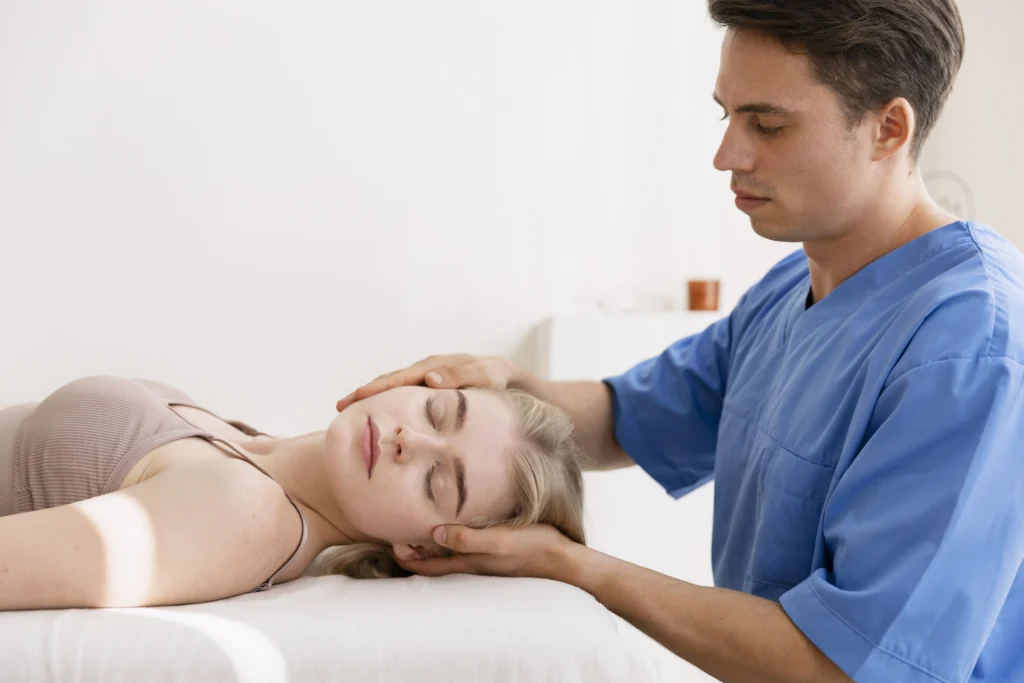
From a physiotherapy standpoint, the treatment of torticollis is not a one-size-fits-all approach. It depends on the underlying cause, age of the patient, and severity of the condition.
The goal is not just to reduce pain, but to restore normal movement, correct posture, and prevent recurrence.
Treatment Approach
Pain Management (Initial Phase)
In acute or painful torticollis, the first step is to reduce pain and muscle spasm.
This may include:
- Gentle heat therapy to relax muscles
- Soft tissue release techniques
- Temporary activity modification
Avoid aggressive stretching during this phase, as it can increase irritation.
Manual Therapy
Physiotherapists use hands-on techniques to:
- Reduce muscle tightness
- Improve circulation
- Release trigger points
This helps prepare the muscles and joints for further rehabilitation.
Read more on : Manual Therapy for Neck Pain: A Physiotherapist’s Evidence Based Guide
Stretching Tight Muscles
Stretching focuses mainly on the sternocleidomastoid and surrounding muscles.
Key guidelines:
- Perform slow and controlled movements
- Hold each stretch for 20 to 30 seconds
- Repeat multiple times daily
In infants, stretching is integrated into routine activities like feeding and positioning.
Learn About: The Ultimate Neck Stretch Routine for Desk Workers in 2026
Strengthening Weak Muscles
While one side is tight, the opposite side is usually weak.
Strengthening helps to:
- Restore muscle balance
- Improve head and neck control
- Prevent future recurrence
Exercises should be introduced gradually once pain reduces.
Postural Correction
Posture plays a major role, especially in adults with desk jobs.
Treatment includes:
- Ergonomic adjustments
- Screen positioning
- Sitting posture correction
Without correcting posture, symptoms are likely to return.
Neuromuscular Re-Education
This focuses on retraining proper movement patterns.
It includes:
- Controlled neck movements
- Coordination exercises
- Proprioceptive training
This step is essential in chronic and neurological cases.
Read about: How to Relieve Morning Neck Stiffness Naturally
Best Exercises for Torticollis
These exercises should be performed gently and ideally under professional guidance initially.
Neck Rotation Stretch
Purpose: Improve ability to turn the head
How to perform:
- Sit or stand upright
- Slowly turn your head toward the restricted side
- Hold for 15 to 30 seconds
- Repeat 5 to 10 times
Avoid forcing the movement.
Lateral Neck Stretch
Purpose: Stretch tight muscles on one side
How to perform:
- Tilt your head toward the opposite side of tightness
- Apply gentle pressure using your hand
- Hold for 20 seconds
- Repeat 3 to 5 times
Chin Tucks
Purpose: Correct forward head posture
How to perform:
- Sit upright
- Gently pull your chin backward
- Keep your eyes forward
- Hold for 5 seconds
- Repeat 10 times
This is especially useful for people with desk jobs.
Leran: How to do Chin Tucks for Neck Pain Relief and Posture Correction
Shoulder Blade Squeezes
Purpose: Improve posture and upper back strength
How to perform:
- Sit or stand upright
- Pull your shoulder blades together
- Hold for 5 seconds
- Repeat 10 to 15 times
Active Neck Movements
Purpose: Restore functional mobility
How to perform:
- Move your neck slowly in all directions
- Include rotation, side bending, flexion, and extension
- Stay within a pain-free range
Positioning Techniques for Infants
For babies with torticollis:
- Encourage turning toward the affected side
- Place toys on the weaker side
- Alternate feeding and sleeping positions
These simple changes support natural correction.
Also Read: Ultimate 6 Weeks Neck Rehabilitation Exercises For Pain Relief
Recovery Timeline
Recovery depends on severity and cause:
- Mild cases may improve within a few weeks
- Moderate cases may take several months
- Congenital torticollis shows excellent results with early treatment
Early intervention significantly improves outcomes.
Read more: Heat Or Cold Therapy for Neck Pain: What Actually Works?
When Exercises Are Not Enough
Some cases require additional medical management:
- Neurological torticollis may need medication or injections
- Structural issues may require specialist care
- Infection-related cases need urgent treatment
Read about: Neck And Jaw Pain Together? Here’s The Full Clinical Picture
Final Physiotherapy Advice
Exercises alone are not enough if the underlying cause is not addressed.
Effective recovery requires:
- Proper diagnosis
- Consistent physiotherapy
- Postural correction
- Lifestyle changes
With the right approach, most cases can be successfully treated and recurrence can be prevented.
Read in detail about: What is Cervical Spondylosis? The Truth Behind Chronic Neck Pain
When Should You Seek Help?
Consult a physiotherapist or doctor if:
- Head tilt persists for more than a few days
- There is pain or stiffness
- A child shows asymmetry or preference for one side
- Movement is restricted
- Symptoms appear suddenly with fever or neurological signs
Read in detail: Whiplash Injury After An Accident? Here’s Treatment And Expert Rehab Guide
Conclusion
Torticollis is not a single condition but a clinical presentation with multiple underlying causes. It may involve muscles, joints, the nervous system, or even sensory systems like vision and balance.
The key to successful management is early identification and correct diagnosis.
From a physiotherapy standpoint, timely intervention can completely reverse most cases and prevent long term complications.
Ignoring it or delaying treatment can lead to persistent dysfunction and structural changes.
Your neck posture today directly influences your long term spinal health.
Read more: Cervical Disc Bulge: Causes, symptoms and treatment
Frequently Asked Questions (FAQs)
1. What is torticollis in simple terms?
Torticollis is a condition where the head tilts to one side and the chin turns to the opposite side due to muscle imbalance or neurological causes.
2. What causes torticollis?
It can be caused by muscle tightness, poor posture, birth-related factors, trauma, infections, or neurological conditions.
3. What is the best treatment for torticollis?
Physiotherapy is the most effective treatment, including stretching, strengthening exercises, posture correction, and manual therapy.
4. What exercises help torticollis?
Exercises such as neck rotation stretches, lateral neck stretches, chin tucks, and posture correction exercises help improve mobility and reduce symptoms.
5. Can torticollis go away on its own?
Mild cases may improve, but treatment is recommended to ensure complete recovery and prevent recurrence.
6. How long does torticollis take to heal?
Recovery can take a few weeks to several months depending on the severity and treatment approach.
7. Is torticollis serious?
Most cases are manageable, but some may require medical attention if caused by infection or neurological conditions.
8. Can poor posture cause torticollis?
Yes, prolonged poor posture is a major cause of torticollis in adults, especially due to excessive screen use.
Stay tuned with us for more health related topics.
Follow us on LinkedIn and Instagram for more.
More Read




Medical Disclaimer!
This article has been reviewed and written under the guidance of our Head Physiotherapist, Dr. Kruti Raj (PT, MUHS,CPT,CMPT). The information shared is intended for educational purposes only and should not be considered a substitute for personalized medical advice, diagnosis, or treatment.
Please consult us or any other qualified healthcare professional before beginning any exercise program, especially if you are experiencing pain, recovering from injury, or managing a medical condition.