
Tinnitus is usually described as a ringing sound in the ear, but that description barely scratches the surface. In real clinical settings, patients describe it very differently.
Some say it is a buzzing noise, some hear a humming tone, and a few even report a pulsating sensation that changes through the day.
One thing that surprises most people is this. Tinnitus is not a disease. It is a symptom. And more importantly, it is not always coming from the ear itself.
In practice, I often see patients who have perfectly normal ear examinations but still struggle with persistent tinnitus.
That is where things become more interesting. The source is often somewhere else in the body, especially the neck, jaw, or even the nervous system.
Read about our Complete Neck Pain Guide : Causes, Symptoms, Exercises and Treatment
Quick Answer
Tinnitus is the perception of sound without an external source. It is not always an ear problem and can be influenced by neck posture, jaw dysfunction, and nervous system sensitivity. Physiotherapy can help reduce symptoms by addressing these underlying factors.
Read: Physiotherapy Exercises for Double Chin That Actually Work
Key Takeaways
- Tinnitus is a symptom, not a disease
- Neck and jaw dysfunction can influence tinnitus
- Brain processing plays a major role
- Physiotherapy is effective in somatosensory tinnitus
- Sleep and stress significantly affect symptoms
Read: How to Tighten Neck Skin Naturally At Home
How Common Is Tinnitus Really
Tinnitus affects a large portion of the population, but not everyone seeks help. Many people learn to live with it, especially when it starts mildly.
Estimates suggest that around 10 to 15 percent of adults experience tinnitus at some point, but only a smaller group finds it severe enough to affect daily life. (Baguley et al. 2013)
In clinic, what I notice is that patients usually wait until sleep is affected. That is often the turning point when they finally decide to seek help.
Read: Physiotherapy Exercises for Double Chin That Actually Work
Types of Tinnitus You Should Know
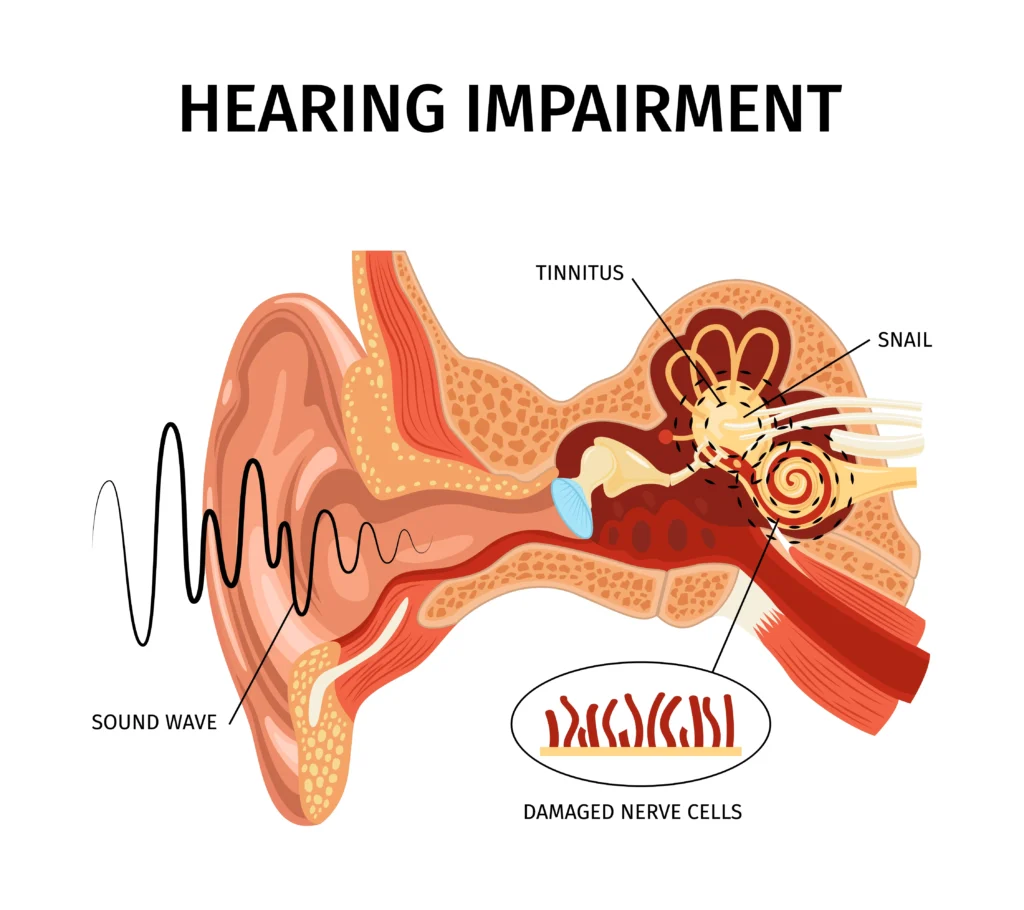
Subjective Tinnitus
This is the most common type. Only the patient can hear the sound. It is often linked with hearing changes, but not always.
Objective Tinnitus
This is rare. In some cases, the sound can actually be detected during examination. It is usually related to vascular or muscular causes.
Somatosensory Tinnitus
This is where physiotherapy becomes highly relevant.
Somatosensory tinnitus changes with movement.
Patients may notice that turning the neck, clenching the jaw, or even pressing certain muscles alters the intensity of the sound. (Shore et al. 2016)
This tells us something important.
The auditory system is not working in isolation. It is interacting with the musculoskeletal system.
Read: Wearable Neck Posture Devices: Are They Useful or Making Your Muscles Weak?
What Recent Research Is Changing About Tinnitus
Newer research has shifted the way we understand tinnitus. It is no longer seen as just an ear problem.
A 2025 neuroimaging study showed that tinnitus involves multiple brain networks, including areas responsible for attention and emotional processing. (Kiashemshaki et al. 2025)
This explains why tinnitus can feel louder during stress or fatigue. The sound may not actually increase, but the brain gives it more attention.
In simple terms, the ear may start the signal, but the brain decides how much importance to give it.
Read: How to Fix Sagging,Ozempic Neck After Rapid Weight Loss
The Neck and Tinnitus Connection That Is Often Missed
This is one of the most overlooked aspects.
The upper cervical spine has direct neural connections with areas involved in hearing.
When there is stiffness, muscle tightness, or poor posture, it can influence these pathways.
In many patients, I find:
- Forward head posture
- Tight sternocleidomastoid muscle
- Reduced upper cervical mobility
Interestingly, some patients can actually change their tinnitus by simply moving their neck.
That is a strong indicator that the source is not purely auditory. (Michiels et al. 2015)
Read: What is Sternocleidomastoid Syndrome, Trigger Points and Its Treatment
Jaw Dysfunction and Its Strong Link to Tinnitus
The temporomandibular joint plays a bigger role than most people expect.
Patients with jaw issues often report:
- Clicking sounds
- Teeth grinding
- Facial tightness
Recent evidence has strengthened this connection. (Wright and Bifano 1997)
A systematic review in 2025 confirmed that people with temporomandibular disorders are more likely to experience tinnitus. Bucci et al. (2025)
This is not just coincidence. The trigeminal nerve, which supplies the jaw, interacts with auditory pathways, creating a crossover effect.
Read: Spasm In Neck: What Causes It & How to Fix It Fast
Symptoms That Usually Come Along but Are Ignored
Tinnitus rarely appears alone. There are often accompanying signs that patients overlook.
These include:
- Neck stiffness
- Headaches near the base of the skull
- Jaw discomfort
- Dizziness
- A feeling of ear fullness
When these are present, it becomes easier to identify a musculoskeletal component.
Read more: Cervical Vertigo Explained: Why Neck Pain Make You Feel Dizzy
Common Triggers That Make Tinnitus Worse
Tinnitus does not behave the same every day. Certain factors can amplify it.
Some of the most common triggers include:
- Poor posture during long screen use
- Stress and anxiety
- Lack of sleep
- Neck strain
- Excess caffeine in some individuals
I have also seen patients who report worsening after long travel or prolonged sitting.
Read: Why Neck Sprain Happens and How to Fix It
What New Evidence Says About Physiotherapy
Physiotherapy is no longer considered an alternative approach. It is increasingly supported by research, especially for somatosensory tinnitus.
A 2024 clinical study showed that targeted physical therapy can reduce tinnitus severity in selected patients. (Michiels et al. 2024)
Another 2026 systematic review found that treating cervical dysfunction can improve associated symptoms such as tinnitus and dizziness. (De Hertogh et al. 2026)
There is also growing interest in digital rehabilitation. A 2024 study explored app-based physiotherapy programs and found positive outcomes when patients remained consistent. (Schlee et al. 2024)
From a practical point of view, consistency matters more than complexity.
Read about: Yoga for Neck Pain: Poses That Actually Work
How Physiotherapy Actually Helps
Treatment is not about one single technique. It is a combination of approaches.
Postural Correction
Improving head and neck alignment reduces mechanical stress.
Read: Simple Posture Correction Exercises for Forward Head Posture
Manual Therapy
Gentle mobilization helps restore normal joint movement.
Read more on : Manual Therapy for Neck Pain: A Physiotherapist’s Evidence Based Guide
Muscle Release Techniques
Targeting tight muscles such as the SCM and upper trapezius can reduce symptom intensity.
Read about: What Is Cervical Myofascial Pain Syndrome And How To Relieve Trigger Points
Jaw Relaxation Work
Reducing unnecessary jaw tension is often overlooked but important.
Read about: Neck And Jaw Pain Together? Here’s The Full Clinical Picture
Breathing Training
This helps regulate the nervous system and reduce sensitivity to internal sounds.
Read: Neck Pain from Poor Breathing Pattern? Correct Now!
Simple Exercises That Are Commonly Prescribed
These are not aggressive exercises. They are subtle but effective when done regularly.
- Chin tucks to activate deep neck muscles
- Neck stretches focusing on tight areas
- Scapular retraction for posture
- Jaw relaxation by keeping teeth slightly apart
The key is regular practice, not intensity.
Read About: Best Sleeping Position for Neck Pain: A Physiotherapist’s Complete Guide
A Lesser Known Factor: Sleep and Tinnitus
Sleep has a surprisingly strong influence on tinnitus.
A recent analysis found that a significant number of patients report changes in tinnitus after sleep, sometimes even noticing it more after naps. (Wineland et al. 2024)
Another study highlighted the role of sleep quality and breathing disturbances in tinnitus severity. (Chen et al. 2025)
In clinical practice, poor sleep often makes tinnitus feel louder, even if the underlying cause remains the same.
Read in detail about: How to Fix Upper Crossed Syndrome Naturally
When Should You Seek Help
It is better not to ignore tinnitus in certain situations.
- If it lasts more than a few weeks
- If it changes with movement
- If it affects sleep
- If it is associated with neck or jaw pain
Early intervention tends to give better results.
Read: How to Treat Trismus- A Jaw Stiffness Naturally with Exercises
A Practical Approach I Usually Recommend
When someone comes in with tinnitus, I do not look only at the ear.
The approach usually includes:
- Posture assessment
- Neck mobility evaluation
- Jaw function screening
- Lifestyle review including stress and sleep
From there, a structured plan is created. Not every patient responds the same way, and that is important to acknowledge.
Read: Eagle Syndrome: Hidden Cause of Neck, Ear and Throat Pain
Final Thoughts
Tinnitus can feel unpredictable, and sometimes frustrating, especially when answers are not straightforward.
But when you start looking beyond the ear and consider the role of the neck, jaw, and nervous system, the picture becomes clearer.
In many cases, it is not about eliminating the sound completely. It is about reducing its intensity and making it less intrusive.
And that is often achievable with the right approach.
Read about: What Is Military Neck Or Cervical Kyphosis And How To Treat It
Frequently Asked Questions
1. Can tinnitus be cured completely?
In some cases it improves significantly, especially when the underlying cause is treated.
2. Is tinnitus always related to hearing loss?
No, many patients with normal hearing experience tinnitus due to other factors like neck or jaw issues.
3. Can physiotherapy reduce tinnitus?
Yes, particularly when tinnitus is linked to musculoskeletal problems.
4. Why does tinnitus get worse at night?
Reduced background noise and increased brain focus can make it more noticeable.
5. Can stress increase tinnitus?
Yes, stress affects how the brain processes sound and can amplify tinnitus.
6. Are exercises helpful for tinnitus?
Yes, especially posture correction and neck exercises.
7. When should I see a specialist?
If tinnitus persists, worsens, or affects sleep and daily activities.
Stay tuned with us for more health related topics.
Follow us on LinkedIn and Instagram for more.
More Read






Medical Disclaimer!
This article has been reviewed and written under the guidance of our Head Physiotherapist, Dr. Kruti Raj (PT, MUHS,CPT,CMPT). The information shared is intended for educational purposes only and should not be considered a substitute for personalized medical advice, diagnosis, or treatment.
Please consult us or any other qualified healthcare professional before beginning any exercise program, especially if you are experiencing pain, recovering from injury, or managing a medical condition.