


Upper Crossed Syndrome (UCS) is one of the most common postural disorders seen in physiotherapy clinics today. It affects the neck, shoulders, and upper back, and is often responsible for persistent neck stiffness, tension headaches, shoulder discomfort, and poor posture.
The condition was first described by Czech neurologist Vladimir Janda, who observed a typical pattern of muscle imbalance affecting the upper body.
In this pattern, some muscles become tight and overactive while others become weak and inhibited, creating a “crossed” imbalance across the neck and shoulder girdle.
In modern life, Upper Crossed Syndrome has become increasingly common due to long hours spent on smartphones, laptops, and desk work.
Recent studies confirm the growing prevalence of this condition. Research among medical students found 37.1% prevalence of upper crossed syndrome linked to poor study posture. (ijphy.com)
Another study evaluating healthcare professionals reported that over 77% experienced neck pain associated with postural dysfunction such as forward head posture, a key feature of UCS. (ijisr.net)
From a physiotherapy perspective, early recognition and correction of these muscular imbalances is essential to prevent chronic neck pain and long-term spinal issues.
Read about our detailed and Complete Guide to Neck Pain: Causes, Symptoms, Exercises and Treatment
What Exactly Happens in Upper Crossed Syndrome?
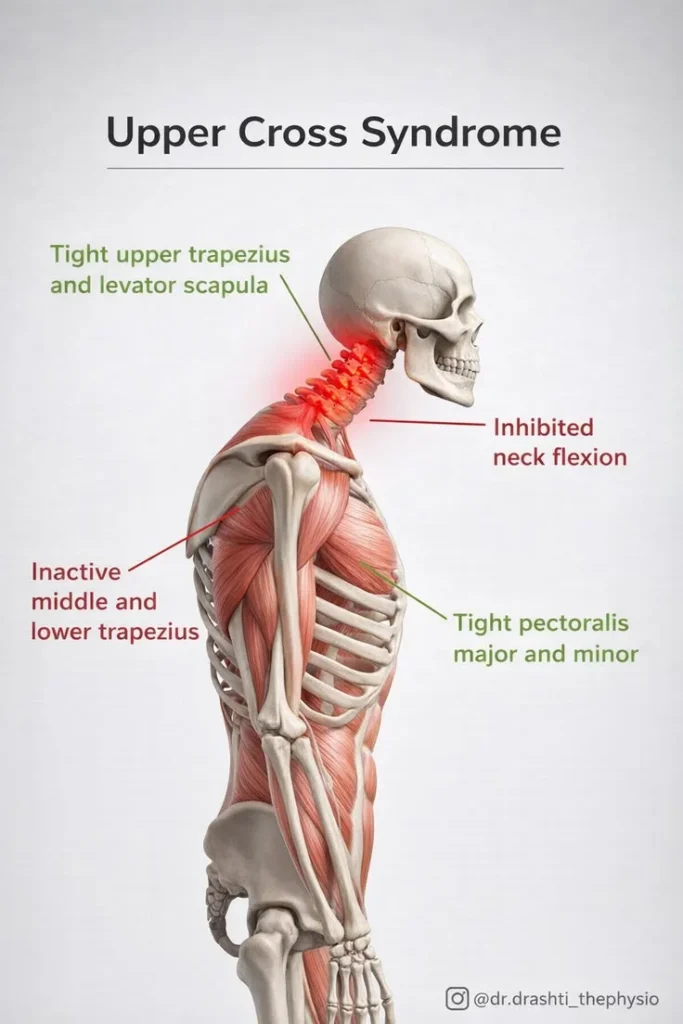
Upper Crossed Syndrome occurs when muscles of the neck, chest, and upper back lose their natural balance.
Certain muscles become tight and shortened, while others become weak and overstretched.
Tight and Overactive Muscles
These muscles tend to pull the head and shoulders forward:
- Upper trapezius
- Levator scapulae
- Pectoralis major
- Pectoralis minor
Weak and Inhibited Muscles
These muscles normally stabilize the neck and shoulder blades but become weakened:
- Deep neck flexors
- Middle trapezius
- Lower trapezius
- Serratus anterior
- Rhomboids
When this imbalance occurs, the body develops a typical posture:
- Forward head posture
- Rounded shoulders
- Increased thoracic kyphosis (rounded upper back)
This creates the “crossed” pattern of muscle imbalance, where tight muscles cross over weak ones in the upper body.
Read about : 15 Common Causes of Neck Pain You Should Know
Why Upper Crossed Syndrome Is Becoming So Common
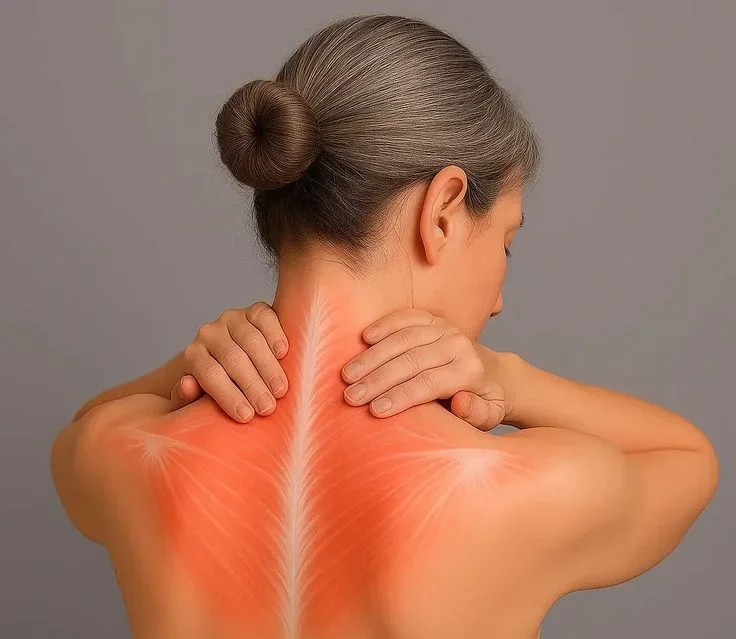
In the past decade, physiotherapists have noticed a dramatic rise in posture-related conditions.
Several lifestyle factors contribute to this.
Excessive Screen Time
Smartphones and laptops encourage prolonged forward head posture. When the head moves forward even slightly, the load on the cervical spine increases significantly.
Sedentary Work Habits
Office workers often sit for 6-10 hours daily, causing prolonged muscular imbalance.
Poor Ergonomics
Improper workstation setup leads to:
- Slouching
- Neck flexion
- Shoulder rounding
Lack of Postural Awareness
Many people simply do not realize they are maintaining poor posture for hours.
Studies examining populations with neck pain found that over 42% had poor posture associated with upper crossed syndrome. (Journal of Rehman Medical Institute)
Learn how posture affects neck pain and correction exercises in our article on Simple Posture Correction Exercises for Forward Head Posture
Common Signs and Symptoms of Upper Crossed Syndrome
Patients with UCS usually present with a recognizable pattern of symptoms.
Neck Pain and Stiffness
Constant tension in the upper trapezius and levator scapulae leads to chronic tightness.
Tension Headaches
Muscle tightness around the cervical spine can irritate nerves and produce headaches.
Rounded Shoulders
Tight pectoral muscles pull the shoulders forward.
Forward Head Posture
The chin protrudes forward, placing additional stress on the cervical spine.
Shoulder Impingement
Weak scapular stabilizers affect shoulder mechanics.
Upper Back Burning Sensation
Fatigue of the rhomboids and trapezius muscles can cause a burning sensation between the shoulder blades.
Read about: What Is Cervical Myofascial Pain Syndrome And How To Relieve Trigger Points
Lesser Known Facts About Upper Crossed Syndrome
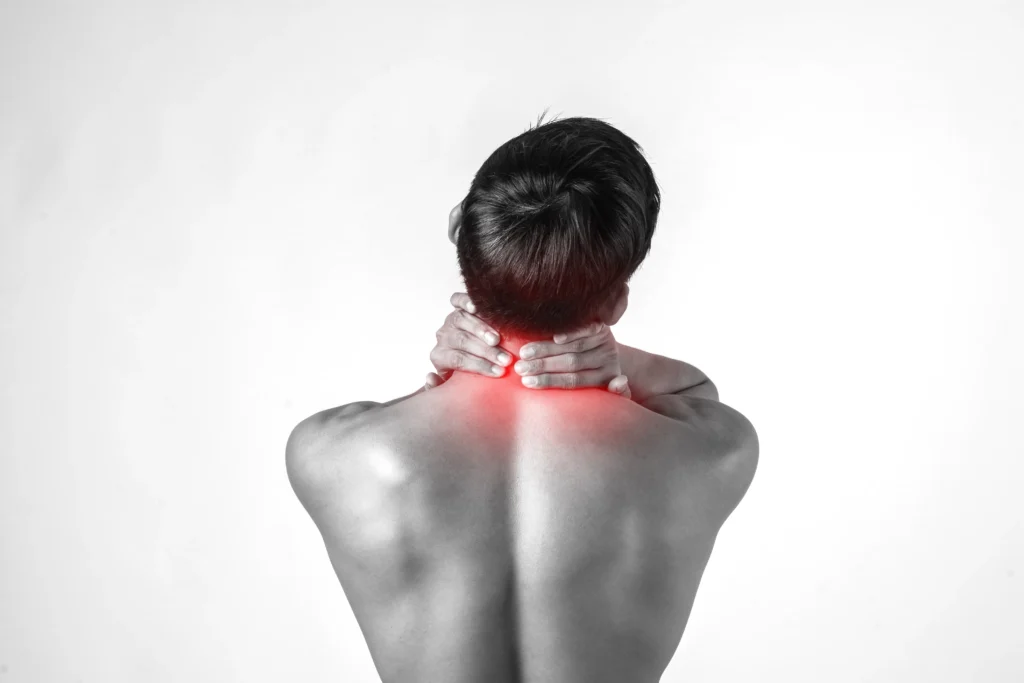
As a physiotherapist, I often tell patients that UCS is more complex than just “bad posture.”
Here are some lesser-known insights supported by research and clinical practice.
The Head Becomes “Heavier”
The human head weighs about 4-5 kg in a neutral position.
When the head moves forward just 2-3 cm, the effective load on the neck can double.
This is why prolonged smartphone use often leads to neck pain.
Breathing Patterns Change
Tight chest muscles can limit rib movement.
This forces the body to rely on accessory neck muscles for breathing, further aggravating muscle tension.
Eye Strain Can Influence Posture
Visual strain while focusing on screens may subconsciously push the head forward to improve visual clarity.
Sleep Quality May Be Affected
Recent research on working women with UCS found that sleep disturbance and difficulty lifting objects were significantly associated with the condition. (JHWCR)
Read About: Managing Neck Pain in Women: Home Exercises and Advice
How Physiotherapists Diagnose Upper Crossed Syndrome
Diagnosis is usually clinical and based on posture assessment.
Postural Observation
A physiotherapist looks for:
- Forward head position
- Rounded shoulders
- Scapular winging
- Increased thoracic curvature
Muscle Length Testing
Tight muscles like pectoralis minor and levator scapulae are evaluated.
Muscle Strength Testing
Weak stabilizers such as the lower trapezius and deep neck flexors are assessed.
Functional Tests
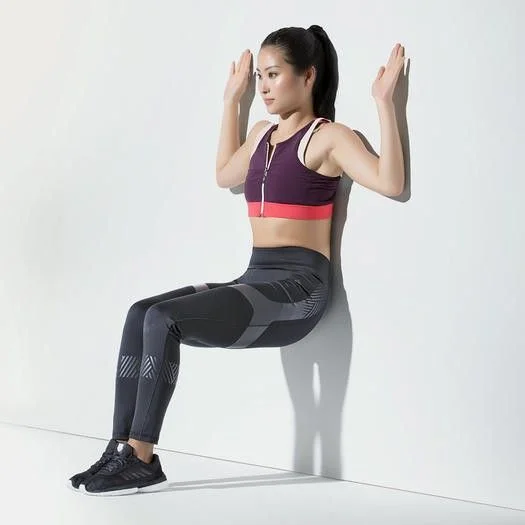
Common tests include:
- Wall posture test
- Scapular stability assessment
- Neck range of motion evaluation
Read about: Effective Neck Pain Exercises At Home: A Complete Guide to Relief and Improved Mobility
Physiotherapy Treatment for Upper Crossed Syndrome
Treatment focuses on restoring muscular balance.
This requires both stretching tight muscles and strengthening weak ones.
Postural Education
Patients must understand proper alignment:
- Ears over shoulders
- Shoulders relaxed and back
- Neutral spine position
Postural awareness during daily activities is essential.
Stretching Tight Muscles
Pectoralis Stretch
Helps open the chest and reduce rounded shoulders.
Upper Trapezius Stretch
Relieves neck tension.
Levator Scapulae Stretch
Improves cervical mobility.
Regular stretching reduces muscle shortening.
Strengthening Weak Muscles
Chin Tucks
Strengthen deep neck flexors.
Scapular Retraction Exercises
Target middle trapezius and rhomboids.
Wall Angels
Improve shoulder mobility and posture.
Serratus Anterior Activation
Important for scapular stability.
Exercise programs combining stretching and strengthening have been shown to improve posture and reduce pain significantly. (Health)
Also read: How to Relieve Neck Tightness Without Equipment
Home Exercises for Upper Crossed Syndrome
Modern physiotherapy research shows that corrective exercise programs targeting deep neck flexors, scapular stabilizers, and thoracic mobility significantly improve forward head posture, rounded shoulders, and thoracic kyphosis associated with Upper Crossed Syndrome. (SpringerLink)
Another controlled exercise study demonstrated that strengthening serratus anterior, rhomboids, and cervical flexors significantly reduces pain and disability in patients with this condition. (Brill)
Below are clinically recommended exercises used in physiotherapy rehabilitation programs.
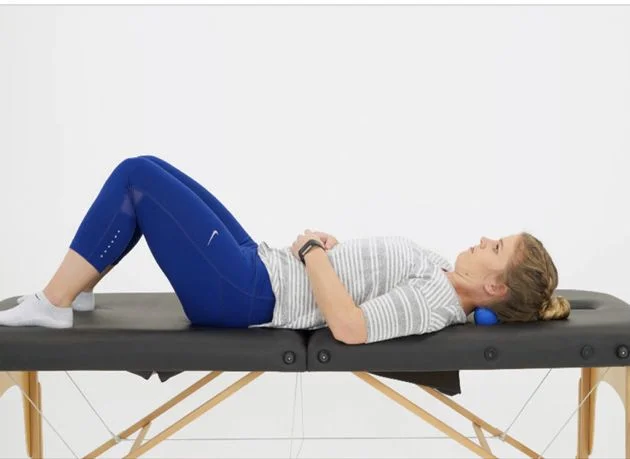
1. Deep Neck Flexor Activation
Craniocervical Flexion Exercise
Why this exercise matters
One of the most consistent findings in upper crossed syndrome is weakness of deep cervical flexors (longus colli and longus capitis).
When these muscles are weak, the body compensates by overusing the sternocleidomastoid and upper trapezius.
Strengthening these stabilizing muscles improves cervical spine alignment and reduces forward head posture.
How to perform
- Lie on your back with knees bent.
- Place a small towel under your neck.
- Gently nod your head as if saying “yes”.
- Keep the chin slightly tucked without lifting the head.
- Hold for 5-10 seconds.
Dosage
- 10 repetitions
- 2-3 sets
- Once or twice daily
Research insight
Studies examining exercise interventions for UCS show that strengthening cervical flexors improves posture and reduces disability scores in patients with neck pain. (Brill)
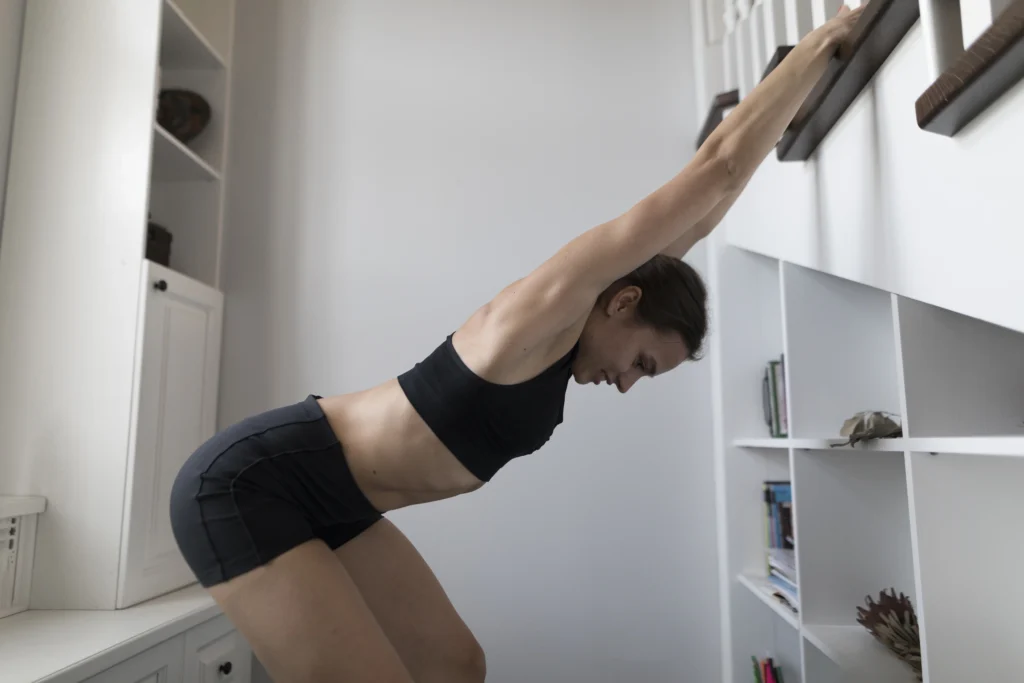
2. Serratus Anterior Wall Slide
Why this exercise matters
The serratus anterior is crucial for scapular stability. In upper crossed syndrome, it becomes inhibited, leading to scapular winging and shoulder dysfunction.
EMG studies comparing exercises for UCS found that scapular stabilization exercises significantly increase serratus anterior activation while reducing upper trapezius overactivity. (ScienceDirect)
How to perform
- Stand facing a wall.
- Place forearms on the wall at shoulder height.
- Slide your arms upward while keeping shoulder blades wrapped around the rib cage.
- Avoid shrugging shoulders.
Dosage
- 10-15 repetitions
- 3 sets
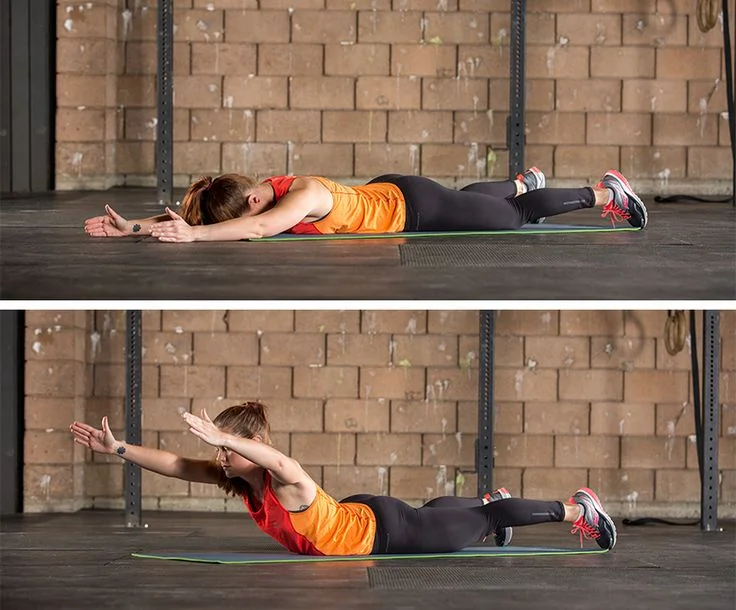
3. Prone Y Raise (Lower Trapezius Strengthening)
Why this exercise matters
The lower trapezius is one of the most important muscles for posture. It counteracts the overactive upper trapezius seen in upper crossed syndrome.
Weak lower trapezius leads to:
- Shoulder elevation
- Rounded shoulders
- Poor scapular mechanics
How to perform
- Lie face down on a bed or exercise bench.
- Raise your arms overhead in a Y position.
- Lift arms slightly while squeezing shoulder blades downwards.
- Keep thumbs pointing upward.
Dosage
- Hold 3–5 seconds
- 12 repetitions
- 3 sets
Research evidence
Corrective exercise programs that activate lower trapezius and middle trapezius significantly improve scapular alignment in individuals with UCS. (SpringerLink)
4. Resistance Band Pull-Apart

Why this exercise matters
This exercise strengthens:
- Rhomboids
- Middle trapezius
- Posterior shoulder stabilizers
These muscles are typically inhibited in people with rounded shoulders.
How to perform
- Hold a resistance band with both hands.
- Keep arms straight at chest level.
- Pull the band apart by squeezing shoulder blades together.
- Slowly return to starting position.
Dosage
- 15 repetitions
- 3 sets
Research insight
Exercise programs using resistance bands significantly improved rhomboid and serratus anterior strength in UCS patients, reducing pain and functional disability. (Brill)
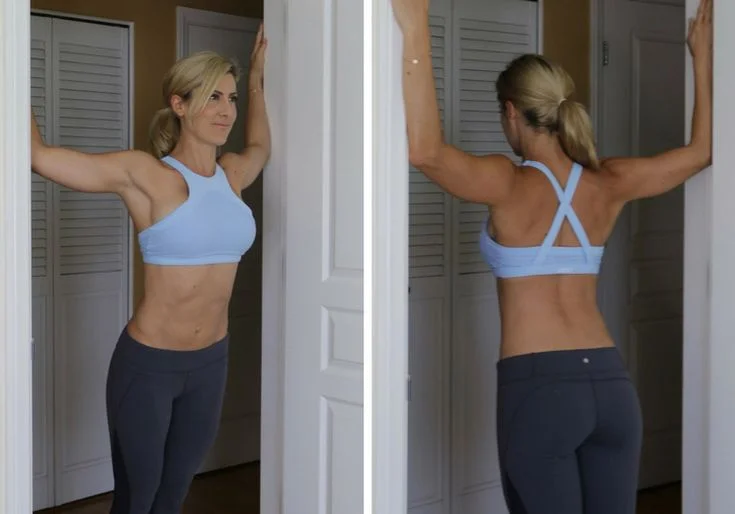
5. Doorway Pectoralis Stretch
Why this exercise matters
Tight pectoralis major and minor muscles pull the shoulders forward.
Stretching these muscles helps restore shoulder retraction and chest expansion.
How to perform
- Stand in a doorway.
- Place forearms on the frame.
- Step forward slowly.
- Feel stretch across the chest.
Dosage
- Hold 20–30 seconds
- 3 repetitions
Clinical insight
Stretching shortened muscles is a key component of corrective exercise protocols for upper crossed syndrome. (SpringerLink)
6. Thoracic Extension Over Foam Roller
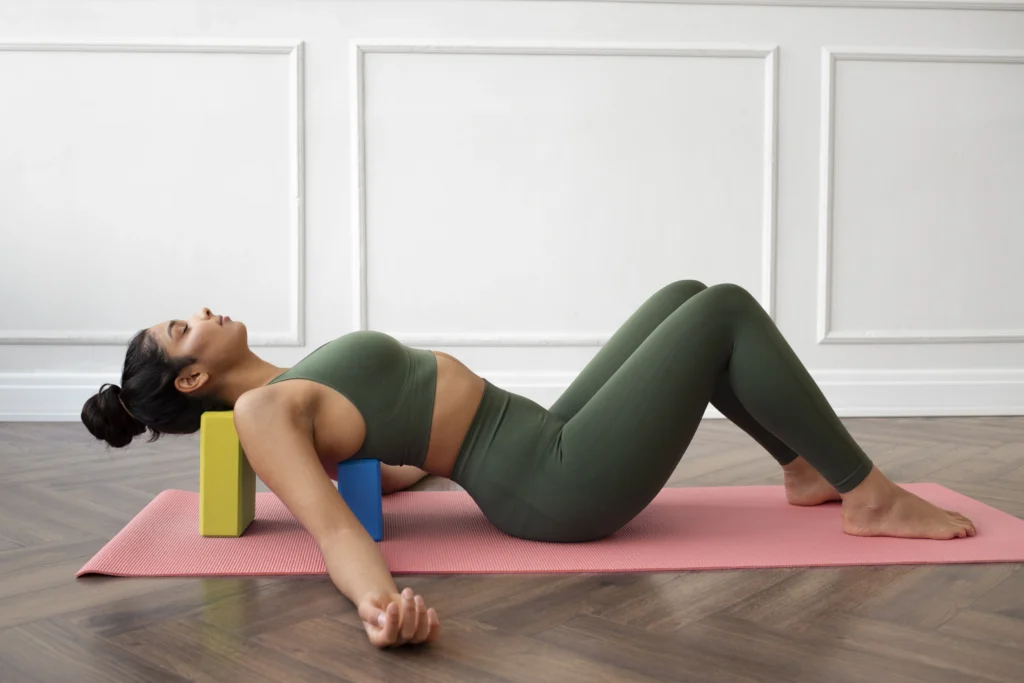
Why this exercise matters
People with upper crossed syndrome often develop thoracic kyphosis (rounded upper back).
Improving thoracic mobility reduces stress on the cervical spine.
How to perform
- Place a foam roller across your upper back.
- Support your head with your hands.
- Gently extend backward over the roller.
- Return slowly.
Dosage
- 10 repetitions
- 2–3 sets
7. Scapular Retraction with Chin Tuck

Why this exercise matters
This combines deep neck flexor activation with scapular stabilization, which is essential for posture correction.
How to perform
- Sit or stand upright.
- Perform a chin tuck.
- Simultaneously squeeze shoulder blades together.
- Hold 5 seconds.
Dosage
- 10 repetitions
- 3 sets
8. Wall Angels

Why this exercise matters
Wall angels improve:
- Thoracic extension
- Scapular control
- Shoulder mobility
How to perform
- Stand against a wall.
- Keep back, head, and hips touching the wall.
- Raise arms into goalpost position.
- Slide arms upward and downward slowly.
Dosage
- 10–12 repetitions
- 3 sets
9. Levator Scapulae Stretch
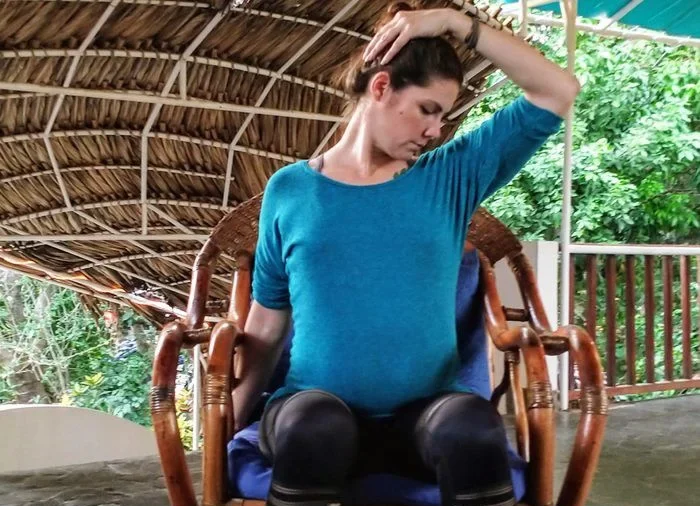
Why this exercise matters
The levator scapulae becomes shortened in UCS and contributes to neck stiffness.
How to perform
- Sit upright.
- Rotate head slightly to the opposite side.
- Bring chin toward the armpit.
- Use the hand to gently deepen the stretch.
Dosage
- Hold 20 seconds
- Repeat 3 times
10. Diaphragmatic Breathing with Scapular Control

Recent research shows that breathing dysfunction contributes to scapular instability in upper crossed syndrome.
Correcting breathing patterns can improve serratus anterior activation and reduce upper trapezius overactivity. (SpringerLink)
How to perform
- Lie on your back.
- Place one hand on chest and one on abdomen.
- Inhale through the nose allowing the abdomen to rise.
- Exhale slowly while maintaining relaxed shoulders.
Dosage
- 5 minutes daily
Read in detail: Best Desk Setup to Reduce Neck and Back Pain
The Role of Ergonomics in Recovery
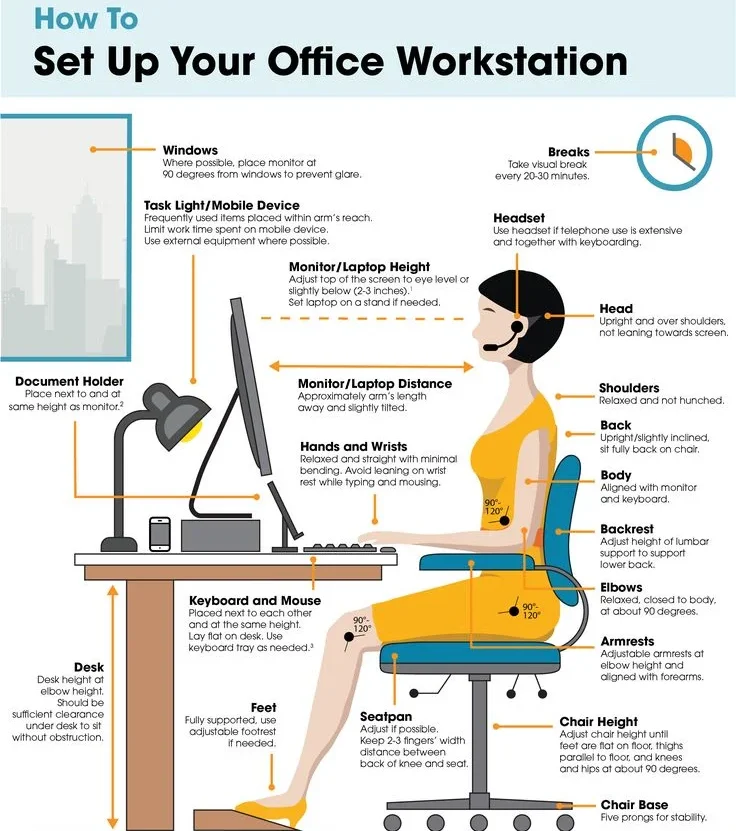
Exercise alone is not enough.
Daily habits must change.
Workstation Adjustments
- Screen at eye level
- Feet flat on floor
- Back supported
Phone Usage
Bring the phone up to eye level instead of bending the neck downward.
Microbreaks
Take breaks every 30-40 minutes to stretch.
Learn About: The Ultimate Neck Stretch Routine for Desk Workers in 2026
Advanced Physiotherapy Approaches
Modern physiotherapy integrates additional methods.
Manual Therapy
Soft tissue release techniques reduce muscle tightness.
Myofascial Release
Helps relieve fascial restrictions around the neck and chest.
Dry Needling
Often used for trigger points in upper trapezius.
Postural Retraining
Neuromuscular training helps the body relearn correct posture.
Thoracic Mobility Exercises
Improving thoracic extension reduces neck strain.
Read in detail: Physiotherapy for Cervical Disc Degeneration: What Actually Works
How Long Does Recovery Take?
Recovery varies depending on:
- Severity of muscle imbalance
- Duration of poor posture
- Consistency of exercises
Most patients begin to notice improvement within 4-6 weeks with regular physiotherapy.
However, complete postural correction may take 3-4 months. Consistency is key.
Read about : What is Cervical Facet Joint Pain, how it causes cervicogenic headaches and how to correct it naturally
Can Upper Crossed Syndrome Be Prevented?
Yes, and prevention is much easier than treatment.
Maintain Postural Awareness
Avoid slouching during sitting.
Strengthen Upper Back Muscles
Regular strengthening prevents muscle imbalance.
Limit Screen Time
Frequent breaks reduce neck strain.
Practice Daily Mobility Exercises
A simple 10-minute routine can prevent recurrence.
Read in detail about: Cervical Radiculopathy: Why Neck Nerve Pain Travels to the Arm
Clinical Tip
In my clinical experience, Upper Crossed Syndrome rarely develops overnight. It slowly builds over months or years of poor posture.
Most patients initially complain of neck tightness or occasional headaches, not realizing that the root cause lies in postural muscle imbalance.
The good news is that with targeted physiotherapy exercises, posture correction, and ergonomic changes, the condition is highly reversible.
In clinical practice, exercises should always follow the principle:
Release → Stretch → Activate → Strengthen → Integrate into posture
- Release tight muscles (self-massage/foam rolling)
- Stretch pectoralis and upper trapezius
- Activate deep neck flexors
- Strengthen scapular stabilizers
- Train posture during daily activities
This approach ensures long-term correction rather than temporary symptom relief.
Physio Prescription- Simple Daily Routine
Perform these exercises once or twice daily.
- Chin tucks– 10 repetitions
- Doorway chest stretch– hold 20 seconds
- Scapular retraction– 15 repetitions
- Wall angels– 10 repetitions
- Thoracic extension stretch- 10 repetitions
Consistency is far more important than intensity.
Read in detail about: Cervical Disc Degeneration: The Hidden Cause of your Neck Pain
When to See a Doctor
Seek medical evaluation if you experience:
- Severe neck pain
- Arm numbness or tingling
- Progressive weakness in arms
- Loss of balance
- Persistent headaches not relieved by physiotherapy
These symptoms may indicate cervical nerve compression or other spinal disorders.
Myth vs Reality
Myth: Upper crossed syndrome only affects office workers.
Reality: Students, gamers, healthcare workers, and even gym enthusiasts can develop it due to repetitive poor posture.
Read in detail about: What is Cervical Spondylosis? The Truth Behind Chronic Neck Pain
Frequently Asked Questions
1. What is Upper Crossed Syndrome?
Upper crossed syndrome is a postural disorder where tight chest and neck muscles combine with weak upper back muscles, causing forward head posture and rounded shoulders.
2. Is Upper Crossed Syndrome serious?
If untreated, it can lead to chronic neck pain, headaches, and shoulder dysfunction.
3. Can physiotherapy cure Upper Crossed Syndrome?
Yes. Physiotherapy exercises that stretch tight muscles and strengthen weak ones are very effective.
4. Who is at risk of Upper Crossed Syndrome?
Office workers, students, smartphone users, gamers, and people with sedentary lifestyles are at higher risk.
5. How can I prevent Upper Crossed Syndrome?
Maintain good posture, perform daily stretching and strengthening exercises, and take regular breaks from screens.
Final Word
Upper Crossed Syndrome is one of the most preventable causes of chronic neck and shoulder pain.
Small daily habits such as correct posture, regular exercise, and ergonomic adjustments can significantly reduce the risk.
If addressed early, physiotherapy can restore muscular balance and prevent long-term spinal problems.
Your posture today determines the health of your spine tomorrow.
Stay tuned with us for more health related topics.
Follow us on LinkedIn and Instagram for more.
More Read


Medical Disclaimer!
This article has been reviewed and written under the guidance of our Head Physiotherapist, Dr. Kruti Raj (PT, MUHS,CPT,CMPT). The information shared is intended for educational purposes only and should not be considered a substitute for personalized medical advice, diagnosis, or treatment.
Please consult us or any other qualified healthcare professional before beginning any exercise program, especially if you are experiencing pain, recovering from injury, or managing a medical condition.


