


Back pain is one of the leading causes of disability worldwide. According to the World Health Organization, low back pain affects more than 600 million people globally and continues to rise due to sedentary lifestyles, prolonged screen use, reduced physical activity and common posture mistakes causing back pain.
While injuries and medical conditions can contribute, daily posture habits remain one of the most overlooked causes.
Posture is not about forcing yourself to stand stiff and straight. It is about maintaining natural spinal alignment while allowing healthy movement.
When posture is consistently poor, it creates excessive mechanical stress on discs, joints, ligaments, and muscles. Over time, this stress leads to pain, stiffness, fatigue, and sometimes nerve irritation.
This article explains the 5 most common posture mistakes causing back pain, the science behind why they hurt, how to fix them, and what you can do daily to protect your spine long term.
Also Read: 10 Minute Gentle Shoulder Mobility Routine at Home for Stiff and Painful Shoulders
Why Posture Matters for Spinal Health
The human spine has three natural curves:
- Cervical curve in the neck
- Thoracic curve in the upper back
- Lumbar curve in the lower back
These curves help distribute force evenly. When alignment shifts away from neutral, pressure increases in specific areas. Muscles overwork to compensate. Ligaments stretch. Discs experience uneven compression.
Respected institutions like the Mayo Clinic emphasize movement and proper body mechanics as key components in preventing chronic back pain.
Poor posture is rarely about one bad moment. It is about repeated strain over months or years.
How Modern Lifestyle Is Quietly Destroying Your Posture
Modern life has fundamentally changed how our bodies function. Unlike previous generations who moved frequently throughout the day, today’s routine revolves around screens, desks, cars, and couches.
This drastic reduction in natural movement has created a global rise in posture-related back pain. The World Health Organization recognizes sedentary behavior as a major contributor to musculoskeletal disorders worldwide.
Prolonged screen exposure is one of the biggest culprits. Smartphones encourage forward head posture. Laptops promote rounded shoulders and slouched sitting.
Extended gaming or binge-watching reinforces static positions for hours at a time. These repeated habits gradually reshape muscle length and joint positioning, leading to chronic discomfort.
Work culture also plays a role. Many professionals sit for 8 to 10 hours daily with minimal breaks. Even when ergonomic chairs are available, poor habits persist.
Without movement variability, muscles fatigue and spinal discs experience continuous pressure. Over months and years, this leads to stiffness, reduced mobility, and persistent lower back pain.
Physical inactivity compounds the issue. Weak glutes, underactive core muscles, and tight hip flexors are common in sedentary individuals.
These imbalances alter pelvic alignment and lumbar curvature, increasing strain on spinal structures.
Institutions such as the Mayo Clinic emphasize regular movement and strength training as protective factors against chronic back pain.
The solution is not perfection. It is consistency in movement. Microbreaks, short walks, stretching routines, and strength training sessions interrupt harmful patterns.
When lifestyle habits shift toward regular mobility, posture improves naturally without forced stiffness.
Here’s 5 most common posture mistakes causing back pain.
Also Read: Simple Thigh Stretching Exercises for Knee Pain Prevention
1. Forward Head Posture (Tech Neck)

What It Looks Like
The head moves forward beyond the shoulders. The chin juts outward. The upper back rounds. This posture is extremely common among smartphone users, laptop workers, and office employees.
Why It Causes Pain
When the head shifts forward, the load on the cervical spine increases significantly. Neck extensor muscles must work harder to hold the head upright. Over time this causes:
- Neck pain
- Upper back pain
- Muscle tightness
- Headaches
- Shoulder tension
The thoracic spine also stiffens, further increasing strain.
How to Fix It
- Raise screens to eye level
- Bring your phone to eye height
- Perform chin tuck exercises daily
- Strengthen mid-back muscles
- Stretch chest muscles
Consistency is essential for lasting correction.
2. Slouched Sitting
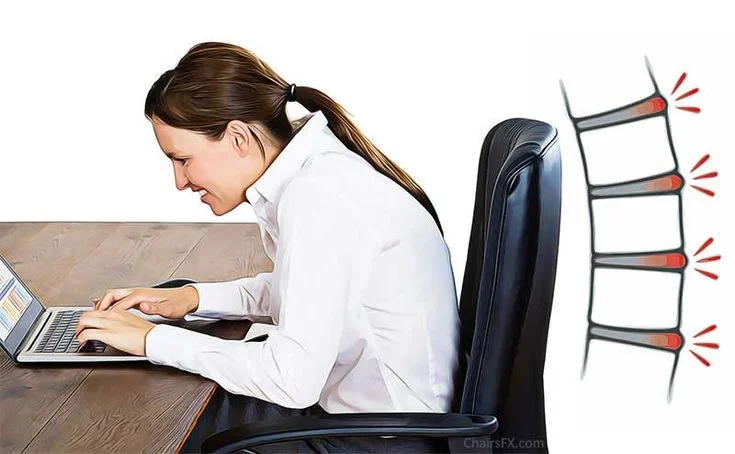
What It Looks Like
Lower back rounded. Shoulders collapsed. Pelvis tilted backward. Often seen in prolonged desk work.
Why It Causes Lower Back Pain
Slouching increases lumbar disc pressure and reduces activation of deep stabilizing muscles. Over time it leads to:
- Chronic lower back ache
- Muscle imbalance
- Decreased endurance
- Increased stiffness
The National Health Service recommends staying active and avoiding prolonged static sitting.
Ergonomic Correction
- Use lumbar support at lower back level
- Keep hips slightly higher than knees
- Place feet flat on the floor
- Keep screen at eye height
- Take movement breaks every 30 minutes
Corrective Exercises
Movement combined with strength training gives the best results.
3. Anterior Pelvic Tilt
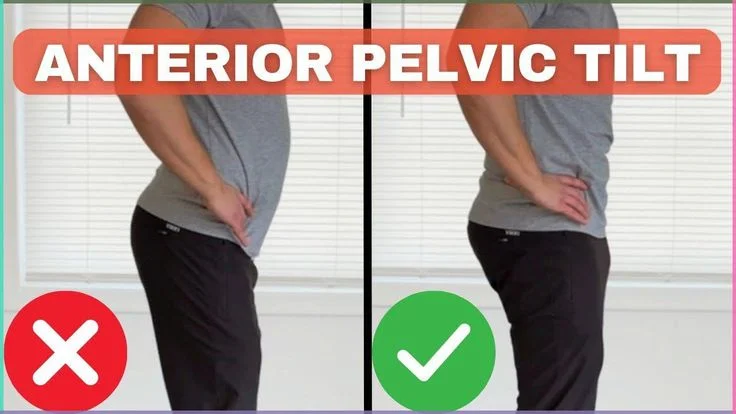
What It Looks Like
Excessive arch in the lower back. Pelvis tilts forward. Abdomen may protrude.
Why It Causes Pain
This position compresses lumbar joints and overstretches abdominal muscles. Tight hip flexors and weak glutes worsen the imbalance. The result is persistent lower back strain.
How to Correct It
Stretch:
Strengthen:
- Glute muscles
- Transversus abdominis
- Multifidus
Practice standing with gentle posterior pelvic control.
4. Prolonged Static Posture

Why It Is Harmful
Even good posture becomes problematic when held for long periods. Static positioning causes:
- Muscle fatigue
- Reduced blood flow
- Joint stiffness
- Disc dehydration
Modern desk jobs significantly increase this risk.
The Solution: Posture Variability
- Alternate sitting and standing
- Walk every hour
- Stretch briefly throughout the day
- Use movement reminders
The body thrives on movement, not rigidity.
5. Asymmetrical Loading
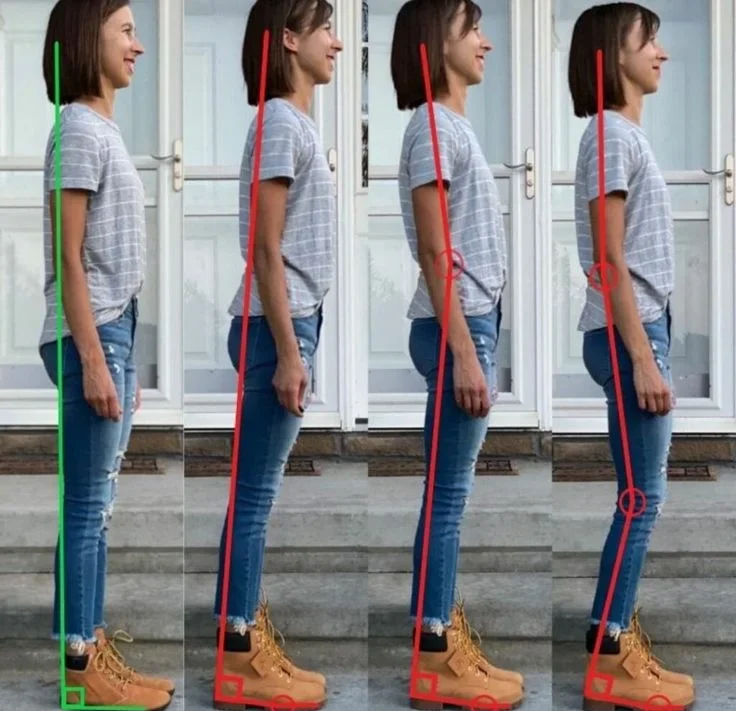
What It Looks Like
Standing with weight shifted to one hip. Carrying a heavy bag on one shoulder. Leaning to one side consistently.
Why It Causes Pain
Uneven forces create side-to-side muscle imbalance. Over time this causes localized tightness and spinal stress.
How to Fix It
- Use a backpack with two straps
- Switch bag sides regularly
- Distribute weight evenly
- Strengthen lateral stabilizers
Balanced loading reduces asymmetrical strain.
Also Read: Wall Slides for Knee Joint Strength- A Complete Guide
The Role of Core Stability
The deep stabilizing system includes:
- Transversus abdominis
- Multifidus
- Diaphragm
- Pelvic floor
When these muscles are weak or poorly coordinated, larger muscles compensate, leading to fatigue and pain. Strengthening deep stabilizers improves spinal support without creating stiffness.
Breathing mechanics also influence posture. Diaphragmatic breathing helps maintain proper rib cage alignment.
Also Read: This 7 day knee strengthening exercise plan works like Miracle
Psychological and Lifestyle Contributors
Back pain is not purely mechanical. Stress increases muscle tension. Poor sleep reduces recovery. Fear of movement leads to guarding and stiffness.
The National Health Service encourages remaining active and avoiding excessive rest for most back pain cases.
Supportive strategies include:
- Regular physical activity
- Quality sleep
- Stress management
- Gradual exposure to movement
Also Read: Ankle Pumps for Joint Mobility and Circulation- A Complete Pain Relief Guide
Sleeping Posture and Mattress Selection
Sleeping posture influences spinal recovery.
Best options:
- Side sleeping with pillow between knees
- Back sleeping with pillow under knees
Avoid stomach sleeping as it increases lumbar and neck strain.
Medium-firm mattresses often provide better spinal support than very soft surfaces.
Also Read: Unlocking Knee Pain Relief: How Physiotherapy Can Change Your Life!
Posture Considerations by Age
Children and Teenagers
- Heavy backpacks
- Long hours on devices
- Rapid growth changes
Office Workers
- Prolonged sitting
- Poor workstation setup
- Limited movement breaks
Older Adults
- Reduced muscle mass
- Degenerative joint changes
- Decreased mobility
Prevention strategies should match age-specific risks.
Also Read: Child’s Pose Exercise for Back Pain Relief- A Complete Guide
Clinical Red Flags
Seek urgent medical care if you experience:
- Loss of bladder or bowel control
- Progressive leg weakness
- Numbness in saddle area
- Fever with back pain
- History of cancer with new spinal pain
These symptoms may indicate serious conditions beyond posture-related strain.
Also Read: 10 Best Daily Stretches for Back Pain Relief at Home
10 Minute Daily Posture Reset Routine
- Cat cow for 1 minute
- Chin tucks 2 sets of 10
- Glute bridges 3 sets of 12
- Hip flexor stretch 2 sets of 30 seconds
- Thoracic rotations 1 minute each side
- Plank 2 sets of 30 seconds
Regular practice improves alignment and resilience.
Also Read: How to Understand What Really Causes You Pain?
How to Build Long-Term Postural Habits That Actually Last
Correcting posture is not a one-time adjustment. It is a behavioral shift. Many people attempt to “sit straight” for a few days and then revert to old habits.
Sustainable change requires building automatic routines rather than relying on willpower.
Start with awareness. Perform a posture check three times per day. Notice head position, shoulder alignment, and pelvic tilt.
Use environmental cues such as a sticky note on your monitor or a recurring phone reminder. Awareness creates the foundation for correction.
Next, strengthen before you stretch excessively. Many people focus only on stretching tight muscles but ignore strengthening weak stabilizers.
Balanced training that includes glutes, deep core muscles, and upper back endurance creates structural support that makes good posture effortless.
The National Health Service advises staying active and building strength rather than avoiding movement due to fear of pain.
Habit stacking is another powerful strategy. Attach posture resets to daily activities. For example, perform chin tucks while waiting for coffee to brew.
Do glute bridges before showering. Stretch hip flexors after brushing your teeth at night. Small consistent actions build lasting improvement.
Finally, understand that posture is dynamic. The goal is not rigid alignment all day. The goal is movement variability and muscular endurance.
When your body becomes strong and adaptable, maintaining healthy posture no longer feels forced. It becomes automatic.
Also Read: 15 Minute Full-Body Stretch To Relieve Your Stress- Proven Ways
Frequently Asked Questions
Slouched sitting and forward head posture are the most frequent contributors due to increased disc and muscle strain.
In many mechanical cases, yes. When combined with strengthening and movement, posture correction significantly reduces symptoms.
Noticeable improvement may occur within 4 to 8 weeks of consistent training and ergonomic adjustments.
They may increase awareness short term but should not replace strengthening exercises.
Also Read: Cat Cow Stretch Benefits for Back Pain- A Complete Guide
Final Summary
Poor posture alone does not cause every case of back pain. However, prolonged mechanical stress, muscle imbalance, and static positioning significantly increase risk.
Correct posture is not about rigid alignment. It is about balanced movement, strength, flexibility, and variability.
By correcting the five major posture mistakes causing back pain, strengthening stabilizers, optimizing ergonomics, and staying active, most mechanical back pain can be reduced or prevented.
Also Read: Spinal Twists for Lower Back Pain Relief- A Complete Guide
Stay tuned with us for more health related topics.
Follow us on LinkedIn and Instagram for more.
More Read


Medical Disclaimer!
This article has been reviewed and written under the guidance of our Head Physiotherapist, Dr. Kruti Raj. The information shared is intended for educational purposes only and should not be considered a substitute for personalized medical advice, diagnosis, or treatment.
Please consult us or any other qualified healthcare professional before beginning any exercise program, especially if you are experiencing pain, recovering from injury, or managing a medical condition.


