


Neck pain is one of the most common musculoskeletal complaints worldwide. While many people assume that neck pain always comes from spinal problems such as disc herniation or cervical spondylosis, a large number of patients actually suffer from a muscular condition known as Cervical Myofascial Pain Syndrome (CMPS).
Cervical myofascial pain syndrome is a chronic pain condition caused by irritable trigger points within tight bands of skeletal muscle located around the neck and shoulder region.
These trigger points produce local tenderness and often cause referred pain patterns, meaning the pain spreads to nearby areas such as the head, shoulders, upper back, or arms.
Research shows that myofascial trigger points are extremely common in patients with chronic neck pain, even when MRI scans appear normal.
One clinical study found that nearly 88.9% of patients with chronic nonspecific neck pain had at least one active trigger point in cervical or shoulder muscles. (PMC)
From a physiotherapy perspective, cervical myofascial pain syndrome is particularly important because it is highly treatable with conservative care, including exercise therapy, posture correction, and trigger point treatment.
Understanding this condition early can prevent months or even years of unnecessary suffering.
Read our detailed and Complete Guide to Neck Pain: Causes, Symptoms, Exercises and Treatment
What Exactly Are Myofascial Trigger Points?
At the core of cervical myofascial pain syndrome lies a structure called the myofascial trigger point (MTrP).
A trigger point is a small hypersensitive knot within a taut band of muscle fibers. When pressed, it produces:
- Local tenderness
- Muscle tightness
- Referred pain to distant areas
- Reduced range of motion
Trigger points may develop due to:
- Muscle overload
- Repetitive strain
- prolonged poor posture
- psychological stress
- injury or trauma
These trigger points disrupt normal muscle function and can keep muscles in a state of constant contraction, reducing blood flow and increasing pain sensitivity.
Systematic reviews also show that trigger points are widely present in neck and shoulder disorders, suggesting they play a major role in musculoskeletal pain conditions affecting these regions. (SpringerLink)
Read About: Managing Neck Pain in Women: Home Exercises and Advice
Common Muscles Involved in Cervical Myofascial Pain Syndrome
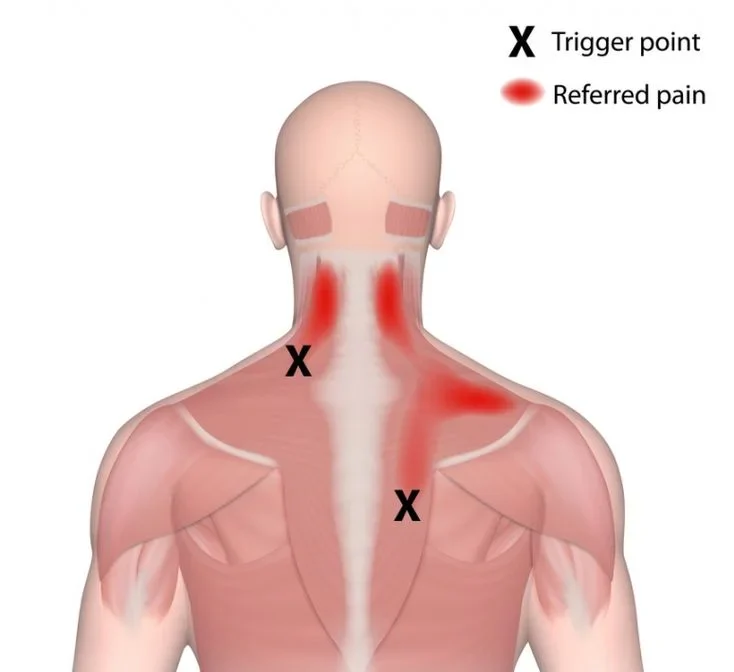
Several muscles in the neck and upper back region are particularly prone to developing trigger points.
Upper trapezius
The upper trapezius is the most commonly affected muscle. Trigger points here often cause pain radiating to the side of the neck and temple, sometimes mimicking tension headaches.
Levator scapulae
Trigger points in this muscle typically cause pain at the angle of the neck and shoulder blade and can make turning the head uncomfortable.
Sternocleidomastoid (SCM)
SCM trigger points may produce headaches, facial pain, dizziness, and even visual disturbances, making diagnosis challenging.
Scalene muscles
Scalene trigger points may mimic symptoms of nerve compression, producing pain or tingling down the arm.
Infraspinatus and suboccipital muscles
Studies indicate these muscles are also commonly involved in cervical myofascial pain syndrome. (PMC)
Why Cervical Myofascial Pain Syndrome Is Often Misdiagnosed

One of the most frustrating aspects of this condition is that medical imaging frequently appears normal.
Many patients undergo X-rays, CT scans, or MRI scans only to be told that nothing significant is wrong.
However, trigger points exist in soft tissues and muscle fascia, which are not easily visible on routine imaging tests.
This explains why patients may experience:
- persistent neck pain
- headaches
- shoulder tightness
- stiffness despite normal imaging reports.
Clinical diagnosis usually relies on manual palpation by experienced physiotherapists or physicians who can identify taut muscle bands and trigger points.
Read about : 15 Common Causes of Neck Pain You Should Know
Causes and Risk Factors
Cervical myofascial pain syndrome rarely occurs due to a single factor. Instead, it usually develops from a combination of mechanical and lifestyle factors.
Poor posture
Forward head posture from prolonged computer or smartphone use is one of the most common triggers.
This posture places excessive strain on cervical muscles, forcing them to work harder to support the head.
Prolonged sitting
Desk workers often develop muscle imbalance and tension in the neck and shoulders.
Repetitive strain
Certain professions involve repetitive shoulder or neck movements, including:
- dentists
- computer professionals
- surgeons
- drivers
- tailors
Emotional stress
Psychological stress increases muscle tension, especially in the neck and shoulder muscles.
Trauma or injury
Whiplash injuries or sudden neck strain can trigger chronic myofascial pain.
Read in detail: Whiplash Injury After An Accident? Here’s Treatment And Expert Rehab Guide
Muscle fatigue
Overuse during exercise or heavy lifting can create micro-injuries that eventually develop into trigger points.
Read in detail about: What is Cervical Spondylosis? The Truth Behind Chronic Neck Pain
Symptoms of Cervical Myofascial Pain Syndrome
Symptoms vary depending on the muscles involved, but typical complaints include:
Local neck pain
Pain may be dull, aching, or deep and persistent.
Referred pain
Trigger points may cause pain spreading to:
- the head
- shoulder blade
- upper back
- arms
Muscle stiffness
Patients often feel tightness or restricted neck movement.
Headaches
Myofascial trigger points are a common cause of tension-type headaches.
Muscle weakness
Affected muscles may fatigue easily.
Tender knots in muscles
Patients sometimes notice small painful knots when pressing their neck or shoulder muscles.
Lesser Known Facts About Cervical Myofascial Pain Syndrome
Trigger points can affect balance
Research suggests that fatigue or dysfunction in cervical muscles may affect postural stability and balance control, highlighting the broader role of neck muscles in body coordination. (arXiv)
Jaw muscles can influence neck pain
Studies have found a relationship between neck trigger points and abnormal activity in jaw muscles, suggesting a functional connection between cervical and masticatory systems. (MDPI)
Pain intensity does not always correlate with the number of trigger points
Interestingly, research shows that the number of trigger points does not always determine how severe the pain is, indicating that other factors like central sensitization also influence symptoms. (PMC)
How Physiotherapists Diagnose Cervical Myofascial Pain Syndrome
Diagnosis is primarily clinical.
Physiotherapists evaluate several aspects including:
Detailed patient history
Questions focus on:
- work habits
- posture
- stress levels
- previous injuries
- symptom pattern
Palpation examination
The therapist palpates neck muscles to identify:
- taut muscle bands
- trigger points
- referred pain patterns
Range of motion testing
Restricted neck movement often confirms muscle involvement.
Functional assessment
Postural evaluation helps identify biomechanical factors contributing to the condition.
Physiotherapy Treatment for Cervical Myofascial Pain Syndrome
The good news is that cervical myofascial pain syndrome usually responds very well to physiotherapy.
Treatment typically involves a combination of techniques.
Trigger point release therapy
Manual pressure applied to trigger points helps release muscle tightness and restore normal circulation.
This technique is commonly used by physiotherapists and may produce immediate pain relief.
Myofascial release
Myofascial release techniques stretch the fascia surrounding muscles and reduce tissue stiffness.
Dry needling
Dry needling is increasingly used to deactivate trigger points.
Thin needles are inserted into trigger points to stimulate muscle relaxation and reduce pain.
Therapeutic exercises
Exercises form the foundation of long-term recovery.
Common exercises include:
- chin tuck exercises (Learn How to do Chin Tucks for Neck Pain Relief and Posture Correction
) - neck stretching
- scapular strengthening
- deep neck flexor training
These exercises restore muscle balance and improve posture.
Postural correction training
Patients are taught ergonomic strategies such as:
- adjusting computer height
- maintaining neutral neck alignment
- taking frequent movement breaks
Learn how posture affects neck pain and correction exercises in our article on Simple Posture Correction Exercises for Forward Head Posture
Heat therapy
Heat helps improve blood flow and relax tight muscles.
Taping techniques
Kinesiology taping may provide additional support and reduce muscle strain.
Also read: How to Relieve Neck Tightness Without Equipment
Self Trigger Point Release Using a Ball
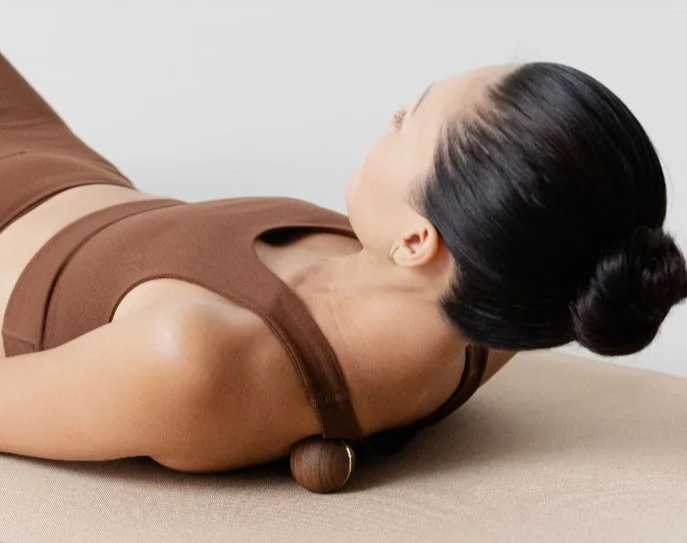
Self-trigger point release is a simple physiotherapy technique that helps relieve muscle tightness at home using tools such as a tennis ball, massage ball, or foam roller.
The method involves applying gentle, sustained pressure on a painful trigger point by leaning against a wall or lying on the floor with the ball placed between the body and a firm surface.
This pressure helps relax tight muscle fibers, improves blood circulation, and reduces pain sensitivity.
Research on self-myofascial release suggests that using a ball or similar tool can improve soft-tissue flexibility, increase range of motion, and reduce muscle tension. (PubMed)
For neck and shoulder trigger points, a common technique is to place a tennis ball between the upper back or shoulder blade area and a wall and gently lean into it while slowly moving to locate tender spots.
Once a trigger point is found, holding gentle pressure for about 20–30 seconds can help the muscle gradually release.
The pressure should remain comfortable to avoid irritation. When combined with physiotherapy exercises, this technique can help manage muscle tension and reduce recurrence of myofascial pain. (NCBI)
Read about: Effective Neck Pain Exercises At Home: A Complete Guide to Relief and Improved Mobility
Home Exercises for Cervical Myofascial Pain Syndrome
Exercise therapy is one of the most effective conservative treatments for cervical myofascial pain syndrome.
Properly designed home exercises improve muscle endurance, neuromuscular control, and posture, which significantly reduces neck pain and disability. (PMC)
Research shows that specific deep cervical muscle training and scapular exercises can reduce pain intensity and improve functional ability in people with chronic neck pain. (PubMed)
Below are safe and evidence-based home exercises frequently prescribed in physiotherapy clinics.
1. Cervical Rotation Mobility Exercise

This gentle movement helps maintain normal cervical range of motion and reduces stiffness in neck muscles.
How to perform
- Sit upright with shoulders relaxed.
- Slowly turn your head to the right side.
- Hold the position for 5 seconds.
- Return to the center.
- Repeat on the left side.
Repetitions
- 10 repetitions each side
- 2–3 sets daily
Why it helps
Maintaining cervical mobility prevents stiffness and helps reduce mechanical stress on neck muscles.
2. Levator Scapulae Stretch
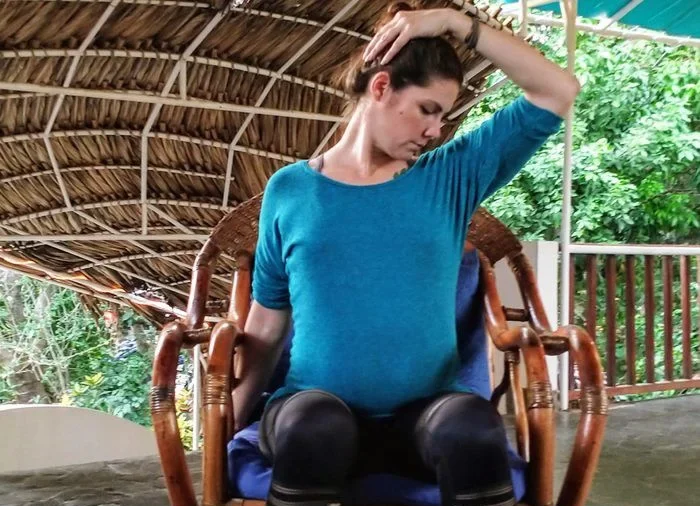
The levator scapulae muscle is commonly involved in cervical myofascial pain and trigger points.
How to perform
- Sit upright.
- Turn your head slightly toward the opposite armpit (about 45 degrees).
- Use your hand to gently pull the head forward and downward.
- Hold the stretch.
Hold
20–30 seconds
Repetitions
3 times on each side
Clinical benefit
This stretch targets one of the most common trigger-point muscles in chronic neck pain.
3. Doorway Chest Stretch

Forward shoulder posture contributes significantly to cervical muscle overload.
How to perform
- Stand in a doorway.
- Place both forearms on the door frame.
- Step one foot forward slowly.
- Allow your chest to move forward until you feel a stretch.
Hold
30 seconds
Repetitions
3 repetitions
Why it works
Stretching the chest muscles improves posture and reduces tension on cervical muscles.
4. Neck Isometric Stabilization Exercise

Isometric strengthening improves neck stability without excessive movement.
How to perform
- Sit upright.
- Place your palm on your forehead.
- Gently push your head forward while resisting with your hand.
- Keep the neck still.
Repeat with hand on:
- forehead (flexion)
- back of head (extension)
- side of head (lateral resistance)
Hold
5 seconds
Repetitions
10 repetitions in each direction
Evidence
Isometric and stabilization exercises are commonly included in physiotherapy programs to reduce pain and improve neck function. (PubMed)
5. Deep Cranio-Cervical Flexion Exercise

This exercise trains the deep neck stabilizing muscles, especially the longus colli and longus capitis.
How to perform
- Lie on your back with knees bent.
- Slowly nod your head as if saying “yes.”
- Keep the movement small and controlled.
- Hold the position.
Hold
10 seconds
Repetitions
10 repetitions
Evidence
Training deep cervical flexor muscles improves endurance and reduces neck pain and disability in patients with chronic neck disorders. (PMC)
It also improves neuromuscular control of cervical muscles. (PMC)
6. Scapular Wall Slide

Weak scapular muscles contribute to chronic neck tension.
How to perform
- Stand with your back against a wall.
- Place your arms in a “goalpost” position.
- Slowly slide your arms upward along the wall.
- Keep your shoulders relaxed.
Repetitions
10–15 repetitions
2 sets daily
Benefit
This exercise strengthens scapular stabilizers and improves upper body posture, reducing cervical muscle overload.
7. Neck Extension Endurance Exercise

This exercise strengthens the deep cervical extensor muscles that support the head.
How to perform
- Lie on your stomach with your head slightly over the edge of a bed.
- Slowly lift your head to a neutral position.
- Hold briefly.
- Lower slowly.
Hold
5 seconds
Repetitions
10 repetitions
Evidence
Studies show that strengthening cervical extensors can improve neck muscle performance and reduce pain intensity. (PMC)
Important Safety Tips for Home Exercises
To avoid worsening symptoms:
- Perform exercises slowly and pain-free
- Avoid sudden neck movements
- Stop if pain radiates to the arm or causes dizziness
- Maintain proper posture during exercises
- Perform exercises consistently rather than aggressively
Regular practice helps restore muscle balance, reduce trigger points, and prevent recurrence of cervical myofascial pain syndrome.
Learn About: The Ultimate Neck Stretch Routine for Desk Workers in 2026
Physiotherapist’s Tip
When performing these exercises, move slowly and avoid pushing into severe pain. Start with low repetitions and gradually increase as symptoms improve.
A well-designed physiotherapy program usually combines:
- stretching of tight muscles
- strengthening of deep neck flexors
- scapular stabilization
- posture correction
Such multimodal rehabilitation programs have been shown to significantly improve neck mobility, muscle endurance, and quality of life in patients with chronic neck pain.
Read about: Best Desk Setup to Reduce Neck and Back Pain
Lifestyle Modifications That Prevent Recurrence
Physiotherapy treatment works best when combined with healthy lifestyle habits.
Important strategies include:
- maintaining ergonomic workstations
- regular stretching during work hours
- strengthening postural muscles
- managing stress
- improving sleep posture
Even small changes such as raising laptop height or using an ergonomic chair can dramatically reduce neck strain.
When Should You See a Physiotherapist?
You should consult a physiotherapist if you experience:
- neck pain lasting more than two weeks
- recurrent headaches
- limited neck movement
- muscle tenderness or knots
- pain radiating to the shoulder or arm
Early treatment prevents chronic pain cycles and improves recovery outcomes.
Read in detail about: Cervical Radiculopathy: Why Neck Nerve Pain Travels to the Arm
Clinical Insight
In clinical practice, cervical myofascial pain syndrome is one of the most overlooked causes of chronic neck pain.
Many patients worry about serious spinal conditions, yet the real problem often lies in overworked and fatigued neck muscles.
The encouraging part is that with targeted physiotherapy and postural correction, most patients experience significant relief within weeks.
Red Flags You Should Not Ignore
Although myofascial pain is common, certain symptoms require medical evaluation.
Seek medical attention if you experience:
- numbness or weakness in arms
- severe trauma or injury
- unexplained weight loss
- persistent fever
- loss of coordination
These may indicate other underlying conditions.
Myth About Cervical Myofascial Pain Syndrome
Myth: Neck pain always comes from a slipped disc.
Fact: Many cases of neck pain actually originate from muscles and trigger points rather than spinal structures.
Understanding this distinction helps patients seek the right treatment early.
Frequently Asked Questions
What causes cervical myofascial pain syndrome?
Cervical myofascial pain syndrome is usually caused by muscle overuse, poor posture, prolonged computer work, emotional stress, or neck injury. These factors lead to the development of trigger points within neck muscles, which produce pain and stiffness.
Can cervical myofascial pain go away on its own?
Mild cases may improve with rest, gentle stretching, and posture correction. However, persistent symptoms often require physiotherapy treatment such as trigger point release, therapeutic exercises, and ergonomic modifications.
How long does cervical myofascial pain last?
With proper physiotherapy treatment and regular exercises, many patients begin to notice improvement within four to six weeks. Recovery time may vary depending on the severity of muscle tightness and lifestyle factors.
Is cervical myofascial pain syndrome dangerous?
No, cervical myofascial pain syndrome is not life threatening. However, untreated trigger points can lead to chronic neck pain, headaches, muscle stiffness, and reduced neck mobility.
Are trigger points permanent?
Trigger points are not permanent. With physiotherapy treatments such as myofascial release, stretching, strengthening exercises, and posture correction, trigger points can be released and prevented from recurring.
Final Word
Cervical myofascial pain syndrome is a common yet frequently misunderstood cause of chronic neck pain.
Trigger points within tight neck muscles can produce widespread discomfort, headaches, and stiffness that significantly affect daily life.
Fortunately, physiotherapy provides effective solutions through trigger point therapy, corrective exercises, and posture retraining.
With the right guidance and consistent care, most individuals can restore neck mobility, reduce pain, and prevent recurrence naturally.
Stay tuned with us for more health related topics.
Follow us on LinkedIn and Instagram for more
More Read


Medical Disclaimer!
This article has been reviewed and written under the guidance of our Head Physiotherapist, Dr. Kruti Raj (PT, MUHS,CPT,CMPT). The information shared is intended for educational purposes only and should not be considered a substitute for personalized medical advice, diagnosis, or treatment.
Please consult us or any other qualified healthcare professional before beginning any exercise program, especially if you are experiencing pain, recovering from injury, or managing a medical condition.


