


For many women, one of the most frustrating symptoms of Polycystic Ovary Syndrome (PCOS) is unexplained weight gain.
Despite eating healthy meals, exercising regularly, and following strict diets, losing weight often feels nearly impossible.
This can lead to frustration, reduced self-confidence, and concerns about long-term health.
Unlike ordinary weight gain, PCOS weight gain is driven by complex hormonal and metabolic changes, making it more challenging to manage through conventional weight-loss methods alone.
Quick Answer
PCOS weight gain occurs mainly because of insulin resistance, hormonal imbalance, chronic inflammation, and metabolic changes, making it easier to gain weight and harder to lose it. Although weight loss may be slower, a combination of a balanced diet, regular exercise, physiotherapy-guided strength training, quality sleep, stress management, and medical treatment when needed can significantly improve weight management and overall health. Even losing 5-10% of body weight can improve menstrual cycles, fertility, and insulin sensitivity.
Research suggests that between 38% and 88% of women with PCOS are overweight or obese, with many experiencing excess fat accumulation around the abdomen due to insulin resistance and hormonal imbalances.
This weight gain can worsen other PCOS symptoms, including irregular menstrual cycles, infertility, acne, excessive facial hair, and an increased risk of developing type 2 diabetes and cardiovascular disease.
Early recognition and appropriate lifestyle interventions are therefore essential for improving both reproductive and overall health. (Barber et al. 2019)
Although weight gain is common in PCOS, it is not inevitable, nor does every woman with PCOS become overweight.
Understanding why weight increases, how hormones influence metabolism, and which evidence-based strategies actually work can empower women to take control of their health.
A combination of personalized nutrition, regular physical activity, physiotherapy-guided exercise, adequate sleep, stress management, and medical treatment when necessary can make a meaningful difference in achieving sustainable weight management.
This article explains why PCOS causes weight gain, who is most at risk, effective treatment strategies, the role of physiotherapy in weight management, and practical lifestyle changes that can help women lose weight safely while improving their overall well-being.
Key Takeaways
- PCOS weight gain is largely driven by insulin resistance and hormonal imbalance.
- Not every woman with PCOS is overweight, Lean PCOS also exists.
- Abdominal fat (PCOS belly) is the most common pattern of weight gain.
- Losing just 5–10% of body weight can significantly improve PCOS symptoms.
- Strength training and physiotherapy-guided exercise improve metabolism and insulin sensitivity.
- Balanced nutrition, regular physical activity, quality sleep, and stress management are essential for long-term success.
- Early diagnosis and treatment help reduce the risk of diabetes, infertility, and cardiovascular disease.
What Is PCOS Weight Gain?
PCOS weight gain refers to the tendency of many women with Polycystic Ovary Syndrome (PCOS) to gain weight more easily and find it significantly harder to lose it compared to women without the condition.
Unlike weight gain caused solely by overeating or a sedentary lifestyle,
PCOS-related weight gain is influenced by a combination of hormonal imbalances, insulin resistance, chronic inflammation, and metabolic dysfunction.
One of the primary contributors is insulin resistance, a condition in which the body’s cells become less responsive to insulin.
To compensate, the pancreas produces more insulin, and these higher insulin levels encourage the body to store more fat, particularly around the abdomen.
Elevated insulin also stimulates the ovaries to produce excess androgens (male hormones), creating a cycle that further worsens PCOS symptoms and makes weight management more difficult.
According to the International Evidence-based Guideline for the Assessment and Management of PCOS,
insulin resistance is present in many women with PCOS regardless of body weight and plays a central role in the disorder’s metabolic complications. (Prosperi et al. 2025).
PCOS weight gain is often characterized by:
- Increased fat accumulation around the abdomen (often called central obesity or PCOS belly)
- Difficulty losing weight despite healthy eating and regular exercise
- Frequent food cravings, especially for sugary or high-carbohydrate foods
- Fatigue and reduced energy levels that make physical activity more challenging
- Gradual weight gain over months or years without major lifestyle changes
It is important to understand that not every woman with PCOS is overweight.
Many women have a healthy Body Mass Index (BMI) yet still experience insulin resistance and hormonal disturbances, a condition sometimes referred to as lean PCOS.
However, when excess weight is present, it can intensify :
hormonal imbalances, worsen menstrual irregularities, reduce fertility, and increase the risk of long-term conditions such as type 2 diabetes, hypertension, and metabolic syndrome.
Recognizing PCOS-related weight gain as a medical consequence of hormonal and metabolic changes, rather than simply a lack of willpower, is the first step toward developing an effective and sustainable treatment plan.
Why Does PCOS Cause Weight Gain?
Weight gain in PCOS is not caused by a single factor.
Instead, it results from several interconnected hormonal and metabolic changes that influence how the body stores fat, regulates appetite, and uses energy.
These changes often create a cycle in which gaining weight worsens PCOS symptoms, and worsening symptoms make losing weight even more difficult.
Insulin Resistance
Insulin resistance is considered one of the most important reasons for weight gain in women with PCOS.
Normally, insulin helps move glucose from the bloodstream into the body’s cells to be used as energy.
In PCOS, however, the cells become less responsive to insulin, forcing the pancreas to produce larger amounts to keep blood sugar under control.
High insulin levels encourage the body to:
- Store more fat instead of burning it
- Increase hunger and carbohydrate cravings
- Reduce fat breakdown
- Promote abdominal fat accumulation
This explains why many women with PCOS gain weight even without consuming excessive calories.
(Dunaif et al. 1997) described insulin resistance as a fundamental metabolic abnormality in PCOS that contributes to obesity, hyperandrogenism, and an increased risk of type 2 diabetes.
Hormonal Imbalances
PCOS disrupts the normal balance of reproductive hormones, particularly estrogen, progesterone, luteinizing hormone (LH), and androgens such as testosterone.
These hormonal disturbances affect metabolism, appetite regulation, and the body’s ability to use stored fat efficiently.
Higher androgen levels may also contribute to increased abdominal fat, reduced muscle mass, and slower calorie expenditure, making weight management more difficult over time.
Chronic Low-Grade Inflammation
Many women with PCOS experience persistent low-grade inflammation, even in the absence of infection.
Inflammatory chemicals released by fat tissue interfere with insulin function and contribute to further metabolic dysfunction.
This ongoing inflammation may also increase the risk of cardiovascular disease and other chronic conditions associated with PCOS.
Altered Appetite Hormones
Research suggests that hormones involved in hunger and fullness, including ghrelin and leptin, may function differently in women with PCOS.
These changes can make it harder to feel satisfied after meals and may increase cravings for calorie-dense foods, particularly refined carbohydrates and sugary snacks.
Reduced Energy Expenditure
Some women with PCOS may have a slightly lower resting metabolic rate or reduced daily energy expenditure.
Combined with fatigue, poor sleep quality, and reduced physical activity, this can gradually contribute to weight gain if not addressed through appropriate lifestyle modifications.
Emotional Stress and Sleep Disturbances
Living with PCOS can affect mental well-being, leading to increased stress, anxiety, or depression.
Elevated stress hormones such as cortisol may encourage fat storage around the abdomen, while inadequate sleep can further worsen insulin resistance, increase appetite, and reduce motivation for physical activity.
These interconnected mechanisms explain why PCOS-related weight gain is a medical condition influenced by hormones and metabolism, rather than simply the result of eating too much or exercising too little.
Does Every Woman with PCOS Gain Weight?
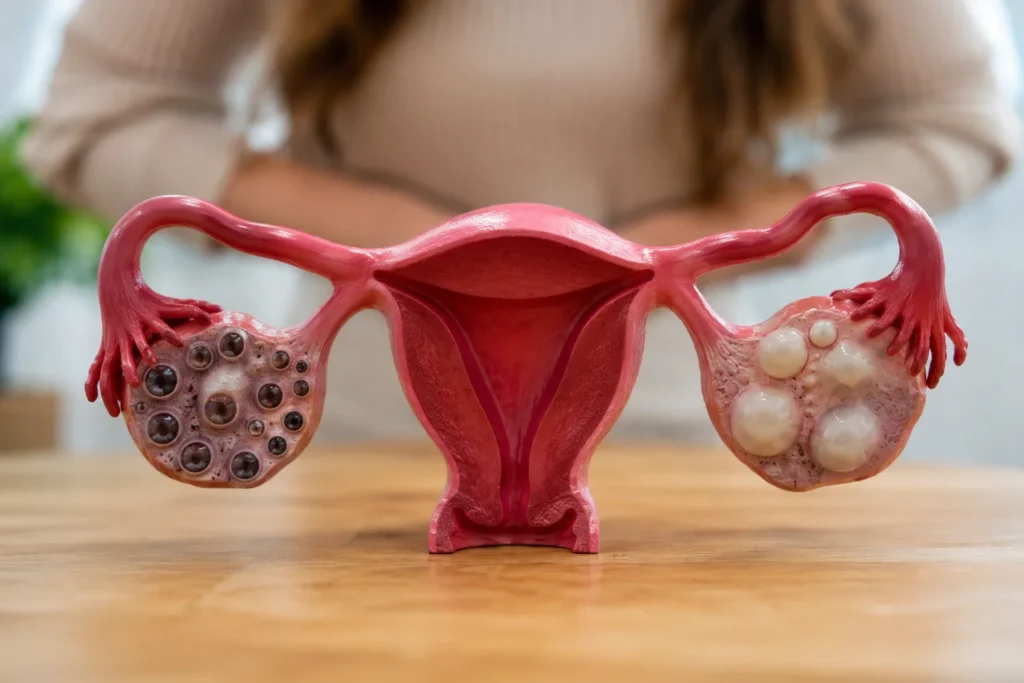
One of the biggest misconceptions about Polycystic Ovary Syndrome (PCOS) is that every woman diagnosed with the condition is overweight.
While weight gain is one of the most common symptoms, not all women with PCOS gain excess weight.
In fact, many women have a healthy Body Mass Index (BMI) yet still experience hormonal imbalances, irregular menstrual cycles, acne, infertility, and insulin resistance.
This presentation is often referred to as lean PCOS.
Research indicates that although obesity is common in PCOS, approximately 20% to 40% of women with the condition have a normal BMI.
However, even women with lean PCOS may have increased abdominal fat, insulin resistance, and metabolic abnormalities that are not immediately visible through body weight alone.
(Lim et al. 2012) reported considerable variation in body weight among women with PCOS, highlighting that obesity is common but not universal.
Several factors influence whether a woman with PCOS gains weight, including:
- Genetics
- Degree of insulin resistance
- Hormonal imbalance severity
- Physical activity level
- Dietary habits
- Sleep quality
- Stress levels
- Age
- Ethnicity
Some women may gain weight rapidly within a few months after developing hormonal changes, while others experience slow, progressive weight gain over several years.
It is equally important to remember that being thin does not mean PCOS is mild.
Women with lean PCOS can still develop infertility, irregular ovulation, elevated androgen levels, and metabolic complications that require medical attention.
Where Does PCOS Weight Usually Accumulate?
Unlike general weight gain, PCOS-related weight gain tends to follow a characteristic pattern, with fat accumulating primarily around the abdomen rather than being evenly distributed throughout the body.
This pattern is largely influenced by insulin resistance and elevated androgen levels, which encourage the storage of visceral fat, the fat surrounding internal organs.
Abdominal Fat (PCOS Belly)
Many women notice that most of their weight is concentrated around the stomach, leading to what is commonly referred to as PCOS belly.
This type of abdominal obesity is associated with:
- Increased waist circumference
- Greater insulin resistance
- Higher cardiovascular risk
- Increased inflammation
- Greater difficulty losing weight
Unlike subcutaneous fat that lies just beneath the skin, visceral fat is metabolically active and releases inflammatory substances that further worsen insulin resistance and hormonal imbalance.
Waist and Midsection
Women with PCOS often develop a higher waist-to-hip ratio, even when overall body weight has increased only modestly.
This change in body shape occurs because excess insulin promotes fat storage around the abdominal organs rather than the hips and thighs.
Hips and Thighs
Although abdominal fat is more common,
some women may also experience increased fat accumulation around the hips, thighs, and buttocks, particularly if lifestyle factors such as physical inactivity contribute to overall weight gain.
Why Fat Distribution Matters
Where fat is stored can be as important as how much fat is present.
Central obesity is linked to a higher risk of:
- Type 2 diabetes
- High blood pressure
- Heart disease
- Fatty liver disease
- Metabolic syndrome
Because of these risks, healthcare providers often measure waist circumference in addition to body weight and BMI when assessing women with PCOS.
Signs Your Weight Gain May Be Related to PCOS
Weight gain can occur for many reasons, including aging, dietary changes, thyroid disorders, certain medications, and reduced physical activity.
qqHowever, when weight gain occurs alongside hormonal symptoms, PCOS becomes an important possibility to consider.
Common signs that suggest weight gain may be related to PCOS include:
Difficulty Losing Weight
Many women report that they follow calorie-controlled diets and exercise regularly yet lose very little weight or regain it quickly after stopping a diet.
This occurs because hormonal and metabolic changes reduce the body’s ability to use stored fat efficiently.
Irregular Menstrual Cycles
Periods may become:
- Infrequent
- Unpredictable
- Very light
- Very heavy
- Completely absent for several months
Irregular ovulation is one of the hallmark features of PCOS.
Increased Facial or Body Hair
Higher androgen levels may cause excessive hair growth on the:
- Chin
- Upper lip
- Chest
- Abdomen
- Back
This condition is known as hirsutism.
Acne and Oily Skin
Persistent acne after adolescence or oily skin that does not improve with routine skincare may indicate elevated androgen levels.
Hair Thinning
Some women notice gradual thinning of hair over the scalp, particularly around the crown, due to androgen-related hair loss.
Darkened Skin
Dark, velvety patches of skin around the neck, armpits, or groin may indicate acanthosis nigricans, a common sign of insulin resistance.
Fatigue
Women with PCOS frequently experience:
- Low energy
- Daytime sleepiness
- Reduced exercise tolerance
These symptoms may be related to insulin resistance, poor sleep quality, or hormonal disturbances.
Fertility Problems
Difficulty becoming pregnant because of irregular or absent ovulation is another common feature associated with PCOS.
Recognizing these symptoms early allows healthcare providers to investigate the underlying hormonal imbalance and begin treatment before long-term complications develop.
How Doctors Diagnose PCOS-Related Weight Gain
There is no single laboratory test that confirms PCOS.
Instead, doctors diagnose the condition by combining medical history, physical examination, laboratory investigations, and imaging studies while excluding other disorders that can produce similar symptoms.
The internationally accepted Rotterdam Criteria state that a diagnosis of PCOS can be made when two out of the following three features are present after excluding other causes:
- Irregular or absent ovulation
- Clinical or laboratory evidence of elevated androgen levels
- Polycystic ovaries visible on ultrasound
These criteria remain the foundation of PCOS diagnosis worldwide. (Teede et al. 2023) continue to recommend their use within a comprehensive clinical assessment.
Medical History
Your doctor may ask about:
- Weight changes
- Menstrual cycle pattern
- Pregnancy history
- Family history of diabetes or PCOS
- Eating habits
- Exercise routine
- Sleep quality
- Current medications
Physical Examination
The examination often includes:
- Height and weight
- Body Mass Index (BMI)
- Waist circumference
- Blood pressure
- Assessment for acne
- Excess facial or body hair
- Hair thinning
- Darkened skin suggestive of insulin resistance
Blood Tests
Common investigations include:
- Blood glucose
- HbA1c
- Fasting insulin (when appropriate)
- Lipid profile
- Testosterone
- DHEAS
- Thyroid function tests
- Prolactin
- LH and FSH levels
These tests help evaluate metabolic health and rule out other endocrine conditions.
Pelvic Ultrasound
Ultrasound can identify enlarged ovaries containing multiple small follicles, often described as a polycystic ovarian appearance.
However, not every woman with PCOS has polycystic ovaries, and some healthy women may have this appearance without having the syndrome.
Can You Lose Weight with PCOS?
Yes. Women with PCOS can successfully lose weight, although the process is often slower than it is for women without the condition.
The key is recognizing that PCOS weight management requires addressing hormonal and metabolic factors rather than relying on crash diets or excessive exercise.
Research consistently shows that even losing just 5% to 10% of body weight can produce meaningful health benefits in women with PCOS.
Modest weight loss has been associated with:
- Improved insulin sensitivity
- More regular menstrual cycles
- Better ovulation
- Reduced androgen levels
- Improved fertility
- Lower blood sugar levels
- Better cholesterol levels
- Reduced cardiovascular risk
The International Evidence-based Guideline for PCOS recommends lifestyle intervention as the first-line treatment for women with excess weight, combining healthy nutrition, regular physical activity, behavioral support, and sustainable long-term habits rather than rapid weight-loss programs.
Successful weight management usually involves:
- A balanced, nutrient-rich eating pattern
- Regular aerobic exercise
- Progressive strength training
- Physiotherapy-guided movement when needed
- Stress reduction techniques
- Adequate sleep
- Medical therapy when indicated
It is important to set realistic expectations.
Because insulin resistance and hormonal imbalances affect metabolism, steady, sustainable progress is generally healthier and more successful than attempting rapid weight loss.
Myth vs Fact
| Myth | Fact |
|---|---|
| Everyone with PCOS is overweight. | Many women have Lean PCOS and maintain a normal BMI. |
| PCOS weight gain is caused by overeating alone. | Hormonal imbalance and insulin resistance play a major role. |
| Women with PCOS cannot lose weight. | Weight loss is achievable with the right lifestyle, exercise, and medical support. |
| Only cardio helps reduce PCOS weight. | Strength training improves insulin sensitivity and boosts metabolism. |
| Rapid weight-loss diets are the best solution. | Gradual, sustainable lifestyle changes produce better long-term results. |
Best Diet for PCOS Weight Loss
Nutrition plays a central role in managing PCOS-related weight gain.
Rather than following restrictive fad diets, experts recommend a balanced eating pattern that improves insulin sensitivity, reduces inflammation, and supports long-term metabolic health.
The most effective dietary approach is one that is nutritionally complete, sustainable, and personalized, taking into account individual preferences, medical conditions, and activity levels.
Choose Low-Glycemic Index (GI) Carbohydrates
Low-GI foods release glucose more gradually, helping to reduce sharp rises in blood sugar and insulin levels.
Examples include:
- Oats
- Brown rice
- Quinoa
- Whole wheat
- Lentils
- Chickpeas
- Beans
Replacing refined carbohydrates with whole grains may improve insulin sensitivity and support weight management.
Increase Protein Intake
Protein helps maintain muscle mass, increases satiety, and may reduce hunger between meals.
Good protein sources include:
- Eggs
- Fish
- Skinless chicken
- Greek yogurt
- Tofu
- Paneer
- Lentils
- Soy products
Eat Plenty of Fiber
Fiber slows digestion, supports gut health, and helps improve blood sugar control.
Include:
- Leafy vegetables
- Broccoli
- Carrots
- Apples
- Berries
- Pears
- Flaxseeds
- Chia seeds
Choose Healthy Fats
Healthy fats can improve satiety and support hormone production when eaten in moderation.
Examples include:
- Nuts
- Seeds
- Olive oil
- Avocados
- Fatty fish rich in omega-3 fatty acids
Limit Highly Processed Foods
Reducing intake of foods high in added sugars and refined carbohydrates may help lower insulin demand.
Examples include:
- Sugary beverages
- Cakes
- Pastries
- Candy
- Highly processed snack foods
- White bread
Rather than eliminating foods completely, developing consistent, balanced eating habits is generally more effective for long-term weight management.
Best Exercises for PCOS Weight Loss
Regular physical activity is one of the most effective non-pharmacological treatments for PCOS-related weight gain.
Exercise not only helps burn calories but also improves insulin sensitivity, reduces inflammation, enhances cardiovascular health, and supports hormonal balance.
Women with PCOS often benefit more from consistency than from high-intensity workouts performed sporadically.
According to the International Evidence-based Guideline for PCOS,
adults with PCOS should aim for 150 to 300 minutes of moderate-intensity exercise or 75 to 150 minutes of vigorous-intensity exercise per week, along with muscle-strengthening activities on at least two days each week. (Teede et al. 2023)
Brisk Walking
Walking is one of the safest and most sustainable forms of exercise for women with PCOS.
Benefits include:
- Improves insulin sensitivity
- Burns calories without excessive joint stress
- Enhances cardiovascular fitness
- Helps reduce abdominal fat
- Suitable for beginners
Walking for 30 to 45 minutes on most days of the week can significantly contribute to weight management.
Strength Training
Resistance training helps build lean muscle mass, which increases resting metabolic rate and improves glucose utilization.
Exercises may include:
- Squats
- Lunges
- Push-ups
- Resistance band exercises
- Free weights
- Machine-based exercises
Muscle tissue burns more calories than fat tissue, making strength training particularly beneficial for long-term weight management.
Low-Impact Cardio
Women experiencing joint pain or obesity may find low-impact exercises easier to maintain.
Examples include:
- Cycling
- Swimming
- Elliptical training
- Water aerobics
These activities improve cardiovascular health while minimizing stress on the knees and hips.
High-Intensity Interval Training (HIIT)
HIIT alternates short bursts of vigorous exercise with recovery periods.
Studies suggest HIIT may improve:
- Insulin sensitivity
- Aerobic capacity
- Body fat percentage
- Cardiovascular fitness
However, HIIT should be introduced gradually and may not be appropriate for every woman, particularly beginners or those with underlying health conditions.
Yoga and Pilates
Although these exercises may burn fewer calories than aerobic workouts, they offer several important benefits:
- Stress reduction
- Improved flexibility
- Better posture
- Enhanced core strength
- Reduced cortisol levels
- Improved mental well-being
These benefits can indirectly support weight management by improving adherence to a healthy lifestyle.
Physiotherapy Perspective
Physiotherapy can play an important role in helping women with PCOS establish safe, sustainable, and individualized exercise routines.
Many women with PCOS experience obesity, poor physical fitness, joint discomfort, low back pain, or reduced confidence when exercising.
A physiotherapist can assess movement patterns, identify limitations, and design an exercise program tailored to the individual’s health status and fitness level.
A physiotherapy-guided program may include:
- Progressive strengthening exercises to improve muscle mass and metabolism
- Aerobic conditioning to enhance cardiovascular fitness
- Core stabilization exercises for better posture and spinal support
- Flexibility and mobility exercises to improve movement efficiency
- Balance and coordination training where needed
- Education on proper exercise technique to reduce injury risk
- Strategies to gradually increase physical activity without overloading joints
Women who are significantly overweight may benefit from beginning with low-impact exercises before progressing to more demanding activities.
This gradual approach improves long-term adherence while reducing discomfort and the likelihood of injury.
Medical Treatments That May Help
Lifestyle modification remains the first-line treatment for PCOS-related weight gain.
However, some women may require medication when lifestyle measures alone are insufficient or when significant insulin resistance or other metabolic complications are present.
Treatment options may include:
Metformin
Metformin improves insulin sensitivity and may help reduce insulin levels, making weight management easier for some women.
It may also improve menstrual regularity and reduce the risk of developing type 2 diabetes in appropriate individuals.
Hormonal Contraceptives
Combined oral contraceptive pills may help regulate menstrual cycles and reduce androgen-related symptoms such as acne and excessive hair growth.
Although they are not weight-loss medications, they can improve hormonal balance as part of an overall treatment plan.
GLP-1 Receptor Agonists
In selected women with obesity or significant metabolic disease, medications such as GLP-1 receptor agonists may be considered under specialist supervision.
These medications work by increasing satiety, slowing stomach emptying, and improving blood sugar control.
Individualized Care
Treatment decisions should always be personalized based on:
- Age
- Pregnancy plans
- Body weight
- Insulin resistance
- Other medical conditions
- Individual treatment goals
Medication should complement, not replace, a healthy lifestyle.
Common Mistakes That Make PCOS Weight Gain Worse
Many women unknowingly adopt habits that make PCOS-related weight gain more difficult to manage.
Some common mistakes include:
Following Crash Diets
Extremely restrictive diets often lead to:
- Nutrient deficiencies
- Muscle loss
- Slower metabolism
- Weight regain after dieting
Avoiding Strength Training
Focusing only on cardio may reduce opportunities to build muscle, which plays an important role in increasing resting metabolic rate.
Poor Sleep
Sleeping fewer than seven hours regularly may worsen insulin resistance, increase appetite, and reduce energy for physical activity.
Chronic Stress
Persistent stress raises cortisol levels, which may contribute to abdominal fat accumulation and unhealthy food cravings.
Skipping Meals
Skipping breakfast or other meals can lead to overeating later in the day and unstable blood sugar levels.
Expecting Immediate Results
Because hormonal factors influence metabolism, weight loss with PCOS is often slower than expected.
Sustainable lifestyle changes generally produce better long-term outcomes than rapid weight-loss approaches.
Possible Complications of Untreated PCOS Weight Gain
When excess weight and metabolic abnormalities remain unmanaged, women with PCOS face an increased risk of several long-term health conditions.
These include:
- Type 2 diabetes
- Prediabetes
- High blood pressure
- High cholesterol
- Heart disease
- Stroke
- Fatty liver disease
- Obstructive sleep apnea
- Infertility
- Pregnancy complications
- Endometrial hyperplasia
- Endometrial cancer
- Depression and anxiety
The risk increases further when obesity, insulin resistance, and sedentary lifestyle occur together.
Prevention Tips
Although PCOS cannot always be prevented, healthy lifestyle habits can significantly reduce the risk of excessive weight gain and metabolic complications.
Helpful strategies include:
- Maintain regular physical activity throughout the week.
- Eat balanced meals rich in vegetables, whole grains, lean proteins, and healthy fats.
- Limit sugary drinks and highly processed foods.
- Prioritize strength training alongside aerobic exercise.
- Sleep for seven to nine hours each night.
- Manage stress through relaxation techniques, yoga, or meditation.
- Attend regular medical follow-ups to monitor blood sugar, cholesterol, and blood pressure.
- Seek early treatment if menstrual irregularities or weight gain develop.
When Should You See a Doctor?
Consult a healthcare professional if you experience:
- Rapid or unexplained weight gain
- Absent or Irregular menstrual periods
- Difficulty becoming pregnant
- Excess facial or body hair
- Persistent acne
- Darkened skin around the neck or underarms
- Symptoms of high blood sugar such as excessive thirst or frequent urination
- Difficulty losing weight despite consistent lifestyle changes
Early diagnosis and appropriate treatment can improve symptom control and reduce the risk of long-term complications.
Final Thoughts
Weight gain associated with Polycystic Ovary Syndrome (PCOS) is not simply a matter of eating too much or exercising too little. It is a complex condition influenced by hormonal changes, insulin resistance, and metabolic dysfunction. While these factors can make weight management more challenging, they do not make it impossible.
By combining healthy nutrition, regular physical activity, physiotherapy-guided strength training, stress management, adequate sleep, and individualized medical care, women with PCOS can achieve sustainable weight loss and improve their overall health. Remember, success is not measured only by the number on the weighing scale, even modest weight loss and improved muscle strength can lead to meaningful improvements in fertility, menstrual health, insulin sensitivity, and long-term well-being.
Taking small, consistent steps today can help build healthier habits that support lifelong physical and reproductive health.
Conclusion
Weight gain associated with Polycystic Ovary Syndrome (PCOS) is far more than a cosmetic concern.
It reflects underlying hormonal and metabolic changes that can affect fertility, cardiovascular health, blood sugar regulation, and overall quality of life.
While insulin resistance and hormonal imbalance make weight management more challenging, they do not make success impossible.
A combination of evidence-based nutrition, regular physical activity, physiotherapy-guided exercise, adequate sleep, stress management, and individualized medical care offers the best chance of achieving sustainable weight loss and improving overall health.
Even modest reductions in body weight can lead to meaningful improvements in menstrual regularity, fertility, insulin sensitivity, and long-term disease prevention.
Rather than focusing on rapid weight loss, women with PCOS should aim for gradual, sustainable lifestyle changes that support lifelong health and well-being.
Frequently Asked Questions (FAQs)
1. Why does PCOS cause weight gain?
PCOS causes weight gain mainly due to insulin resistance, hormonal imbalance, chronic inflammation, and changes in metabolism that encourage fat storage.
2. Can women with PCOS lose weight?
Yes. Although weight loss may be slower, a combination of healthy eating, strength training, regular physical activity, adequate sleep, and medical treatment when necessary can help women lose weight successfully.
3. Does everyone with PCOS become overweight?
No. Some women have Lean PCOS and maintain a healthy body weight while still experiencing hormonal and metabolic symptoms.
4. Which exercise is best for PCOS weight loss?
A combination of brisk walking, resistance training, cycling, swimming, and physiotherapy-guided exercise provides the greatest long-term benefits.
5. How much weight should I lose to improve PCOS?
Research shows that losing just 5–10% of body weight can improve insulin sensitivity, menstrual regularity, fertility, and overall metabolic health.
6. Is abdominal fat common in PCOS?
Yes. Many women with PCOS develop central obesity or “PCOS belly” because insulin resistance promotes fat storage around the abdomen.
Stay tuned with us for more health related topics.
Follow us on LinkedIn and Instagram for more.
More Read




Medical Disclaimer!
This article has been reviewed and written under the guidance of our Head Physiotherapist, Dr. Kruti Raj (PT, MUHS,CPT,CMPT). The information shared is intended for educational purposes only and should not be considered a substitute for personalized medical advice, diagnosis, or treatment.
Please consult us or any other qualified healthcare professional before beginning any exercise program, especially if you are experiencing pain, recovering from injury, or managing a medical condition.


