


Home exercises can be an effective way to improve PCOS symptoms; all without needing expensive gym equipment.
Regular physical activity is one of the most effective lifestyle strategies for managing Polycystic Ovary Syndrome (PCOS).
While medications and dietary modifications are important components of treatment,
exercise plays a unique role in improving hormonal balance, insulin sensitivity, cardiovascular fitness, body composition, and overall well-being.
In fact, current international PCOS guidelines recommend regular physical activity as a first-line treatment for women with PCOS, regardless of their body weight.
Quick Answer
Home exercises are an effective way to manage Polycystic Ovary Syndrome (PCOS). Activities such as brisk walking, squats, glute bridges, wall push-ups, resistance band rows, planks, bird-dog exercises, step-ups, yoga, and low-impact cardio can improve insulin sensitivity, hormonal balance, cardiovascular fitness, muscle strength, and overall well-being. Consistency is more important than intensity, and even short daily workouts can provide long-term health benefits.
The good news is that you do not need an expensive gym membership or specialized equipment to experience these benefits.
Many effective exercises can be performed safely at home using only your body weight or simple resistance bands.
Home workouts are convenient, cost-effective, and easier to maintain consistently, making them an excellent option for busy women balancing work, family, and personal responsibilities.
This article highlights 10 of the best home exercises for women with PCOS, explaining how each exercise supports hormonal health, improves insulin resistance, and enhances overall fitness.
Whether you are newly diagnosed or looking to build a sustainable exercise routine, these exercises can help you take an active role in managing PCOS. (Sabag et al. 2024)
Key Takeaways
- Regular home exercise helps improve insulin sensitivity and hormonal balance in women with PCOS.
- A combination of aerobic exercise, strength training, flexibility exercises, and yoga offers the greatest health benefits.
- Home workouts are convenient, affordable, and easier to maintain consistently.
- Exercise improves metabolic health even if significant weight loss does not occur.
- Proper warm-up, cool-down, and exercise technique reduce the risk of injury.
- Following a structured weekly exercise routine improves long-term adherence.
- Combining exercise with healthy nutrition and adequate sleep enhances PCOS management.
- Small, consistent lifestyle changes lead to meaningful improvements in overall health.
Why Exercise Is Important for Women with PCOS
Exercise is much more than a tool for weight loss.
For women with PCOS, regular physical activity directly addresses several of the underlying metabolic and hormonal abnormalities associated with the condition.
Research has shown that consistent exercise can help:
- Improve insulin sensitivity
- Reduce insulin resistance
- Support healthier ovulation
- Improve menstrual regularity
- Reduce abdominal fat
- Improve cardiovascular health
- Increase muscle strength
- Lower the risk of type 2 diabetes
- Improve mental well-being
- Reduce long-term cardiovascular risk
Importantly, many of these benefits occur even when body weight changes are minimal, meaning exercise improves health beyond simply reducing the number on the scale.
Can Home Exercises Help Manage PCOS?
Yes.
Home-based exercise programs can be just as effective as gym-based workouts when performed consistently and with proper technique.
Home exercises for PCOS provide numerous advantages, including:
- Greater convenience
- Lower cost
- Flexible scheduling
- Privacy
- No travel time
- Easier long-term adherence
Many evidence-based exercises require little or no equipment while still improving:
- Muscle strength
- Cardiovascular fitness
- Insulin sensitivity
- Balance
- Flexibility
- Functional mobility
Consistency is the key factor.
Exercising regularly at home is often more beneficial than participating in occasional high-intensity gym sessions.
Benefits of Exercising at Home
Home exercise programs offer several advantages for women with PCOS.
Improves Insulin Sensitivity
Regular movement helps muscles absorb glucose more efficiently, reducing insulin resistance and improving blood sugar regulation.
Supports Healthy Weight Management
Exercise increases calorie expenditure while helping preserve lean muscle mass.
Maintaining muscle mass supports a healthier metabolism and long-term weight management.
Improves Hormonal Balance
Exercise indirectly supports healthier hormone regulation by:
- Lowering excess insulin levels
- Reducing androgen production associated with insulin resistance
- Supporting regular ovulation
- Improving metabolic function
Enhances Cardiovascular Health
Regular exercise strengthens the heart and improves circulation.
Benefits include:
- Lower blood pressure
- Improved endurance
- Better cholesterol profile
- Reduced cardiovascular risk
Reduces Stress
Living with PCOS can affect emotional health.
Physical activity helps:
- Reduce stress
- Improve mood
- Decrease anxiety
- Improve sleep quality
These psychological benefits contribute to better long-term adherence to healthy lifestyle habits.
Saves Time and Money
Home workouts eliminate:
- Gym membership fees
- Travel time
- Waiting for equipment
- Scheduling difficulties
This makes regular exercise more practical for many women.
Before You Start: Safety Tips
Although home exercises for PCOS are generally safe, following a few precautions helps reduce the risk of injury.
Before beginning a new exercise program:
- Consult your healthcare provider if you have diabetes, hypertension, heart disease, or another chronic medical condition.
- Wear comfortable clothing and supportive footwear.
- Begin with a 5-10 minute warm-up.
- Increase exercise intensity gradually.
- Stay hydrated throughout your workout.
- Focus on proper technique rather than speed.
- Include a cool-down and stretching routine after exercising.
- Allow adequate recovery between strength-training sessions.
Stop exercising and seek medical advice if you experience:
- Chest pain
- Severe dizziness
- Fainting
- Difficulty breathing beyond expected exertion
- Severe joint pain
- Sudden swelling or injury
Women who are pregnant or undergoing fertility treatment should discuss exercise plans with their healthcare provider.
How Often Should Women with PCOS Exercise?
Current international recommendations suggest that women with PCOS should aim for:
- At least 150-300 minutes of moderate-intensity aerobic exercise per week, or
- 75-150 minutes of vigorous-intensity aerobic exercise per week
Additionally:
- Perform strength-training exercises at least two days each week.
- Include flexibility and mobility exercises several times weekly.
- Reduce prolonged sitting by moving regularly throughout the day.
Rather than exercising intensely for a few days and then stopping, it is more beneficial to maintain a consistent routine throughout the week.
The 10 Best Home Exercises for Women with PCOS
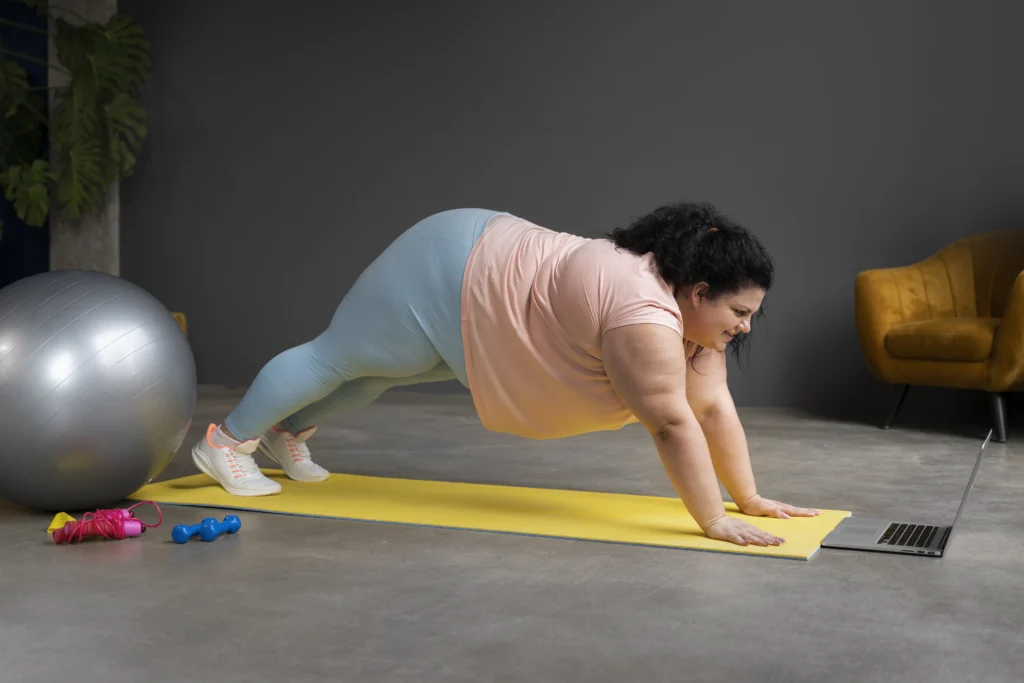
The following exercises are beginner-friendly, require little or no equipment, and help improve strength, endurance, insulin sensitivity, and overall fitness.
1. Brisk Walking (Indoor or Outdoor)
Walking is one of the safest and most effective exercises for women with PCOS.
Why it helps
- Improves insulin sensitivity
- Burns calories
- Supports cardiovascular health
- Reduces stress
- Improves endurance
- Easy to perform consistently
How to do it
- Walk at a pace that slightly increases your breathing while still allowing you to talk.
- Swing your arms naturally.
- Maintain good posture.
- Look forward rather than down.
Recommended duration
- 30-45 minutes
- 5 days per week
Common mistakes
- Walking too slowly to raise your heart rate.
- Poor posture with rounded shoulders.
- Wearing unsupportive footwear.
2. Bodyweight Squats
Squats strengthen the lower body and engage large muscle groups, increasing glucose utilization and improving insulin sensitivity.
Why it helps
- Builds leg strength
- Improves muscle mass
- Increases calorie expenditure
- Supports metabolic health
- Improves functional mobility
How to do it
- Stand with feet shoulder-width apart.
- Keep your chest upright.
- Push your hips backward.
- Bend your knees as though sitting in a chair.
- Lower until your thighs are nearly parallel to the floor.
- Push through your heels to return to standing.
Recommended repetitions
- 2-3 sets
- 10-15 repetitions
Common mistakes
- Knees collapsing inward.
- Rounding the back.
- Rising onto the toes instead of pushing through the heels.
3. Glute Bridges
Glute bridges strengthen the hips, glutes, and core while improving posture and pelvic stability.
Why it helps
- Strengthens the posterior chain
- Improves core stability
- Supports lower back health
- Enhances functional movement
- Complements other strength exercises
How to do it
- Lie on your back with knees bent.
- Keep your feet flat on the floor.
- Tighten your abdominal muscles.
- Lift your hips until your shoulders, hips, and knees form a straight line.
- Hold for 2-3 seconds.
- Slowly lower your hips back to the floor.
Recommended repetitions
- 2-3 sets
- 12–15 repetitions
Common mistakes
- Arching the lower back excessively.
- Lifting the hips too high.
- Holding the breath during the movement.
4. Wall Push-Ups
Wall push-ups are an excellent upper-body exercise for beginners and women who prefer low-impact workouts.
They strengthen the chest, shoulders, arms, and core without placing excessive stress on the wrists or shoulders.
Why It Helps Women with PCOS
Wall push-ups help increase lean muscle mass, which improves insulin sensitivity and boosts resting metabolism.
They also improve upper-body strength and posture, making daily activities easier.
How to Perform Wall Push-Ups
- Stand facing a wall about an arm’s length away.
- Place your palms flat against the wall at shoulder height and shoulder-width apart.
- Keep your body in a straight line from head to heels.
- Bend your elbows slowly and bring your chest toward the wall.
- Push back to the starting position.
Recommended Repetitions
- 2-3 sets
- 10-15 repetitions
Common Mistakes to Avoid
- Standing too close to the wall
- Allowing the lower back to arch excessively
- Locking the elbows at the top of the movement
Safety Tips
Maintain a straight body position throughout the exercise and avoid shrugging your shoulders.
5. Resistance Band Rows
Resistance band rows strengthen the upper back, shoulders, and arms while improving posture.
They are simple to perform at home using an inexpensive resistance band.
Why It Helps Women with PCOS
Increasing muscle strength helps improve glucose utilization, insulin sensitivity, and overall metabolic health.
Better posture also reduces neck and shoulder discomfort associated with prolonged sitting.
How to Perform Resistance Band Rows
- Secure a resistance band around a stable object.
- Hold one end of the band in each hand.
- Stand upright with a slight bend in your knees.
- Pull the band toward your waist while squeezing your shoulder blades together.
- Slowly return to the starting position.
Recommended Repetitions
- 2-3 sets
- 10-15 repetitions
Common Mistakes to Avoid
- Pulling with the arms instead of engaging the back muscles
- Leaning backward excessively
- Using momentum rather than controlled movement
Safety Tips
Use a resistance band with appropriate tension and inspect it regularly for signs of wear.
6. Modified Plank
The modified plank strengthens the abdominal muscles, shoulders, hips, and lower back while improving stability.
Why It Helps Women with PCOS
Core strengthening supports better posture, enhances movement efficiency, and improves functional fitness, making other exercises safer and more effective.
How to Perform a Modified Plank
- Begin on your hands and knees.
- Lower onto your forearms.
- Keep your knees on the floor.
- Tighten your abdominal muscles.
- Maintain a straight line from your shoulders to your knees.
- Hold the position while breathing normally.
Recommended Duration
- Hold for 20-40 seconds
- Repeat 2-3 times
Common Mistakes to Avoid
- Allowing the hips to sag
- Holding your breath
- Raising the hips too high
Safety Tips
Stop if you experience shoulder or lower back pain and focus on maintaining proper alignment.
7. Bird-Dog Exercise
The bird-dog exercise improves balance, coordination, and core stability while strengthening the back and hip muscles.
Why It Helps Women with PCOS
This exercise improves posture, spinal stability, and muscle coordination, making daily movement more efficient and reducing the risk of lower back pain.
How to Perform the Bird-Dog Exercise
- Start on your hands and knees.
- Tighten your abdominal muscles.
- Extend your right arm forward and your left leg backward.
- Hold for 3–5 seconds.
- Return to the starting position.
- Repeat on the opposite side.
Recommended Repetitions
- 10 repetitions per side
- 2-3 sets
Common Mistakes to Avoid
- Rotating the hips
- Arching the lower back
- Moving too quickly
Safety Tips
Move slowly and maintain balance throughout the exercise.
8. Step-Ups
Step-ups strengthen the legs, glutes, and cardiovascular system using a sturdy step, staircase, or low platform.
Why It Helps Women with PCOS
Step-ups activate large lower-body muscles, increasing calorie expenditure while improving insulin sensitivity, endurance, and lower-limb strength.
How to Perform Step-Ups
- Stand facing a sturdy step.
- Place one foot completely on the step.
- Push through your heel to lift your body upward.
- Bring the opposite foot onto the step.
- Step back down in a controlled manner.
- Alternate the leading leg.
Recommended Repetitions
- 10-15 repetitions per leg
- 2-3 sets
Common Mistakes to Avoid
- Using an unstable platform
- Leaning excessively forward
- Pushing off the trailing leg instead of the leading leg
Safety Tips
Use a secure step and perform the movement slowly to maintain balance.
9. Yoga (Cat-Cow Stretch and Child’s Pose)
Yoga combines gentle movement with controlled breathing and relaxation.
Cat-Cow Stretch and Child’s Pose are particularly suitable for beginners with PCOS.
Why It Helps Women with PCOS
Yoga helps reduce stress, improve flexibility, relieve muscle tension, enhance posture, and promote relaxation.
Lower stress levels may support healthier cortisol regulation and improve overall well-being.
How to Perform the Cat-Cow Stretch
- Begin on your hands and knees.
- Inhale while arching your back and lifting your head (Cow Pose).
- Exhale while rounding your spine and tucking your chin (Cat Pose).
- Continue slowly with controlled breathing.
Recommended Duration
- 8-10 slow repetitions
How to Perform Child’s Pose
- Kneel on the floor.
- Sit back on your heels.
- Stretch your arms forward.
- Lower your forehead toward the floor.
- Relax and breathe deeply.
Recommended Duration
- Hold for 30-60 seconds
Common Mistakes to Avoid
- Moving too quickly
- Holding your breath
- Forcing stretches beyond a comfortable range
Safety Tips
Move gently and avoid overstretching if you experience pain.
10. Low-Impact Jumping Jacks or Marching in Place
Women who cannot perform traditional jumping jacks can choose low-impact jumping jacks or marching in place to improve cardiovascular fitness safely.
Why It Helps Women with PCOS
These exercises elevate the heart rate, improve endurance, burn calories, and support insulin sensitivity while placing less stress on the joints than high-impact movements.
How to Perform Low-Impact Jumping Jacks
- Stand with your feet together.
- Step one foot to the side while raising both arms overhead.
- Return to the starting position.
- Repeat on the opposite side.
- Continue in a rhythmic manner.
How to Perform Marching in Place
- Stand upright.
- Lift one knee toward your waist.
- Alternate legs while swinging your arms naturally.
- Maintain a steady pace.
Recommended Duration
- 2-5 minutes
- Repeat 2-3 rounds
Common Mistakes to Avoid
- Slouching the shoulders
- Moving too quickly without control
- Wearing unsupportive footwear
Safety Tips
Maintain an upright posture and stop if you experience dizziness or unusual shortness of breath.
Why Consistency Matters More Than Intensity
Women with PCOS often believe they need long, exhausting workouts to improve their symptoms.
However, research shows that consistent moderate exercise performed several times each week is more effective than occasional high-intensity sessions.
Regular home workouts help:
- Improve insulin sensitivity
- Support hormonal balance
- Increase cardiovascular fitness
- Build lean muscle mass
- Improve mood and reduce stress
- Promote long-term adherence to a healthy lifestyle
Creating a routine that fits your schedule and fitness level is the key to achieving lasting improvements in PCOS management.
Sample Weekly Home Exercise Plan for Women with PCOS
Creating a structured weekly routine makes it easier to stay consistent and achieve long-term health benefits.
The following plan combines aerobic exercise, strength training, flexibility, and recovery to improve insulin sensitivity, hormonal balance, cardiovascular fitness, and muscle strength.
Monday
- Brisk Walking – 30 minutes
- Bodyweight Squats – 3 sets of 12 repetitions
- Glute Bridges – 3 sets of 15 repetitions
- Stretching – 5 minutes
Tuesday
- Wall Push-Ups-– 3 sets of 12 repetitions
- Resistance Band Rows – 3 sets of 12 repetitions
- Modified Plank – Hold for 30 seconds × 3
- Bird-Dog Exercise – 10 repetitions per side
- Deep Breathing Exercises – 5 minutes
Wednesday
- Brisk Walking or Cycling – 35-40 minutes
- Yoga (Cat-Cow Stretch and Child’s Pose) – 15 minutes
Thursday
- Step-Ups – 3 sets of 12 repetitions per leg
- Squats – 3 sets of 15 repetitions
- Glute Bridges – 3 sets of 15 repetitions
- Stretching – 5 minutes
Friday
- Low-Impact Jumping Jacks or Marching in Place – 20 minutes
- Resistance Band Rows – 3 sets of 12 repetitions
- Modified Plank – Hold for 30-45 seconds × 3
Saturday
- Brisk Walking – 45 minutes
- Yoga or Pilates – 20 minutes
- Full Body Stretching – 10 minutes
Sunday
- Active recovery day
- Light walking
- Gentle stretching
- Relaxation exercises
This schedule can be modified according to individual fitness levels, age, and medical conditions.
Combining Exercise with a Healthy Diet
Exercise alone provides significant health benefits, but combining physical activity with a balanced diet offers even greater improvements for women with PCOS.
Healthy nutrition supports exercise by:
- Providing energy for workouts
- Improving muscle recovery
- Supporting hormonal regulation
- Reducing inflammation
- Improving insulin sensitivity
Women with PCOS should focus on eating:
- Whole grains
- Fresh fruits
- Green leafy vegetables
- Lean protein
- Beans and legumes
- Nuts and seeds
- Healthy fats such as olive oil and avocados
Limiting the following may improve metabolic health:
- Sugary beverages
- Highly processed foods
- Refined carbohydrates
- Excess saturated fats
- Foods high in added sugars
When healthy eating and regular exercise are combined, many women notice improvements in energy levels, menstrual regularity, and overall health.
When Should You Consult a Physiotherapist?
Although many home exercises are safe, consulting a physiotherapist is beneficial if you:
- Are newly diagnosed with PCOS and unsure where to begin
- Experience knee, hip, or back pain during exercise
- Have obesity that limits movement
- Have diabetes or cardiovascular disease
- Are recovering from surgery or injury
- Are pregnant or planning pregnancy
- Need an individualized exercise program
- Want guidance on proper exercise technique
A physiotherapist can assess your mobility, strength, posture, flexibility, and fitness before designing a personalized exercise plan that matches your goals and physical abilities.
Common Exercise Mistakes to Avoid
Many women unknowingly reduce the effectiveness of their exercise program through avoidable mistakes.
Common mistakes include:
- Exercising only when trying to lose weight
- Skipping the warm-up and cool-down
- Performing exercises with poor technique
- Increasing exercise intensity too quickly
- Ignoring muscle recovery
- Remaining inactive for the rest of the day after exercising
- Comparing your progress with others
- Expecting immediate hormonal changes
- Stopping exercise once symptoms improve
Consistency is far more important than perfection.
Tips to Stay Motivated
Maintaining a regular exercise routine can sometimes be challenging.
These practical strategies may help improve consistency.
Set Realistic Goals
Begin with small, achievable goals and gradually increase the duration or intensity of your workouts.
Create a Weekly Schedule
Planning your workouts in advance makes it easier to stay committed and reduces the likelihood of skipping sessions.
Exercise at the Same Time Each Day
Developing a routine helps turn exercise into a lasting habit.
Track Your Progress
Keep a journal or use a fitness app to record:
- Workout duration
- Number of steps
- Strength improvements
- Energy levels
- Menstrual cycle changes
Monitoring progress can be motivating, even if body weight changes slowly.
Celebrate Small Achievements
Recognize improvements such as:
- Increased stamina
- Better flexibility
- Improved mood
- Reduced fatigue
- Greater consistency
Every positive change contributes to better long-term health.
⚠ Myth vs Fact
| Myth | Fact |
|---|---|
| You need a gym membership to manage PCOS effectively. | Well-planned home workouts can provide similar health benefits when performed regularly. |
| Only intense workouts improve PCOS symptoms. | Moderate, consistent exercise is highly effective for improving insulin sensitivity and metabolic health. |
| Exercise only works if you lose weight. | Exercise improves hormone regulation, cardiovascular fitness, and insulin sensitivity even without major weight loss. |
| Walking is not enough to help women with PCOS. | Brisk walking is one of the most recommended aerobic exercises for improving metabolic and cardiovascular health. |
| Strength training is unsafe for women with PCOS. | Properly performed strength exercises improve muscle mass, insulin sensitivity, and overall fitness. |
Myths About Home Exercises for PCOS
Myth 1: Home exercises are less effective than gym workouts.
Fact: Well-planned home exercise programs can provide similar health benefits when performed consistently and with proper technique.
Myth 2: Women with PCOS need intense workouts every day.
Fact: Moderate, regular exercise is often more sustainable and equally effective for improving metabolic and hormonal health.
Myth 3: Strength training causes women to become bulky.
Fact: Strength training increases lean muscle mass, improves insulin sensitivity, supports metabolism, and enhances overall fitness without causing excessive muscle growth.
Myth 4: Exercise only helps if you lose weight.
Fact: Regular physical activity improves insulin sensitivity, cardiovascular health, hormonal balance, and mental well-being even without significant weight loss.
Myth 5: Walking is not enough for women with PCOS.
Fact: Brisk walking is an excellent aerobic exercise that improves cardiovascular fitness, insulin sensitivity, and calorie expenditure, especially when combined with strength exercises.
Final Thoughts
You don’t need a gym to take control of Polycystic Ovary Syndrome (PCOS). A well-planned home exercise routine that combines aerobic activity, strength training, flexibility exercises, and regular movement can improve insulin sensitivity, hormonal balance, cardiovascular fitness, and overall well-being. The key to success is consistency rather than perfection. By making exercise a regular part of your daily routine and combining it with healthy eating and appropriate medical care, you can effectively manage PCOS and support your long-term health.
Conclusion
Regular home exercise is one of the most practical and effective ways to manage Polycystic Ovary Syndrome (PCOS).
Exercises such as :
brisk walking, squats, glute bridges, wall push-ups, resistance band rows, planks, bird-dog exercises, step-ups, yoga, and low-impact cardio help improve insulin sensitivity, strengthen muscles, support hormonal balance, and enhance cardiovascular health.
The greatest benefits come from consistency rather than intensity.
By combining home workouts with healthy eating, adequate sleep, stress management, and appropriate medical care,
women with PCOS can improve their reproductive, metabolic, and overall health while reducing the risk of long-term complications. (Patten et al. 2020)
Frequently Asked Questions (FAQs)
1. Can home exercises help manage PCOS?
Yes. Regular home exercises improve insulin sensitivity, hormonal balance, cardiovascular fitness, muscle strength, and overall health, making them an effective part of PCOS management.
2. Which home exercise is best for women with PCOS?
Brisk walking, bodyweight squats, glute bridges, resistance band exercises, yoga, and strength training are among the most effective home exercises for women with PCOS.
3. How many days a week should women with PCOS exercise?
Most guidelines recommend at least 150–300 minutes of moderate-intensity physical activity each week, along with strength training on two or more days.
4. Can home workouts improve fertility in PCOS?
Regular exercise may improve insulin sensitivity, support ovulation, and enhance reproductive health, which can contribute to improved fertility in some women.
5. Do I need equipment to exercise at home for PCOS?
No. Many effective exercises use only body weight. Resistance bands can be added later to increase workout variety and strength.
6. Is walking enough to improve PCOS symptoms?
Brisk walking is highly beneficial, especially when combined with strength and flexibility exercises as part of a balanced weekly routine.
Stay tuned with us for more health related topics.
Follow us on LinkedIn and Instagram for more.
More Read


Medical Disclaimer!
This article has been reviewed and written under the guidance of our Head Physiotherapist, Dr. Kruti Raj (PT, MUHS,CPT,CMPT). The information shared is intended for educational purposes only and should not be considered a substitute for personalized medical advice, diagnosis, or treatment.
Please consult us or any other qualified healthcare professional before beginning any exercise program, especially if you are experiencing pain, recovering from injury, or managing a medical condition.


