


Pain on the outside of the hip can make walking, climbing stairs, exercising, and sleeping uncomfortable.
Quick Answer: Is GTPS Really Hip Bursitis?
Not always. Greater trochanteric pain syndrome (GTPS) describes pain around the outer hip that may involve the gluteal tendons, nearby bursae, or both. Gluteal tendinopathy is an important cause, so not every case is simply bursitis.
What can help? Depending on the diagnosis, physiotherapy may include activity modification, gradual hip strengthening, movement adjustments, and a progressive return to everyday activities.
It is often called hip bursitis, but the bursa is not always the main source of pain.
Greater trochanteric pain syndrome (GTPS) is a broader condition involving the tissues around the outer hip, particularly the gluteal tendons.
Understanding the difference matters because the right physiotherapy approach depends on what is causing the symptoms.
Key Takeaways
- GTPS is a broader diagnosis: It can involve gluteal tendons, bursae, or both.
- Outer hip pain has several possible causes: Symptoms alone cannot confirm bursitis.
- Physiotherapy assessment matters: A clinician considers pain patterns, strength, function, and other possible causes.
- Exercise should be individualized: Gradual strengthening and appropriate load management may improve function.
- Recovery takes time: Progress depends on symptom severity, activity demands, and the underlying condition.
- Seek assessment when needed: Persistent, severe, or unusual symptoms deserve professional evaluation.
What Is Greater Trochanteric Pain Syndrome?
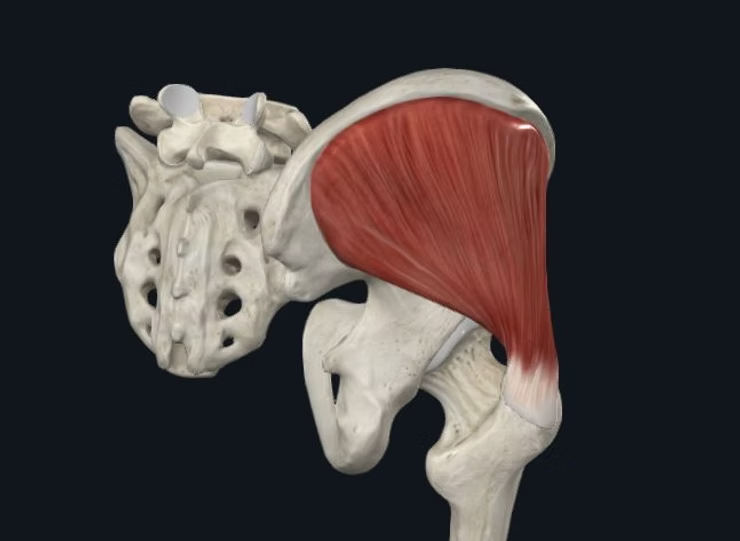
The greater trochanter is the bony prominence on the outer side of the upper thigh bone.
The gluteus medius and gluteus minimus tendons attach around this region, while nearby fluid-filled bursae help reduce friction between moving tissues.
GTPS is an umbrella term for pain in this area. It can involve:
- Gluteal tendinopathy: Changes in the gluteus medius or gluteus minimus tendons that can cause pain during loading.
- Trochanteric bursitis: Irritation or inflammation of a bursa near the greater trochanter.
- Gluteal tendon tears: Partial or complete tears that may affect hip strength and pelvic control.
- External snapping hip: A snapping sensation when soft tissue, often the iliotibial band, moves over the greater trochanter.
These conditions can overlap. Gluteal tendinopathy is an important contributor to outer hip pain, which is why GTPS should not automatically be treated as isolated bursitis. (Pianka et al., 2021)
Why Is GTPS Often Mistaken for Hip Bursitis?
The role of the gluteal tendons
The gluteus medius and gluteus minimus muscles help stabilize the pelvis when walking, climbing stairs, and standing on one leg. Their tendons transfer muscle force to the thigh bone.
When these tendons are repeatedly exposed to more load than they can comfortably tolerate, symptoms may develop. This can happen after a sudden increase in walking or exercise, or gradually through repeated everyday activities.
Tendinopathy does not necessarily mean the tendon is torn or permanently damaged. It describes a problem involving the tendon and its response to loading. With appropriate rehabilitation, symptoms and function can improve.
What does the hip bursa do?
A bursa is a small fluid-filled sac that reduces friction between moving tissues. Irritation of a bursa can contribute to outer hip pain, but bursal changes can also occur alongside tendon problems.
Fluid around a bursa on an ultrasound or MRI does not automatically prove that bursitis is causing the symptoms. The finding must be interpreted alongside the person’s pain pattern and clinical examination.
Why the distinction matters
If gluteal tendinopathy is the main problem, treatment often focuses on managing tendon compression and gradually improving strength and load tolerance.
Treating the condition as inflammation alone may overlook these important rehabilitation needs. (Grimaldi & Fearon, 2015)
What Are the Symptoms of GTPS?
The most common symptom is pain over the outside of the hip, near the greater trochanter. It may feel like a deep ache, local tenderness, or sharp discomfort during particular movements.
Other symptoms include:
- Pain when lying on the affected side.
- Discomfort when climbing stairs or walking uphill.
- Pain after prolonged walking or standing.
- Tenderness when pressing the outer hip.
- Pain during single-leg activities, such as putting on trousers while standing.
- Discomfort spreading down the outer thigh, sometimes towards the knee.
- Difficulty sleeping because of hip pain.
Symptoms may develop gradually or follow a change in activity, a fall, or an increase in exercise.
A useful clue: Pain when lying on the affected side is common in GTPS, but it does not confirm the diagnosis by itself.
What Causes Greater Trochanteric Pain Syndrome?
GTPS can develop through a combination of tendon loading, muscle capacity, movement demands, and other health factors.
Sudden increases in activity
Increasing walking distance, running mileage, hill training, or gym intensity too quickly may overload the gluteal tendons.
The activity itself is not necessarily harmful. The problem may be that the tissues have not adapted to the amount or frequency of loading.
Repeated compression around the hip
Positions that bring the thigh across the body’s midline can increase compression around the gluteal tendons.
Examples include crossing the legs tightly, standing with the hip pushed out to one side, or sleeping directly on the painful hip.
When the area is sensitive, repeatedly holding these positions may aggravate symptoms. Modifying these positions can reduce irritation while the person gradually rebuilds tolerance.
Reduced hip strength or control
The hip abductors help control pelvic movement during walking and single-leg tasks. Reduced strength or endurance may make these activities more difficult.
However, weakness is not always the original cause.
Pain itself can reduce muscle performance, so a physiotherapist should assess both strength and symptoms instead of assuming that weak muscles explain everything.
Other contributing factors
GTPS is reported more frequently in middle-aged adults and women. Previous hip injuries, changes in activity, and coexisting hip or lower-back problems may also influence symptoms. These factors can contribute to the clinical picture, but none proves the diagnosis on its own.
How Is GTPS Diagnosed?
Physiotherapy assessment
A physiotherapist will ask where the pain occurs, when it started, what makes it worse, and how it affects walking, sleep, exercise, and daily activities.
The physical examination may include:
- Palpation: Checking whether pressure over the greater trochanter reproduces familiar pain.
- Resisted hip abduction: Assessing pain and strength when moving the leg outwards against resistance.
- Single-leg stance: Observing symptoms and pelvic control while standing on one leg.
- Functional movement tests: Assessing activities such as step-ups, stair climbing, and walking.
- Hip and lower-back assessment: Checking for other conditions that may explain or contribute to the pain.
No single test is definitive.
A systematic review found that combining selected clinical tests can help clinicians increase or decrease the likelihood of GTPS, although diagnostic accuracy varies between tests. (Kinsella et al., 2024)
Are scans necessary?
GTPS is often diagnosed through clinical history and examination. Imaging may be considered when the diagnosis is uncertain, symptoms persist despite appropriate treatment, a significant tendon tear is suspected, or another condition needs to be excluded.
- X-rays can help identify certain bone and joint problems, including osteoarthritis.
- Ultrasound may assess the gluteal tendons and nearby bursae.
- MRI can provide more detailed information about tendon tears and other soft-tissue abnormalities.
Scan findings need to match the symptoms. Tendon changes and bursal fluid can also occur in people without pain, so imaging should not be interpreted in isolation.
GTPS or Hip Osteoarthritis: How Are They Different?
Both conditions can cause hip pain, but the symptom pattern may provide useful clues.
| Feature | GTPS | Hip osteoarthritis |
|---|---|---|
| Typical pain location | Outer hip | Often groin or front of hip, sometimes thigh |
| Lying on the painful side | Often aggravates symptoms | Not a defining feature |
| Tenderness over the outer hip | Common | May be absent |
| Hip stiffness | Can occur | Often more noticeable, especially after rest |
| Pain during walking | Common | Common |
These patterns are not absolute.
Both conditions can occur together, and lower-back problems can also refer pain towards the hip. A clinical assessment is needed when symptoms overlap. (Fearon et al., 2013)
Physiotherapy Treatment for GTPS
Physiotherapy aims to reduce excessive irritation, improve hip muscle capacity, and help the person return to meaningful activities. Treatment should be adjusted to symptom severity, physical capacity, and individual goals.
1. Modify aggravating activities
Complete rest is rarely the only answer. Instead, temporarily reduce activities or positions that repeatedly cause significant pain.
Helpful changes may include:
- Reducing steep hills or long walks during a flare-up.
- Avoiding prolonged standing with body weight shifted onto one hip.
- Keeping the legs uncrossed if crossing them aggravates symptoms.
- Sleeping on the opposite side with a pillow between the knees.
- Avoiding direct pressure on the painful hip where possible.
The goal is to keep moving within a tolerable range while reducing repeated irritation.
2. Start with suitable strengthening exercises
Exercise selection depends on the person’s pain, strength, balance, and ability to tolerate loading. A physiotherapist may begin with less demanding exercises and gradually progress them.
Isometric hip abduction: Gently press the outer knee against a wall or fixed resistance without moving the leg.
Bridges: Lie on your back with your knees bent and lift your pelvis in a controlled movement.
Standing hip abduction: Hold a stable support and move the affected leg out to the side without leaning your trunk.
Resisted side-stepping: Take controlled sideways steps with a resistance band once basic exercises are tolerated.
These are examples, not a universal program. Repetitions, resistance, and progression should be tailored to the individual. Stop an exercise if it causes sharp or progressively worsening pain and seek professional guidance.
3. Progress towards everyday activities
As symptoms improve, rehabilitation may progress to step-ups, balance training, longer walks, stair climbing, and other tasks that matter to the person.
Progress should be based on how the hip responds during exercise and over the following day. Increasing walking distance, resistance, and training frequency all at once may make symptoms harder to manage.
4. What does research say about exercise?
A systematic review and meta-analysis published in 2024 found that exercise can provide modest improvements in pain and physical function for people with GTPS. The review supported exercise as a first-line treatment, while noting that the evidence base remains limited and some outcomes have low-to-moderate certainty. (Kjeldsen et al., 2024)
A separate randomized clinical trial found that education about tendon load management combined with structured exercise produced better overall improvement than corticosteroid injection at eight weeks and one year in people with gluteal tendinopathy.
This supports education and exercise for appropriately diagnosed gluteal tendinopathy, although the findings should not be assumed to apply identically to every condition grouped under GTPS. (Mellor et al., 2018)
Exercise Mistakes That May Aggravate Outer Hip Pain
Some well-intentioned exercises or stretches may increase compression around sensitive gluteal tendons.
Common issues include:
- Aggressive outer-hip stretching: Pulling the thigh across the body may increase compression around the outer hip.
- Training through escalating pain: Repeatedly pushing through significant pain can make symptoms harder to manage.
- Increasing activity too quickly: Sudden jumps in walking distance, running, or resistance may exceed current capacity.
- Stopping all movement unnecessarily: Prolonged inactivity can reduce strength and confidence with movement.
- Using the same exercises indefinitely: Rehabilitation should progress as strength and tolerance improve.
The best approach is not to avoid every movement that produces any sensation. It is to find a manageable level of activity and adjust the program according to the person’s response.
GTPS: Myth vs Fact
MYTH: All outer hip pain is bursitis.
FACT: GTPS may involve gluteal tendinopathy, bursal irritation, tendon tears, or overlapping conditions.
MYTH: A scan alone confirms the pain source.
FACT: Imaging findings need to be interpreted alongside symptoms and clinical examination.
MYTH: Complete rest is always best.
FACT: Many people benefit from modifying aggravating activities while maintaining tolerable movement.
MYTH: Pain during every exercise means progress.
FACT: Exercises should be adjusted to the individual’s symptoms and response. Increasing or sharp pain should not be ignored.
Do Corticosteroid Injections Help?
Corticosteroid injections may provide short-term relief for some people, depending on the source of pain and clinical circumstances. However, they do not rebuild tendon capacity, and symptom relief may not last.
If an injection is being considered, the decision should account for the suspected pain source, previous treatment, potential benefits and risks, and the person’s goals. It should not automatically replace a suitable rehabilitation plan.
Persistent symptoms, marked weakness, or suspected tendon tears may require further medical assessment and discussion of other options.
How Long Does Recovery Take?
Recovery varies according to symptom duration, tendon involvement, overall health, activity demands, and consistency with rehabilitation. Some people improve over several weeks, while persistent cases may take months.
Progress may be gradual. Useful signs include sleeping more comfortably, walking further, climbing stairs with less pain, and tolerating more strengthening work.
If improvement stalls, the diagnosis, exercise dose, recovery, and possible contributing conditions should be reassessed rather than simply increasing exercise intensity.
When Should You Seek Medical Assessment?
Arrange an assessment if outer hip pain persists, repeatedly disrupts sleep, limits walking, or fails to improve with sensible activity modification.
Seek urgent medical attention if significant hip pain follows a fall or injury and you cannot bear weight, or if the area is hot or markedly swollen and you have a fever or feel seriously unwell. Sudden severe pain or rapidly worsening symptoms also need prompt evaluation.
Pain accompanied by numbness, progressive weakness, or symptoms that seem to originate in the lower back may require assessment for another cause.
A Lesser-Known Fact About GTPS
The amount of pain does not always match what a scan shows. Some people have tendon or bursal changes without symptoms, while others experience substantial pain with relatively subtle imaging findings.
That is why a physiotherapist considers the person’s history, movement, strength, symptom response, and imaging when available, rather than treating a scan result alone.
Final Thoughts
Greater trochanteric pain syndrome is not always hip bursitis. Gluteal tendon problems can play an important role, and the most useful treatment depends on a careful assessment of the pain and its contributing factors.
With appropriate activity modification and a progressive physiotherapy program, many people can work towards better strength, more comfortable movement, and improved daily function. Persistent or unusual symptoms should be assessed by a qualified healthcare professional.
Conclusion
Greater trochanteric pain syndrome is broader than hip bursitis. Although bursal irritation can contribute to symptoms, gluteal tendinopathy and tendon tears are also important considerations.
Physiotherapy can help by identifying likely contributors, modifying aggravating loads, and gradually rebuilding strength and functional tolerance. The treatment plan should reflect the person’s symptoms and goals, not simply the label of bursitis.
The key question is not just whether the bursa is inflamed, but which structures are contributing to the pain and what approach will help the person move comfortably again?
Frequently Asked Questions About GTPS
1. Is greater trochanteric pain syndrome the same as hip bursitis?
No. GTPS is an umbrella term for pain around the outer hip. It may involve gluteal tendinopathy, bursal irritation, tendon tears, or a combination of problems.
2. What is the most common symptom of GTPS?
Pain and tenderness over the outer hip are typical. Symptoms may worsen when lying on the affected side, climbing stairs, walking uphill, or standing on one leg.
3. Which exercises may help GTPS?
Depending on the assessment, a physiotherapist may recommend isometric hip abduction, bridges, standing hip abduction, and progressive functional strengthening. Exercise selection should match the person’s symptoms and ability.
4. Is walking good for GTPS?
Walking may remain beneficial if the amount is tolerable. During a flare-up, shorter walks or flatter routes may be more comfortable. Increase distance gradually according to symptoms.
5. How should I sleep with GTPS?
Try sleeping on the unaffected side with a pillow between your knees, or on your back if comfortable. Avoid positions that place direct pressure on the painful hip.
6. How long does GTPS take to recover?
Recovery varies. Some people improve over several weeks, while persistent symptoms may take months. The underlying condition, activity demands, and rehabilitation response all influence recovery.
7. When should I see a physiotherapist or doctor?
Seek assessment if pain persists, affects sleep or walking, or does not improve with activity modification. Severe pain after an injury, inability to bear weight, fever, or a hot and swollen area requires prompt medical attention.
Stay tuned with us for more health related topics.
Follow us on LinkedIn and Instagram for more.
More Read





Medical Disclaimer
This article is intended for general educational and informational purposes only. It does not replace professional medical advice, diagnosis, or individualized physiotherapy treatment. Hip pain can have several causes, and exercises suitable for one person may not be appropriate for another. Consult a qualified healthcare professional for assessment and personalized guidance. Seek urgent medical attention for severe hip pain after an injury, inability to bear weight, fever with a hot or swollen area, or other concerning symptoms.


