


If you have ever felt a dull, heavy pressure around your eyes, cheeks, or forehead, you probably called it a sinus headache, and this is where physiotherapy treatment for sinus headache can make a significant difference.
Most people do. But in clinic, this is where things get interesting.
A large number of patients who say they have sinus headaches are actually dealing with something else completely.
And that is exactly why their treatment never really works.
Let’s walk through this the way I explain it to my patients.
Sinus headaches are usually caused by pressure buildup due to poor sinus drainage, not just infection. The most effective relief comes from combining pressure points, posture correction, breathing exercises, and simple daily habits rather than relying only on medicines.
• Most sinus headaches are often misdiagnosed
• Posture and neck tension play a major role
• Pressure points work best with slow breathing
• Simple exercises improve sinus drainage naturally
• Hydration and nasal breathing are often overlooked
• Long-term relief needs consistency, not quick fixes
Are You Sure It Is a Sinus Headache
Here is something that surprises almost everyone.
A well-known study found that most people who believed they had sinus headaches were actually experiencing migraines. Schreiber et al. (2004)
More recent clinical discussions also highlight that sinus symptoms and headaches often overlap but are not always directly related. Kim and Patel (2020)
So if your treatment has not worked so far, it may not be because nothing helps. It may be because the problem was identified incorrectly.
What a True Sinus Headache Feels Like
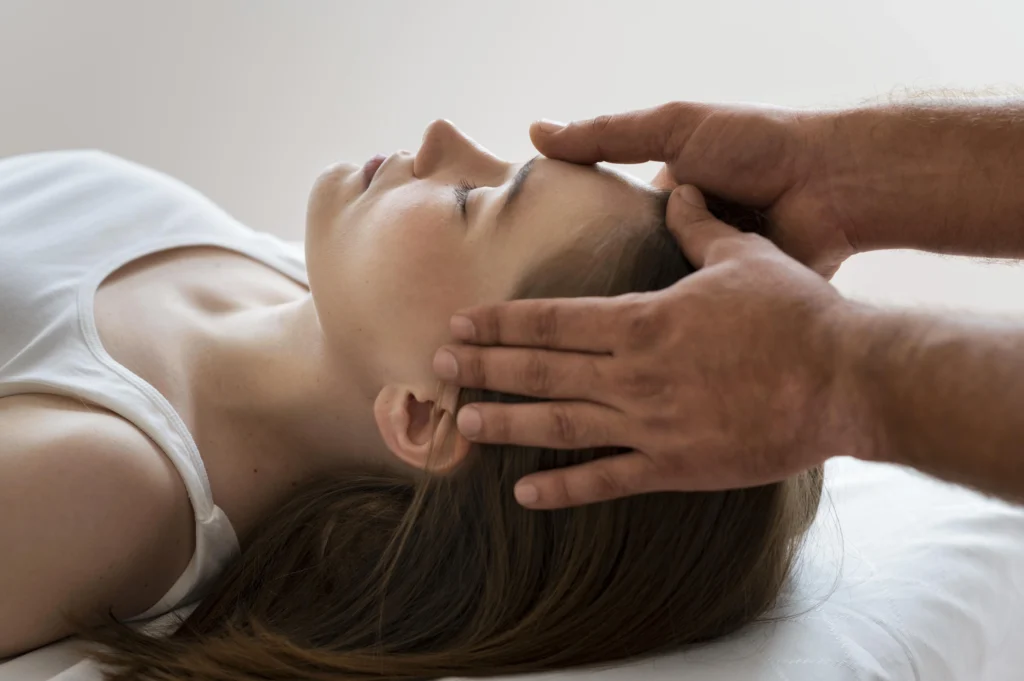
A genuine sinus headache usually comes with a few clear signs.
- Pressure in the cheeks, forehead, or around the eyes
- Pain that increases when you bend forward
- Blocked or stuffy nose
- Thick nasal discharge
- A feeling of heaviness in the face
It is not usually sharp or throbbing. It feels more like a deep internal pressure.
Why Physiotherapy Plays a Bigger Role Than You Think
Most people assume sinus problems are only about infection or allergies.
But in practice, I see something else contributing just as much.
Your posture. Your breathing. Your neck.
When your head stays forward for long hours, especially during laptop or phone use, it affects:
- Sinus drainage
- Blood flow
- Muscle tension around the face and neck
Research has shown that neck dysfunction is strongly linked with headache patterns. Falla et al. (2018)
So even if your sinuses are involved, your body mechanics can make things worse or keep the problem going.
What I Often See in Clinic
A patient walks in saying, “I have sinus headache for months.”
They’ve tried medicines. Steam. Sprays.
But when I assess them:
- Head is forward
- Neck is stiff
- Breathing is shallow
We work on posture and breathing.
Within a week, pressure reduces.
It is not magic. It is mechanics.
A Lesser Known Factor: Drainage, Not Just Blockage
Most treatments focus on clearing sinuses.
But very few people talk about drainage.
Recent fluid dynamics research shows that sinus ventilation and mucus movement depend heavily on airflow and positioning. Zhao et al. (2024)
This explains why some people feel worse when lying down and better when upright.
It also explains why posture correction actually helps.
Physiotherapy Treatment For Sinus Headache
Instead of just reducing pain, physiotherapy focuses on improving how your sinuses function, relieving pressure naturally, and addressing the root causes behind recurring symptoms.
Below is a detailed guide to physiotherapy treatment for sinus headache:
Manual Lymphatic Drainage (MLD)
Manual lymphatic drainage is a gentle, specialized technique used by physiotherapists to stimulate lymph flow and reduce sinus congestion.
By applying light, rhythmic strokes over the face, neck, and lymphatic pathways, MLD helps clear accumulated fluid and decreases facial pressure.
Research shows that MLD can significantly improve lymphatic circulation and reduce edema, which is particularly beneficial in conditions involving fluid stagnation like sinus congestion (PUBMED).
Myofascial Release and Trigger Point Therapy
Tight muscles in the face, jaw, and upper neck can refer pain to the sinus regions, mimicking or worsening sinus headaches.
Physiotherapists use myofascial release and trigger point therapy to reduce muscle tension and improve tissue mobility.
Studies have demonstrated that trigger points in cervical and craniofacial muscles are strongly associated with headache patterns and facial pain, and releasing them can significantly reduce symptoms (PMC).
Cervical Spine Mobilization and Posture Correction
Poor posture, especially forward head posture, can impair venous and lymphatic drainage from the head and contribute to sinus pressure and headaches.
Physiotherapists address this through cervical spine mobilization and targeted posture correction exercises.
Evidence suggests that correcting posture and improving cervical mobility can reduce headache intensity and frequency by relieving mechanical stress on surrounding structures (NCBI).
Breathing Exercises and Nasal Airflow Training
Dysfunctional breathing patterns, such as mouth breathing or shallow chest breathing, can worsen sinus congestion and reduce oxygenation.
Physiotherapists train patients in diaphragmatic and nasal breathing techniques to improve airflow and sinus ventilation.
Research indicates that proper breathing techniques can enhance respiratory efficiency and reduce upper airway resistance, thereby supporting sinus health (NIH)
Sinus Drainage Positions and Facial Exercises
Specific positioning techniques and facial mobility exercises are used to promote natural sinus drainage using gravity.
These include head positioning, gentle facial movements, and relaxation techniques that encourage mucus clearance.
Clinical approaches emphasize that combining positioning with movement can enhance sinus drainage and reduce pressure symptoms, especially when practiced regularly as part of a home program
A more advanced and emerging approach includes myofascial release of the posterior chain along with sinus drainage techniques, which looks beyond just the face and treats the body as a connected system.
Recent clinical findings suggest that releasing tension in the back, neck, and facial muscles together can significantly improve sinus headache symptoms and overall quality of life (Pubmed)
Muscle and Joint Coordination Around the Jaw and Upper Neck
In addition, physiotherapy treatment for sinus headache also focuses on muscle and joint coordination around the jaw and upper neck, which are closely linked to headache patterns.
Studies show that combining manual therapy with cervical exercises significantly improves headache-related symptoms and reduces disability, especially when musculoskeletal factors are involved (NCBI)
Pressure Points That Can Reduce Sinus Pressure
These are simple techniques, but they work best when done correctly.
1. Point Beside the Nose
Located on either side of your nostrils.
Use gentle circular pressure for about a minute.
This helps open nasal passages and reduce congestion.
2. Between the Eyebrows
This point is often used for calming.
Apply light pressure and breathe slowly.
It helps reduce frontal heaviness and tension.
3. Under the Cheekbones
This area corresponds to the maxillary sinus.
Gentle pressure here can reduce cheek pressure and even dental-type discomfort.
4. Inner Eyebrow Corner
This point is helpful when there is pressure around the eyes.
How to Make These Work Better
Do not just press and expect results.
Combine pressure with slow nasal breathing.
Slow breathing improves circulation and nervous system balance. Jerath et al. (2006)
This combination is what actually creates noticeable relief.
Exercises That Help Sinus Drainage
These are not random movements. Each one has a purpose.
1. Chin Retraction
Sit upright and pull your chin straight back.
Hold for a few seconds and repeat.
This corrects forward head posture and improves drainage pathways.
2. Rib Cage Breathing
Place your hands on your lower ribs.
Breathe in through your nose and expand sideways.
This improves fluid movement and reduces congestion.
3. Gentle Head Positioning
Lie down with your head slightly elevated.
Turn your head slowly from one side to the other.
This supports natural sinus drainage.
4. Jaw Relaxation
Keep your teeth slightly apart and tongue resting on the roof of your mouth.
Many people unknowingly clench their jaw, which increases facial tension.
5. Facial Activation
Simple movements like raising eyebrows, puffing cheeks, and smiling can improve circulation.
It sounds basic, but it works. intensity and frequency. Moraska et al. (2015)
A New and Interesting Approach
Some newer studies have explored the use of vibration combined with breathing techniques.
This approach showed improvement in facial pain and sinus symptoms. Taspinar et al. (2023)
This supports the idea that movement and airflow play a bigger role than we previously thought.
Do This, Not That
Do this
- Breathe through your nose
- Keep your head aligned with your spine
- Stay hydrated
- Use gentle pressure techniques
Not that
- Rely only on painkillers
- Slouch for long hours
- Forcefully blow your nose
- Ignore early symptoms
What Usually Does Not Work Long Term
- Overuse of nasal sprays
- Only taking painkillers
- Ignoring posture
- Treating symptoms without addressing cause
Common Mistakes People Make
- Pressing pressure points too hard
- Doing exercises only when pain starts
- Ignoring posture during screen time
- Mouth breathing all day
- Overusing nasal sprays for quick relief
Small habits like these keep the problem coming back.
How to Tell If It Is Not a Sinus Headache
This is important.
If your symptoms include:
- Throbbing pain
- Sensitivity to light
- Nausea
- Pain without congestion
It is more likely a migraine than a sinus issue.
A Simple Daily Routine
This is what I usually suggest.
Morning
- Chin retraction exercises
- Breathing practice
Evening
- Pressure points
- Steam or nasal rinse
Throughout the day
- Stay aware of posture
Consistency matters more than intensity.
Daily Sinus Relief Checklist
- Chin tuck exercises done
- Nose breathing maintained
- Water intake adequate
- Screen posture corrected
- Pressure points practiced
If you tick most of these, you are on the right track.
Red Flags You Should Not Ignore
- High fever with headache
- Swelling around eyes
- Vision changes
- Severe headache that feels different from usual
- Symptoms lasting more than 10 days
These need medical attention. Do not self-manage.
Why Your Sinus Headache Keeps Coming Back
- You treat pain, not the cause
- Posture remains unchanged
- Breathing stays shallow
- Lifestyle habits don’t improve
Relief without correction is temporary.
Final Thought From a Physiotherapist
You don’t have to keep guessing what is causing your headache.
In most cases, it’s not just your sinuses. It’s how your body is functioning overall. Your posture, your breathing, your daily habits.
I usually tell my patients this. If you only focus on quick relief, the headache keeps coming back. But when you start correcting the basics, things slowly begin to change.
It’s not instant, but it is consistent. And that’s what actually works.
Frequently Asked Questions
1. How do I know if my headache is sinus or something else?
Sinus headaches usually come with facial pressure and nasal congestion. If you have throbbing pain, nausea, or light sensitivity, it may be a migraine instead.
2. Do pressure points really help sinus headaches?
Yes, when used gently and combined with slow breathing, they can improve circulation and reduce pressure.
3. How long does it take for exercises to show results?
Some people feel relief within a few days, but consistent practice for 2 to 3 weeks gives better results.
4. Can posture really affect sinus pressure?
Yes, forward head posture can restrict drainage and increase pressure around the face.
5. Is steam inhalation enough to treat sinus headaches?
Steam provides temporary relief but does not address the root cause like posture or breathing issues.
6. Can neck tension cause sinus-like pain?
Yes, tight neck muscles can mimic sinus pressure and contribute to headaches.
7. What is the fastest way to relieve sinus pressure?
Using pressure points along with slow nasal breathing can provide quick relief.
8. When should I see a doctor?
If symptoms last more than 10 days, worsen, or include fever or vision changes, consult a doctor.
Stay tuned with us for more health related topics.
Follow us on LinkedIn and Instagram for more.


