


Home remedies for back pain can help ease discomfort, improve mobility, and support recovery through simple, practical strategies that can be used at home.
Back pain has a way of interrupting everyday life.
You wake up with stiffness, struggle to bend down to tie your shoes, or feel a sharp ache after sitting at your desk for too long.
In moments like these, most people are not looking for complicated medical terms.
They simply want to know:
“What can I do at home to feel better?”
Quick Answer
Simple home remedies for back pain include staying active, taking short walks, applying heat or cold, doing gentle stretches, improving your sleep position, managing stress, and avoiding prolonged bed rest. Most people benefit from combining several healthy habits rather than relying on one quick fix.
The good news is that many episodes of back pain improve with simple self-care measures.
In fact, most lower back pain is non-specific, meaning it cannot be linked to one particular structure in the spine.
As a physiotherapist, I often remind patients that recovery is rarely about finding one miracle cure.
Instead, it is usually the result of small healthy habits repeated consistently.
Key Takeaways
- Staying active is usually better than prolonged bed rest.
- Walking is one of the easiest and most effective home remedies.
- Heat and cold therapy may provide temporary relief.
- Gentle stretching can reduce stiffness and improve mobility.
- Good sleep and stress management support recovery.
- Small daily habits often matter more than miracle cures.
- Seek medical attention if you develop red flag symptoms.
Stay Active Instead of Staying in Bed
Years ago, people with back pain were often advised to stay in bed until the pain disappeared.
Today, we know that prolonged bed rest may actually slow recovery for many people.
Modern guidelines encourage maintaining normal activities as much as symptoms allow. (WHO)
This does not mean pushing through severe pain. It means avoiding unnecessary inactivity.
Walking around the house, doing light chores, or taking a short walk outside can help keep the body moving.
Walking Is One of the Best Home Remedies For Back Pain
Walking is simple, free, and suitable for most people.
It helps:
- Improve circulation
- Reduce stiffness
- Maintain mobility
- Build confidence in movement
- Support overall health
You do not need to walk for long periods.
Even ten to fifteen minutes, two or three times a day, can be beneficial.
Exercise and movement are widely recommended for managing chronic low back pain. (Hayden et al. 2021)
Use Heat to Relax Tight Muscles
Many people find that heat provides temporary relief.
A warm shower, heating pad, or hot water bottle may help relax muscles and reduce feelings of stiffness.
Heat is often useful when:
- Muscles feel tight
- The back feels stiff
- Pain develops after prolonged sitting
Use heat carefully and avoid placing extremely hot objects directly on the skin.
Can Ice Help?
Ice may be helpful during the first day or two after a minor strain or injury.
A cold pack wrapped in a towel can be applied for short periods.
Some people prefer heat, while others respond better to cold.
There is no single rule that works for everyone.
The best option is often the one that provides comfort without causing irritation.
Try Gentle Stretching
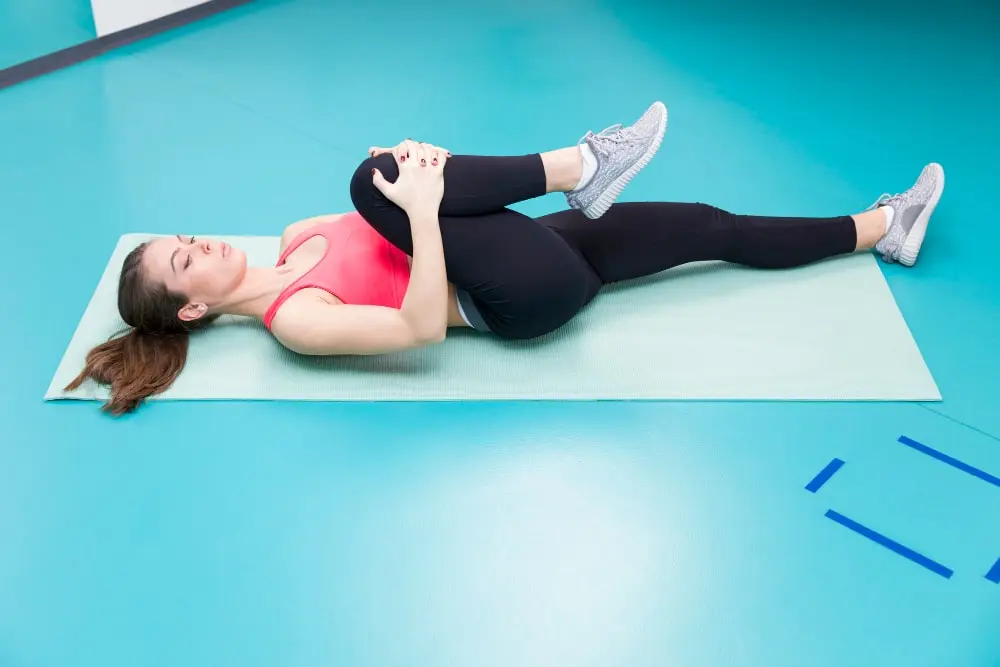
Gentle stretching can improve mobility and reduce the feeling of tight muscles.
Simple stretches include:
- Knee-to-chest stretch
- Child’s pose
- Hip flexor stretch
- Hamstring stretch
- Cat-camel movement
Stretching should feel comfortable.
Forcing the body into painful positions is rarely helpful.
Change Positions Regularly
Many people spend long hours sitting at work.
The body generally responds better to movement than remaining in one position.
Try to:
- Stand up every hour
- Walk during phone calls
- Stretch during work breaks
- Change posture regularly
The best posture is often the next posture.
Improve Your Sleep Position
Sleep gives the body time to recover.
Many people with back pain feel more comfortable:
- Sleeping on their side with a pillow between the knees
- Sleeping on their back with a pillow under the knees
The goal is to keep the spine in a comfortable sleeping position and reduce unnecessary strain.
Check Your Mattress
A very old or uncomfortable mattress may contribute to poor sleep quality.
You do not necessarily need the most expensive mattress.
The best mattress is usually one that feels supportive and allows you to sleep comfortably.
Our article Best Mattress for My Back Pain explores this topic in more detail.
Practice Deep Breathing and Relaxation
Pain and stress often influence one another.
During stressful periods, muscles may become tighter and the nervous system can become more sensitive.
Simple breathing exercises may help:
- Breathe in slowly through the nose
- Pause briefly
- Breathe out slowly through the mouth
Repeating this for several minutes can encourage relaxation.
Modern pain science recognises that biological, psychological, and social factors all contribute to the experience of pain. (Trachsel et al. 2023)
Stay Hydrated
Drinking enough water will not instantly cure back pain, but hydration supports normal body function and overall health.
People who remain physically active should also pay attention to maintaining adequate fluid intake.
Try Gentle Self-Massage
Some people find relief through gentle massage.
This may involve:
- Using your hands
- Using a massage ball
- Using a foam roller carefully
Massage should never be painful.
The goal is to relax muscles rather than force deep pressure into sensitive areas.
Improve Your Workstation
If you work at a desk, small changes in workstation setup can help reduce discomfort.
Try to:
- Keep your screen at eye level
- Support your feet
- Keep your shoulders relaxed
- Sit close to the desk
- Take regular movement breaks
Even the best chair cannot replace regular movement.
Continue with Everyday Activities
Many people become afraid of bending, lifting, or exercising after back pain begins.
However, avoiding all activity may slow recovery.
Most episodes of lower back pain are not caused by serious structural damage.
Remaining active and gradually returning to normal activities often helps rebuild confidence.
Eat a Healthy Diet
There is no special food that cures back pain.
However, a balanced diet supports healing and general health.
A healthy eating pattern includes:
- Fruits
- Vegetables
- Whole grains
- Lean proteins
- Healthy fats
Maintaining a healthy body weight may also reduce unnecessary strain on the body.
Manage Your Stress
Looking after mental well-being is an important part of looking after physical health.
Helpful strategies include:
- Meditation
- Spending time outdoors
- Reading
- Talking with family or friends
- Gentle relaxation exercises
Stress management is not about suggesting the pain is imaginary.
It is about recognising that the body and nervous system work together.
Avoid These Common Mistakes
Staying in Bed for Several Days
Too much rest may increase stiffness.
Looking for a Miracle Cure
Recovery usually comes from several healthy habits working together.
Overstretching
Gentle movement is usually more helpful than aggressive stretching.
Becoming Afraid of Movement
The spine is strong and designed to move.
Myth vs Fact
Myth: The best home remedy is complete bed rest.
Fact: Most people recover better when they stay active.
Myth: One stretch can cure back pain.
Fact: Recovery usually involves a combination of healthy habits.
Myth: Pain always means damage.
Fact: Many episodes of back pain improve without serious structural problems.
Should You Use Painkillers?
Some people choose to use over-the-counter pain relief.
However, medication should not become the only strategy.
Movement, exercise, and healthy habits often play a major role in long-term recovery.
If you have concerns about medication, speak with a healthcare professional.
When Should You See a Physiotherapist?
Professional advice may be helpful if:
- Pain lasts for several weeks
- Symptoms keep returning
- Pain spreads into the leg
- Daily activities become difficult
- You are becoming afraid of movement
A physiotherapist can help identify contributing factors and create an individual recovery plan.
When Should You Seek Immediate Medical Attention?
Seek urgent medical assessment if you experience:
- Loss of bladder or bowel control
- Severe weakness in the legs
- Numbness around the groin
- Major trauma
- High fever with severe back pain
- Unexplained weight loss
- Rapidly worsening symptoms
These symptoms require prompt medical evaluation.
Seek Immediate Medical Care If You Have:
- Loss of bladder or bowel control
- Severe weakness in the legs
- Numbness around the groin
- Major trauma
- High fever with severe back pain
- Unexplained weight loss
- Rapidly worsening symptoms
A Physiotherapist’s Advice
One of the biggest lessons I have learned is that the body is remarkably adaptable.
Most people do not need to find one perfect exercise or one miracle treatment.
Small daily habits often make the biggest difference.
Walk regularly.
Stay active.
Sleep well.
Manage stress.
Trust that your back is stronger than you think.
A Physiotherapist’s Advice
You do not need to wait for all pain to disappear before moving. Gentle activity, walking, and returning gradually to normal life often help the body recover. Your back is designed to move and adapt.
Final Thoughts
Home remedies for back pain are not about avoiding healthcare.
They are about supporting recovery through simple, evidence-based habits that you can start today.
Walking, gentle stretching, heat therapy, healthy sleep, stress management, and staying active can all play a valuable role.
Low back pain is one of the leading causes of disability worldwide, but many people recover successfully with conservative care and healthy lifestyle habits. (World Health Organization 2023)
While home remedies for back pain may provide significant relief, persistent or worsening symptoms should be evaluated by a healthcare professional.
❓ Frequently Asked Questions
1. What is the best home remedy for back pain?
Walking, staying active, gentle stretching, and heat therapy are among the most commonly recommended home remedies.
2. Should I rest if my back hurts?
Short periods of rest may help, but prolonged bed rest is usually not recommended.
3. Is heat or ice better for back pain?
Both can help. Heat is often used for stiffness, while ice may be useful after a recent strain.
4. Is walking good for back pain?
Yes. Walking is a low-impact activity that can improve mobility and reduce stiffness.
5. Can stress make back pain worse?
Yes. Stress can increase muscle tension and affect how pain is experienced.
6. When should I see a physiotherapist?
If pain lasts for weeks, keeps returning, or limits daily activities, professional advice may help.
7. Can a mattress affect back pain?
A supportive and comfortable mattress may improve sleep quality and comfort.
8. When should I seek emergency medical care?
Seek urgent help if you develop severe weakness, bladder or bowel problems, numbness around the groin, or major trauma.
Stay tuned with us for more health related topics.
Follow us on LinkedIn and Instagram for more.
More Read


Medical Disclaimer!
This article has been reviewed and written under the guidance of our Head Physiotherapist, Dr. Kruti Raj (PT, MUHS,CPT,CMPT). The information shared is intended for educational purposes only and should not be considered a substitute for personalized medical advice, diagnosis, or treatment.
Please consult us or any other qualified healthcare professional before beginning any exercise program, especially if you are experiencing pain, recovering from injury, or managing a medical condition.


