


A cervical collar, commonly called a neck brace, is an orthopedic device designed to support, stabilize, and restrict movement of the cervical spine.
As a physiotherapist, I often tell my patients: a collar is not a treatment, it is a temporary support tool.
Cervical collars work primarily by limiting neck motion, thereby reducing strain on injured tissues.
Research shows that rigid cervical collars can significantly restrict neck movement, especially flexion and extension, making them useful when immobilization is required. (ScienceDirect)
Another study comparing soft vs rigid collars found that rigid collars reduce movement far more effectively (up to ~60%), whereas soft collars provide minimal restriction. (PubMed)
This difference is crucial when prescribing collars clinically.
Read about: Early Signs of Cervical Spine Damage You Should Never Ignore
Quick Answer
A cervical collar is a neck support device used to limit movement and protect the cervical spine after injury or surgery. While it can reduce pain and provide stability in the short term, prolonged use may weaken neck muscles and delay recovery. Physiotherapy and guided exercises are essential for long-term healing.
Read about our Complete Neck Pain Guide : Causes, Symptoms, Exercises and Treatment
Key Takeaways
- Cervical collars are designed to restrict neck movement and provide temporary support.
- Rigid collars are more effective than soft collars for immobilization.
- Prolonged use can cause muscle weakness, stiffness, and delayed recovery.
- Modern physiotherapy favors early movement over long-term collar use.
- Always use a cervical collar under medical guidance and combine it with rehab exercises.
Read about : 15 Common Causes of Neck Pain You Should Know
Types of Cervical Collars
Soft Cervical Collar
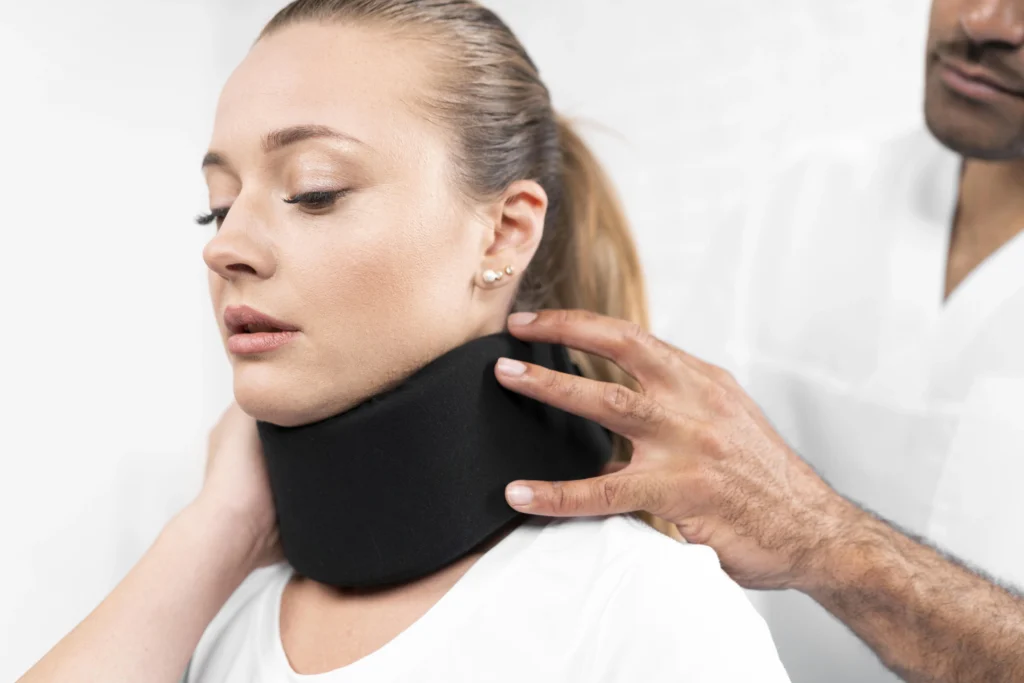
- Made of foam
- Provides mild support
- Allows partial movement
- Often used for muscle spasm or mild pain
However, studies suggest soft collars may reduce movement by only ~17%, making them less effective for true immobilization. (PubMed)
Rigid Cervical Collar
- Made of plastic with padding
- Provides strong immobilization
- Used in trauma, fractures, post-surgery
Rigid collars can restrict motion significantly across all directions, making them more suitable for acute injuries. (PubMed)
Specialty Collars
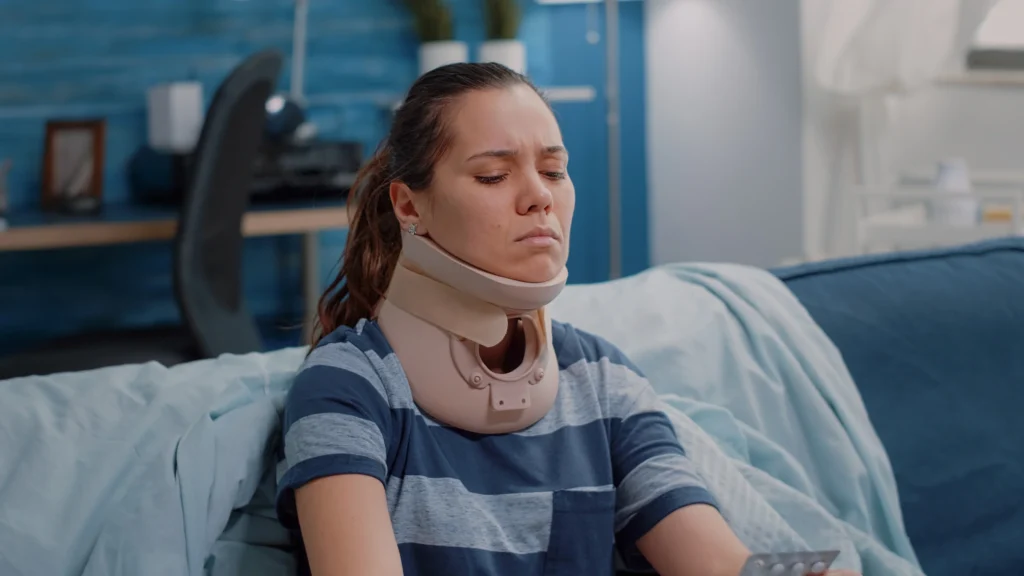
- Philadelphia collar
- Miami J collar
- Aspen collar
These are prescribed in serious spinal conditions and must always be fitted professionally.
Also read: How to Relieve Neck Tightness Without Equipment
When Should You Use a Cervical Collar?
From a physiotherapy perspective, cervical collars are useful in specific, short-term situations:
1. Acute Neck Injury (Whiplash, Trauma)
A collar may help reduce pain by limiting movement during the inflammatory phase.
However, evidence suggests prolonged immobilization may delay recovery, especially in whiplash cases.
Read in detail: Whiplash Injury After An Accident? Here’s Treatment And Expert Rehab Guide
2. Post-Surgical Support
Traditionally prescribed after cervical spine surgery.
But recent research challenges this practice.
A 2025 study found no significant difference in outcomes between patients using collars and those who did not, suggesting collars may not always be necessary. (Houston Methodist)
Read in detail about: Cervical Disc Degeneration: The Hidden Cause of your Neck Pain
3. Cervical Radiculopathy or Disc Issues
Temporary use can reduce nerve irritation by limiting painful movements.
Read in detail about: What is Cervical Spondylosis? The Truth Behind Chronic Neck Pain
4. Severe Muscle Spasm
Short-term use may allow muscles to relax.
Read more: Cervical Myelopathy: The Hidden Neck Condition Affecting Your Walking
5. Neurological Conditions
e.g., Dropped Head Syndrome
Provides external support when muscles are weak.
Read: What is Torticollis? How to treat neck tilt condition
When You Should NOT Use a Cervical Collar
As a physiotherapist, I strongly emphasize that collars are often overused.
Avoid or limit use in:
- Chronic neck pain without instability
- Postural neck pain (IT workers, desk jobs)
- Long-term use without supervision
- Mild stiffness or tension
Why? Because movement, is the key to recovery and not immobilization
Read : A Complete Guide To Neck Arthriti
Benefits of Cervical Collars
1. Pain Relief
By limiting movement, collars reduce mechanical irritation.
2. Protection After Injury
Prevents sudden or harmful neck movements.
3. Psychological Support
Patients feel “safer,” which can reduce fear-based movement.
4. Temporary Muscle Offloading
Helpful in acute inflammation phases.
A study on computer workers found cervical collars may reduce pain associated with prolonged posture-related neck strain when used appropriately. (teknokes.org)
Read about: What Is Military Neck Or Cervical Kyphosis And How To Treat It
Side Effects and Risks
This is where most patients go wrong.
1. Muscle Weakness and Atrophy
Long-term use leads to muscle deconditioning and stiffness. (Healthline)
2. Reduced Neck Mobility
Prolonged immobilization makes the neck stiff and less functional.
3. Skin Problems
- Pressure sores
- Irritation
- Sweating
4. Swallowing Difficulty (Dysphagia)
Rigid collars can compress throat structures. (Houston Methodist)
5. Delayed Recovery
Over-reliance can slow healing. Evidence suggests movement-based rehab is superior to prolonged immobilization.
7. Poor Posture Dependency
Patients may “lean” into the collar, worsening posture.
8. Increased Intracranial Pressure (rare but serious)
Especially in trauma cases. (Healthline)
9. Psychological Dependence
Patients may fear removing the collar, even when safe.
Read: Lhermitte’s sign- An Electic Shock Sensation Down The Neck
Lesser-Known Clinical Facts
Rigid collars restrict motion but do not guarantee spinal stability in all injuries.
Soft collars may act more like a reminder device than a true support.
Prolonged collar use can alter proprioception (your body’s sense of position).
Some patients develop dependency, fearing movement without the collar.
New research is exploring dynamic neck supports that allow movement while providing stability.
Read about: Neck And Jaw Pain Together? Here’s The Full Clinical Picture
How to Use a Cervical Collar Correctly
1. Follow Time Limits Strictly
- Acute injury: usually 3-7 days (unless prescribed longer)
- Avoid all-day use unless medically necessary
2. Ensure Proper Fit
- Chin should rest comfortably
- Not too tight (avoid breathing/swallowing issues)
- Not too loose (ineffective support)
3. Combine With Physiotherapy
Never use a collar as a standalone treatment.
4. Maintain Skin Hygiene
- Clean daily
- Check for redness or sores
5. Remove Periodically (if allowed)
- Gentle movement prevents stiffness
Read About: Best Sleeping Position for Neck Pain: A Physiotherapist’s Complete Guide
How to Sleep with a Cervical Collar
Sleeping is one of the biggest challenges for patients wearing a cervical collar.
The goal is to maintain neutral spinal alignment while minimizing strain.
Best Sleeping Positions
- On your back (ideal): Keeps spine aligned
- Side sleeping (if needed): Ensure neck stays straight
- Avoid stomach sleeping completely
Pillow Tips
- Use one thin pillow only
- Avoid stacking pillows (increases neck flexion)
- Consider a firm mattress for better support
Safe Bed Movement Technique
- Use log rolling method (roll body as one unit)
- Avoid sudden neck movements
Hospitals recommend log-rolling to prevent spinal stress during recovery. (UHD)
Read About: How to Choose the Right and Best Pillow for Neck Pain
Lesser-Known Insight
A 2025 randomized study found that cervical collars may improve airway alignment during sleep in certain patients, especially those with positional breathing issues. (PubMed)
Clinical guidelines recommend maintaining a neutral neck position and avoiding twisting, as improper positioning can delay healing. (Healthline)
Read about: What is Turkey Neck And How To Fix It Naturally
How to Bathe or Shower with a Cervical Collar
This is where many patients make mistakes.
Option 1: Shower with Collar
- Keep collar on to prevent sudden movements
- Use a shower chair to reduce fall risk
- Use a handheld shower for control
Hospitals advise wearing the collar during showers due to high fall and sudden neck movement risk. (Cambridge University Hospitals)
Option 2: Remove Collar (Only if Doctor Allows)
- Must be done with assistance
- Neck must remain fully supported
- Replace collar immediately after
Important Tip
- Cover collar with plastic to keep it dry
- Or use waterproof liners
Bathing is not just hygiene, it’s a high-risk activity for reinjury due to slippery surfaces and reflex movements.
Read: How to Fix Sagging,Ozempic Neck After Rapid Weight Loss
How to Clean a Cervical Collar Properly
Hygiene is critical to prevent skin infections and irritation.
Daily Cleaning Routine
- Remove pads (if removable)
- Wash with mild soap and lukewarm water
- Air dry completely before reuse
If not cleaned regularly, bacteria buildup can lead to skin irritation and sores. (Healthline)
For Rigid Collars
- Clean plastic shell separately
- Replace inner pads regularly
Skin Care Checklist
- Inspect skin twice daily
- Look for redness, sores, or sweating
Clinical guidelines emphasize daily skin checks to prevent pressure injuries. (Children’s Minnesota)
Also Read : Neck Cracking: Benefits, Risks, and the Truth About Stroke
Tips to Wear a Cervical Collar Comfortably
1. Proper Fit is Everything
- Should be snug, not tight
- Chin rests comfortably
- No pressure points
Improper fit can lead to skin irritation, pain, and ineffective support. (NHS Hull)
2. Maintain Good Posture
- Keep ears aligned with shoulders
- Avoid slouching
3. Avoid Long Static Positions
- Change position every 30-45 minutes
- Gentle movement prevents stiffness
4. Clothing Tips
- Wear cotton clothing
- Avoid collars rubbing against brace
5. Manage Heat & Sweat
- Use extra liners
- Keep skin dry
Physiotherapy Tip
Think of the collar as a support, not a resting place. Don’t “hang” your neck into it.
Read more: Is Cervical Traction For Neck Pain Really Effective
How Long Should You Wear a Cervical Collar?

This depends entirely on the condition, but here’s a clinically guided framework:
General Guidelines
- Mild neck pain: 3–7 days maximum
- Acute injury: 1–2 weeks (guided)
- Post-surgery: 2–6 weeks (doctor-dependent)
Prolonged use beyond this can cause muscle weakness and stiffness, delaying recovery. (Healthline)
Read : Chiropractic for Neck Pain: Does It Really Work?
Condition-Specific Wearing Duration
1. Whiplash Injury
- Short-term use (few days)
- Early movement preferred
2. Cervical Spondylosis
- Intermittent use only
- Not for long-term daily wear
3. Cervical Disc Herniation
- Short-term during acute pain phase
4. Post-Surgery (e.g., Fusion)
- Typically 2–6 weeks
- Depends on surgeon protocol
5. Fractures / Severe Trauma
- Continuous use (24/7)
- May require rigid collar
Medical guidance often recommends continuous wear (including sleep) in serious conditions. (Cambridge University Hospitals)
Read about: The Most Effective McKenzie Exercises For Neck Pain
Daily Do’s and Don’ts
Do’s
- Follow prescribed duration strictly
- Keep collar clean and dry
- Perform physiotherapy exercises
- Maintain upright posture
Don’ts
- Don’t wear longer than advised
- Don’t sleep without guidance
- Don’t ignore skin irritation
- Don’t use as a long-term solution
Read more: Heat Or Cold Therapy for Neck Pain: What Actually Works?
Signs Your Collar is Doing More Harm Than Good
- Increasing stiffness
- Skin redness or sores
- Headaches after wearing
- Feeling “dependent” on it
- Reduced neck strength
These indicate it’s time to reassess usage immediately.
Also Read: Ultimate 6 Weeks Neck Rehabilitation Exercises For Pain Relief
Physiotherapy Perspective: Collar vs Movement
Modern rehabilitation strongly favors early controlled movement over immobilization.
Studies indicate that active mobilization and physiotherapy outperform prolonged collar use in conditions like whiplash. (ScienceDirect)
In fact:
- Soft collars may be no better than doing nothing
- Exercise-based rehab leads to faster recovery
This is why I tell my patients:
“A collar may protect you, but physiotherapy heals you.”
Read about: Effective Neck Pain Exercises At Home: A Complete Guide to Relief and Improved Mobility
Physiotherapy Exercises to Do Alongside Collar Use
Should always be guided by a professional)
Early Phase
- Chin tucks (gentle) [Learn: How to do Chin Tucks for Neck Pain Relief and Posture Correction]
- Deep breathing exercises
- Isometric neck holds
Recovery Phase
- Neck mobility exercises
- Scapular strengthening
- Postural correction drills
Read: Simple Posture Correction Exercises for Forward Head Posture
Clinical Insight
In my clinical practice, the biggest mistake I see is over-dependence on cervical collars.
Patients often come to me after weeks of use with:
- Weak neck muscles
- Increased stiffness
- Fear of movement
The truth is:
A collar should be like a crutch, temporary and gradually discontinued.
Read more: Cervical Disc Bulge: Causes, symptoms and treatment
Physio Prescription
- Use collar only when medically indicated
- Limit duration strictly
- Start gentle exercises early
- Focus on posture correction
- Strengthen deep neck flexors
- Avoid resting into the collar
Read in detail about: Cervical Radiculopathy: Why Neck Nerve Pain Travels to the Arm
Red Flags
- Severe trauma
- Numbness or weakness in arms
- Loss of coordination
- Difficulty swallowing or breathing
- Persistent severe pain
Read more: Cervical Vertigo Explained: Why Neck Pain Make You Feel Dizzy
Myth vs Reality
Myth: Cervical collars heal neck pain
Reality: They only support temporarily, rehab is essential
Myth: More use = faster recovery
Reality: More use = weaker muscles
Myth: Soft collars are always safe
Reality: Even soft collars can delay recovery if overused
Read about: What Is Cervical Myofascial Pain Syndrome And How To Relieve Trigger Points
Frequently Asked Questions
1. How long should I wear a cervical collar?
Typically 3–7 days for minor injuries, unless advised otherwise by a doctor.
2. Can I sleep with a cervical collar?
Only if prescribed. Improper use may cause discomfort or breathing issues.
3. Is a soft collar effective?
It provides minimal support and is mainly used for comfort rather than immobilization.
4. Can cervical collars weaken neck muscles?
Yes, prolonged use can lead to muscle weakness and stiffness.
5. Is physiotherapy necessary with a neck brace?
Yes, it is essential for proper recovery and preventing long-term issues.
Read about: Cervical Ligament Injury or Neck Ligament Tear
Final Word
A cervical collar is a powerful but double-edged tool.
Used correctly, it protects.
Used excessively, it weakens.
As a physiotherapist, my advice is simple:
“Respect the collar, but don’t rely on it.”
Your recovery lies in movement, strength, and guided rehabilitation.
Stay tuned with us for more health related topics.
Follow us on LinkedIn and Instagram for more.
More Read


Medical Disclaimer!
This article has been reviewed and written under the guidance of our Head Physiotherapist, Dr. Kruti Raj (PT, MUHS,CPT,CMPT). The information shared is intended for educational purposes only and should not be considered a substitute for personalized medical advice, diagnosis, or treatment.
Please consult us or any other qualified healthcare professional before beginning any exercise program, especially if you are experiencing pain, recovering from injury, or managing a medical condition.


