


How the uterus grows during pregnancy is one of the most remarkable changes in the human body
The uterus undergoes remarkable growth during pregnancy, expanding from the size of a small pear to accommodate a full-term baby.
Pregnancy changes nearly every system in the body, but no organ undergoes a transformation quite as remarkable as the uterus.
Most women expect their belly to grow.
What often surprises them is how many other changes happen along the way.
Suddenly, your jeans feel tighter.
Rolling over in bed becomes more complicated.
Breathing feels different. Even your posture starts to change.
Quick Answer
The uterus expands dramatically throughout pregnancy, growing from a small pear-shaped organ weighing about 60-80 grams to a muscular structure weighing nearly 1,100 grams by full term. As it grows, it moves from the pelvis into the abdomen, reaching the belly button around 20 weeks and the rib cage by 36 weeks. This expansion affects posture, breathing, digestion, pelvic floor function, and abdominal muscles, making uterine growth one of the most remarkable adaptations of pregnancy.
As a women’s health physiotherapist,
I often hear mothers say, “I knew my baby was growing, but I didn’t realize how much my body would have to adapt.”
The truth is that many of the physical changes you experience during pregnancy are connected to one incredible process: the expansion of the uterus.
By the time your baby is ready to be born,
the uterus will have grown from a small pelvic organ roughly the size of a pear into a structure large enough to hold a full-term baby, the placenta, amniotic fluid, and everything needed to support life before birth.
Understanding how the uterus grows and expands can help you make sense of many pregnancy symptoms and feel more confident about the changes happening inside your body.
Key Takeaways
- The uterus begins pregnancy weighing around 60-80 grams and may reach approximately 1,100 grams by full term.
- Growth starts very early, often before a visible baby bump appears.
- Between 12 and 16 weeks, the uterus moves from the pelvis into the abdominal cavity.
- By 20 weeks, the top of the uterus usually reaches the belly button.
- During the third trimester, the uterus expands upward toward the rib cage.
- Uterine growth influences posture, breathing, digestion, abdominal muscles, and pelvic floor health.
- Shortness of breath and rib discomfort often result from the enlarging uterus pressing against the diaphragm.
- The abdominal muscles naturally stretch to accommodate uterine growth.
- The pelvic floor works harder throughout pregnancy as uterine weight increases.
- After delivery, the uterus gradually returns toward its pre-pregnancy size through a process called involution.
Why the Uterus Is One of the Body’s Most Extraordinary Organs
Before pregnancy, the uterus weighs approximately 60 to 80 grams and has a cavity that can hold only about 10 milliliters of fluid.
By the end of pregnancy, it may weigh close to 1,100 grams and hold around 5 liters or more.
This means the uterus increases its capacity hundreds of times over during pregnancy.
What makes this even more fascinating is that the uterus does not simply stretch like a balloon.
Its muscle cells actually grow larger and multiply.
Blood vessels expand. Supporting tissues adapt.
Hormones coordinate these changes with remarkable precision.
In simple terms, your body is remodeling an entire organ to create a safe environment for your baby.
Did You Know?
The uterus increases its capacity hundreds of times during pregnancy. Few organs in the human body undergo such a dramatic transformation in size, blood supply, and function over such a short period.
The Changes Begin Long Before You Start Showing
One of the biggest misconceptions about pregnancy is that uterine growth begins when the bump becomes visible.
In reality, significant changes start very early.
Within days of implantation, the uterus begins preparing for the growth during pregnancy.
Blood flow increases dramatically.
The uterine lining thickens.
Hormones signal the muscles and connective tissues to become more flexible.
During the first trimester, most of these changes are hidden because the uterus remains deep inside the pelvis.
That is why many women experience symptoms long before they look pregnant.
Why You May Feel Pregnant Before You Look Pregnant
During the first trimester of pregnancy, the uterus grows and starts taking up more space within the pelvis.
At the same time, blood volume begins increasing and hormone levels rise rapidly.
As a result, many women notice:
- Pelvic heaviness
- Frequent urination
- Mild lower back discomfort
- Bloating
- A feeling of fullness in the lower abdomen
These sensations are often dismissed as “normal pregnancy symptoms,” but many are directly related to the uterus beginning its expansion journey.
A Physiotherapist’s Observation
Many first-time mothers worry when they feel pressure in the pelvis during early pregnancy.
In most cases, this sensation is simply the uterus adapting and increasing in size.
Of course, any severe pain should always be discussed with your healthcare provider, but mild pelvic awareness is extremely common.
When the Uterus Leaves the Pelvis
Around the end of the first trimester, something important happens.
The uterus grows and becomes too large to remain entirely within the pelvis during pregnancy.
As it grows upward, it gradually enters the abdominal cavity.
This transition usually occurs between 12 and 16 weeks of pregnancy.
Many women notice subtle changes around this time.
Clothes may fit differently.
The lower abdomen may appear slightly rounded.
The sensation of bladder pressure sometimes improves because the uterus is no longer pressing as heavily within the pelvis.
The First Time Many Women Notice a Bump
Interestingly, the appearance of a baby bump varies significantly from person to person.
Factors that influence when you start showing include:
- Height
- Core muscle tone
- Previous pregnancies
- Baby’s position
- Body composition
Some women notice visible changes by 14 weeks.
Others may not show clearly until closer to 20 weeks.
Neither is necessarily better or worse.
The Second Trimester Growth Spurt
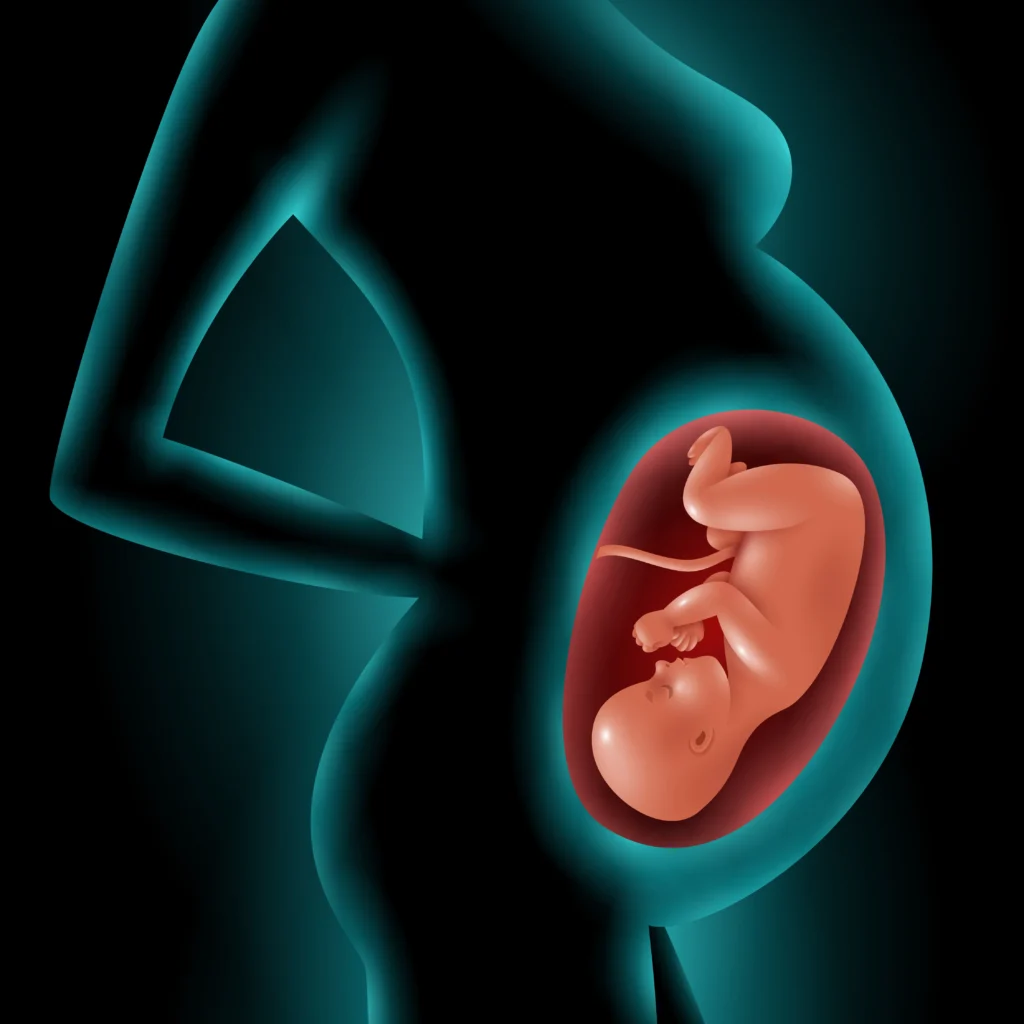
The second trimester is when uterine growth becomes much more noticeable.
Many women describe this period as the stage where pregnancy suddenly feels real.
The uterus continues moving upward while expanding outward.
As space becomes limited within the abdomen, nearby organs begin adjusting their positions.
Your Body Is Constantly Making Room
One lesser-known fact about pregnancy is that the growing uterus does not simply occupy empty space.
Instead, surrounding structures gradually shift to accommodate it.
The intestines move upward and sideways.
The bladder becomes compressed.
The stomach changes position.
The diaphragm slowly rises.
These adaptations explain why symptoms can evolve dramatically from one trimester to the next.
The Belly Button Milestone
Around 20 weeks, the top of the uterus typically reaches the level of the belly button.
Healthcare providers often begin measuring fundal height around this stage.
Fundal height is the distance between the pubic bone and the top of the uterus.
It provides a simple way to monitor growth throughout pregnancy. (Cleveland Clinic 2024)
Although ultrasounds provide more detailed information, fundal height measurements remain a valuable clinical tool.
Why Your Posture Changes During Pregnancy
One of the most noticeable effects of uterine growth is its impact on posture.
As the uterus grows and expands forward during pregnancy, your center of gravity shifts.
Without realizing it, your body begins making adjustments to maintain balance.
Many women develop:
- Increased lower back arching
- Forward head posture
- Rib flare
- Changes in walking pattern
These adaptations are normal.
However, they can place extra strain on muscles and joints.
The Connection Between Uterine Growth and Back Pain
Pregnancy-related back pain is often blamed entirely on hormones.
Hormones certainly play a role.
However, biomechanics are equally important.
As the uterus grows and becomes heavier in pregnancy, the muscles of the back, abdomen, hips, and pelvic floor must work differently.
This increased workload can contribute to discomfort.
The larger the uterus becomes, the more these adaptations are required.
Physiotherapist’s Advice
One of the most effective strategies during pregnancy is maintaining movement.
Simple activities such as:
- Walking
- Pelvic tilts
- Prenatal strengthening exercises
- Gentle stretching
can help the body adapt more comfortably to the changing demands of pregnancy.
The goal is not perfect posture.
The goal is helping your body move efficiently as the uterus grows during pregnancy.
Why Round Ligament Pain Happens
A common question I hear in clinic is:
“Why do I get a sudden sharp pain when I stand up?”
Often, the answer involves the round ligaments.
These ligaments help support the uterus.
As the uterus expands and grows, the ligaments stretch significantly in pregnancy.
For some women, this stretching creates brief episodes of discomfort.
The sensation is often described as:
- Sharp
- Pulling
- Stabbing
- Located near the groin or lower abdomen
It commonly occurs during:
- Standing up quickly
- Sneezing
- Coughing
- Rolling over in bed
A Lesser-Known Fact
Round ligament pain is frequently mistaken for a muscle injury.
In reality, it is often a sign that the supporting tissues around the uterus are adapting to rapid growth.
While uncomfortable, it is usually considered a normal part of pregnancy.
The Amazing Increase in Blood Flow
The growing uterus requires an enormous blood supply.
To support this demand, the cardiovascular system undergoes significant changes.
Blood volume increases substantially throughout pregnancy.
Blood flow to the uterus and placenta rises dramatically to provide oxygen and nutrients to the developing baby. (Lawrence et al. 2006)
This increased circulation is one reason many women experience:
- Warmth
- Mild swelling
- Pelvic fullness
- Increased vaginal discharge
Although these symptoms can feel strange, they often reflect the body’s effort to support a healthy pregnancy.
A Recent Discovery About How the Uterus Grows During Pregnancy
For many years, people assumed the uterus expanded evenly in all directions.
Recent research suggests the process is more complex.
A 2024 biomechanical study found that uterine growth patterns vary throughout pregnancy and are not simply the result of uniform stretching.
Researchers observed differences in how various regions of the uterus and cervix adapt over time. (Jolivet et al. 2024)
This research helps explain why pregnancy can feel so different from one woman to another.
The uterus is not following a rigid blueprint.
It is constantly adapting to the unique demands of each pregnancy.
When the Uterus Reaches the Rib Cage
By the third trimester, the uterus has become the dominant structure within the abdomen.
What began as a small pelvic organ is now occupying a significant portion of the abdominal cavity.
Around 36 weeks of pregnancy, the top of the uterus typically reaches its highest point beneath the rib cage.
This is often the stage when women tell me they feel as though there is simply “no room left.”
They are usually right.
The uterus has expanded so much that nearby organs are competing for space. (Mayo Clinic 2024)
Why Your Ribs May Feel Sore
Many women are surprised when pregnancy discomfort shifts upward.
Earlier in pregnancy, pressure is often felt in the pelvis.
Later, discomfort may appear under the ribs.
This happens because the uterus continues rising throughout the third trimester.
If your baby stretches, kicks, or changes position near the upper abdomen, the pressure can be quite noticeable.
Some women describe it as:
- Tightness under the bra line
- Aching along the lower ribs
- A bruised sensation beneath the chest
- Difficulty finding a comfortable sitting position
While uncomfortable, these sensations are often a sign of normal uterine growth and a healthy-sized baby occupying more space.
Why Breathing Feels Different in Late Pregnancy
One of the most common concerns during the third trimester is shortness of breath.
Many women worry something is wrong.
In most cases, the explanation is surprisingly simple.
The enlarging uterus pushes upward against the diaphragm.
The diaphragm is the primary muscle responsible for breathing.
As the uterus rises, the diaphragm has less room to move downward during inhalation.
A Physiotherapist’s Perspective on Breathing
When I assess pregnant women during the third trimester, I often notice changes in breathing patterns.
Instead of expanding the abdomen during inhalation, many women begin relying more heavily on their upper chest and neck muscles.
This is understandable.
The growing uterus limits how much the abdomen can expand.
Simple breathing exercises can help improve comfort.
I often encourage women to focus on:
- Rib cage expansion
- Gentle side breathing
- Relaxed shoulder positioning
- Slow controlled exhalation
The goal is not to take deeper breaths.
The goal is to breathe more efficiently within the space available.
What Happens to Your Abdominal Muscles?
As the uterus expands forward, the abdominal wall must stretch to accommodate it.
This process is remarkable.
The abdominal muscles do not simply get pushed aside.
They gradually lengthen and adapt over many months.
Understanding Diastasis Recti
One lesser-known consequence of uterine expansion is diastasis recti.
This refers to the widening of the connective tissue between the two sides of the rectus abdominis muscle.
In simple terms, the “six-pack” muscles gradually separate to create more room for the growing uterus.
Research suggests this separation becomes increasingly common during late pregnancy. (Carlson et al. 2026)
Many women assume this means their abdominal muscles have been damaged.
That is not necessarily true.
A certain degree of separation is often a normal adaptation to pregnancy.
Why Core Strength Still Matters
Some women avoid exercise during pregnancy because they are afraid of worsening abdominal separation.
In reality, appropriate exercise is usually beneficial.
A well-designed prenatal exercise program can help support:
- Posture
- Breathing mechanics
- Back comfort
- Pelvic stability
- Recovery after birth
The focus should be on function rather than appearance.
How the Growing Uterus Affects the Pelvic Floor
The pelvic floor plays an important role throughout pregnancy.
These muscles form a supportive hammock at the base of the pelvis.
As the uterus becomes heavier, the pelvic floor must manage increasing loads.
Imagine carrying a backpack that gradually becomes heavier every week.
Eventually, the muscles responsible for support need to work harder.
The pelvic floor experiences a similar challenge.
Signs Your Pelvic Floor Is Working Hard
Some women notice:
- Pelvic heaviness
- Pressure in the vagina
- Difficulty controlling urine when coughing or sneezing
- Fatigue after standing for long periods
These symptoms deserve attention rather than being dismissed as “just pregnancy.”
Physiotherapist’s Advice
Pelvic floor exercises are not simply about squeezing muscles repeatedly.
Effective pelvic floor training involves:
- Strength
- Relaxation
- Coordination
- Breathing awareness
In many cases, learning how to relax the pelvic floor can be just as important as learning how to strengthen it.
The Surprising Effect on Your Digestive System
The uterus does not only influence muscles and posture.
It also affects digestion.
As the uterus expands, the stomach and intestines gradually shift position.
This helps explain why digestive symptoms become more common later in pregnancy.
Why Heartburn Often Gets Worse
Heartburn is frequently blamed on pregnancy hormones.
Hormones do play a role.
However, mechanical pressure also contributes.
As the uterus grows upward, the stomach becomes compressed.
This can make acid reflux more likely. (Mayo Clinic 2024)
Smaller meals and avoiding lying down immediately after eating may help reduce symptoms.
When the Baby Drops
Toward the end of pregnancy, many women notice a sudden change.
Breathing becomes easier.
At the same time, pelvic pressure increases.
This stage is commonly called “lightening.”
What Is Lightening?
Lightening occurs when the baby’s head settles deeper into the pelvis.
As this happens, the uterus shifts slightly downward.
The upper abdomen may feel less crowded.
The lungs and diaphragm often gain a little more room.
Many women describe feeling as though the baby has “dropped.”
Interestingly, first-time mothers often notice this change weeks before labor begins.
For others, it may not occur until labor is approaching.
What Happens to the Uterus After Birth?
One of the most remarkable aspects of pregnancy is that the story does not end with delivery.
After birth, the uterus begins another extraordinary transformation.
It starts shrinking.
This process is called involution.
How Quickly Does the Uterus Shrink?
Immediately after delivery, the uterus still weighs approximately 1 kilogram.
Over the following weeks, it gradually returns toward its pre-pregnancy size.
The majority of involution occurs during the first six weeks postpartum.
Many women are surprised by this.
After carrying a baby for nine months, the body does not instantly return to normal.
Recovery is a gradual process.
A Physiotherapist’s Reminder
Healing deserves the same respect as pregnancy itself.
The abdominal muscles, pelvic floor, connective tissues, breathing patterns, and posture all need time to recover.
One of the most common mistakes I see is women expecting their bodies to bounce back immediately.
Recovery is not a race.
It is a process.
When Should You Speak With Your Healthcare Provider?
Most uterine growth follows a healthy and predictable pattern.
However, there are situations that deserve medical evaluation.
Speak with your healthcare provider if you experience:
- Severe abdominal pain
- Sudden swelling
- Significant bleeding
- Reduced fetal movements
- Persistent contractions before term
- Severe shortness of breath
- Symptoms that feel unusual or concerning
Trust your instincts.
You know your body better than anyone else.
Physiotherapist’s Advice
As your uterus expands, your body constantly adjusts to maintain balance, movement, and comfort. Rather than focusing on perfect posture, focus on staying active with pregnancy-safe exercises, regular walking, breathing exercises, and pelvic floor awareness. Small daily movements often provide more benefit than occasional intense workouts. If discomfort begins affecting your daily activities, consider consulting a women’s health physiotherapist for individualized guidance.
Final Thoughts
Pregnancy is often measured in weeks, scans, and milestones.
Yet behind every visible change is an organ quietly performing one of the most impressive feats in human biology.
The uterus is not merely a container for a growing baby.
It is an active, dynamic structure that changes shape, size, blood supply, and function to support new life.
As a physiotherapist,
I believe understanding these changes helps women view pregnancy differently.
Instead of seeing symptoms as isolated inconveniences, they can be understood as signs of an incredible adaptation taking place inside the body.
Every stretch, every shift in posture, every change in breathing tells part of the same story.
Your uterus is creating space for life, and your body is working alongside it every step of the way.
Frequently Asked Questions
Is it normal to feel stretching pain as the uterus grows?
Yes. Mild stretching sensations, especially around the lower abdomen and groin, are often caused by the ligaments supporting the uterus adapting to its increasing size. However, severe or persistent pain should always be evaluated by a healthcare provider.
At what week does the uterus move out of the pelvis?
The uterus typically begins moving out of the pelvis between 12 and 16 weeks of pregnancy, becoming more noticeable in the lower abdomen.
When does the uterus reach the belly button?
For most women, the top of the uterus reaches the level of the belly button at approximately 20 weeks of pregnancy.
Why does breathing become more difficult during late pregnancy?
As the uterus expands upward, it pushes against the diaphragm and reduces the space available for lung expansion, which can make breathing feel different.
Does uterine growth cause back pain?
It can contribute significantly. The growing uterus shifts the body’s center of gravity and changes posture, increasing strain on the lower back and pelvic joints.
Can the growing uterus affect digestion?
Yes. The uterus can place pressure on the stomach and intestines, which may contribute to heartburn, bloating, and slower digestion during pregnancy.
What happens to the uterus after delivery?
After birth, the uterus begins a process called involution, gradually shrinking and returning toward its pre-pregnancy size over several weeks.
Is every woman’s uterine growth pattern the same?
No. Factors such as body shape, baby position, previous pregnancies, and individual anatomy can influence how the uterus expands and how pregnancy feels.
Stay tuned with us for more health related topics.
Follow us on LinkedIn and Instagram for more.
More Read


Medical Disclaimer!
This article has been reviewed and written under the guidance of our Head Physiotherapist, Dr. Kruti Raj (PT, MUHS,CPT,CMPT). The information shared is intended for educational purposes only and should not be considered a substitute for personalized medical advice, diagnosis, or treatment.
Please consult us or any other qualified healthcare professional before beginning any exercise program, especially if you are experiencing pain, recovering from injury, or managing a medical condition.


