Understanding Neck Pain in Dentists
Dentistry is a profession that demands precision, concentration, and prolonged close-range visual work.
While dentists dedicate their careers to improving patients’ oral health, their own musculoskeletal health often receives little attention.
From a physiotherapy perspective, dentists are among the healthcare professionals most vulnerable to work-related musculoskeletal disorders (MSDs), especially neck pain.
The nature of dental work leaning over patients, performing repetitive fine motor movements, and maintaining static postures places continuous mechanical stress on the cervical spine. Research consistently confirms this trend.
Several large studies report that neck pain is one of the most common musculoskeletal complaints among dentists worldwide, affecting a significant proportion of dental professionals throughout their careers. (Eddhaoui et al., 2025)
According to this research, 78% of dentists experience work-related musculoskeletal disorders, with the neck being one of the most frequently affected regions.
Another occupational health study found that approximately 73% of dentists reported experiencing neck pain, a rate significantly higher than that seen in many other healthcare professions. (Zhou et al., 2021)
For physiotherapists, this trend is not surprising. In clinical practice, many dentists present with chronic neck stiffness, muscle tightness, and postural dysfunction caused by years of repetitive clinical work.
The encouraging news is that most cases of dental-related neck pain are preventable and manageable with ergonomic improvements, targeted exercises, and early physiotherapy intervention.
Read about our Complete Neck Pain Guide : Causes, Symptoms, Exercises and Treatment
Quick Answer
Neck pain in dentists is commonly caused by prolonged forward head posture, static working positions, and repetitive dental procedures. Research shows that more than half of dental professionals experience neck pain due to occupational strain. Preventive strategies include maintaining ergonomic posture, using magnification loupes, taking regular micro-breaks, and performing physiotherapy exercises that strengthen the neck and upper back muscles.
Read About: Managing Neck Pain in Women: Home Exercises and Advice
Key Takeaways
- Neck pain is one of the most common occupational health problems among dentists.
- Prolonged forward head posture and static working positions significantly increase cervical spine strain.
- Studies show that between 50% and 80% of dentists experience neck pain during their careers.
- Proper ergonomics, including magnification loupes and correct patient positioning, can greatly reduce neck strain.
- Regular physiotherapy exercises that strengthen the upper back and improve posture are essential for preventing chronic neck pain.
- Taking short micro-breaks during dental procedures helps restore blood circulation to neck muscles.
- Early physiotherapy intervention can prevent long-term cervical spine problems and improve career longevity for dentists.
Also Read: Why Neck Pain in Surgeons Is So Common And How To Tackle It
Why Dentists Are Highly Prone to Neck Pain

Prolonged Forward Head Posture
One of the most important risk factors for neck pain in dentistry is forward head posture.
During dental procedures, dentists often lean forward to obtain a better view of the patient’s oral cavity. However, even a small forward tilt of the head significantly increases the mechanical load on cervical structures.
When the head moves forward just a few centimeters, the muscles supporting the cervical spine must work much harder to stabilize it. Over time this increased strain leads to:
- muscle fatigue
- ligament stress
- cervical joint compression
- increased disc pressure
Recent ergonomic monitoring studies using wearable posture sensors have confirmed that dentists frequently exceed recommended neck flexion angles during procedures. (Rafeemanesh et al., 2025)
These findings highlight how common harmful neck postures are in dental practice.
Learn how posture affects neck pain and correction exercises in our article on Simple Posture Correction Exercises for Forward Head Posture
Static Working Positions
Another major contributor to neck pain is prolonged static posture.
Dental procedures often require maintaining the same position for 20 to 60 minutes without significant movement. Unfortunately, muscles are designed for movement rather than continuous contraction.
When muscles remain contracted for long periods:
- blood flow decreases
- oxygen supply reduces
- metabolic waste accumulates
This process leads to muscular fatigue and pain. (Eddhaoui et al., 2025)
This study explains that prolonged static posture significantly increases spinal loading and muscular ischemia in dental professionals.
Repetitive Upper Limb Movements
Dental work also involves repetitive hand and arm movements, including:
- drilling
- scaling
- polishing
- instrument handling
These movements require stabilization from shoulder and neck muscles, particularly the upper trapezius and levator scapulae.
Over time, repetitive activation of these muscles can lead to myofascial trigger points and chronic muscular tension.
High Workload and Patient Volume
Many dentists treat 15 to 25 patients daily, often with minimal rest between procedures.
Higher workloads have been strongly linked to increased musculoskeletal discomfort.
Research examining occupational risk factors among dentists found that sedentary clinical work combined with repetitive tasks significantly increases neck pain prevalence. (Bhatia et al., 2024)
Read about : 15 Common Causes of Neck Pain You Should Know
Lesser-Known Fact: Neck Pain Often Begins During Dental School
One important but often overlooked finding is that neck pain frequently begins during dental education.
Dental students often adopt poor posture habits while learning clinical procedures, and these habits may persist throughout their careers.
A recent study involving dental students found that over 63% reported musculoskeletal symptoms during clinical training, with the cervical region among the most affected. (Almeida et al., 2024)
Another investigation confirmed that dental students frequently struggle to maintain proper ergonomic posture while performing procedures. (Rafeemanesh et al., 2025)
These findings emphasize the importance of ergonomic education early in dental training.
Read in detail about: What is Cervical Spondylosis? The Truth Behind Chronic Neck Pain
Biomechanics of Dental Neck Pain
From a physiotherapy perspective, neck pain in dentists often results from several interacting biomechanical problems.
Forward Head Syndrome

Forward head posture gradually shifts the head in front of the shoulders.
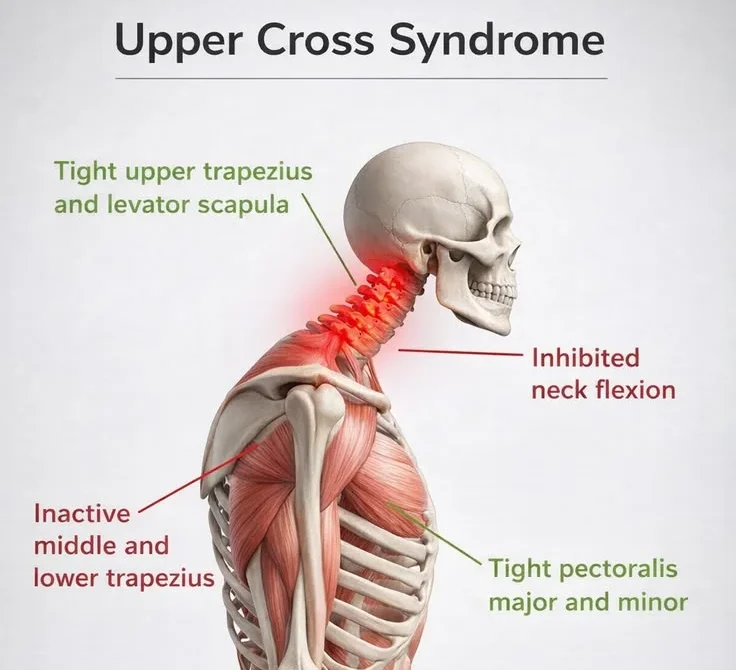
This leads to muscular imbalance known as Upper Crossed Syndrome, characterized by:
- tight upper trapezius
- tight levator scapulae
- tight pectoral muscles
- weak deep cervical flexors
- weak scapular stabilizers
These imbalances place chronic stress on the cervical spine.
Read in detail about: How to Fix Upper Crossed Syndrome Naturally
Cervical Joint Compression
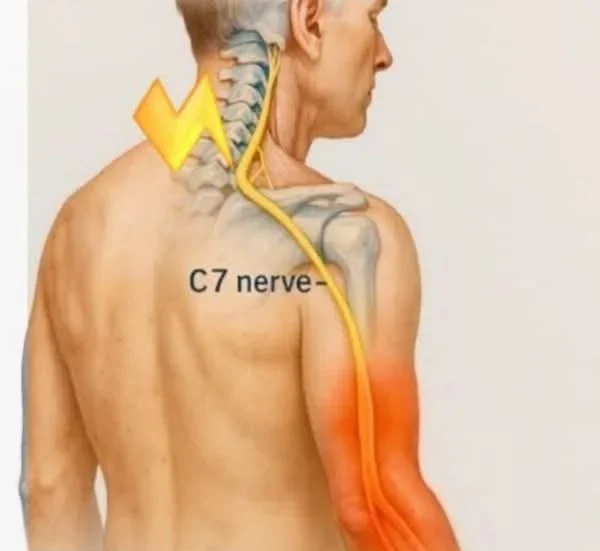
Prolonged neck flexion increases stress on several cervical structures, including:
- facet joints
- intervertebral discs
- cervical ligaments
Over time, repeated stress may contribute to degenerative changes in the cervical spine.
Myofascial Trigger Points
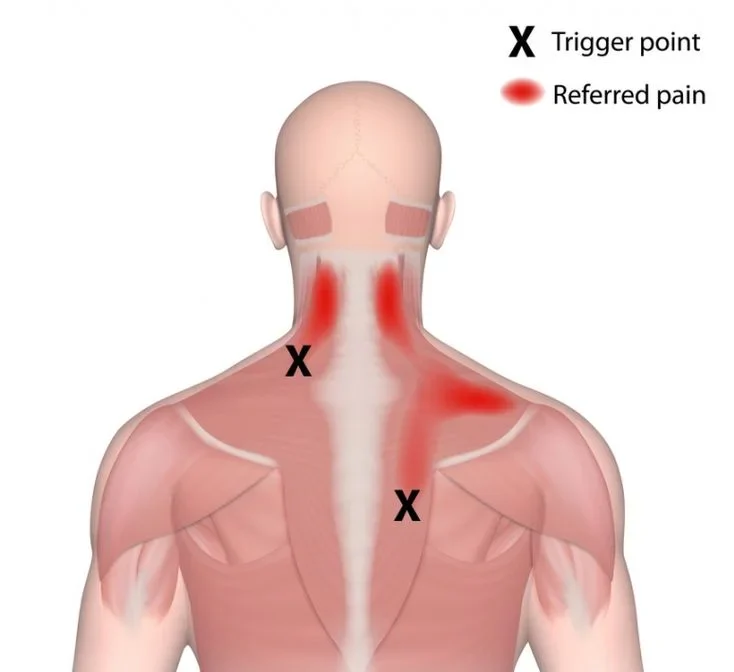
Dentists frequently develop trigger points in muscles such as:
- upper trapezius
- sternocleidomastoid
- levator scapulae
These trigger points may cause symptoms including:
- localized neck pain
- headaches
- shoulder tightness
- radiating arm discomfort
Read about: What Is Cervical Myofascial Pain Syndrome And How To Relieve Trigger Points
Early Warning Signs Dentists Should Not Ignore
Neck pain often develops gradually.
Early symptoms may include:
- morning neck stiffness
- headaches after dental procedures
- burning sensation between the shoulder blades
- reduced neck mobility
- persistent upper back tightness
Recognizing these early signs allows dentists to address the problem before chronic injury develops.
Read in detail about: Cervical Disc Degeneration: The Hidden Cause of your Neck Pain
Long-Term Consequences of Ignoring Neck Pain
If neck pain is not addressed, several long-term complications may occur.
Cervical Disc Degeneration
Repeated mechanical stress can accelerate degeneration of intervertebral discs.
Cervicogenic Headaches
Pain originating in cervical structures may radiate to the head.
Read more: Cervical Vertigo Explained: Why Neck Pain Make You Feel Dizzy
Nerve Compression
Advanced cervical degeneration may lead to nerve irritation causing:
- arm numbness
- tingling
- muscle weakness
Studies show that musculoskeletal disorders among dentists can also reduce work productivity and contribute to early retirement. (Bracciale et al., 2025)
Read in detail about: Cervical Radiculopathy: Why Neck Nerve Pain Travels to the Arm
Ergonomic Strategies to Prevent Neck Pain
Preventing neck pain begins with proper ergonomics.
Maintain Neutral Spine Posture
The ideal posture includes:
- ears aligned with shoulders
- chin slightly tucked
- relaxed shoulders
Avoid excessive neck bending toward the patient.
Use Magnification Loupes
Dental loupes allow dentists to maintain a more upright posture while still maintaining excellent visual precision.
Optimize Patient Positioning
The patient should be positioned so that the dentist does not need to lean excessively forward.
Practice Four-Handed Dentistry
Working with a trained assistant reduces unnecessary reaching and repetitive movements.
Take Micro-Breaks
Short breaks of 30-60 seconds every 20 minutes help restore circulation to neck muscles.
Read about: How to Relieve Morning Neck Stiffness Naturally
Physiotherapy Exercises for Dentists
Exercise is one of the most effective strategies for preventing and managing cervical strain in dental professionals.
Because dentistry involves prolonged static posture, repetitive hand movements, and forward head positioning, the neck and upper back muscles are continuously overloaded.
A structured exercise program helps restore muscle balance, improve posture, and reduce accumulated strain on the cervical spine.
Recent research confirms that targeted exercise programs focusing on postural muscles and scapular stabilization significantly reduce neck and shoulder pain among dental professionals. (Sandoval-Alarcón et al., 2025)
Instead of traditional exercises like basic chin tucks, modern physiotherapy approaches increasingly focus on dynamic cervical stabilization and scapular control exercises that better address the postural demands of dentistry.
Below are some effective and relatively advanced exercises recommended in contemporary physiotherapy practice.
1. Deep Cervical Flexor Activation with Pressure Biofeedback
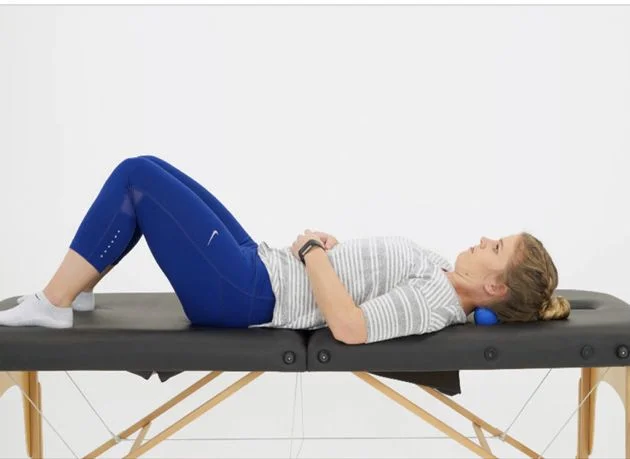
This exercise targets the deep cervical stabilizing muscles, which are often weak in individuals with forward head posture. Unlike simple chin tucks, this technique provides feedback to ensure proper muscle activation.
How to perform:
- Lie on your back with knees bent.
- Place a small pressure biofeedback unit or rolled towel under the neck.
- Gently nod the head as if saying “yes,” without lifting the head off the surface.
- Maintain a steady pressure increase while keeping superficial neck muscles relaxed.
- Hold for 10 seconds and repeat 8-10 times.
Benefits:
- improves cervical spine stability
- reduces strain on superficial neck muscles
- retrains proper neck posture
This exercise is commonly used in physiotherapy rehabilitation programs for chronic neck pain. (Falla et al., 2018)
2. Wall Angel Postural Exercise

Wall angels help strengthen the scapular stabilizers and upper back muscles, which play a crucial role in maintaining proper posture during dental procedures.
How to perform:
- Stand with your back against a wall.
- Keep your head, upper back, and hips touching the wall.
- Raise your arms to form a “goalpost” position.
- Slowly slide your arms upward and downward along the wall.
- Maintain contact between your back and the wall throughout the movement.
Repeat 10–12 repetitions.
Benefits:
- improves shoulder mobility
- activates lower trapezius and rhomboid muscles
- counters forward shoulder posture common in dentists
3. Serratus Anterior Activation
Wall Push-Up Plus

Weakness in the serratus anterior muscle contributes to poor scapular stability and increased neck tension.
How to perform:
- Stand facing a wall with hands placed shoulder-width apart.
- Perform a gentle wall push-up.
- At the top of the movement, push slightly further to protract the shoulder blades.
- Hold for two seconds and return to starting position.
Repeat 10–15 times.
Benefits:
- improves scapular control
- reduces overload on neck muscles
- enhances shoulder stability during repetitive dental tasks
4. Levator Scapulae Stretch

The levator scapulae muscle frequently becomes tight in dentists due to sustained neck flexion.
How to perform:
- Sit upright in a chair.
- Turn your head about 45 degrees to one side.
- Gently lower the chin toward the armpit.
- Use your hand to apply light pressure for a deeper stretch.
- Hold for 20–30 seconds and repeat on both sides.
Benefits:
- relieves tension in the upper neck
- reduces stiffness caused by prolonged clinical posture
5. Thoracic Extension Over Chair or Foam Roller

Dentists frequently develop stiffness in the thoracic spine because of prolonged leaning.
Restoring thoracic mobility reduces compensatory strain on the cervical spine.
How to perform:
- Sit in a chair with a low backrest.
- Place your hands behind your head.
- Lean backward over the chair while looking slightly upward.
- Hold for 10-15 seconds and repeat 6-8 times.
Alternatively, a foam roller can be used on the floor for deeper thoracic mobilization.

Benefits:
- restores thoracic spine mobility
- reduces forward-bent posture
- decreases mechanical stress on cervical structures
6. Resistance Band Face Pulls

This advanced strengthening exercise targets the posterior shoulder and upper back muscles, which are essential for maintaining upright posture during dental procedures.
How to perform:
- Attach a resistance band to a stable anchor at eye level.
- Hold the band with both hands.
- Pull the band toward your face while squeezing the shoulder blades together.
- Keep elbows high and maintain neutral neck posture.
- Slowly return to starting position.
Perform 10-12 repetitions for 2-3 sets.
Benefits:
- strengthens rhomboids and rear deltoids
- improves postural endurance
- reduces neck muscle overload during prolonged work
Also read: How to Relieve Neck Tightness Without Equipment
Practical Exercise Routine for Dentists
For best results, dentists should perform these exercises at least 4-5 times per week. A simple routine may include:
- Wall angels – 2 sets
- Serratus wall push-ups – 2 sets
- Levator scapulae stretch – 3 repetitions each side
- Thoracic extension mobilization – 8 repetitions
- Resistance band face pulls – 2 sets
The entire routine can be completed in 8-10 minutes, making it easy to incorporate between patient appointments or after work.
Regular exercise, combined with ergonomic workplace adjustments, can significantly reduce the risk of chronic neck pain and help dentists maintain a healthy and sustainable career.
Read about: Effective Neck Pain Exercises At Home: A Complete Guide to Relief and Improved Mobility
Lifestyle Habits That Protect a Dentist’s Neck
While ergonomics and exercise are essential for preventing work-related neck pain, lifestyle habits outside the clinic also play a major role in maintaining cervical spine health.
Dentists often spend long hours in static postures, and the body needs adequate recovery time to prevent chronic muscle fatigue and joint stress.
Adopting healthy daily habits can help reduce cumulative strain on the neck and improve overall musculoskeletal resilience.
Regular physical activity, proper sleep posture, stress management, and maintaining a healthy lifestyle all contribute to better spinal health and long-term prevention of neck pain.
Research shows that dentists who perform regular stretching and exercise report significantly fewer musculoskeletal complaints compared with those who lead sedentary lifestyles. (Rafeemanesh et al., 2025)
Below are several lifestyle habits that can help dentists protect their cervical spine.
Read in detail: Best Desk Setup to Reduce Neck and Back Pain
Maintain Regular Physical Activity
Regular physical activity is one of the most effective ways to maintain spinal health.
Exercise improves muscle strength, flexibility, and circulation, all of which help protect the cervical spine from excessive strain.
Dentists who engage in regular physical activity such as strength training, yoga, swimming, or Pilates often develop stronger postural muscles that support the neck and upper back.
These muscles play an important role in maintaining proper alignment during long dental procedures.
Exercise also improves blood circulation to muscles and connective tissues, helping remove metabolic waste that accumulates during prolonged static work.
Even moderate exercise performed 3 to 4 times per week can significantly reduce the risk of chronic neck pain.
Read About: How to Choose the Right and Best Pillow for Neck Pain
Improve Sleep Posture and Pillow Support
Sleep posture plays a surprisingly important role in cervical spine health.
Spending six to eight hours each night in an improper sleeping position can place unnecessary stress on the neck and contribute to morning stiffness.
Dentists should aim to maintain a neutral cervical spine position during sleep, where the neck remains aligned with the rest of the spine.
Helpful strategies include:
- using a cervical support pillow designed to maintain natural neck curvature
- sleeping on the back or side rather than on the stomach
- avoiding pillows that are too high or too flat
Sleeping in a stomach-down position often forces the neck into extreme rotation for prolonged periods, which can aggravate cervical joints and muscles.
Using a supportive pillow that maintains proper spinal alignment can significantly reduce overnight cervical strain.
Read About: Best Sleeping Position for Neck Pain: A Physiotherapist’s Complete Guide
Maintain a Healthy Body Weight
Excess body weight increases mechanical stress on the entire spine, including the cervical region. Higher body mass can alter posture and increase the load placed on supporting muscles and joints.
Maintaining a healthy body weight helps reduce the physical demands on the musculoskeletal system and improves overall mobility and posture control.
Additionally, regular physical activity used for weight management also strengthens muscles that support the spine, further reducing the risk of occupational neck pain.
Manage Stress and Muscle Tension
Dentistry can be a mentally demanding profession. Long hours, complex procedures, and patient care responsibilities may lead to increased stress levels.
Stress often triggers involuntary muscle tension in the neck and shoulder region. Over time this tension may contribute to persistent tightness and trigger points in muscles such as the upper trapezius.
Practices that help manage stress can therefore indirectly protect cervical spine health. Helpful strategies include:
- deep breathing exercises
- mindfulness meditation
- yoga
- short relaxation breaks during work
Even brief relaxation techniques performed between patients can help reduce muscular tension and improve circulation.
Read about: The Complete Guide to Neck Pain in Yoga Practitioners
Stay Hydrated and Support Muscle Recovery
Adequate hydration is essential for muscle health and joint lubrication. Dehydration can increase muscle fatigue and reduce tissue elasticity, making muscles more vulnerable to strain.
Dentists should aim to maintain proper hydration throughout the workday, particularly during busy clinical schedules.
Balanced nutrition that includes adequate protein, vitamins, and minerals also supports muscle repair and recovery after prolonged work.
Limit Prolonged Smartphone and Laptop Use
Many dentists unknowingly extend their neck strain beyond the clinic by spending long hours using smartphones or laptops with poor posture.
The “text neck” posture where the head bends forward while looking at a phone can add additional strain to already fatigued cervical muscles.
To minimize this risk:
- hold devices at eye level
- avoid prolonged downward gaze
- take regular breaks during screen use
Reducing unnecessary neck strain outside work helps the cervical spine recover from occupational stress.
Read in detail: Neck Pain from Phone Use? Here’s How to Treat Text Neck Syndrome
Incorporate Recovery Days and Mobility Work
Musculoskeletal recovery is just as important as physical activity. Dentists should schedule time for stretching, mobility exercises, and relaxation activities that allow muscles to recover from repetitive clinical tasks.
Activities such as gentle yoga, foam rolling, or mobility exercises can help maintain flexibility and prevent stiffness in the neck and upper back.
These recovery practices help counteract the cumulative strain caused by long working hours.
A Holistic Approach to Cervical Spine Health
Protecting the neck requires more than just workplace ergonomics. A holistic approach that includes physical activity, proper sleep habits, stress management, and healthy lifestyle choices provides the best protection against chronic neck pain.
For dentists who already experience mild discomfort, improving these lifestyle habits can significantly reduce symptoms and prevent the condition from progressing into a chronic musculoskeletal disorder.
By combining healthy daily habits with ergonomic awareness and targeted physiotherapy exercises, dental professionals can safeguard their cervical spine and maintain long-term musculoskeletal health.
Learn About: The Ultimate Neck Stretch Routine for Desk Workers in 2026
When Dentists Should Seek Physiotherapy
Dentists should seek professional evaluation if:
- neck pain persists for more than two weeks
- pain interferes with work activities
- numbness or tingling develops in the arms
Physiotherapy treatment may include:
- manual therapy
- trigger point release
- posture retraining
- strengthening programs
- ergonomic assessment
Early treatment can prevent long-term spinal complications.
Read about: Cervical Ligament Injury or Neck Ligament Tear
The Future of Dental Ergonomics
Modern dentistry is increasingly incorporating ergonomic technologies such as:
- saddle chairs
- dental operating microscopes
- posture monitoring systems
- adjustable operator stools
These innovations aim to reduce occupational strain and improve the long-term health of dental professionals.
Read in detail: Whiplash Injury After An Accident? Here’s Treatment And Expert Rehab Guide
Final Thoughts from a Physiotherapist
Neck pain in dentists is not simply a minor occupational discomfort it is a widespread musculoskeletal issue affecting dental professionals around the world.
The good news is that with the right combination of ergonomic awareness, targeted exercise, and physiotherapy support, dentists can significantly reduce their risk of chronic cervical spine problems.
Taking care of your spine is essential not only for your health but also for sustaining a long and fulfilling professional career.
Also Read: Top 5 Posture Mistakes Causing Back Pain and How to Fix Them
Frequently Asked Questions
1. Why do dentists commonly experience neck pain?
Dentists often maintain forward-bent postures during dental procedures, which places strain on cervical muscles and joints.
2. How common is neck pain among dentists?
Studies suggest that between 50% and 80% of dentists experience neck pain due to occupational strain.
3. Can physiotherapy help dentists with neck pain?
Yes. Physiotherapy treatments such as posture correction, stretching, strengthening exercises, and ergonomic training can significantly reduce symptoms.
4. What exercises help dentists prevent neck pain?
Chin tucks, upper trapezius stretching, thoracic extension, and shoulder blade strengthening are commonly recommended exercises.
5. When should dentists seek treatment?
If neck pain persists for more than two weeks or causes numbness or weakness in the arms, professional evaluation is recommended.
Stay tuned with us for more health related topics.
Follow us on LinkedIn and Instagram for more.
More Read


Medical Disclaimer!
This article has been reviewed and written under the guidance of our Head Physiotherapist, Dr. Kruti Raj (PT, MUHS,CPT,CMPT). The information shared is intended for educational purposes only and should not be considered a substitute for personalized medical advice, diagnosis, or treatment.
Please consult us or any other qualified healthcare professional before beginning any exercise program, especially if you are experiencing pain, recovering from injury, or managing a medical condition.