


Neck pain is now one of the most common workplace health complaints in the world. With remote work, hybrid models, extended laptop use, and increasing screen time, desk workers are experiencing higher levels of cervical strain than ever before. Incorporating this neck stretch routine for desk workers during the workday can help reduce muscle tension, improve posture, and prevent stiffness from prolonged sitting.
Studies in occupational health consistently show that more than half of office workers experience weekly neck discomfort.
Many develop forward head posture, muscular imbalances, tension headaches, and chronic stiffness that reduces both productivity and quality of life.
If you spend more than four hours per day at a desk, this guide is designed for you.
Also Read: Complete Guide to Neck Pain: Causes, Symptoms, Exercises and Treatment
This is not just a list of stretches. It is a complete framework that includes:
- Cervical spine anatomy explained simply
- Causes of tech neck and posture dysfunction
- A step by step neck stretch routine
- Strengthening exercises for long term protection
- Ergonomic correction guidelines
- Breathing and stress integration
- Sleep and recovery strategies
- A 30 day improvement plan
- Safety precautions and medical red flags
Also Read: 10 Best Daily Stretches for Back Pain Relief at Home
Understanding the Modern Desk Worker Neck Problem
Cervical Spine Anatomy Made Simple
Your neck, also called the cervical spine, consists of:
- Seven cervical vertebrae
- Intervertebral discs
- Facet joints
- Ligaments
- Deep stabilizing muscles
- Superficial movement muscles
- Nerve roots
Key muscles commonly affected in desk workers include:
- Upper trapezius
- Levator scapulae
- Sternocleidomastoid
- Scalenes
- Suboccipital muscles
- Deep cervical flexors
The human head weighs approximately 4 to 5 kilograms. When your head moves forward even 2 to 3 inches, the mechanical load on the neck significantly increases.
Over time, this extra strain contributes to muscular fatigue, joint irritation, and potential disc degeneration.
Also Read: Knee-to-Chest Stretch for Bach Pain Relief and Spinal Flexibility- A Complete Guide
Why Desk Workers Develop Neck Pain
1. Forward Head Posture
When looking at screens placed too low, the head shifts forward. This posture overloads the upper cervical region and tightens the posterior muscles.
2. Static Sitting
Holding one position for hours reduces blood flow and joint lubrication, leading to stiffness.
3. Tight Chest Muscles
Rounded shoulders from prolonged sitting shorten the pectoral muscles, which pull the neck forward.
4. Weak Mid Back Muscles
Without strong scapular stabilizers, the neck compensates for upper body support.
5. Stress and Mental Load
Chronic stress increases trapezius tension and jaw clenching, further tightening neck muscles.
Also Read: Cat Cow Stretch Benefits for Back Pain- A Complete Guide
Self Assessment: Do You Have Forward Head Posture
Stand sideways in front of a mirror.
If your ear sits forward of your shoulder instead of directly above it, you likely have forward head posture.
Additional signs:
- Frequent tension headaches
- Burning sensation between shoulder blades
- Reduced neck rotation
- Stiffness after long meetings
- Pain when turning your head
Also Read: Ultimate Guide to Home Physiotherapy for Back Pain
The Complete Neck Stretch Routine for Desk Workers
Total time required: 12 to 15 minutes
Frequency: Twice daily for best results
This routine combines mobility, stretching, activation, and posture correction.
Also Read: Spinal Twists for Lower Back Pain Relief- A Complete Guide
1. Chin Tucks for Deep Neck Activation
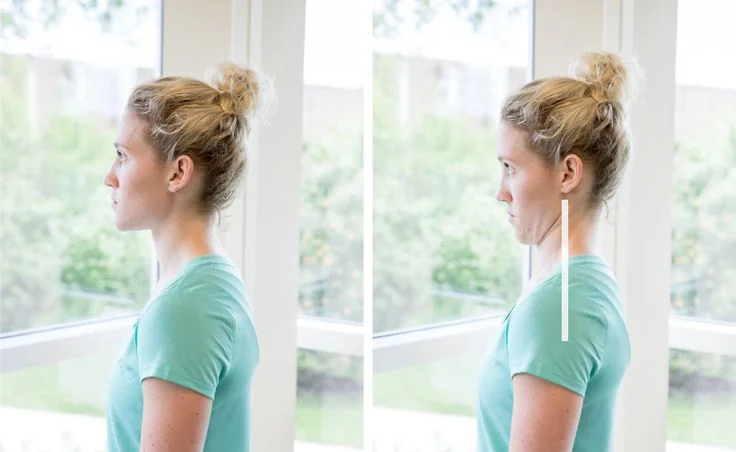
Purpose: Strengthens deep cervical flexors and corrects forward head posture.
How to perform:
- Sit upright with shoulders relaxed.
- Look straight ahead.
- Gently glide your head backward.
- Keep chin parallel to the floor.
- Hold for 5 seconds.
Repetitions: 10 to 12
Sets: 2
Common mistake: Tilting the head downward instead of moving it straight back.
2. Upper Trapezius Stretch

Purpose: Releases tension caused by shoulder elevation and screen use.
How to perform:
- Sit tall.
- Drop your right ear toward your right shoulder.
- Gently use your right hand to deepen the stretch.
- Keep the opposite shoulder relaxed and down.
Hold for 30 seconds.
Repeat twice per side.
3. Levator Scapulae Stretch

Purpose: Targets the muscle responsible for sharp pain near the upper shoulder blade.
How to perform:
- Turn your head 45 degrees.
- Look down toward your armpit.
- Gently pull head forward using your hand.
Hold 20 to 30 seconds per side.
4. Suboccipital Release
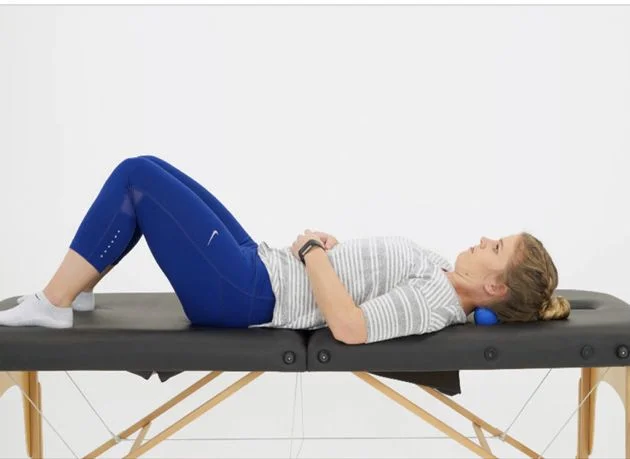
Purpose: Relieves tension headaches caused by prolonged screen use.
How to perform:
- Lie on your back.
- Slightly tuck your chin.
- Press the back of your head gently into the floor or a folded towel.
Hold 10 seconds.
Repeat 8 times.
5. Neck Rotation Mobility Drill

Purpose: Improves range of motion and joint lubrication.
How to perform:
- Slowly turn head to the right.
- Hold 5 seconds.
- Return to center.
- Repeat left.
10 repetitions each side.
6. Shoulder Blade Retraction Exercise

Purpose: Strengthens mid back muscles to support posture.
Squeeze shoulder blades together.
Hold 5 seconds.
Repeat 12 times.
7. Chest Opener Stretch

Purpose: Counteracts rounded shoulders.
Clasp hands behind your back.
Lift arms slightly.
Open chest.
Hold 30 seconds.
Repeat twice.
Also Read: 15 Minute Full-Body Stretch To Relieve Your Stress- Proven Ways
Strengthening for Long Term Protection
Stretching improves flexibility. Strengthening prevents recurrence.
Perform 3 times per week:
- Isometric neck holds
- Wall angels
- Resistance band rows
- Prone Y and T raises
Strong mid back and deep neck muscles reduce strain during long desk sessions.
Also Read: Unlocking Knee Pain Relief: How Physiotherapy Can Change Your Life!
Breathing Integration for Better Results
Desk workers often breathe shallowly from the chest.
Practice diaphragmatic breathing:
Inhale through nose for 4 seconds.
Expand ribs.
Exhale slowly for 6 seconds.
This reduces trapezius tension and improves oxygen delivery.
Also Read: How to Understand What Really Causes You Pain?
Ergonomic Optimization Checklist
- Monitor at eye level
- Screen one arm length away
- Feet flat on floor
- Hips slightly higher than knees
- External keyboard for laptop users
- Headset for long calls
- Avoid cradling phone between shoulder and ear
Ergonomics and stretching must work together.
Also Read: Ankle Pumps for Joint Mobility and Circulation- A Complete Pain Relief Guide
Sleep and Recovery for Cervical Health
Your neck heals during sleep.
Recommendations:
- Use medium firmness pillow
- Keep spine neutral
- Avoid stomach sleeping
- Stay hydrated
- Ensure adequate protein intake
Intervertebral discs rely on hydration for resilience.
Also Read: Simple Thigh Stretching Exercises for Knee Pain Prevention
When to Seek Medical Help
Consult a healthcare professional if you experience:
- Arm numbness
- Tingling in fingers
- Persistent weakness
- Severe headaches with stiffness
- Pain lasting longer than 3 weeks
Stretching cannot resolve structural disc injuries.
Also Read: Wall Slides for Knee Joint Strength- A Complete Guide
30 Day Neck Reset Plan
Week 1
Daily mobility routine.
Week 2
Add strengthening exercises.
Week 3
Improve workstation ergonomics.
Week 4
Track pain reduction and maintain habits.
Most desk workers report noticeable improvement within 2 to 3 weeks.
Also Read: 10 Minute Gentle Shoulder Mobility Routine at Home for Stiff and Painful Shoulders
Long Term Prevention Strategy
- Take micro breaks every 60 to 90 minutes
- Perform quick stretch sequence during work
- Maintain strength training routine
- Manage stress
- Limit late night screen exposure
Neck health is cumulative. Small daily corrections prevent chronic issues.
Also Read: This 7 day knee strengthening exercise plan works like Miracle
Frequently Asked Questions (FAQs)
1. Why do desk workers commonly experience neck pain?
Desk workers often develop neck pain due to prolonged sitting, poor posture, and extended screen time. Looking down at laptops or phones places additional strain on the cervical spine and surrounding muscles.
2. How often should desk workers stretch their neck?
Experts recommend stretching the neck every 1 to 2 hours during long work sessions. Even a short 2 to 5 minute stretching routine can help relieve muscle tension and improve posture.
3. Can neck stretches help prevent headaches?
Yes. Neck tension and poor posture can contribute to tension headaches. Regular neck stretches improve blood flow and reduce muscle tightness, which may help prevent headaches.
4. What are the best neck stretches for desk workers?
Some of the most effective neck stretches include upper trapezius stretch, levator scapula stretch, chin tucks, neck rotations, and shoulder rolls.
5. Is it safe to do neck stretches every day?
Yes. Gentle neck stretches can safely be performed daily. However, movements should be slow and controlled to avoid strain or injury.
6. How long should a neck stretching routine take?
A complete neck stretch routine usually takes about 5 to 10 minutes and can significantly reduce stiffness caused by long hours at a desk.
7. When should someone see a doctor for neck pain?
If neck pain lasts longer than a few weeks, becomes severe, or is accompanied by numbness, weakness, or tingling in the arms, medical evaluation is recommended.
Conclusion
Neck pain among desk workers is not inevitable. It is often the result of posture habits, muscle imbalance, and prolonged static sitting.
A structured neck stretch routine for desk workers combined with strengthening, ergonomic correction, breathing awareness, and consistent movement can significantly reduce pain and protect your cervical spine long term.
Start today. Consistency will transform how your neck feels during long workdays.
Also Read: These Are the Best Home Exercises For Hip Pain Relief
Stay tuned with us for more health related topics.
Follow us on LinkedIn and Instagram for more.
More Read


Medical Disclaimer!
This article has been reviewed and written under the guidance of our Head Physiotherapist, Dr. Kruti Raj (PT, MUHS,CPT,CMPT). The information shared is intended for educational purposes only and should not be considered a substitute for personalized medical advice, diagnosis, or treatment.
Please consult us or any other qualified healthcare professional before beginning any exercise program, especially if you are experiencing pain, recovering from injury, or managing a medical condition.


